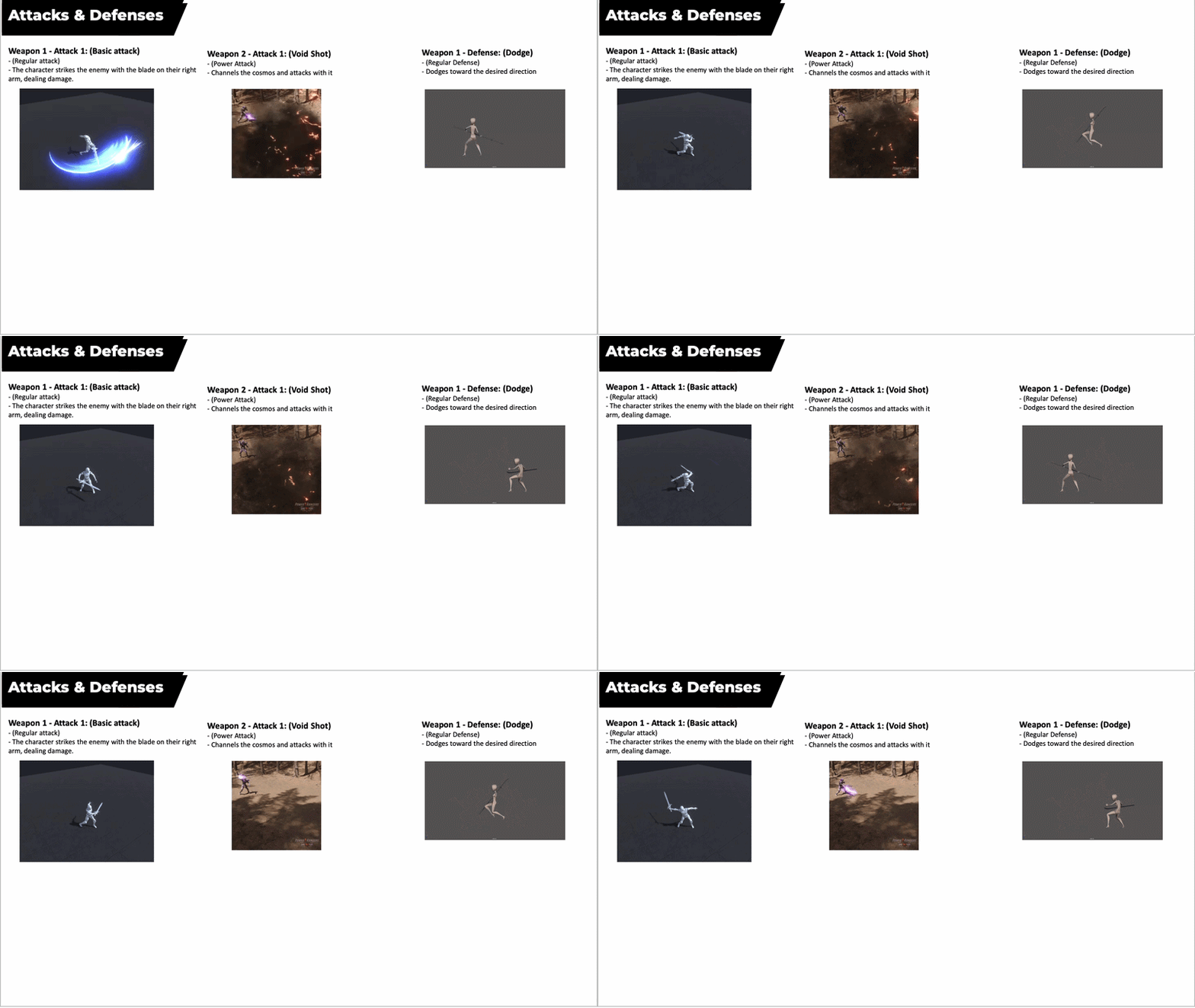
Overview
The Cradle - Narrative Design
- Genre: Soulslike
- Type: Branching Dialogue / Quest Design / Character Design / Storyboard / Location Design
- Narrative Tools: Arcweave, Excel, PPT, Unreal Engine, Procreate, Affinity
- Duration: 8 weeks
- Role: Narrative designer / Game Writer
Responsibilities Overview
Goal
The Cradle is a Soulslike experience centered around a world shaped by eldritch forces, forgotten civilizations, and competing ideologies.
The goal of this project was to demonstrate the full narrative design pipeline, from worldbuilding and narrative content creation to implementation-ready documentation for cross-disciplinary collaboration.
- Developed a cohesive world through characters, factions, locations, cosmology, quests, and item lore designed to support player-driven discovery.
- Used environmental storytelling, item descriptions, and dialogue to deliver fragmented narrative information through gameplay.
- Produced production-ready documentation to support implementation and collaboration across narrative, level design, art, and audio disciplines.
- Developing narrative content through iterative feedback from industry narrative designers and playtesting.
Linear & Branching Dialogue
Designed two interconnected quest lines
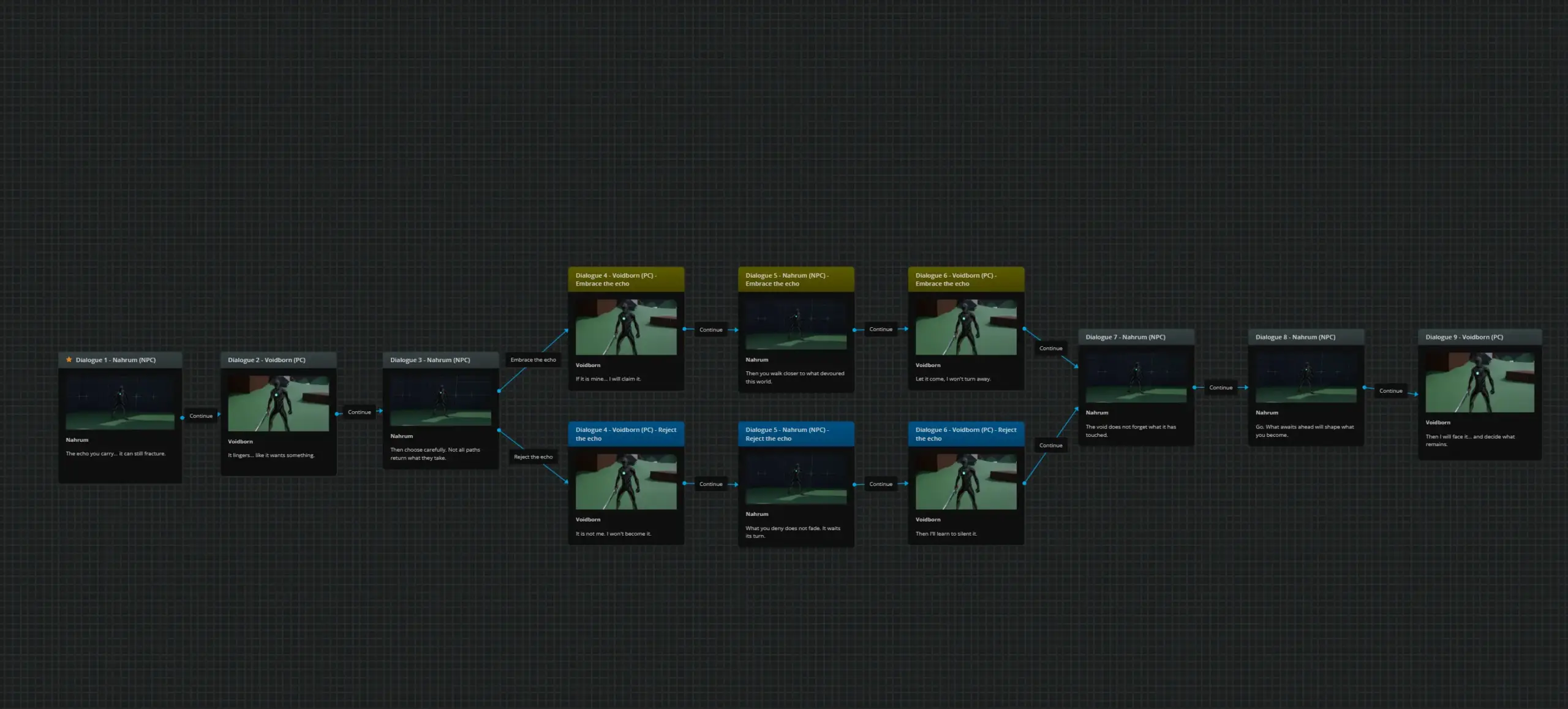
Designed and implemented two interconnected quest lines in Unreal Engine 5 that combine narrative progression, player agency, and character progression.
The quest lines were designed with the following goals:
- Create meaningful player choices by allowing Echoes to be invested into different progression paths, each tied to a specific NPC and narrative outcome.
- Reinforce player agency by ensuring that progression decisions impact both character development and the direction of future interactions.
- Support replayability by providing mutually exclusive progression opportunities and alternative narrative outcomes.
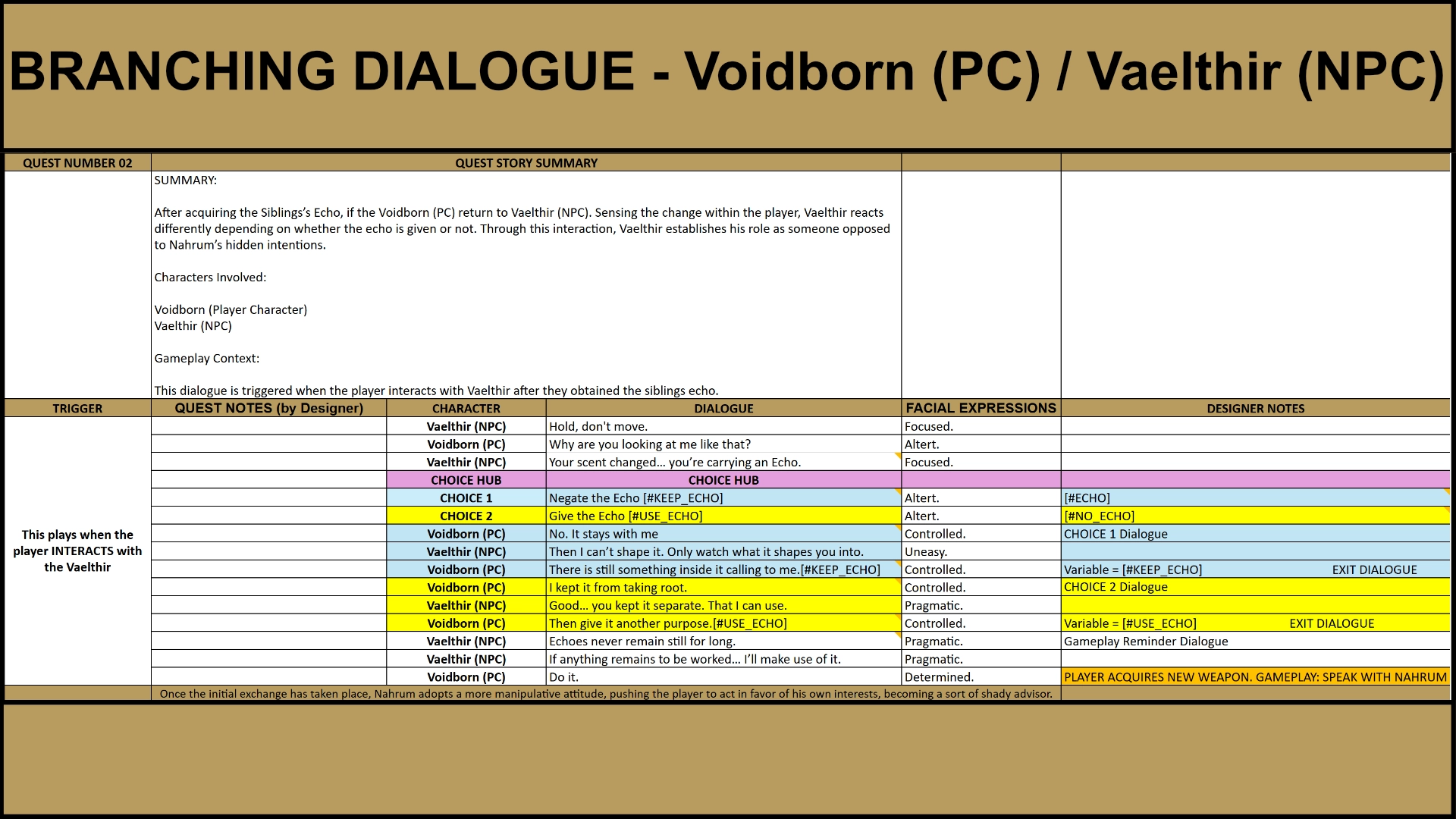
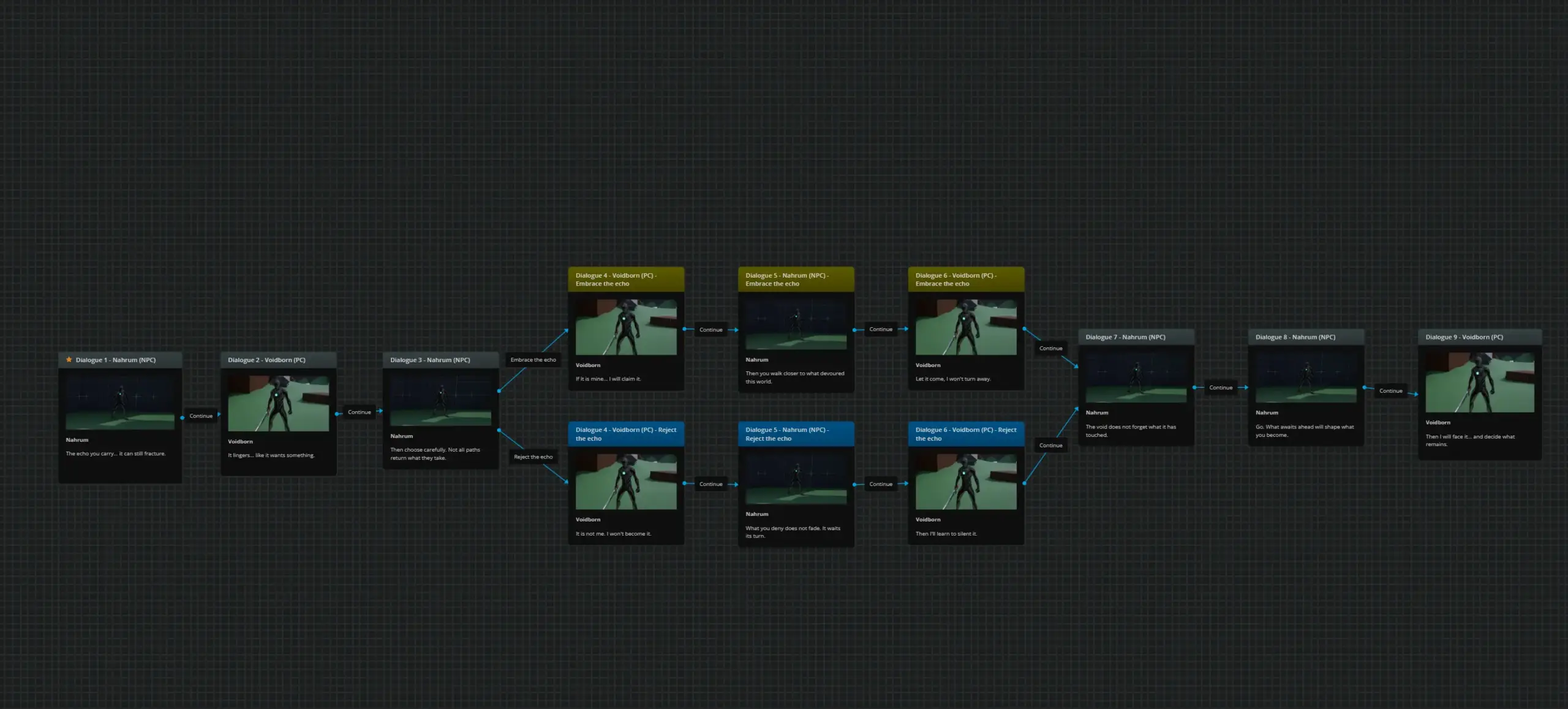
Designed Quest Branching Dialogue
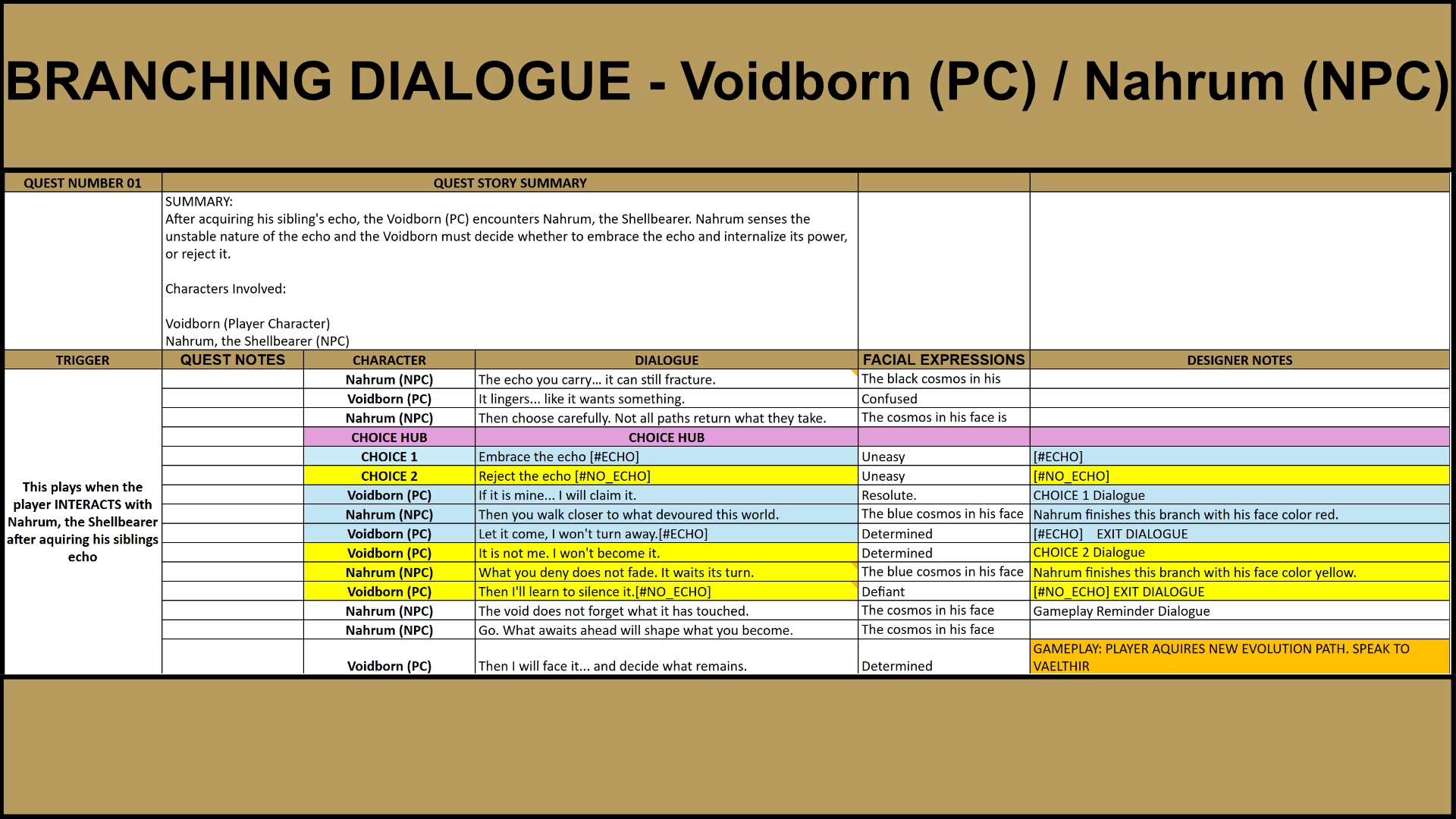
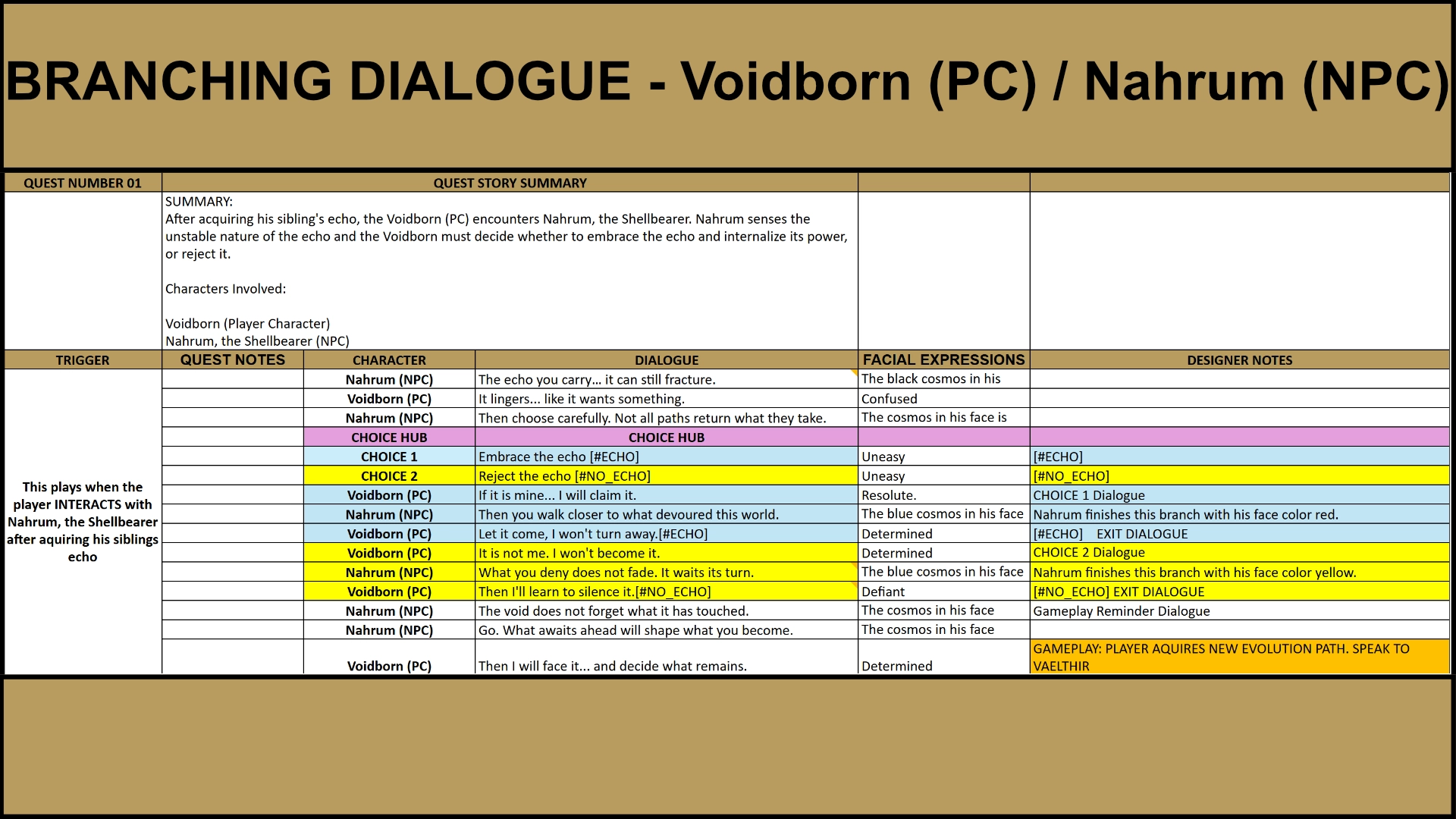
I designed branching dialogue systems that connect player choice, gameplay progression, and long-term narrative consequences. To support this, I created:
- Persistent narrative variables that carry player decisions across multiple dialogue encounters and NPC interactions.
- Choice HUBs that reinforce player agency through gameplay progression and build paths, ensuring player decisions have meaningful impact.
I prototyped all branching dialogue flows in Arcweave before implementing them in Unreal Engine 5 through Data Tables, validating narrative flow and player interaction through clicks/taps.
The prototype also served as a collaborative design space, allowing rapid iteration through feedback from narrative designers
Linear Dialogue - Thought Process
I designed linear dialogue to introduce key characters, establish narrative context, and support gameplay progression throughout the level.
The dialogue was designed to:
- Communicate quest objectives and gameplay goals with clarity while maintaining the cryptic tone of the Soulslike genre.
- Support exploration and progression by directing the player toward meaningful gameplay opportunities and narrative discoveries.
- Deliver worldbuilding information through character interactions while keeping dialogue concise and focused on gameplay progression.
Through iterative feedback and revision, I refined character voice, narrative clarity, and dialogue pacing to ensure each interaction supported both the narrative experience and gameplay flow.
Items
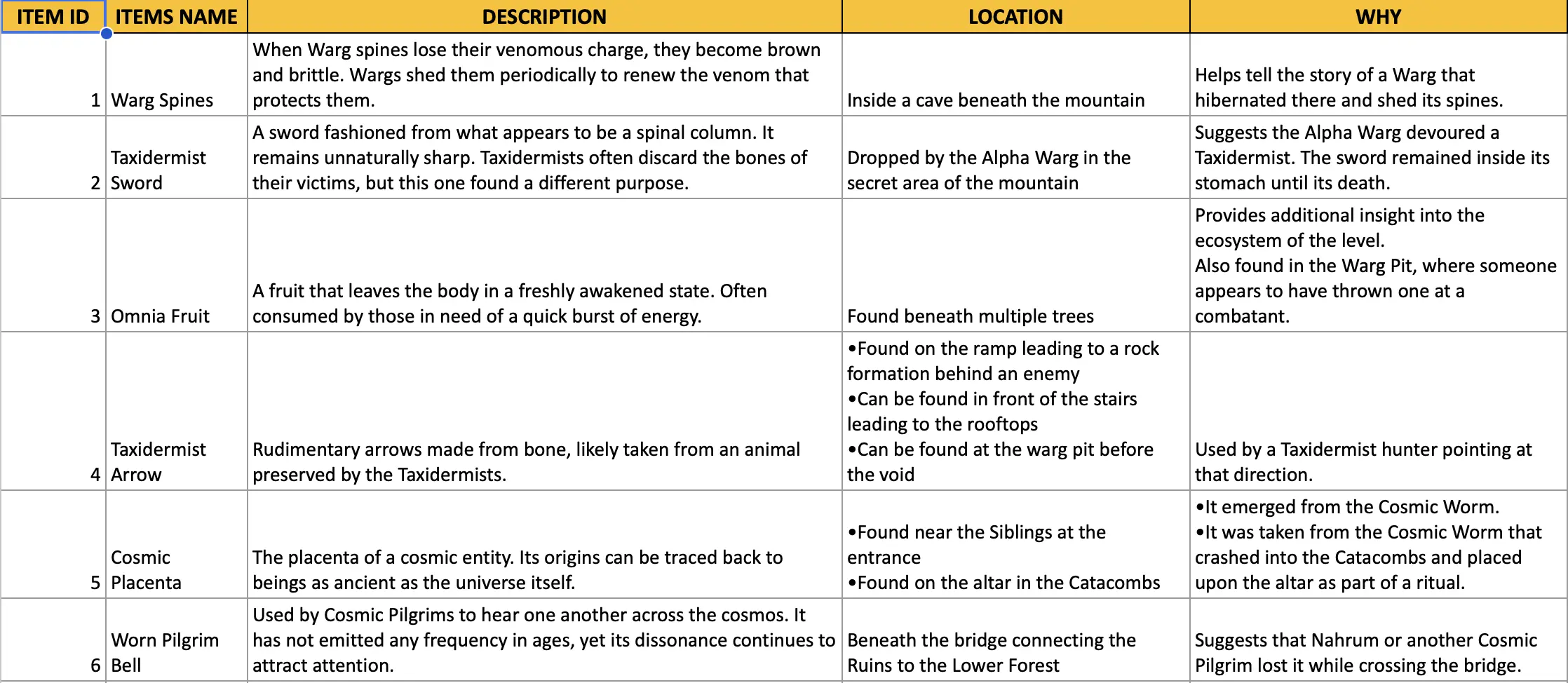
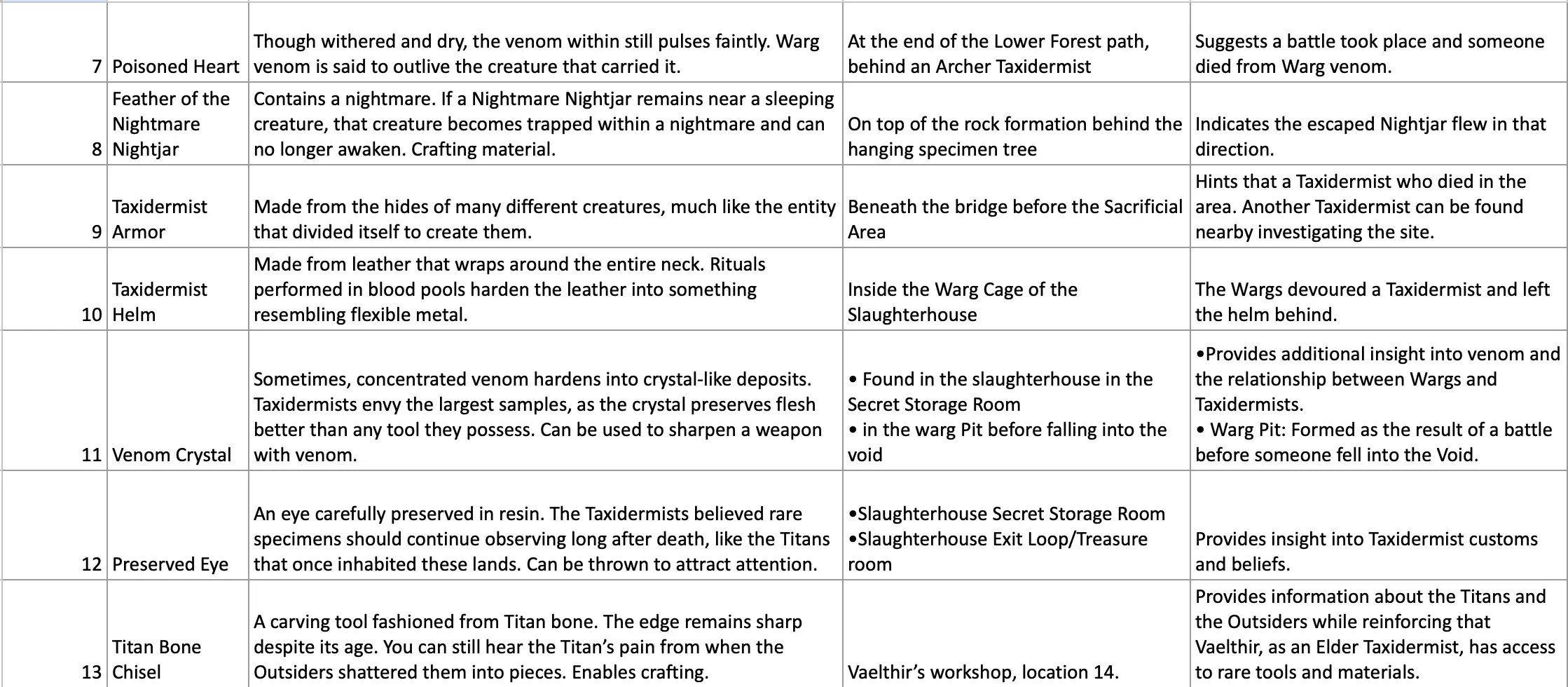
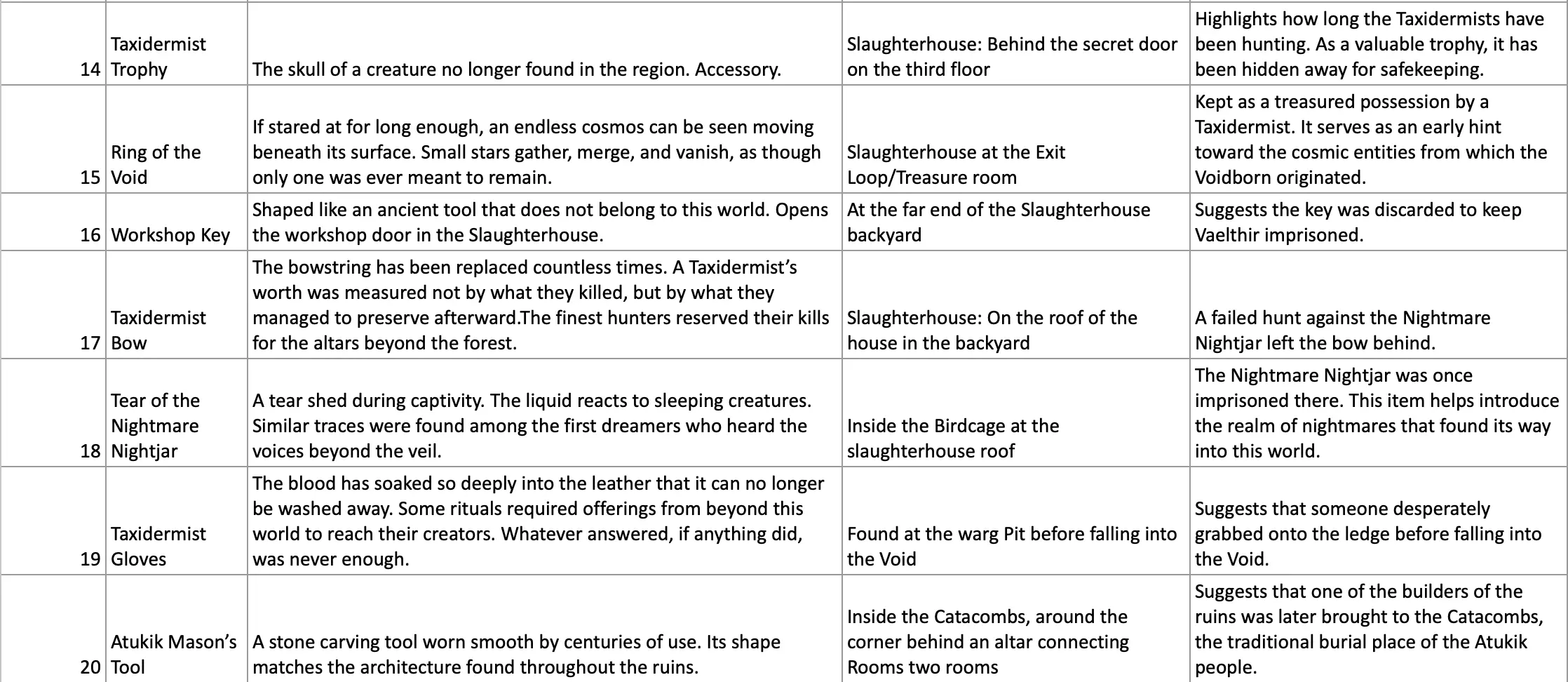
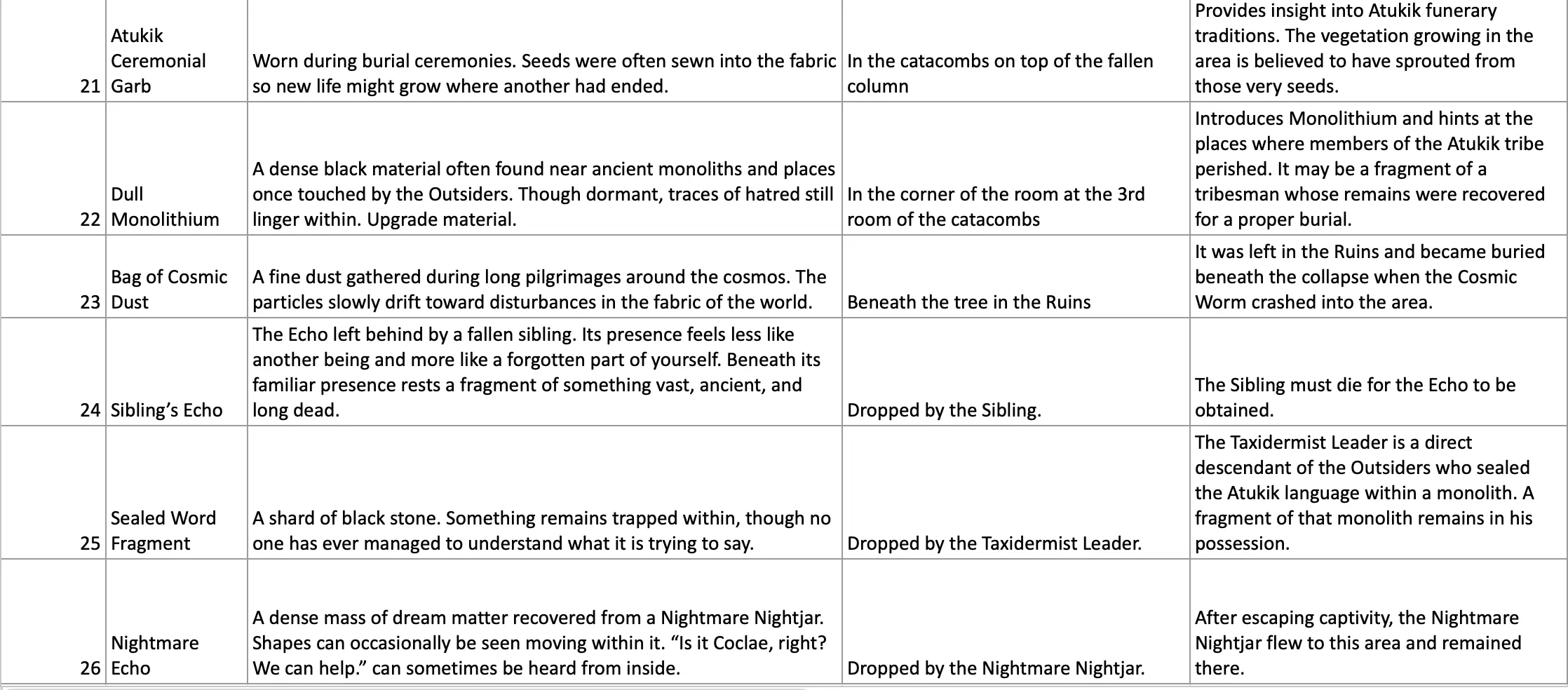
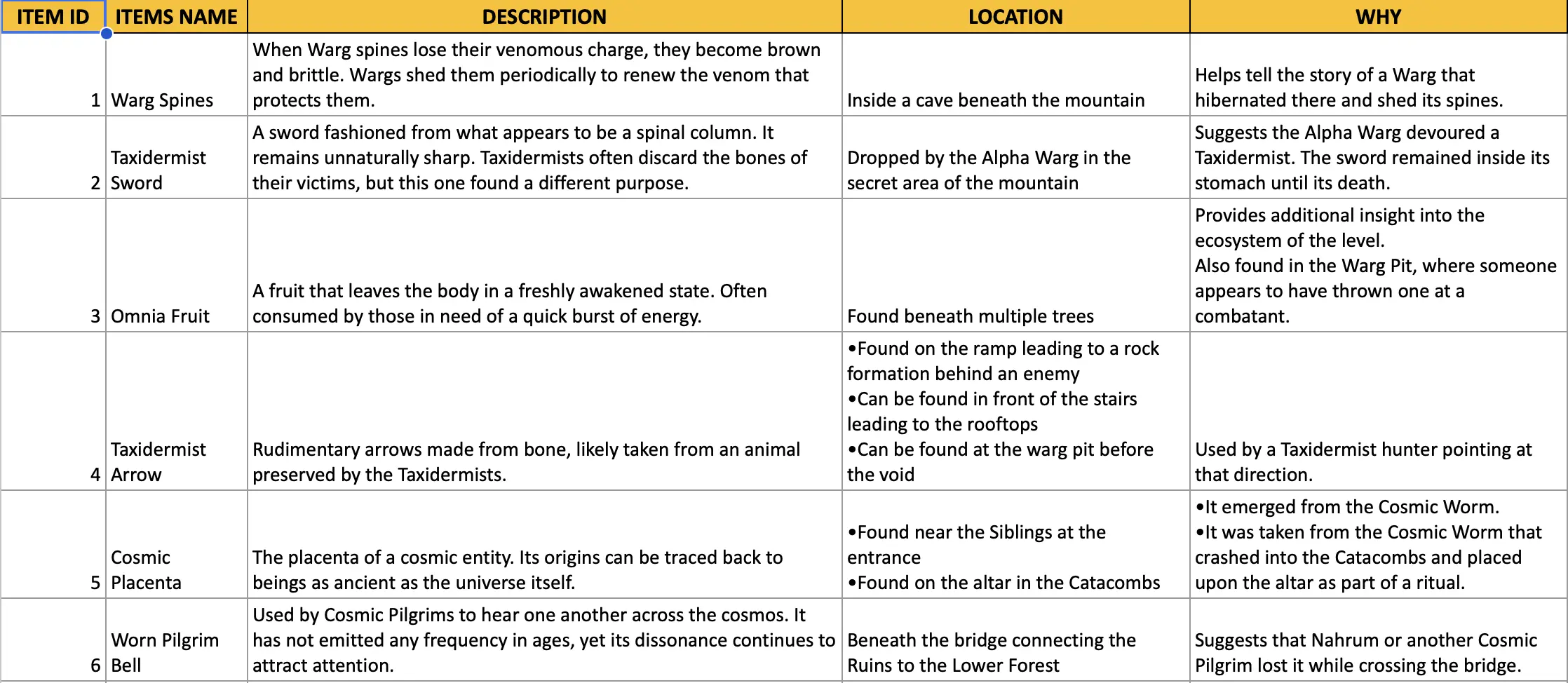
Designed 26 items with lore-driven descriptions
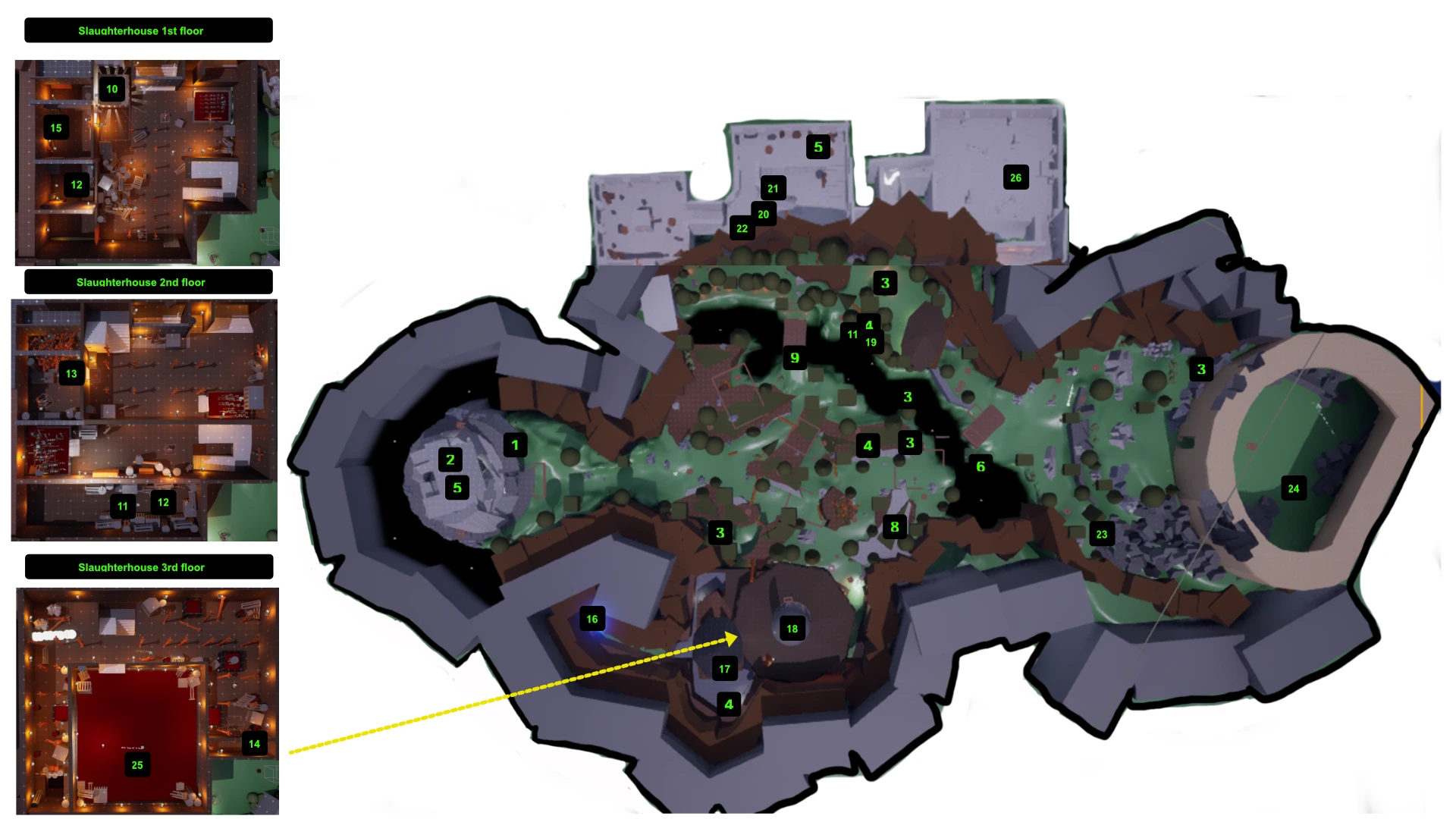
To support the fragmented storytelling approach commonly found in Soulslike games, I created and implemented 26 lore-driven item descriptions distributed throughout the level. These items expand the world’s history, factions, ecosystem and lore.
Item placement was closely tied to environmental storytelling, ensuring that each item provided additional context about the location or events that occurred there. This allowed narrative information to emerge naturally through exploration.
Special consideration was given to the Golden Path, placing key lore items along the main route so that players less interested in exploration would still encounter enough narrative content to understand the world and its central conflicts. Optional areas contain additional items that reward exploration with deeper insight into the setting’s mysteries and hidden history.
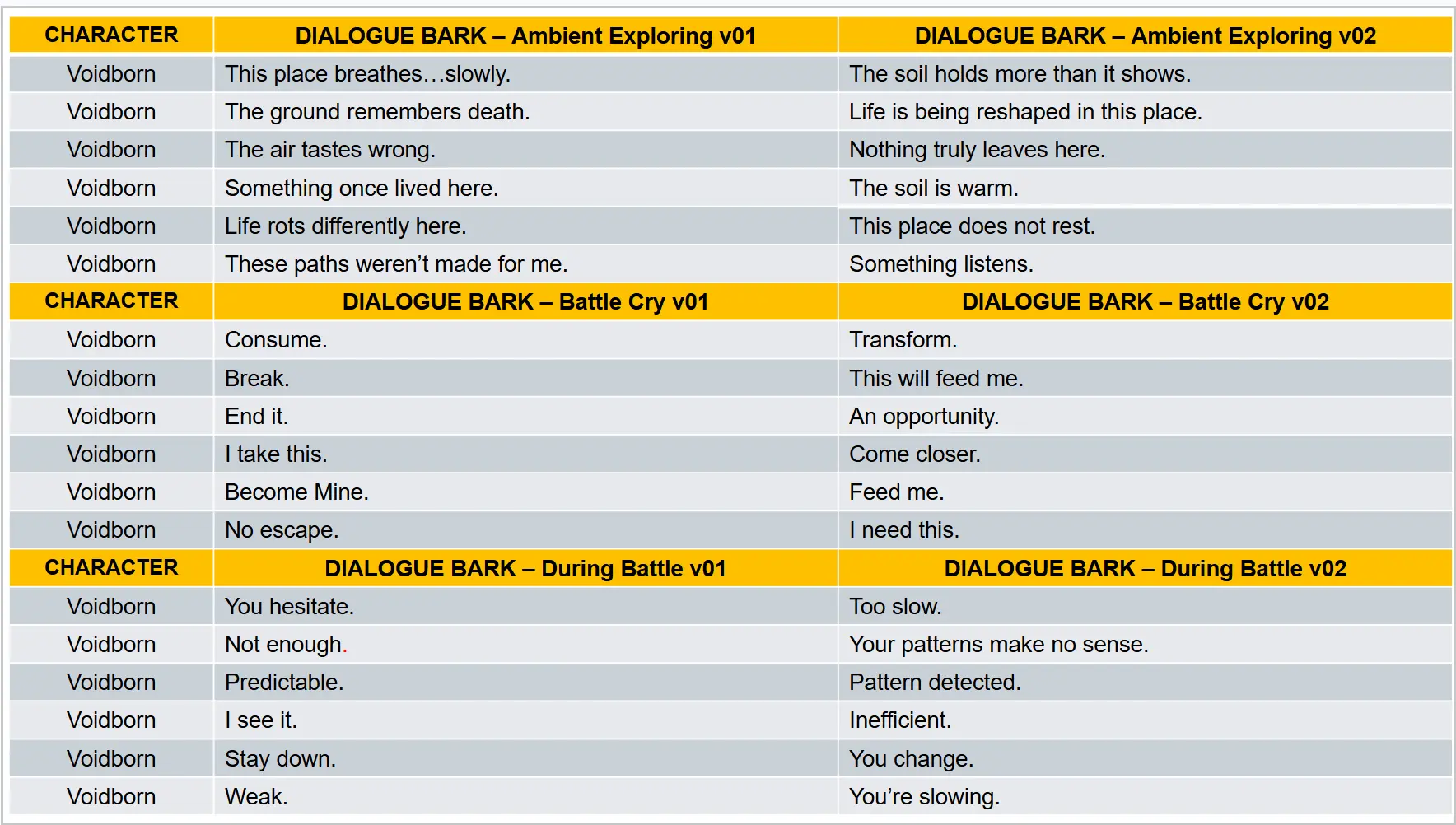
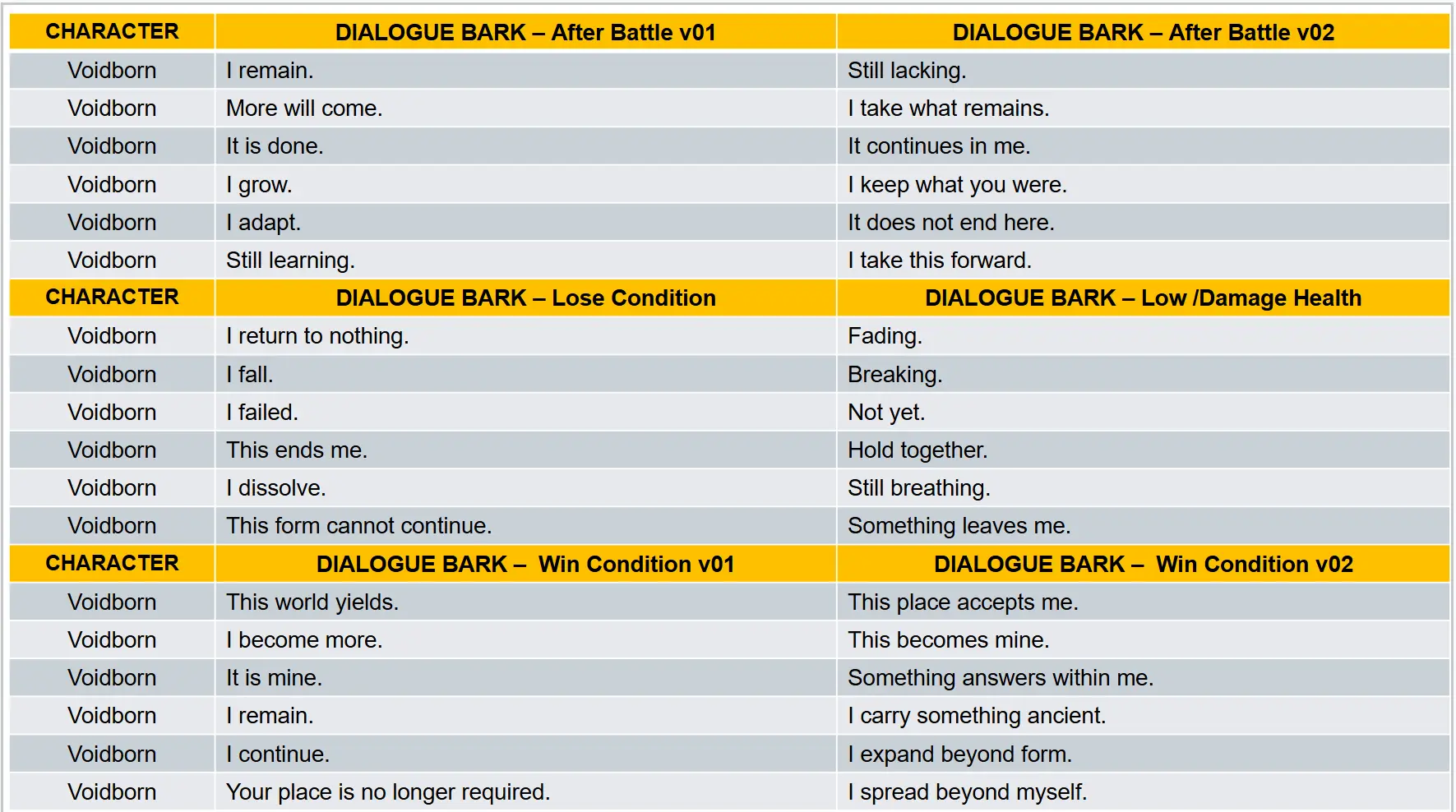
Character Design & Barks
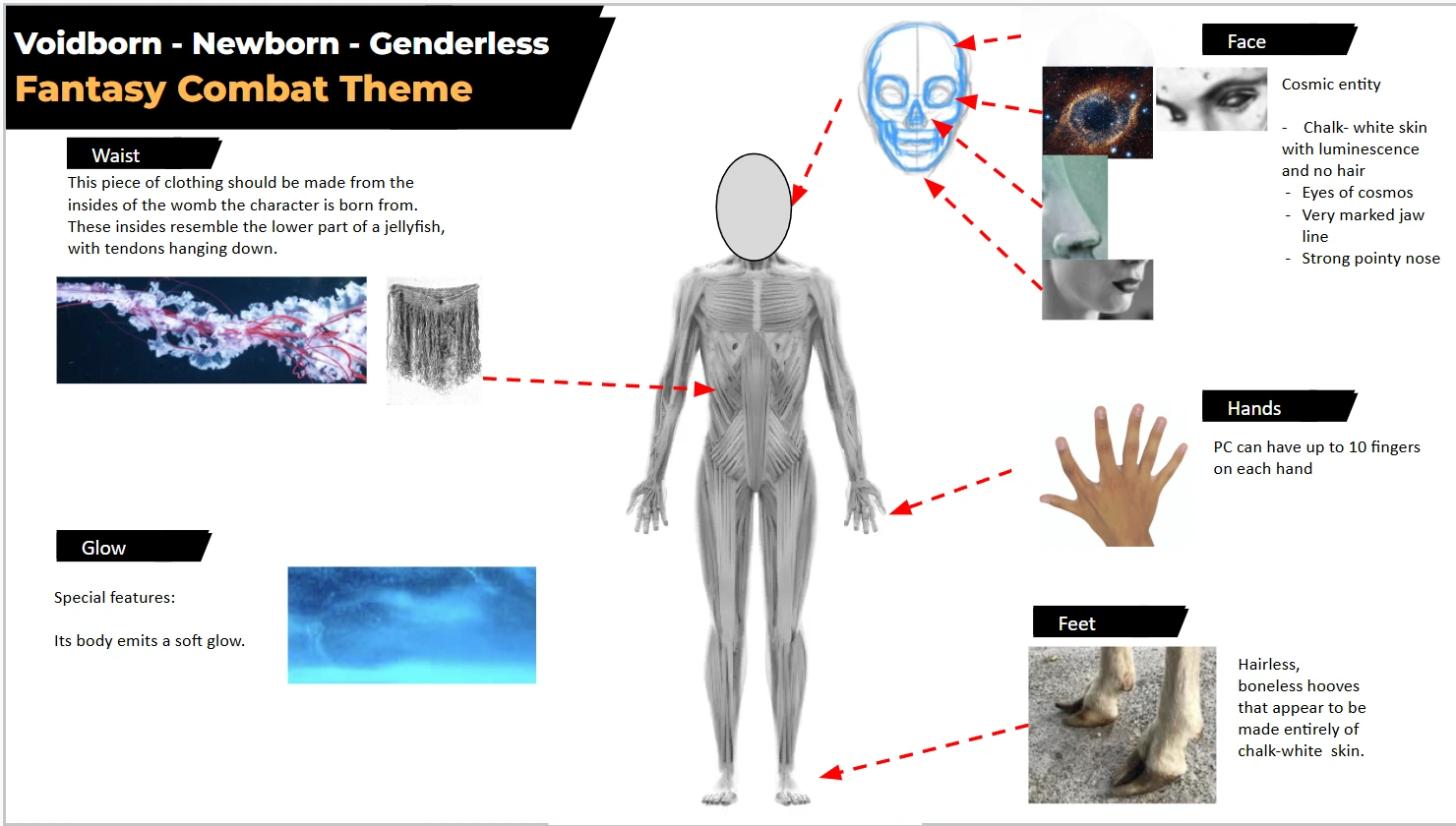
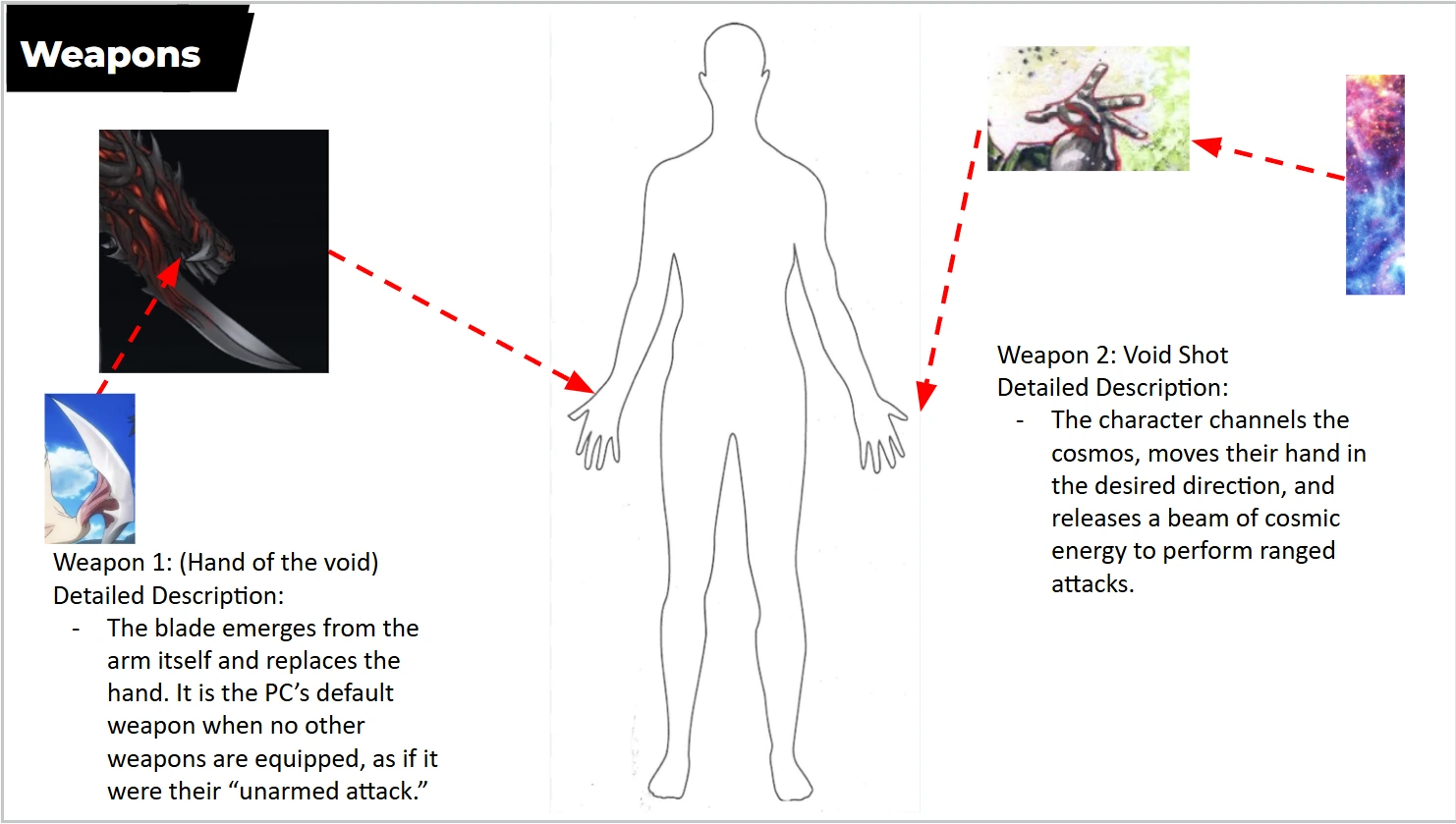
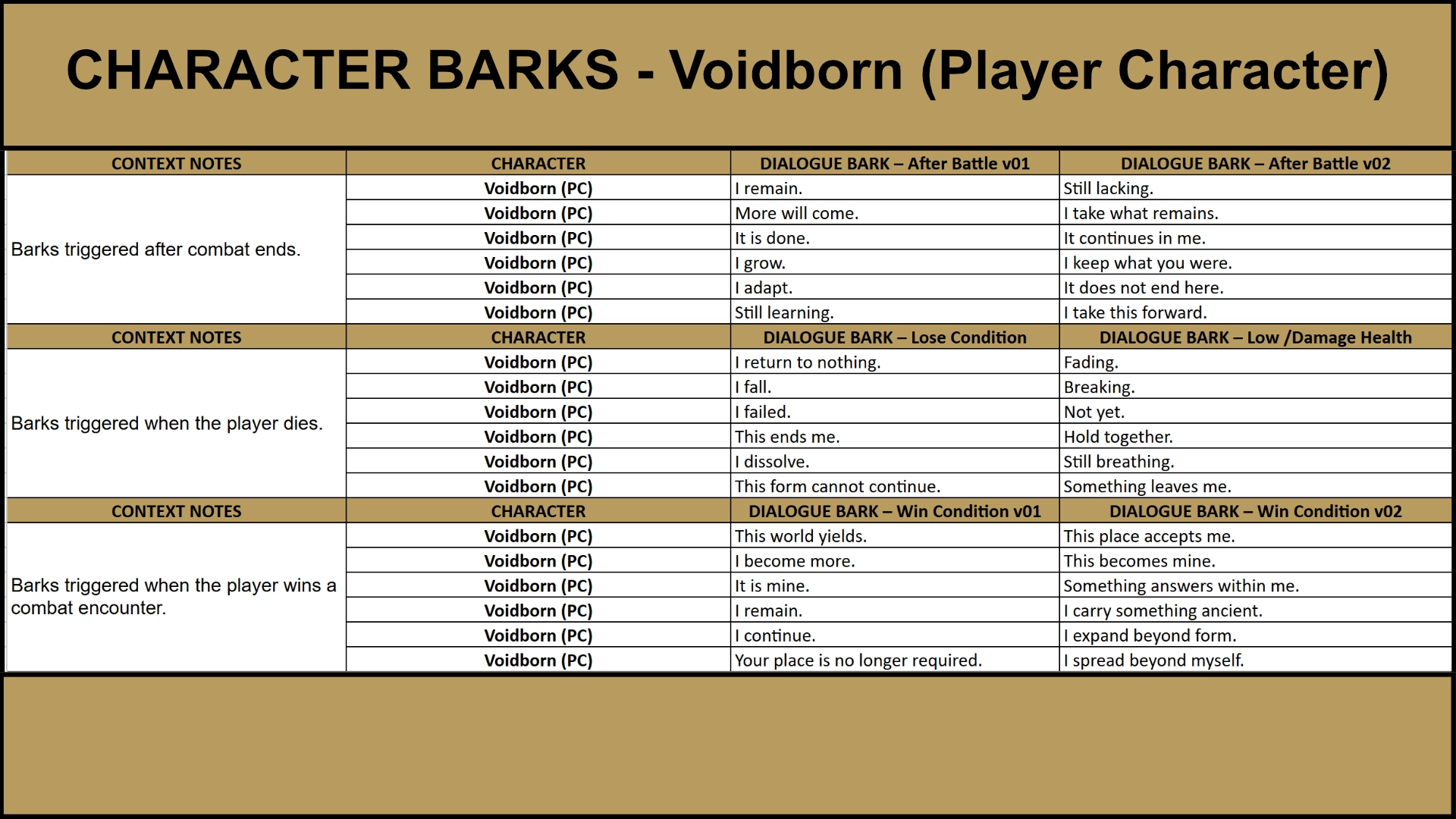
Player Character: Voidborn
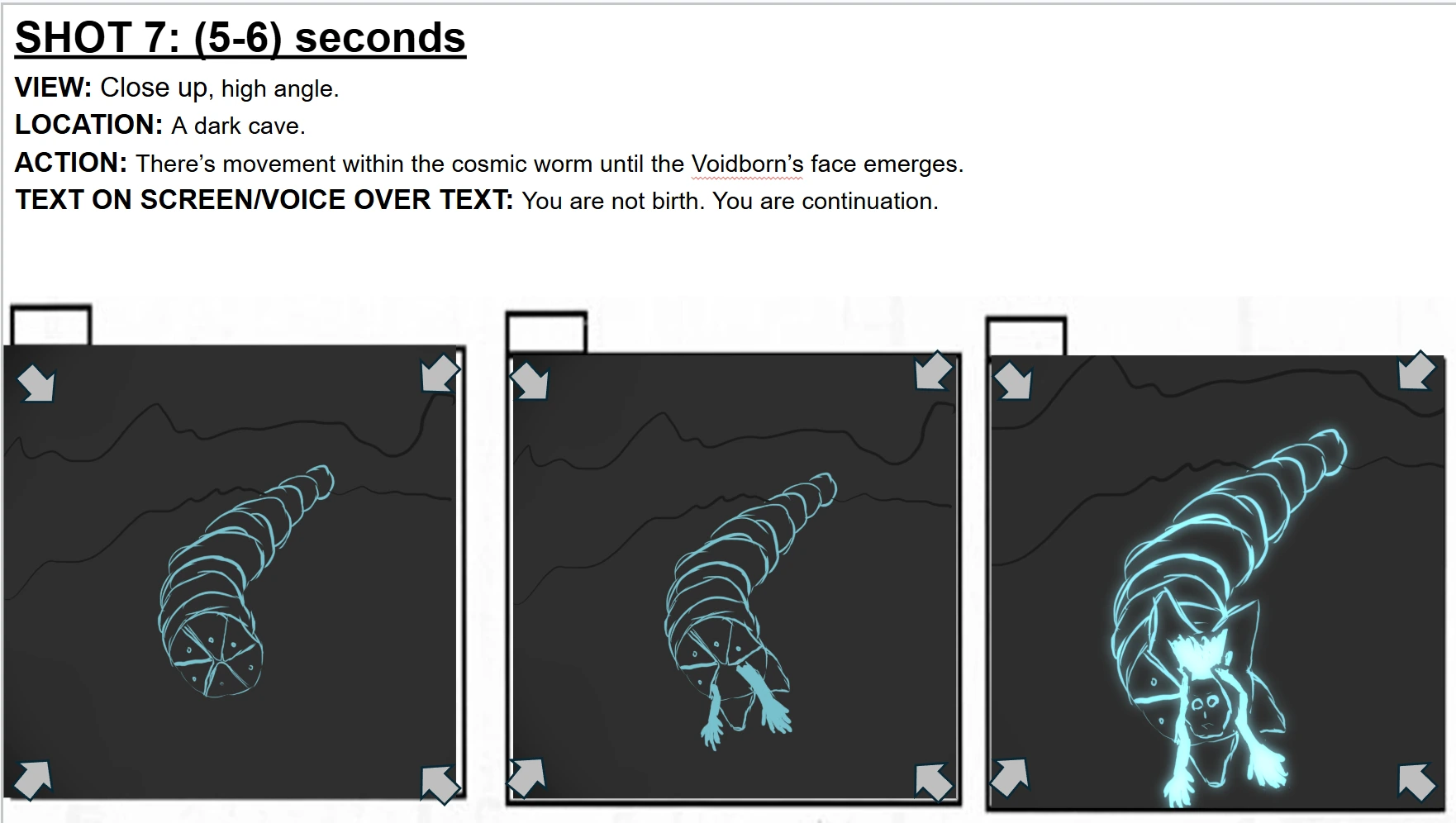
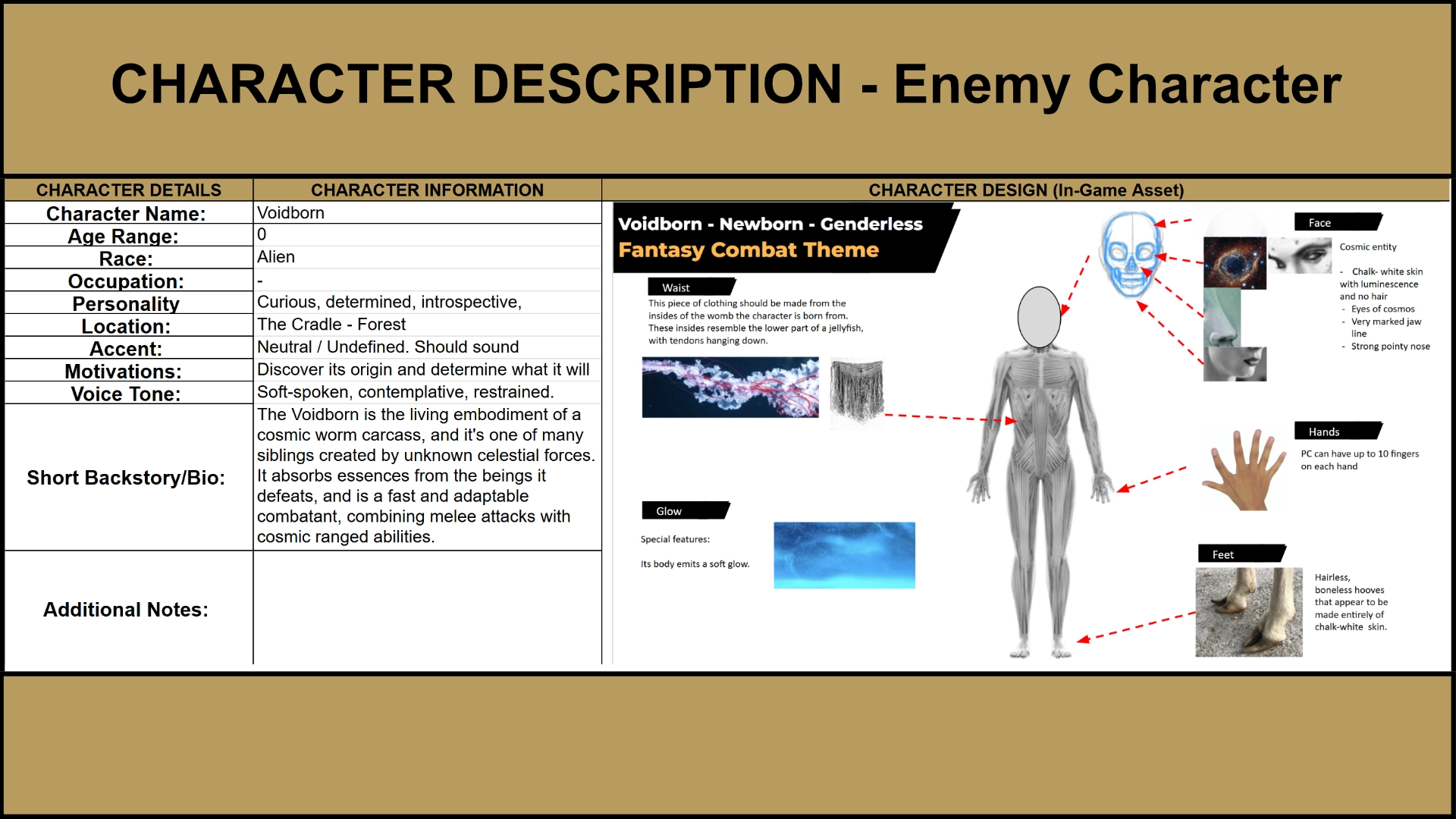
The Voidborn is the player character, born from a cosmic worm that descended from an immense eldritch entity. Having just entered existence, they possess no understanding of themselves, their origin, or the hostile world around them.Â
- Character Purpose. Designed as a blank slate protagonist, allowing players to project their own interpretation onto the character while discovering their identity through gameplay, build paths, exploration, and narrative choices.
- Personality. Curious, uncertain, and driven by a need to understand their origin. Their perspective evolves through the player’s choices, creating a stronger connection between narrative decisions and player agency.
- Gameplay Integration. Player decisions regarding Echoes influence both character progression and narrative direction, shaping the Voidborn’s relationship with their own nature.
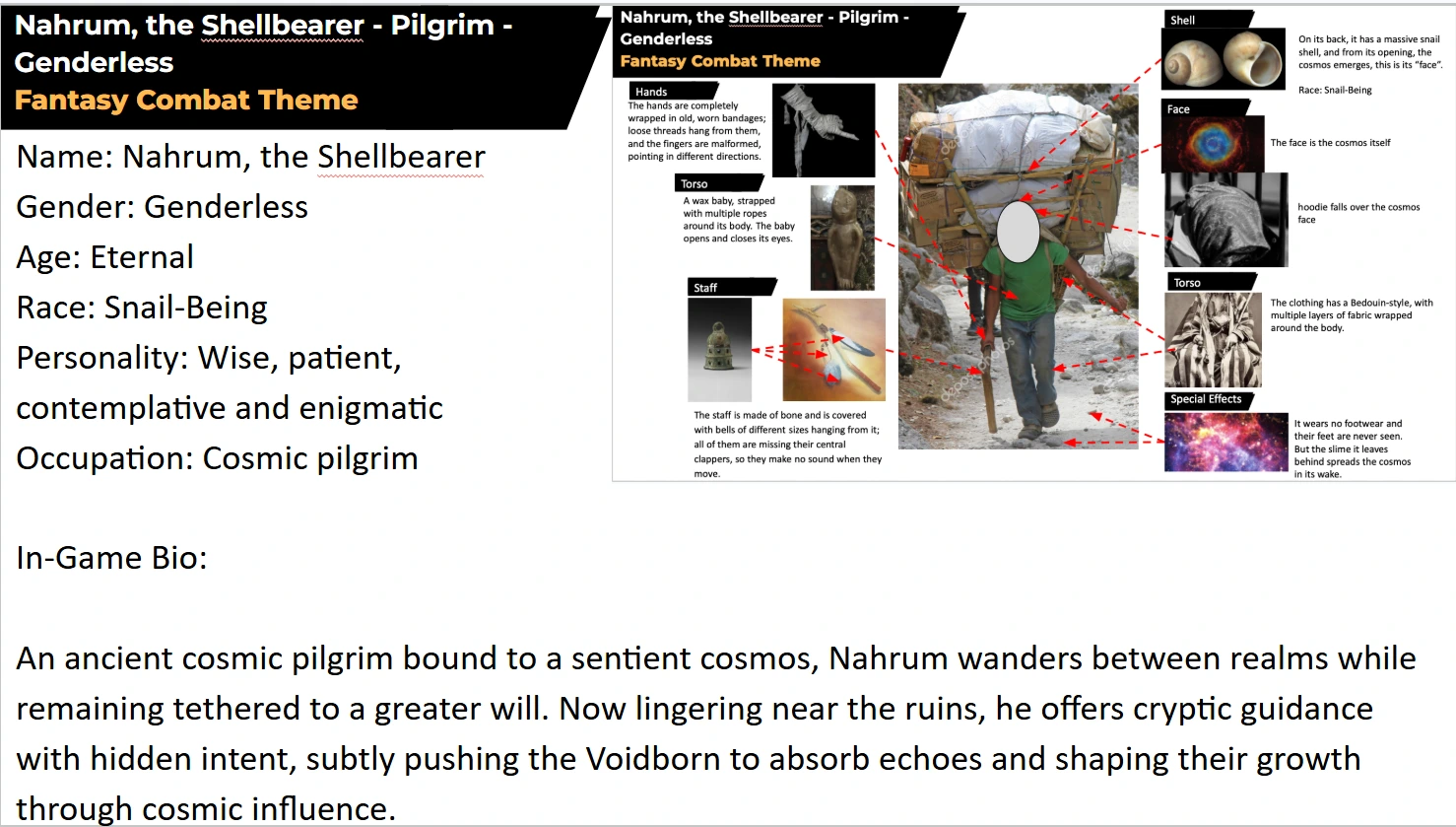
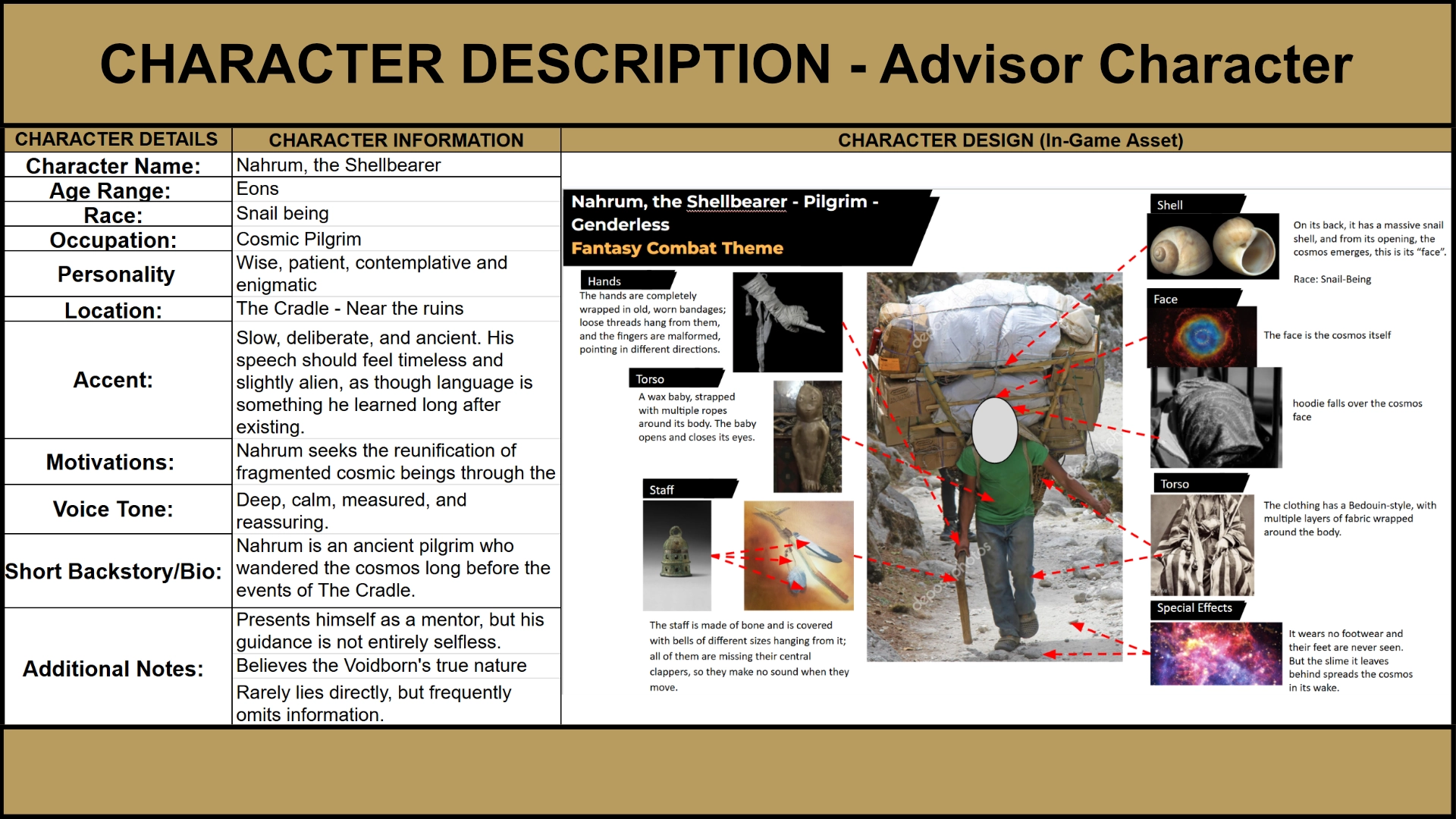
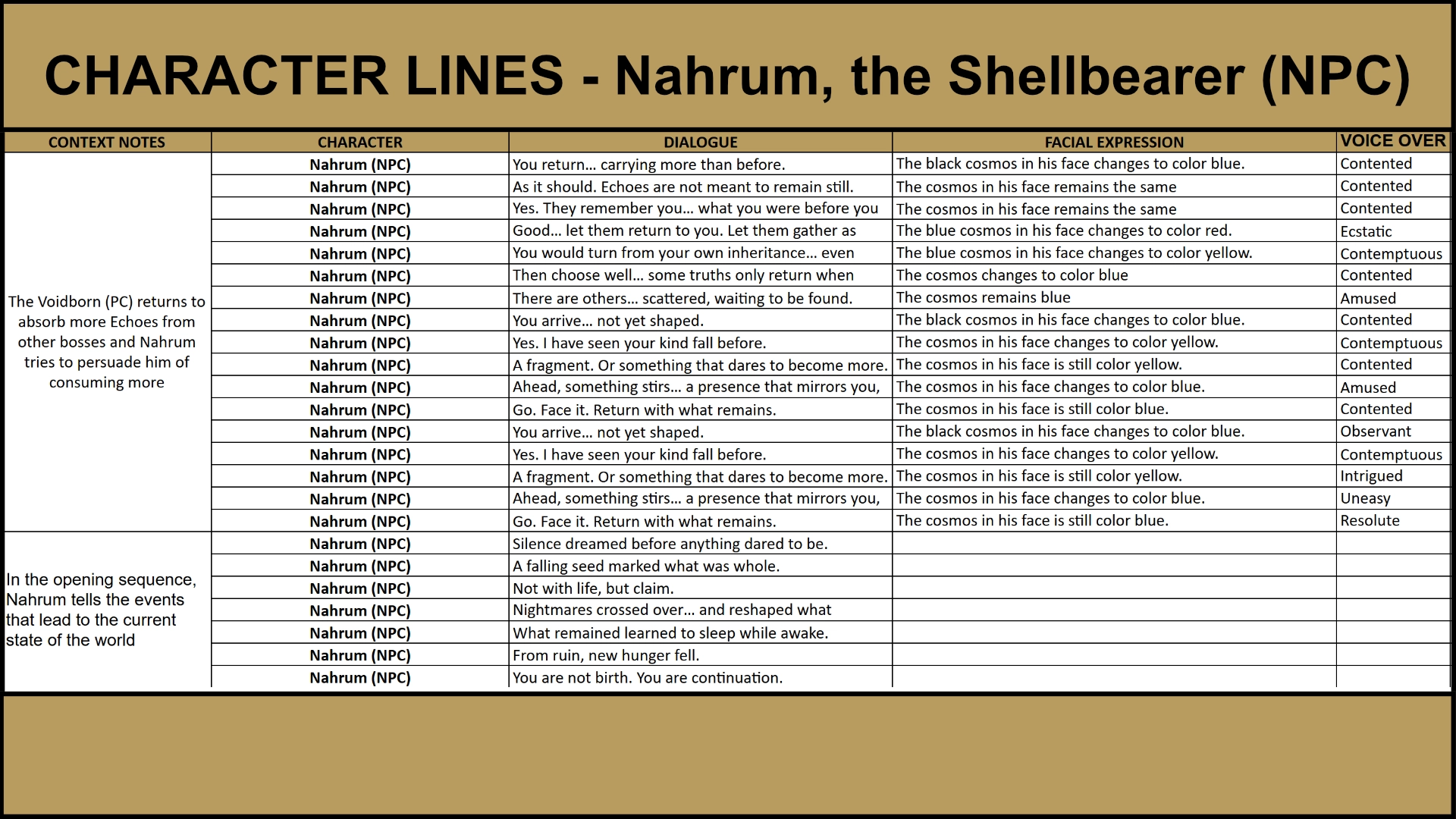
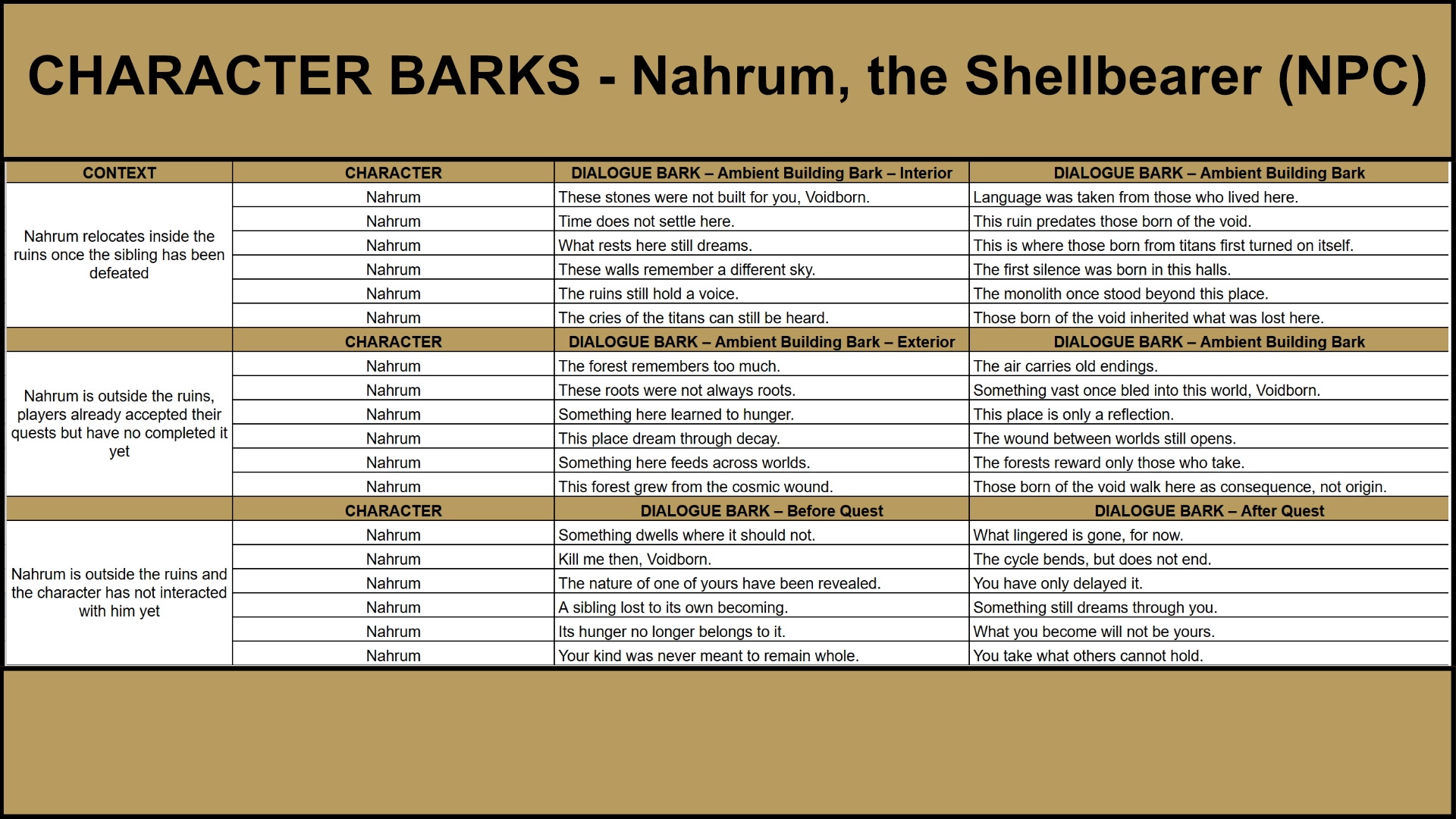
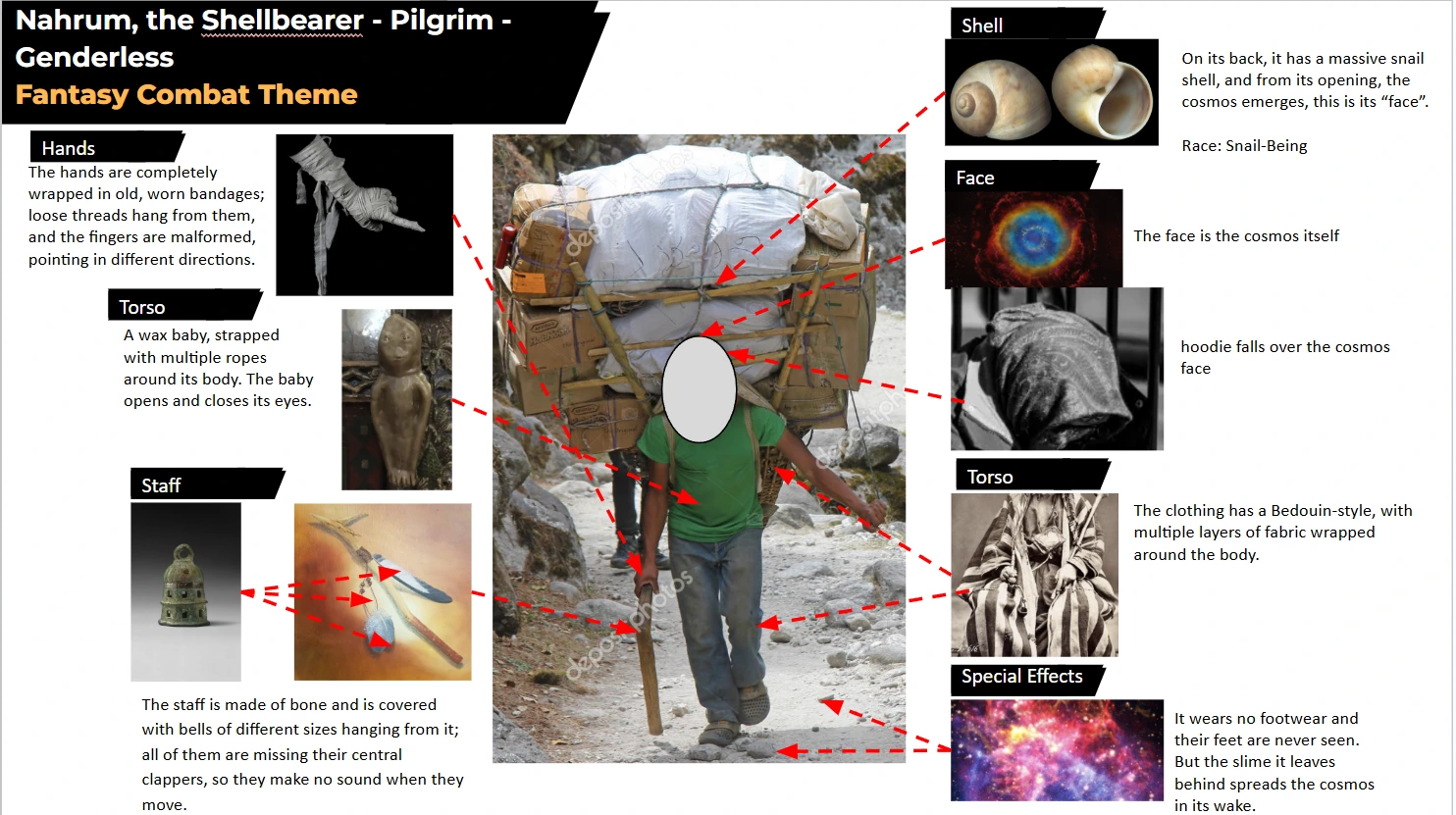
Advisor NPC: Nahrum, the Shellbearer
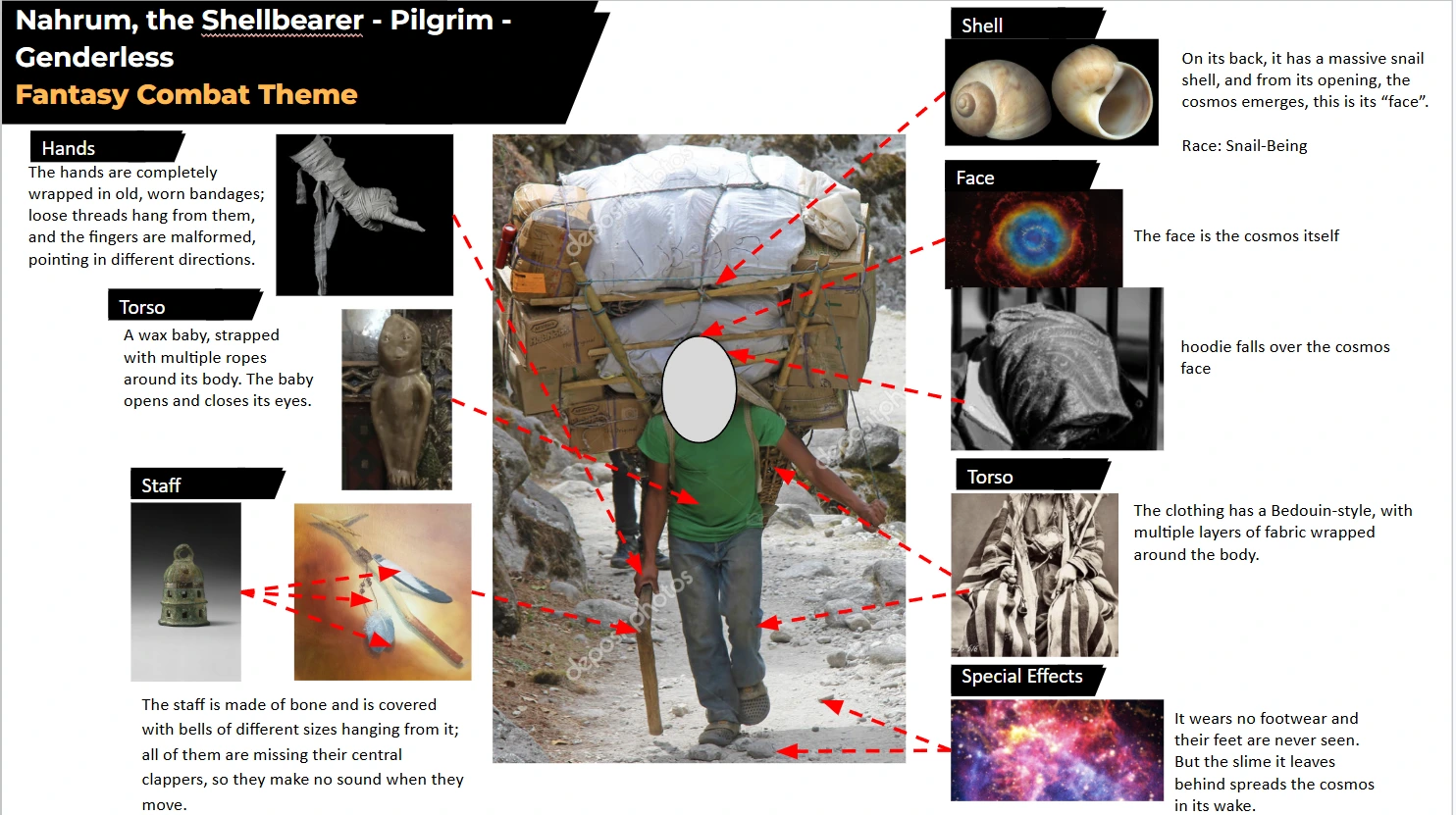
Nahrum is a cosmic pilgrim who has witnessed countless ages and civilizations. Possessing knowledge far beyond mortal understanding, he guides the Voidborn while concealing his true intentions.
- Story Role. Primary advisor figure, quest giver, and narrator of the opening cinematic. Through his interactions, he introduces the player to the world, its mysteries, and the threats that lie ahead.
- Narrative Function. Serves as the player’s primary source of cosmological knowledge, gradually revealing part of the world’s history and mysteries while subtly guiding the Voidborn toward a hidden objective. Much of the lore uncovered through item descriptions originates from the Cosmic Pilgrims, further extending his influence beyond direct player interactions.
- Personality. Patient, enigmatic, and persuasive. Rarely lies directly, preferring to guide the Voidborn toward conclusions that align with his own interests.
- Gameplay Integration. Introduces quests, progression opportunities, and Echo-related decisions through both linear and branching dialogue systems.
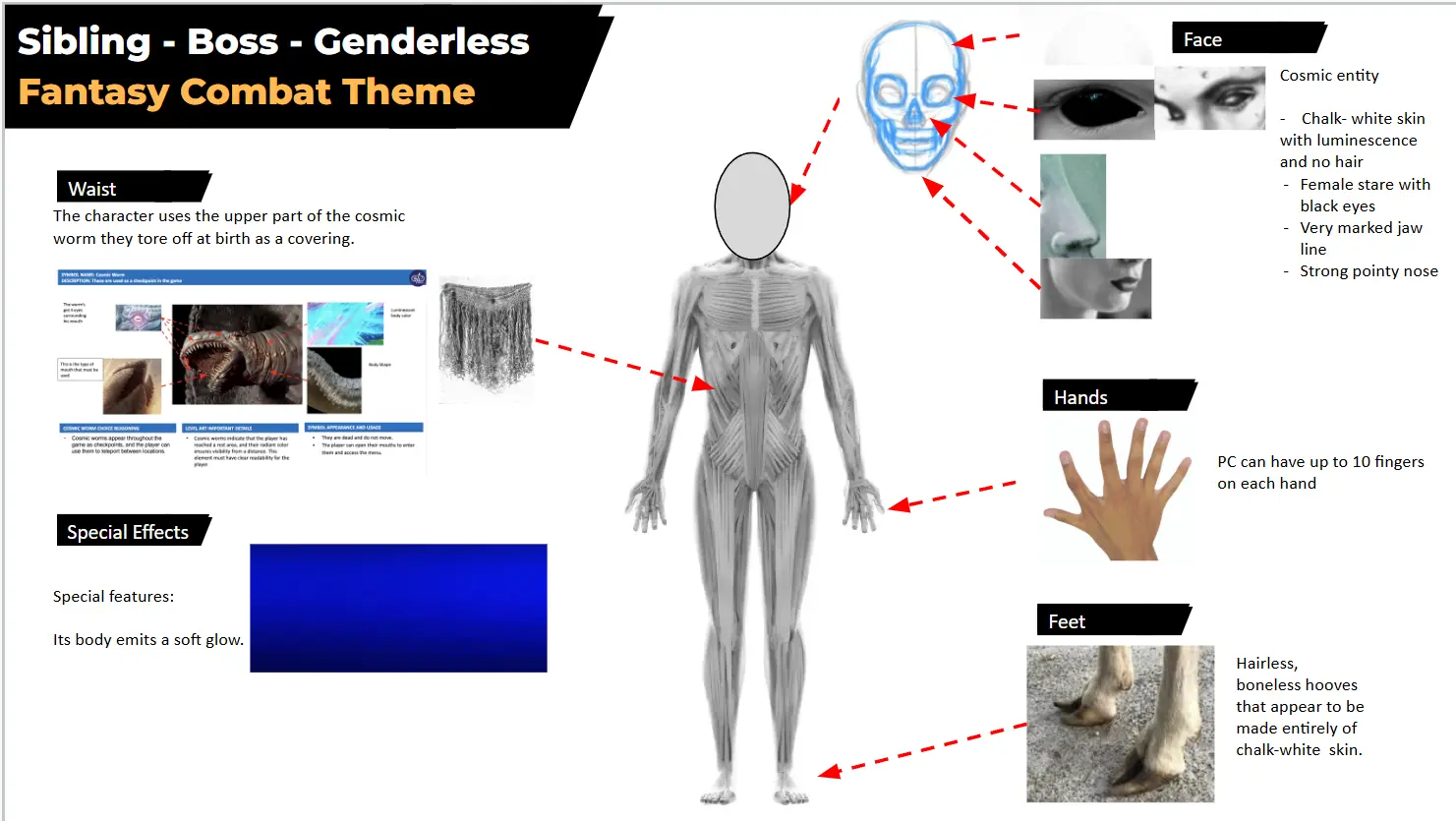
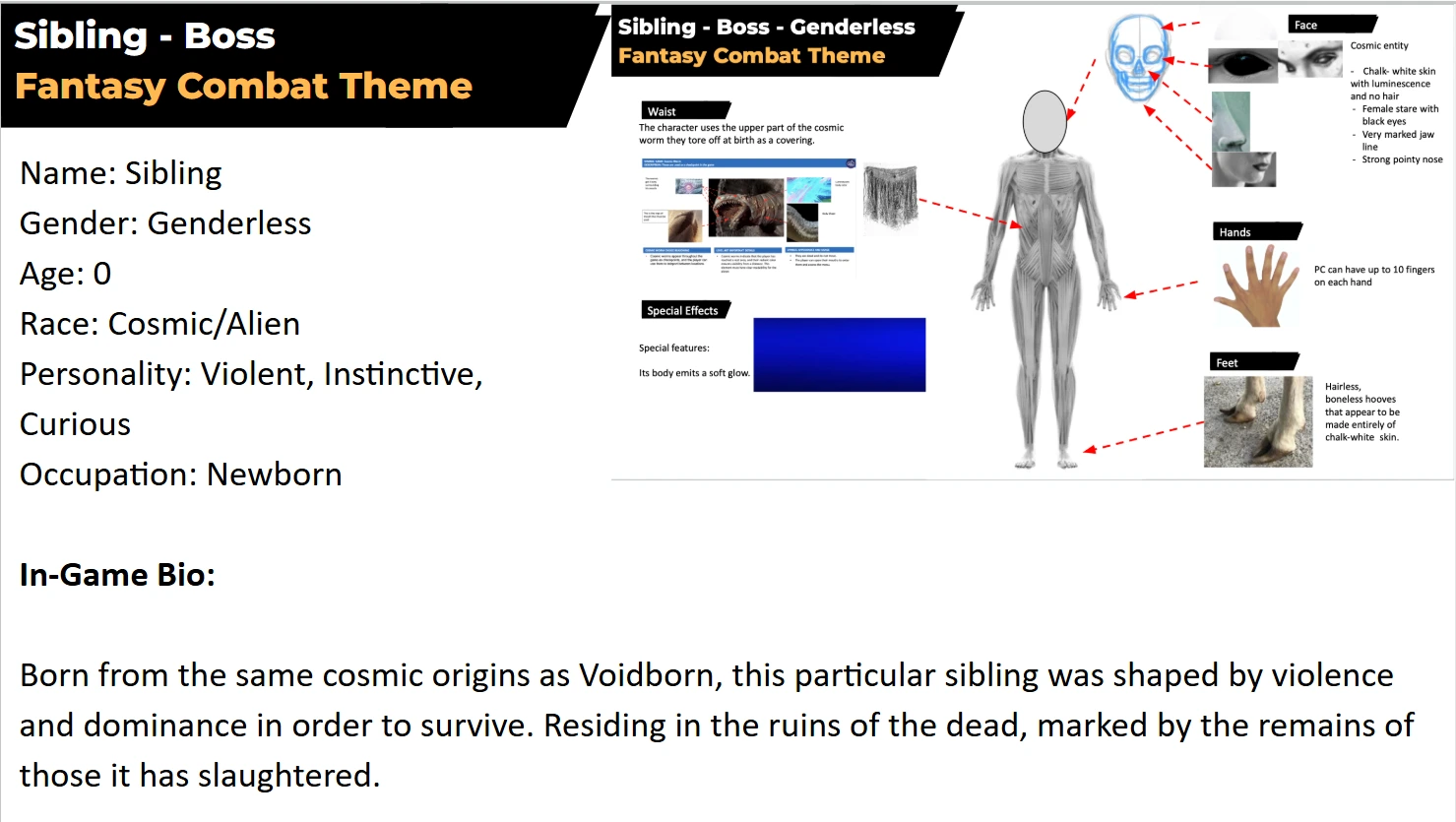
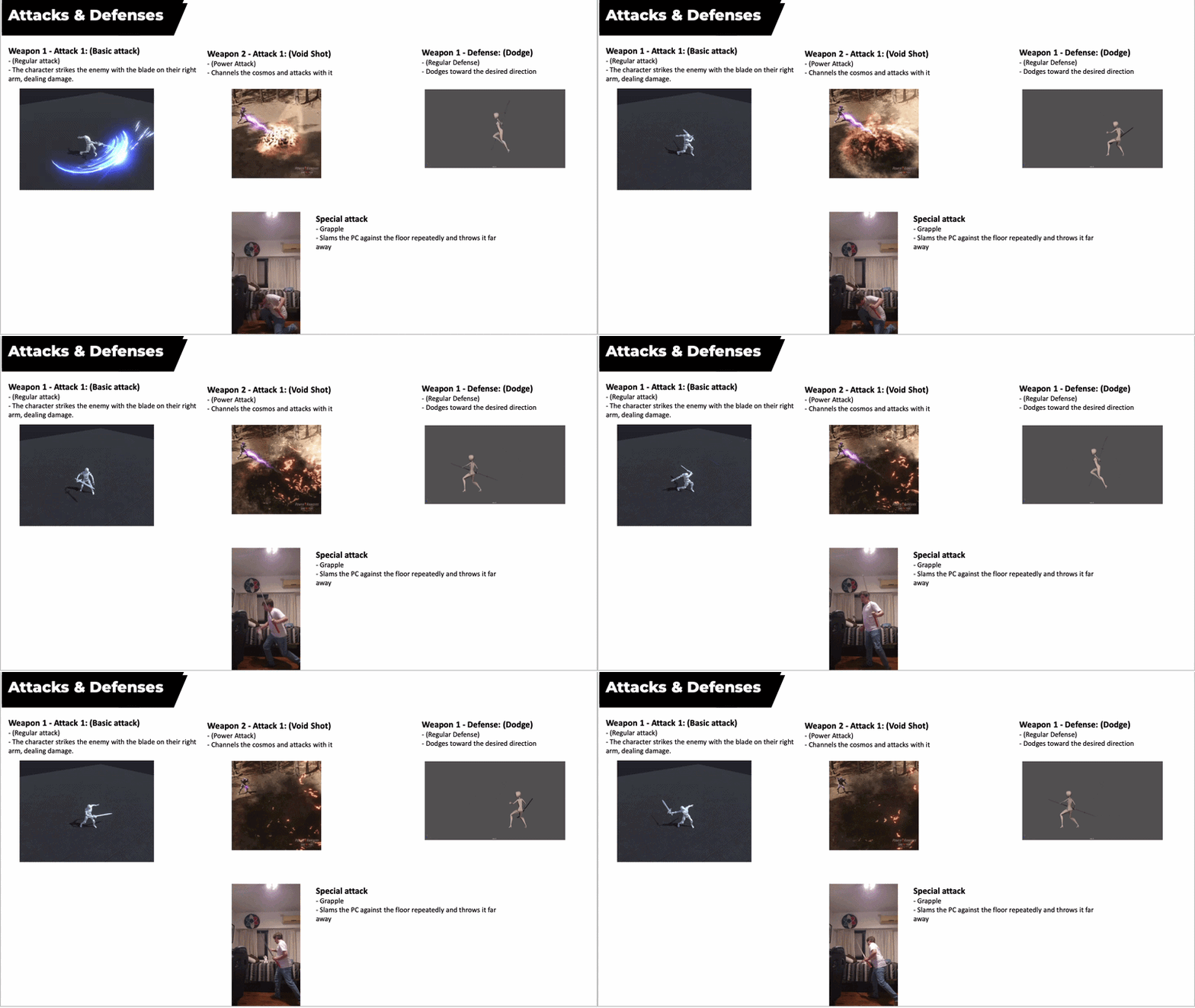
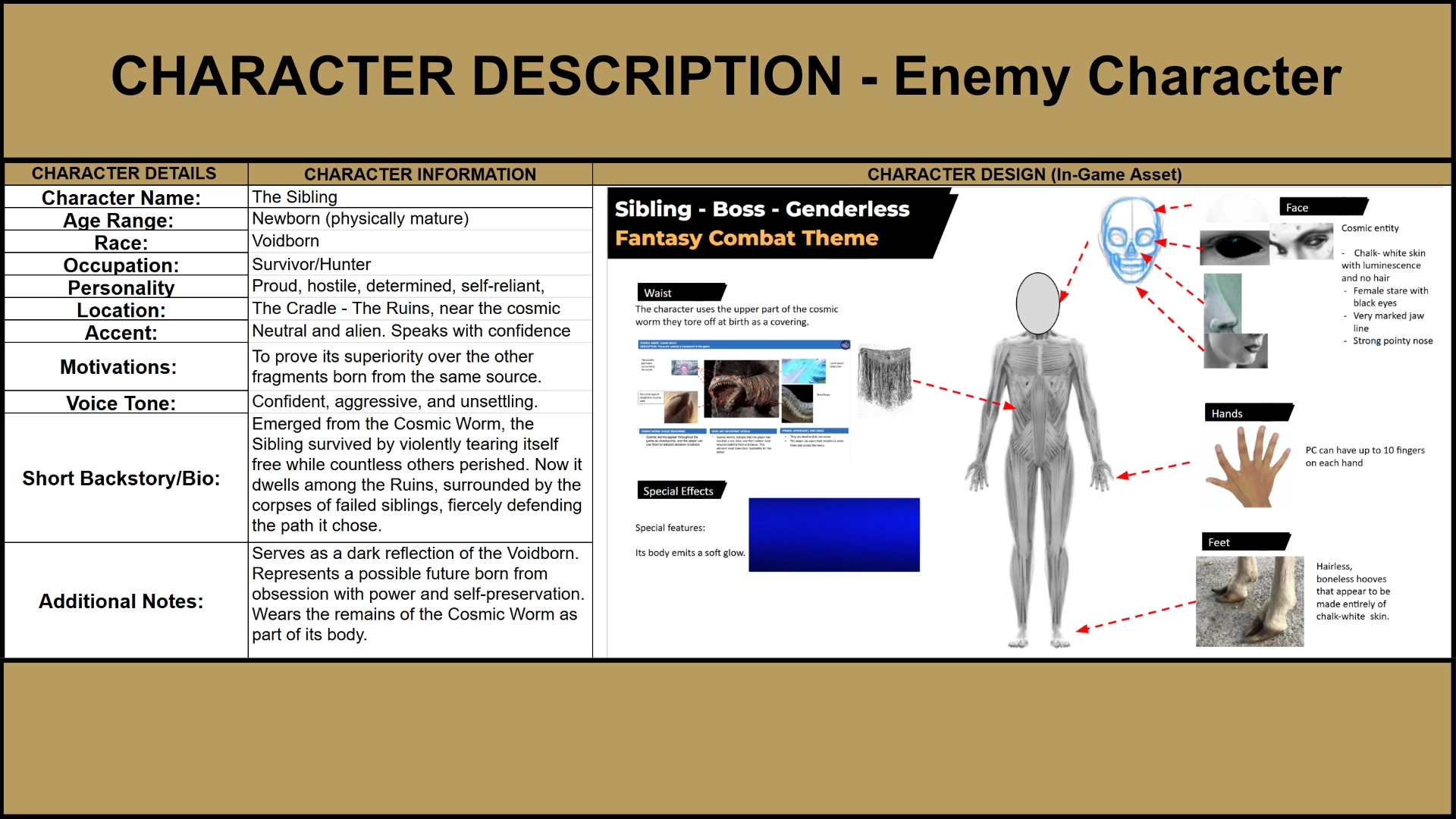
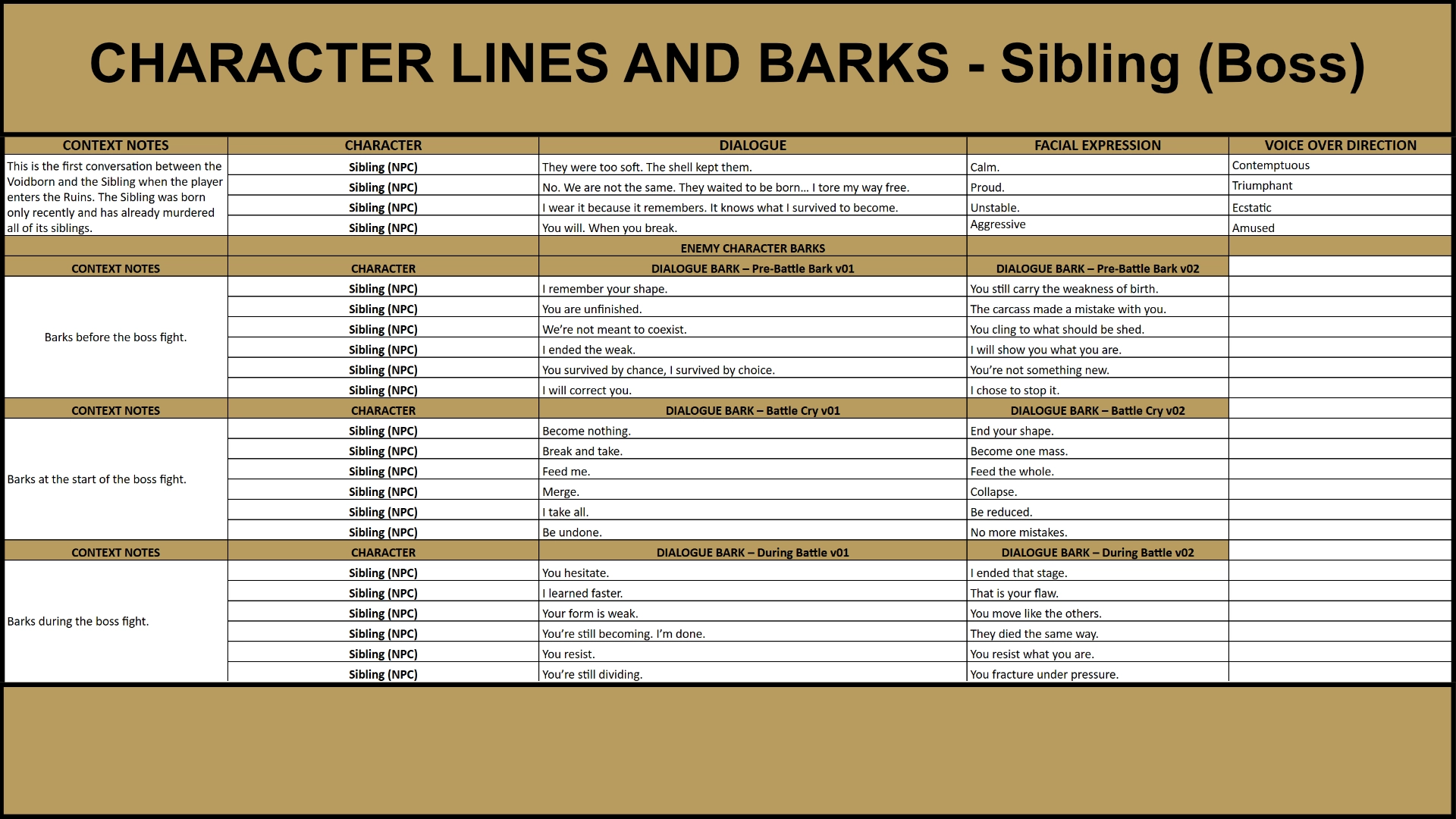
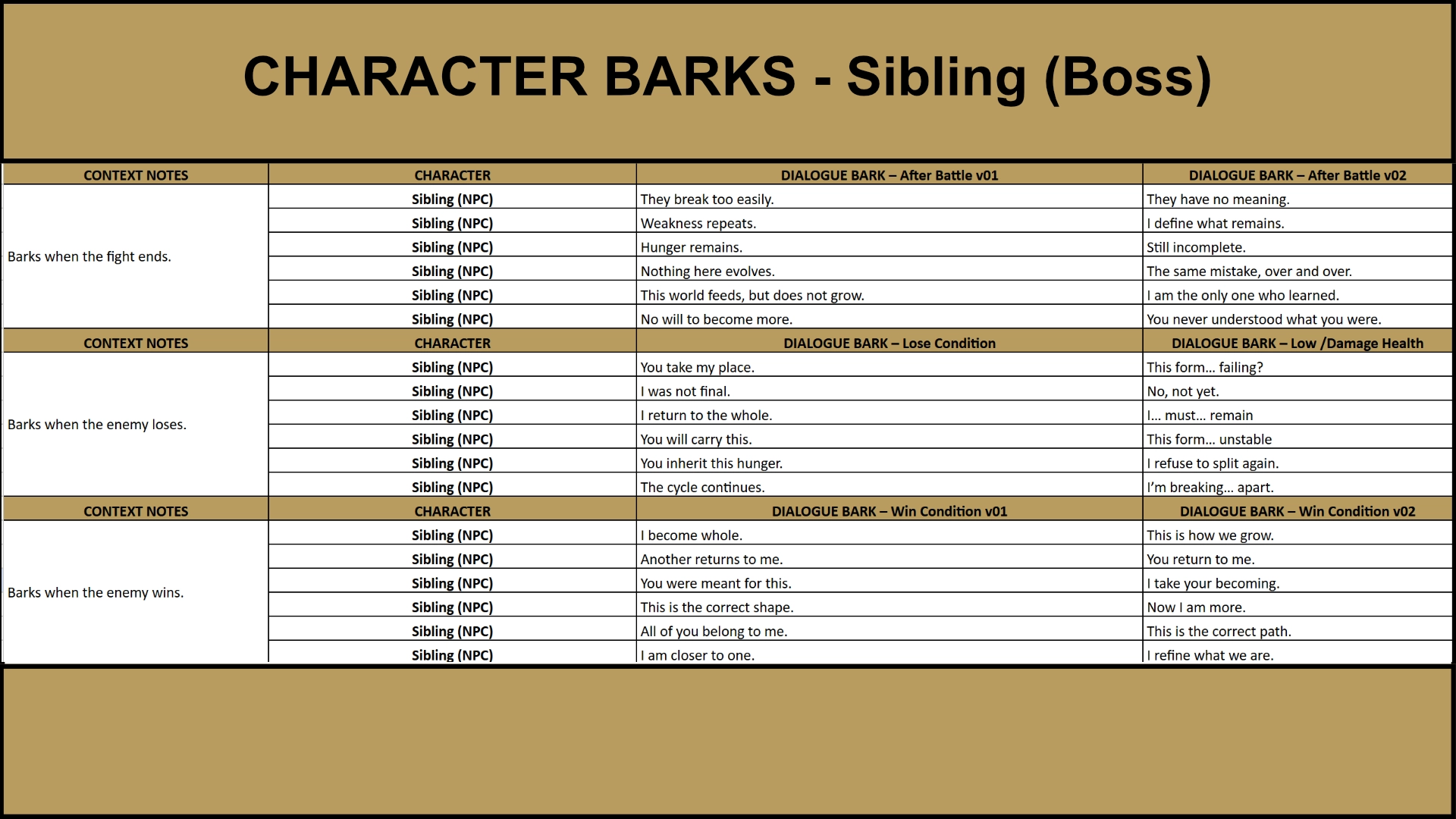
Enemy NPC: Sibling
The Sibling is another newborn creature born from the Cosmic Worm. Unlike the Voidborn, it emerged within the Ruins and began slaughtering its kin shortly after its birth.
- Story Role. Primary antagonist and first major boss encounter. Serves as the player’s first glimpse into the true nature of the Voidborn and the legacy they may inherit.
- Narrative Function. Acts as a dark reflection of the Voidborn, foreshadowing what the player may become through the choices they make and the relationship they develop with Echoes.
- Personality. Instinctive, violent, and driven by impulses it does not fully understand.
- Gameplay Integration. Acts as a narrative and systemic milestone, introducing the Echo system and triggering key branching decisions after its defeat.
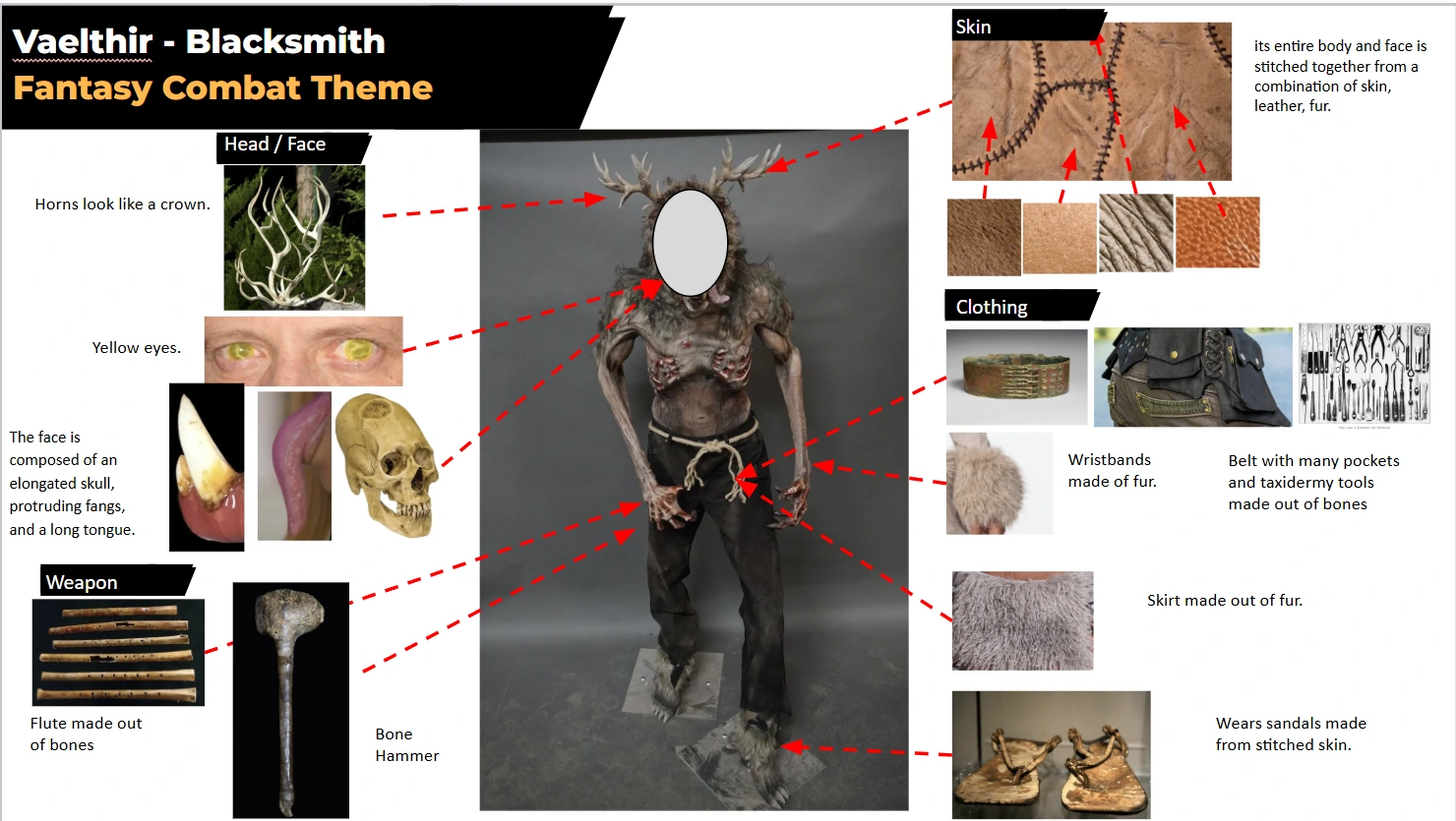
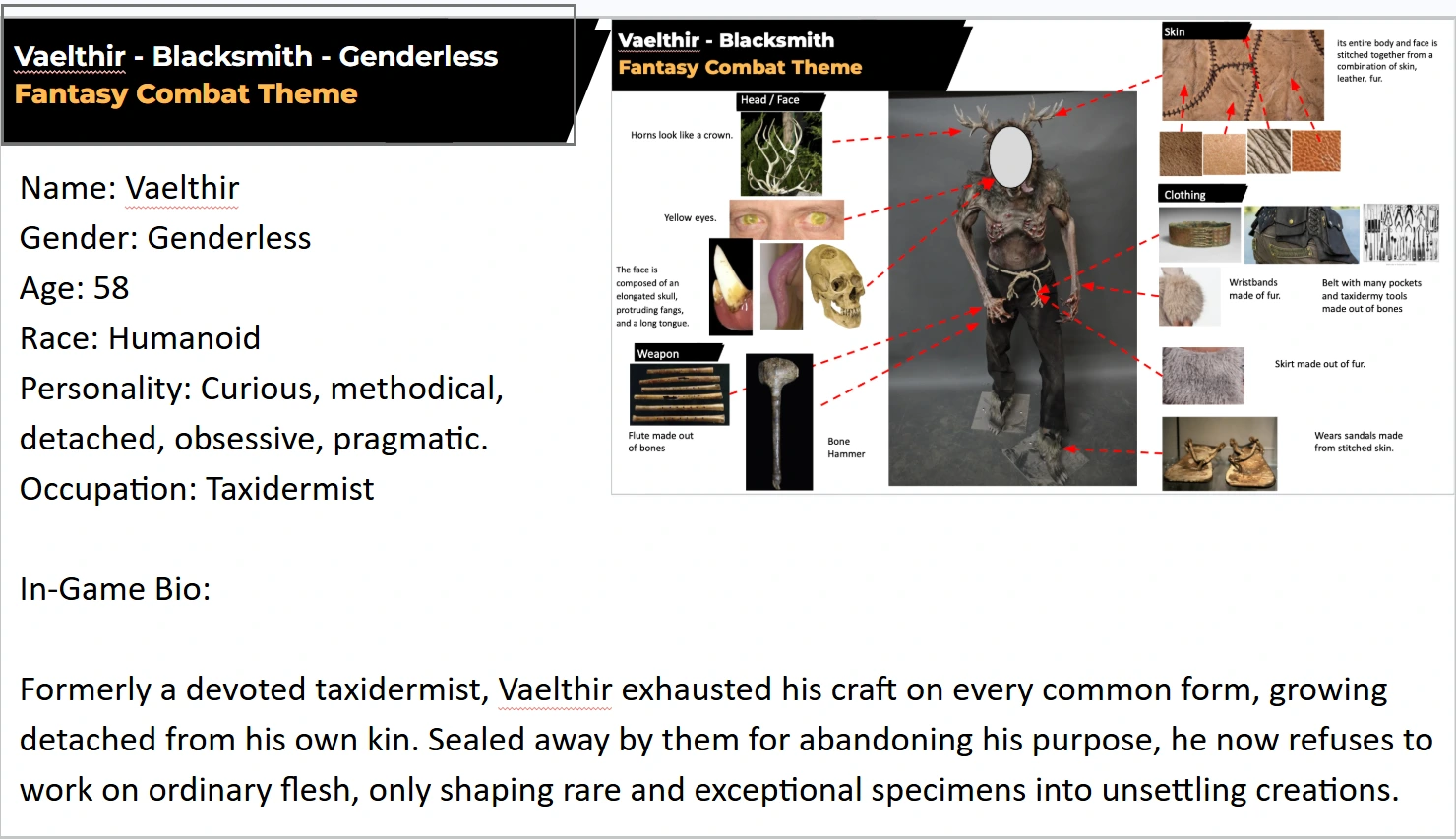
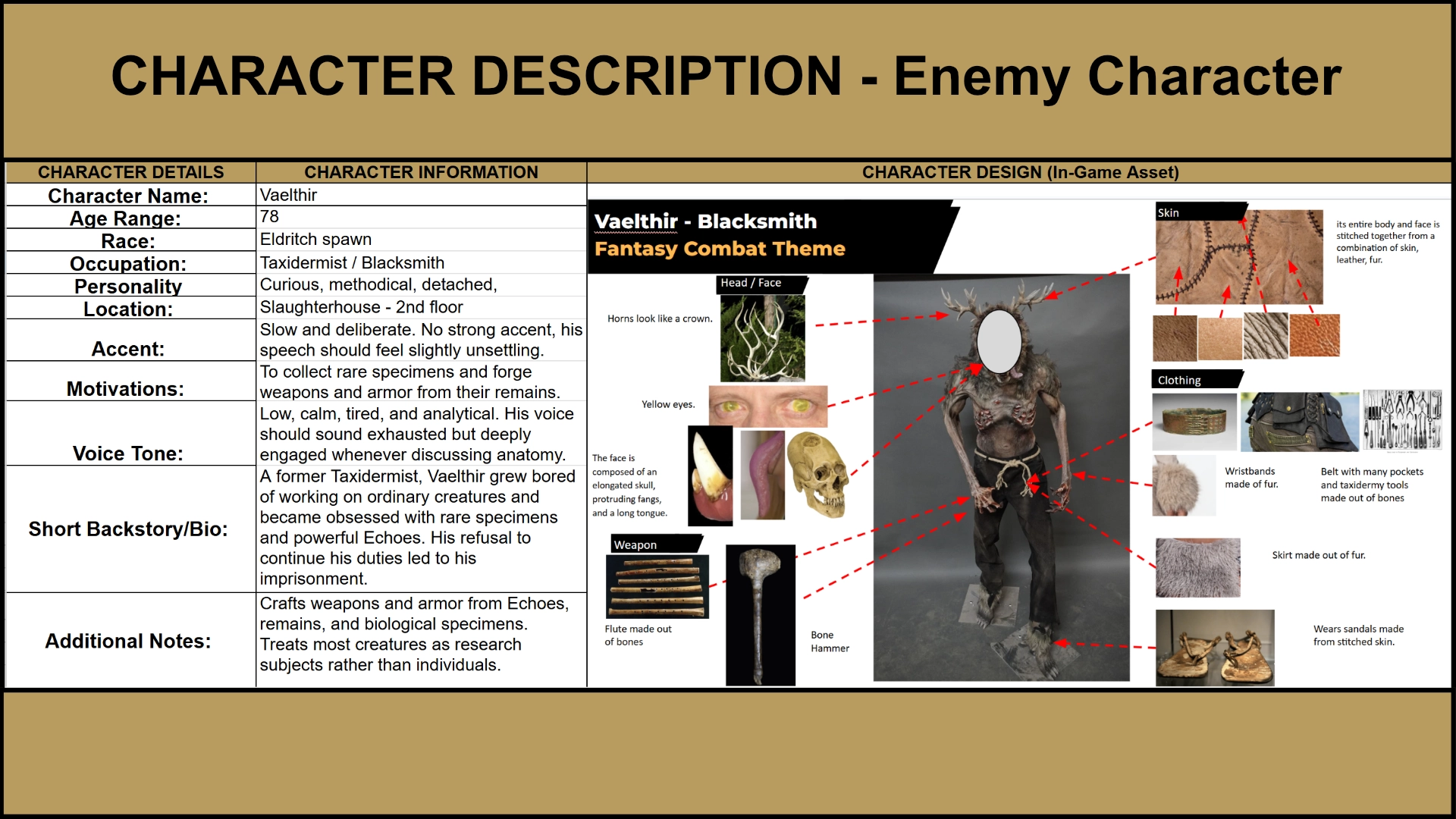
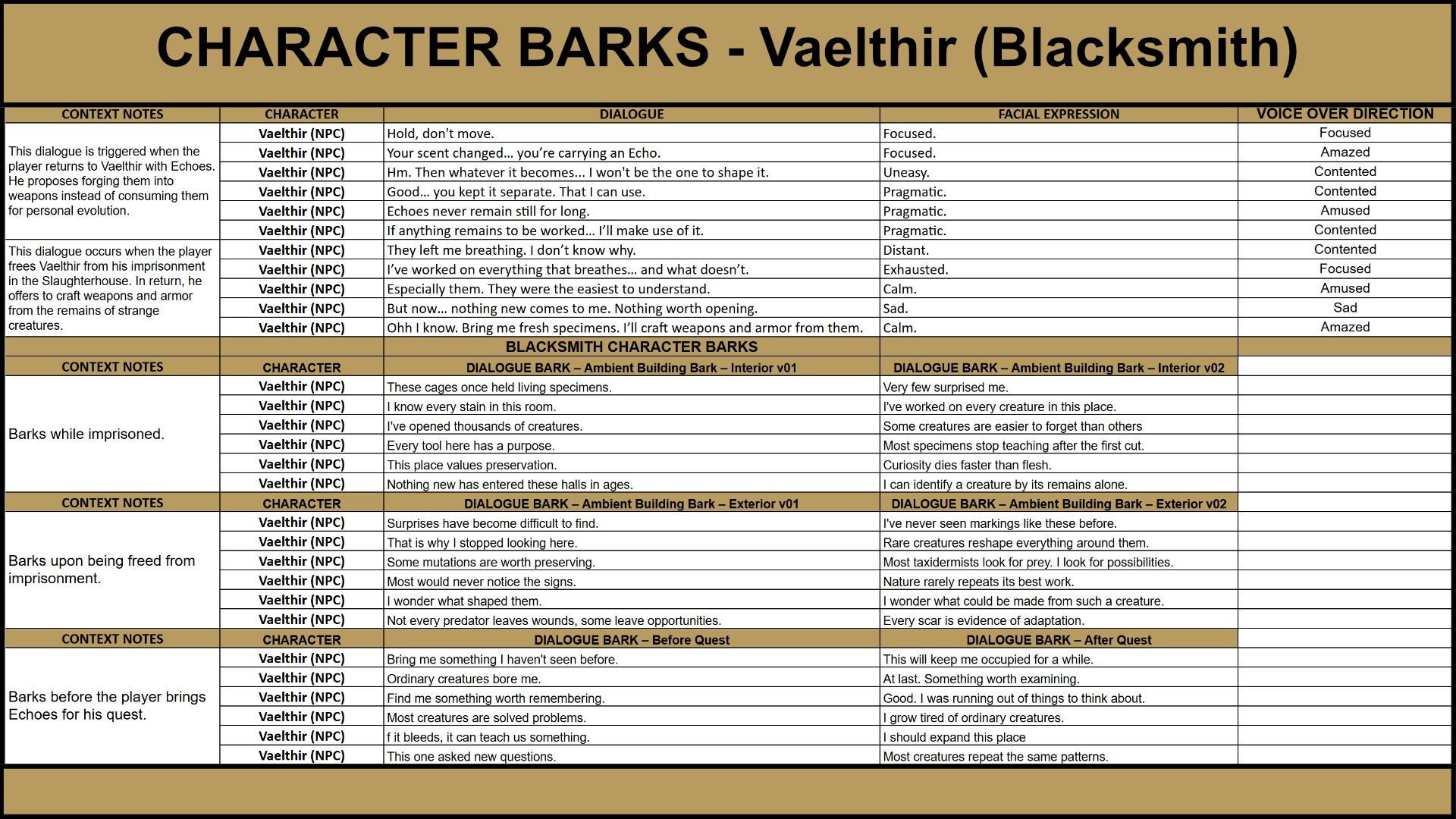
Blacksmith NPC: Vaelthir
Once a member of the Taxidermists, Vaelthir was imprisoned by his own faction after growing dissatisfied with practicing his craft on the same specimens time and time again. His obsession with discovering and experimenting on unknown creatures eventually pushed him beyond the limits of what his peers considered acceptable.
- Story Role. Optional ally and craftsman. His goals often conflict with Nahrum’s, creating tension between the player’s progression choices and the interests of both characters.
- Narrative Function. Provides insight into the Taxidermists while offering an alternative perspective on the world’s creatures and Echoes, giving players an alternative path to power and progression.
- Personality. Curious, eccentric, and deeply fascinated by the unknown. His pursuit of discovery often outweighs caution, tradition, or common sense.
- Gameplay Integration. Allows players to transform rare remains and echos into weapons and equipment, tying progression systems directly to exploration and combat.
Enemies
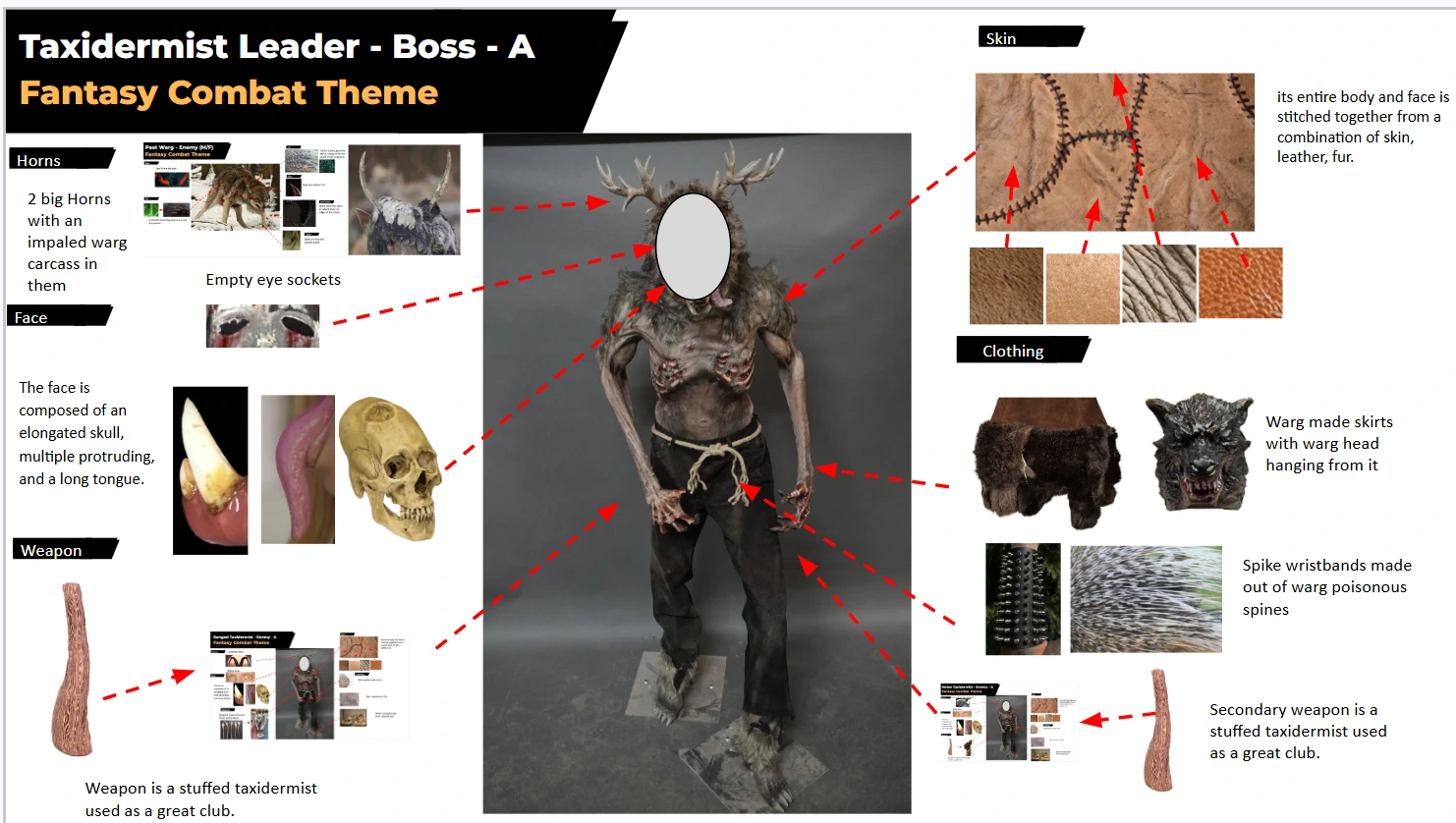
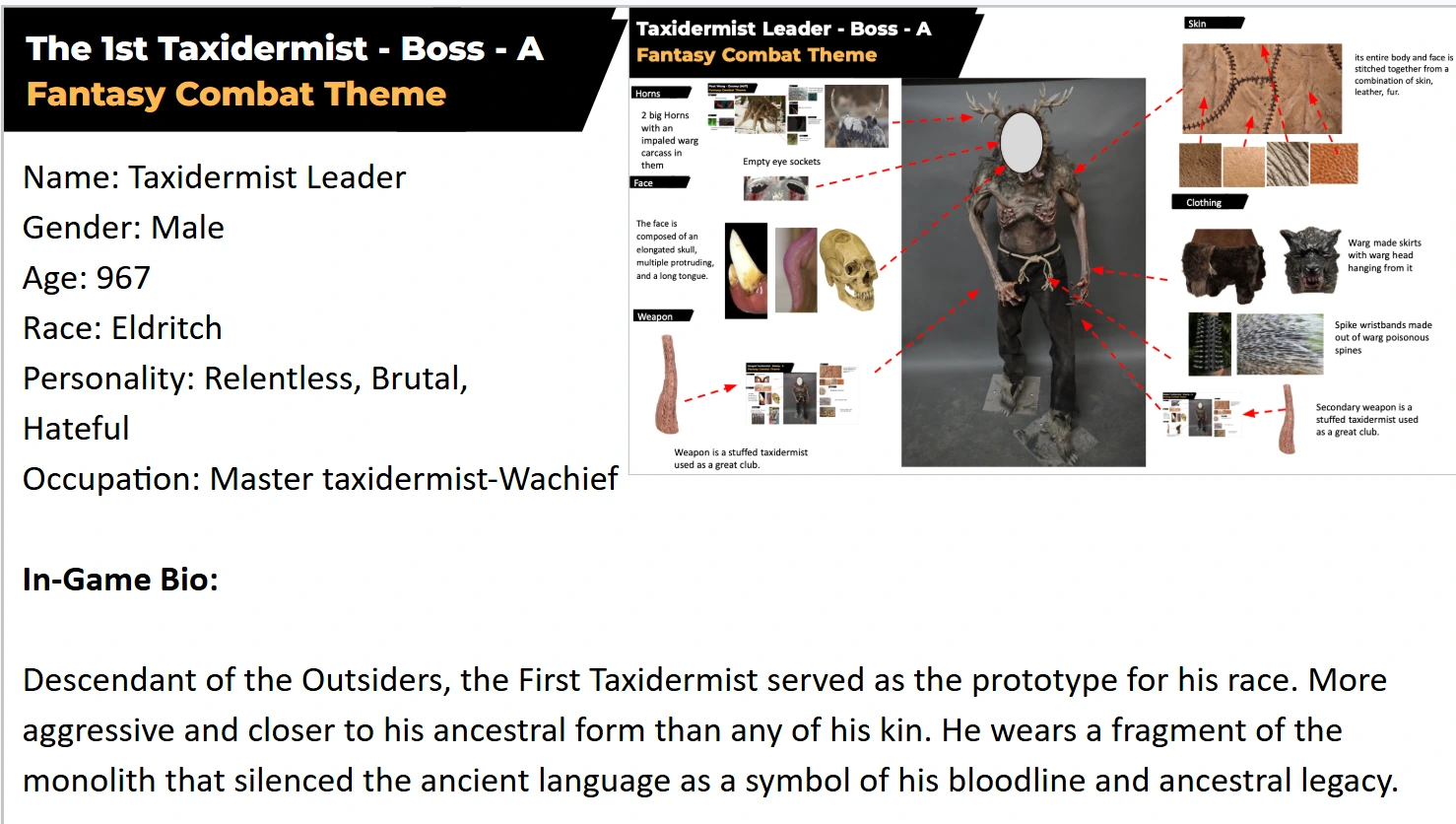
Taxidermists
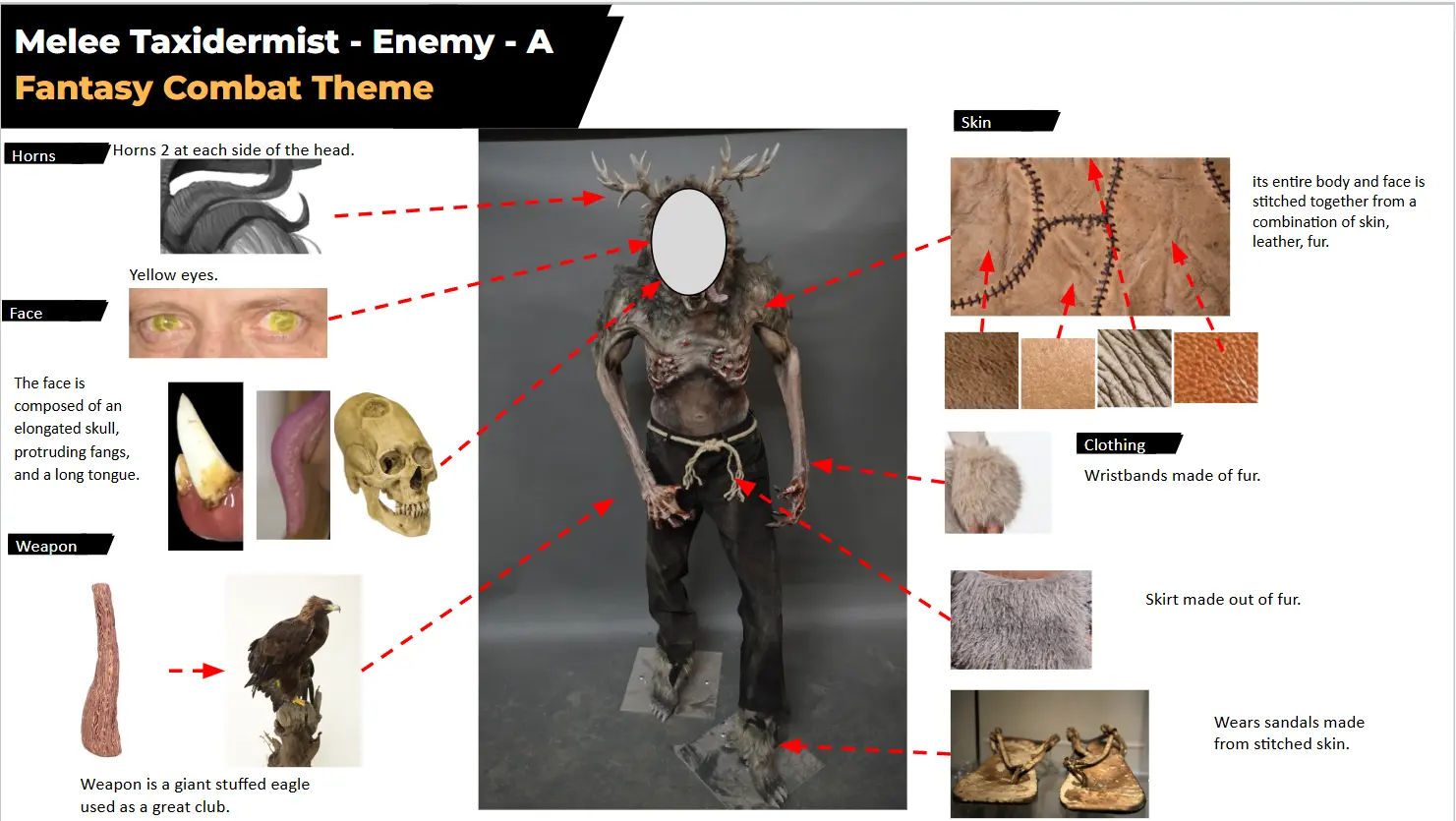
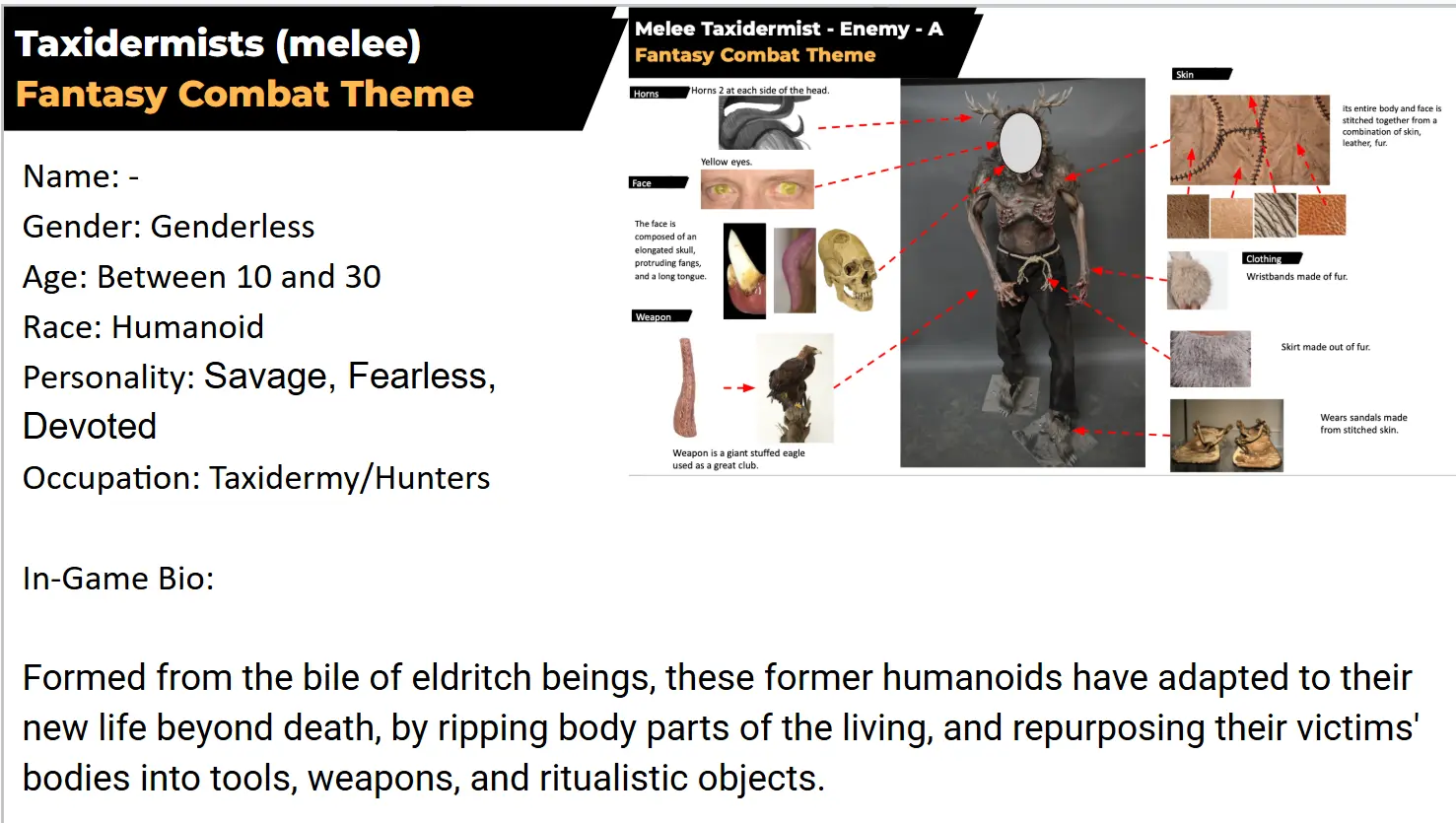
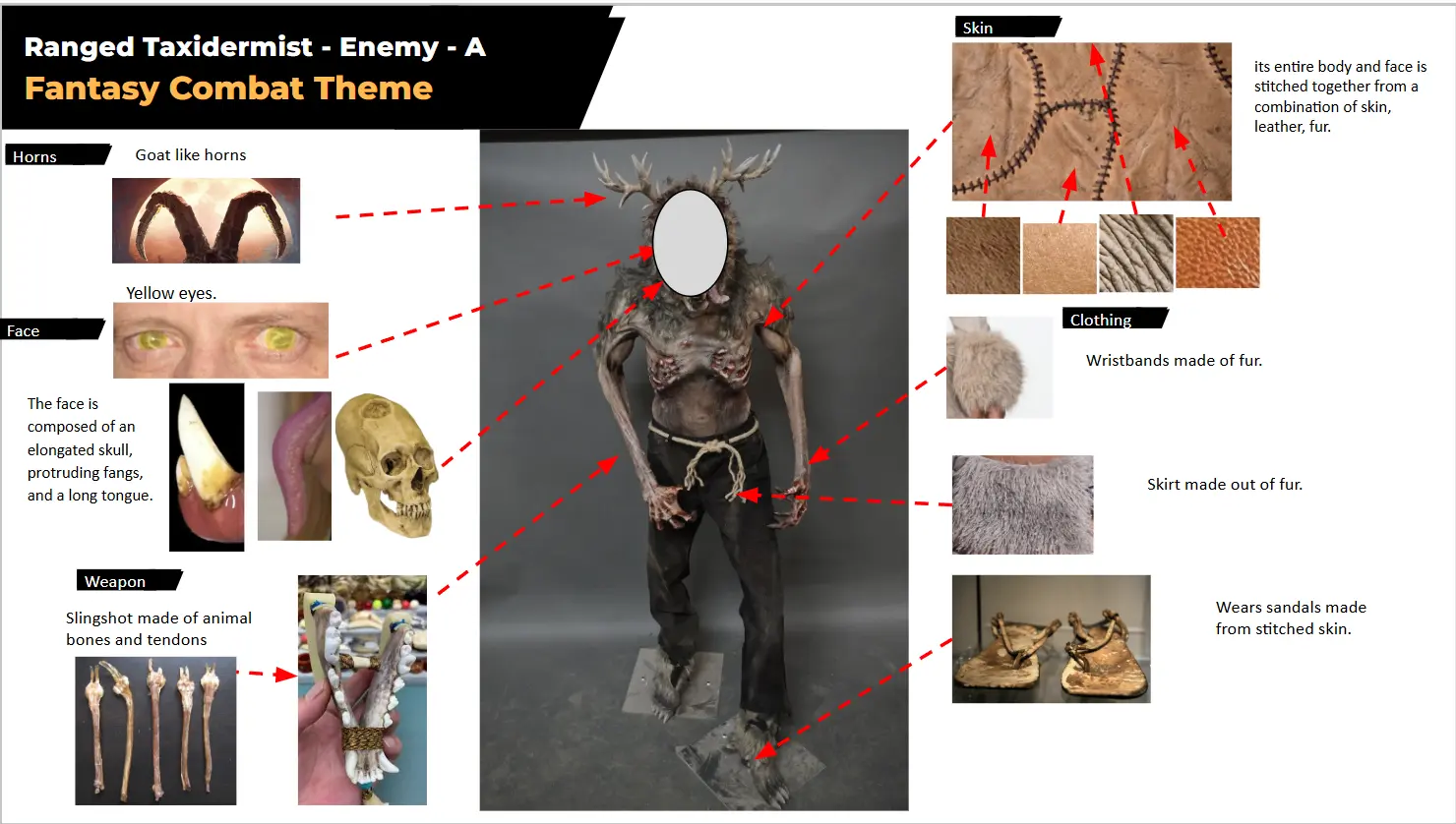
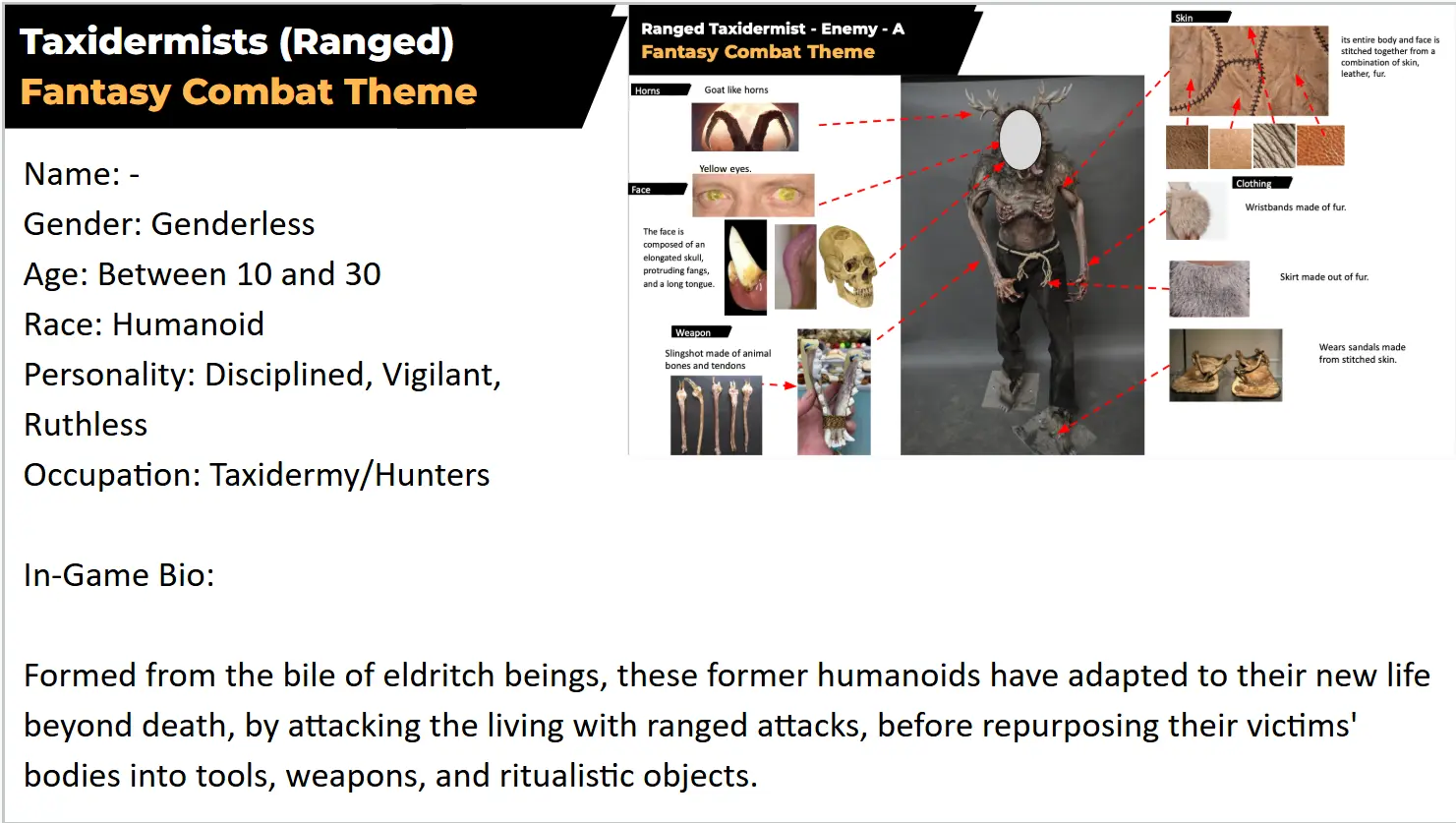
The dominant enemy faction within The Cradle, driven by hatred toward other species and a culture built around hunting and repurposing their remains.
- Narrative Purpose. Establish the Taxidermists as the primary hostile force within the level and demonstrate how their practices have shaped the region.
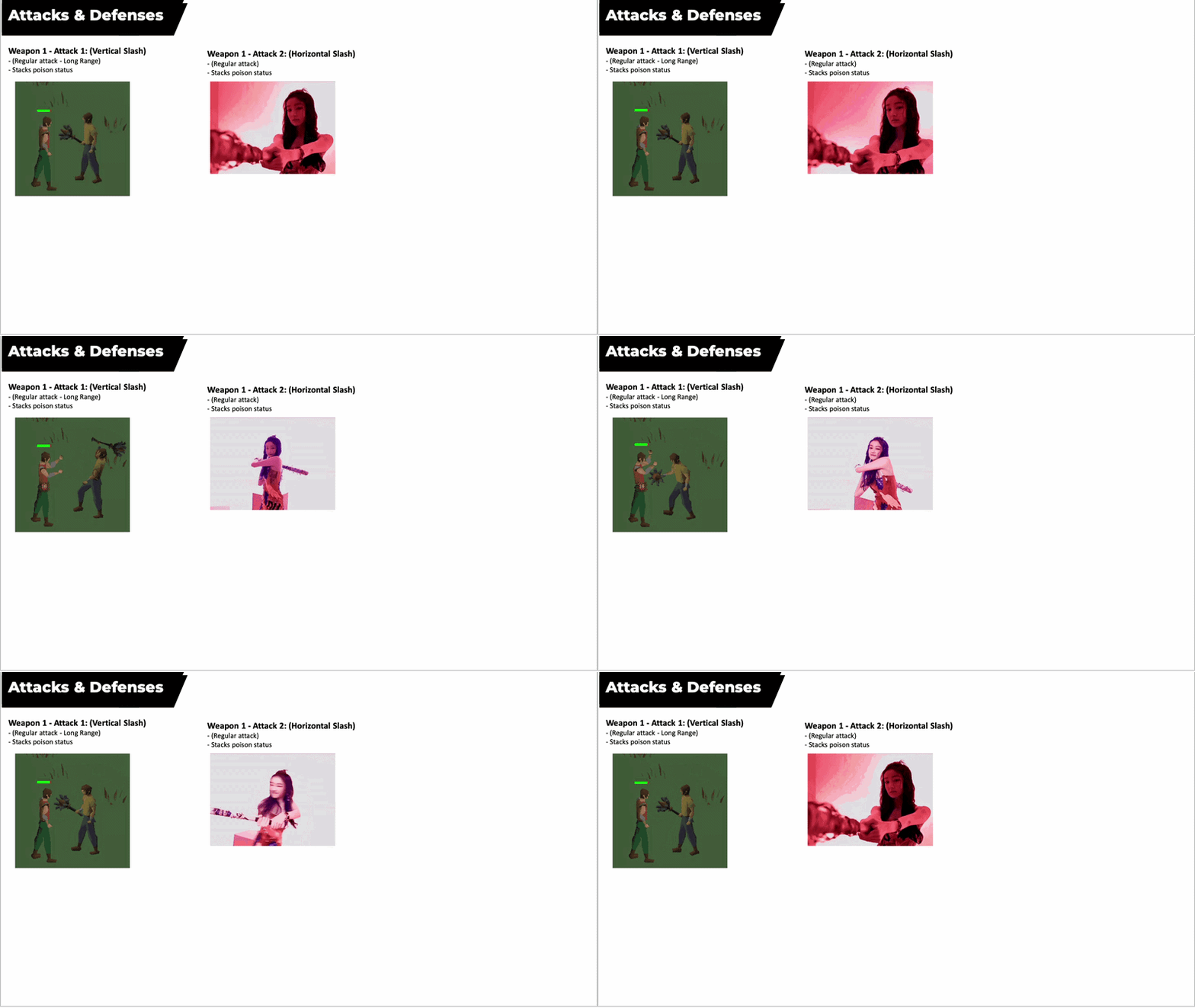
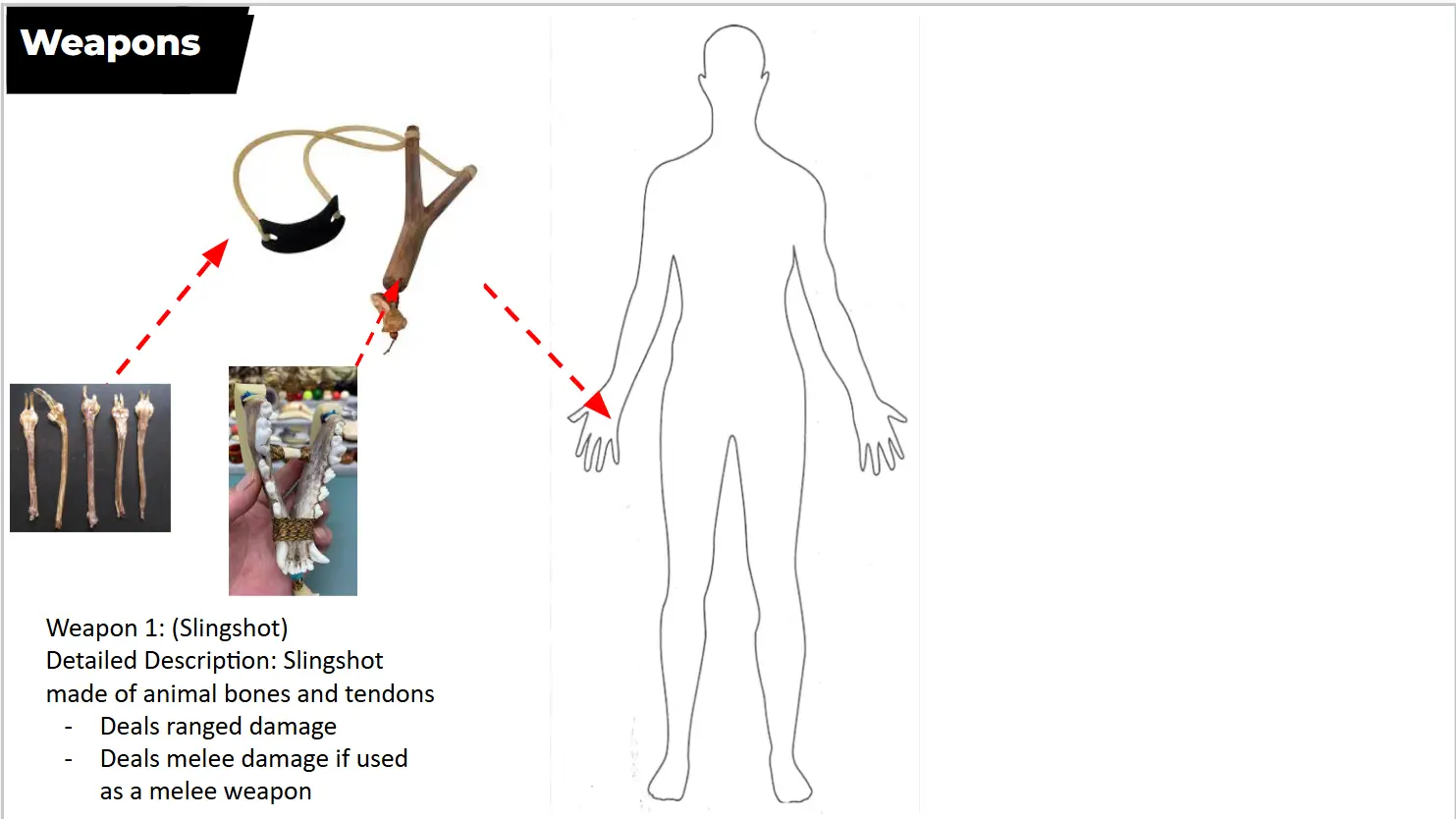
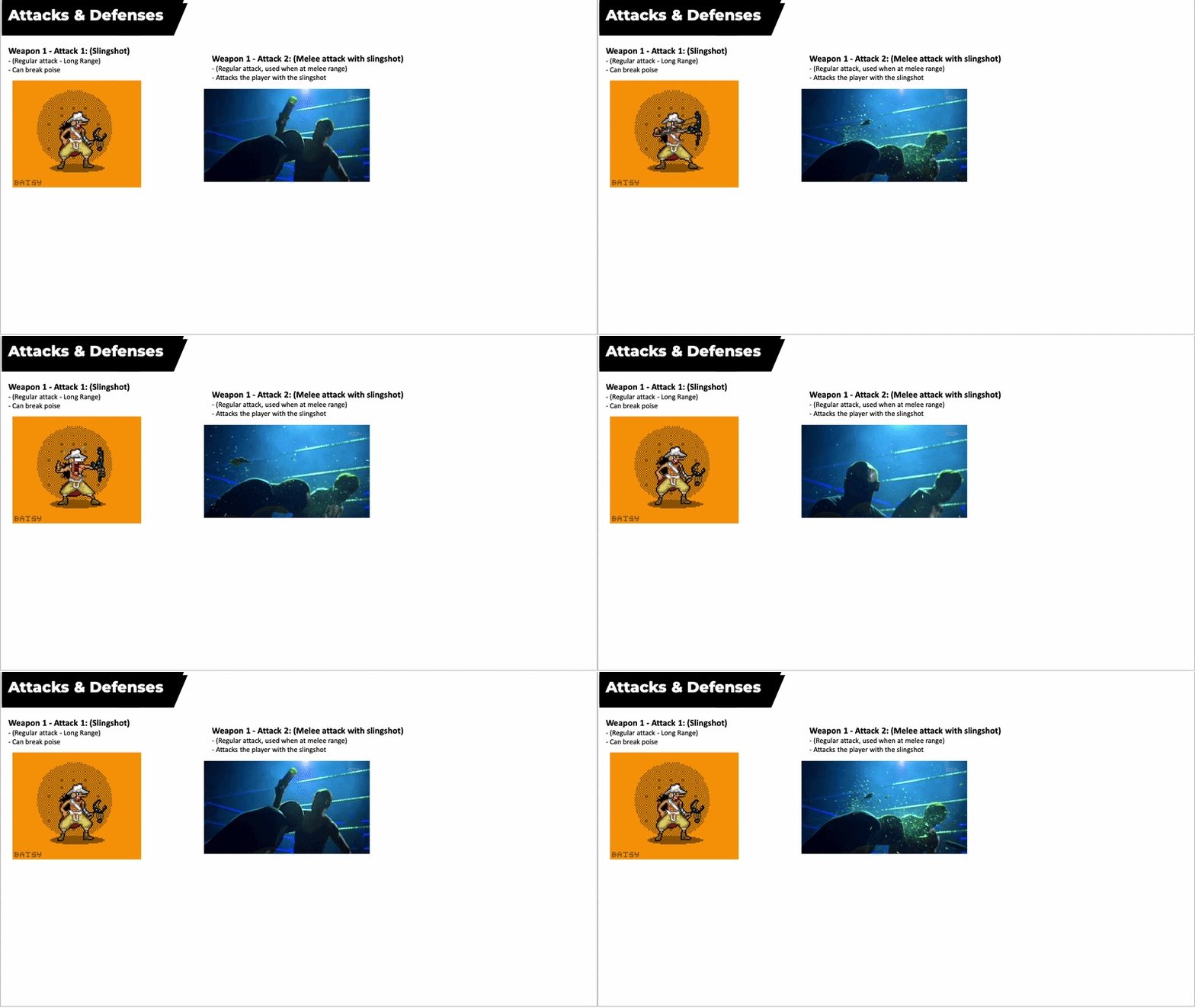
- Combat Role. Melee, ranged, and boss variants create different combat pressures and reinforce the faction’s control over the environment.
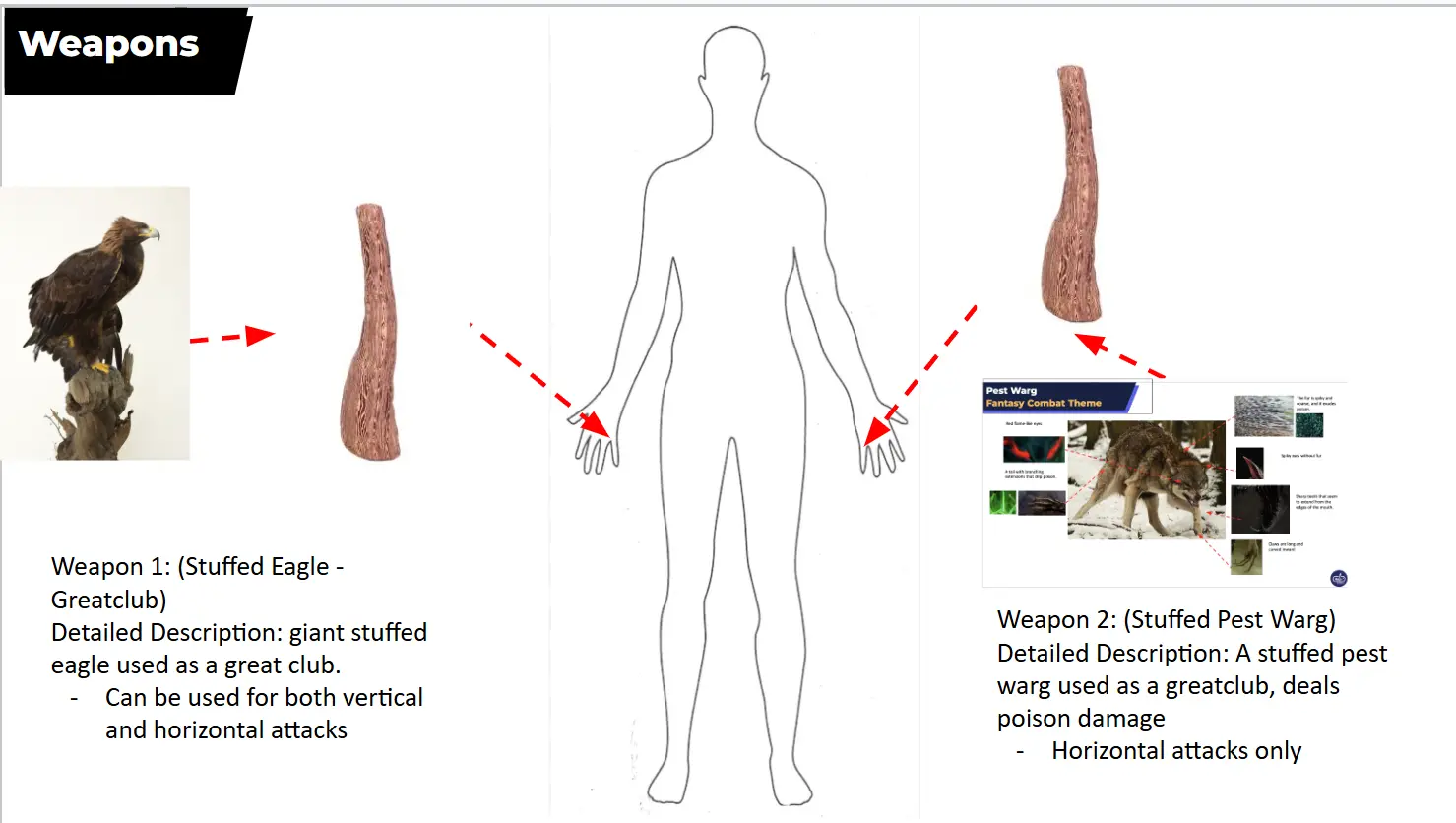
- Character Design. Their tools, armor, and silhouettes reflect a faction that transforms remains into weapons, trophies, and experiments.
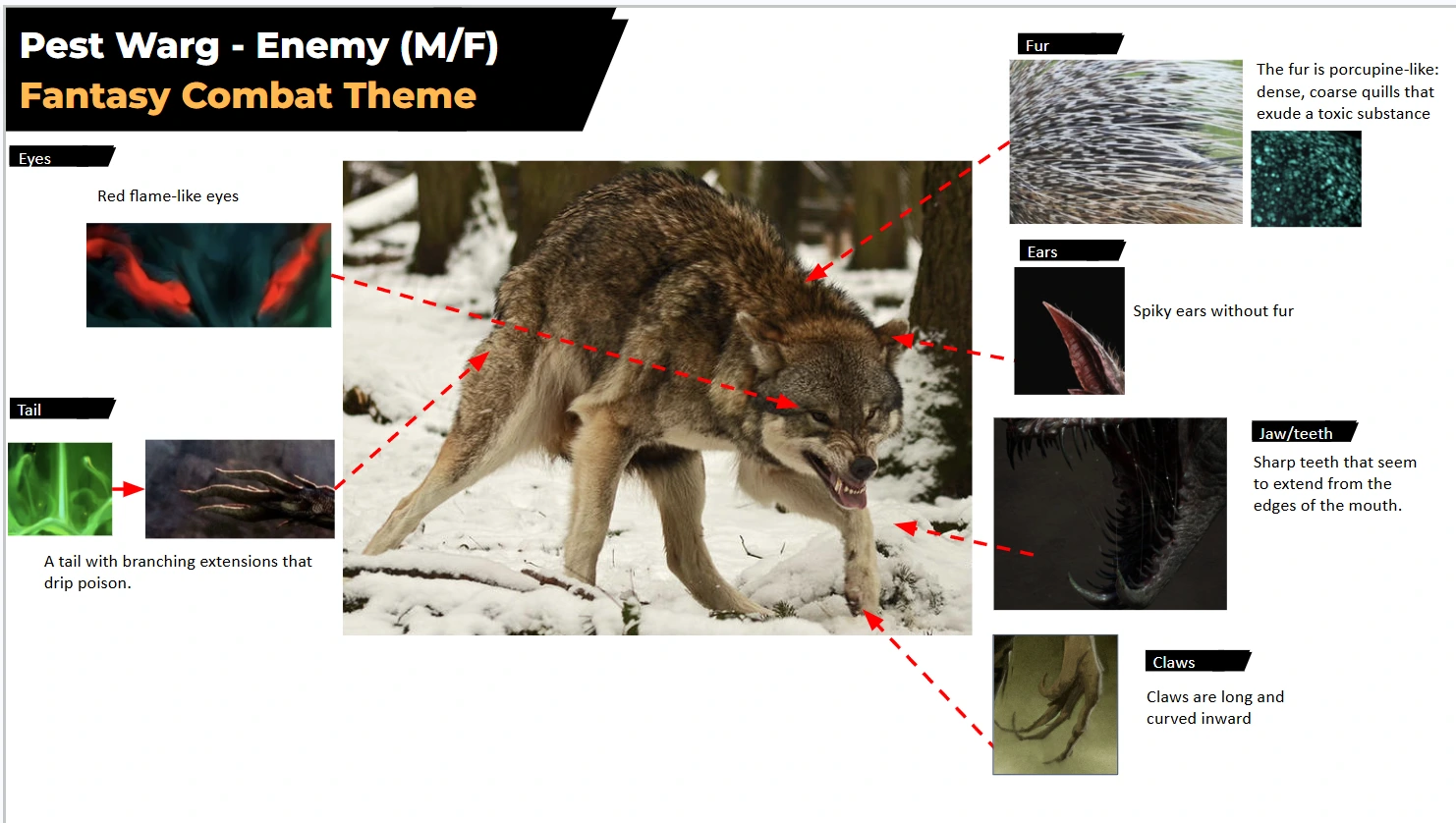
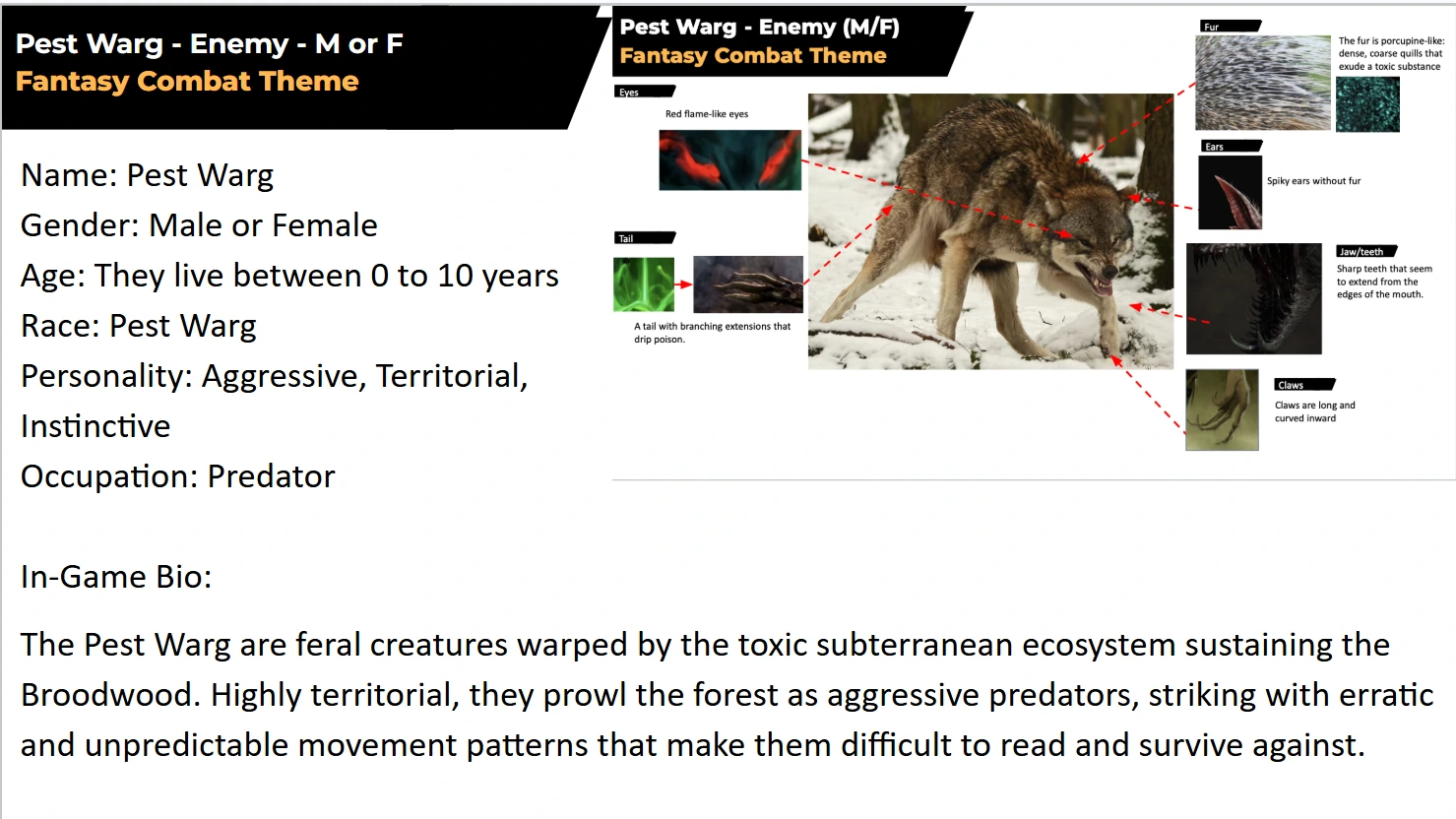
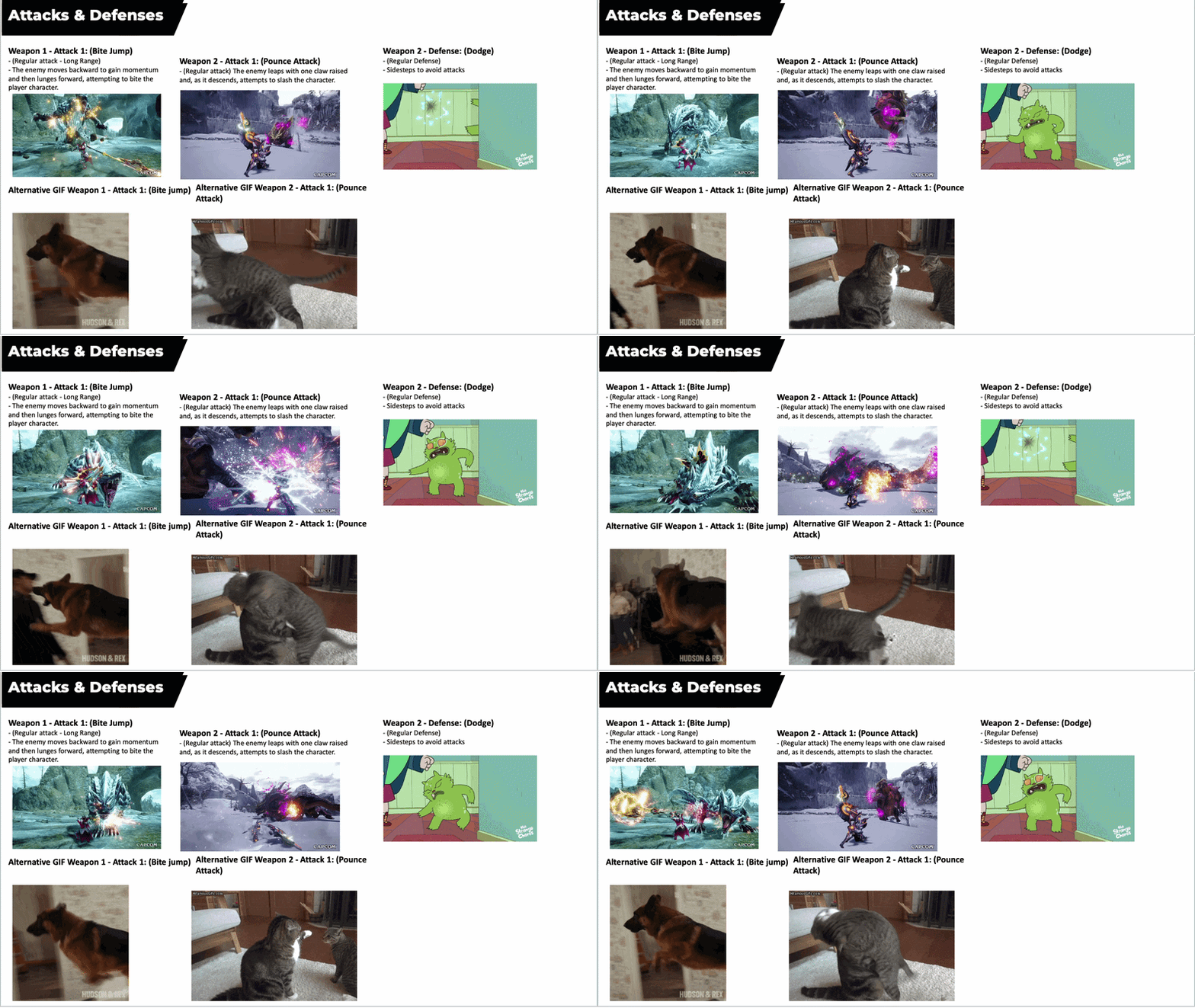
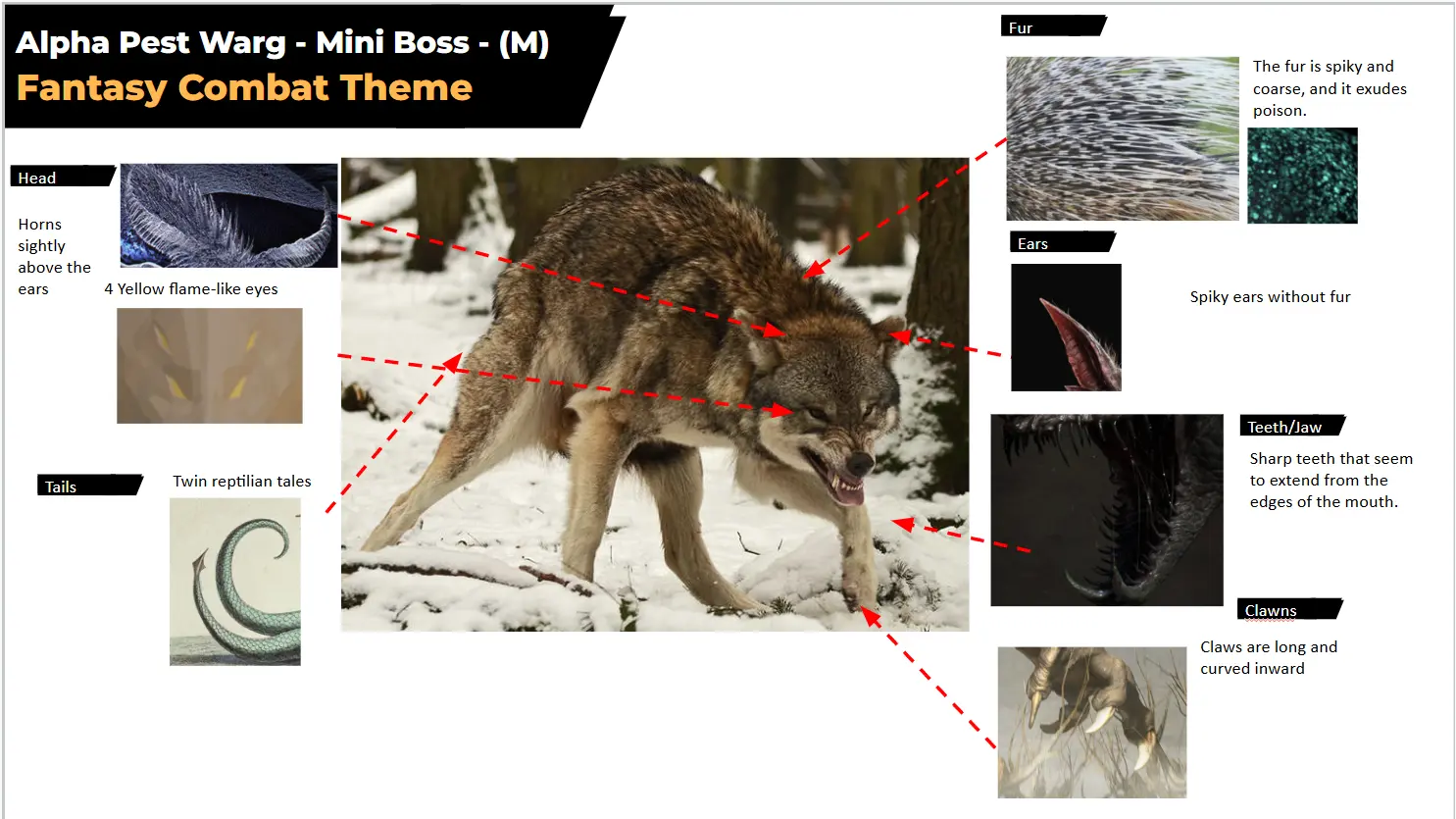
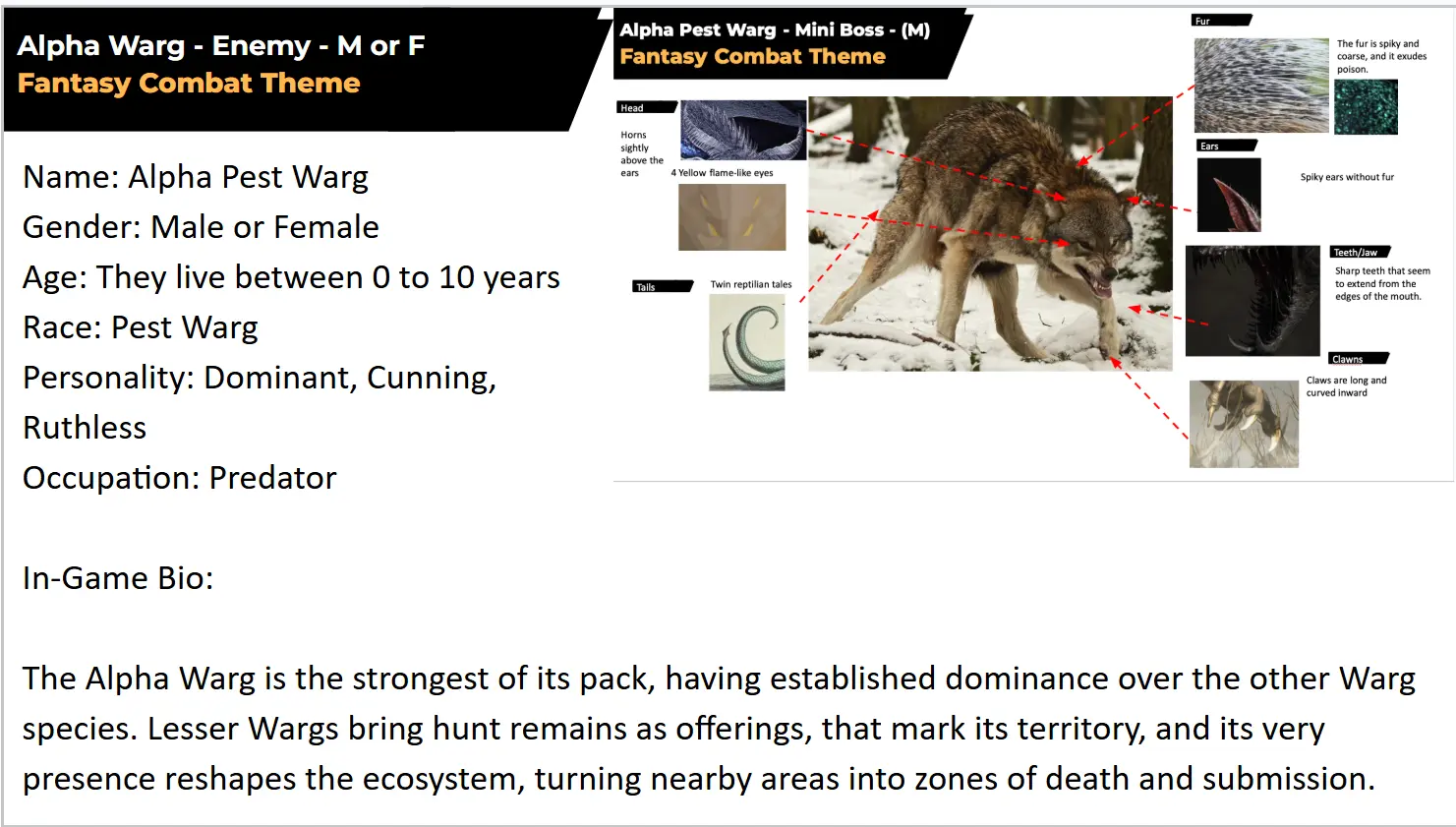
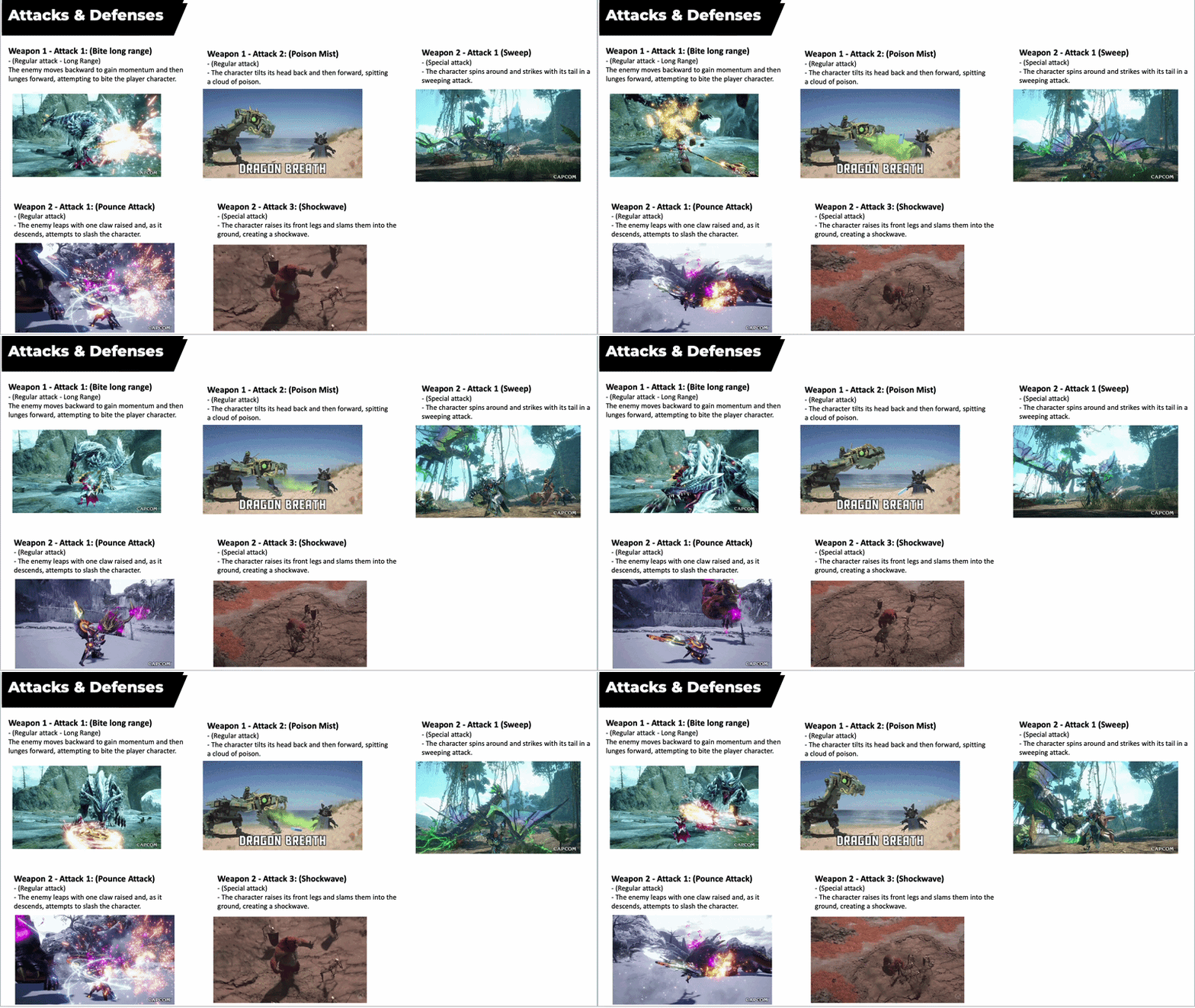
Wargs
 Predatory creatures native to The Cradle’s ecosystem.
- Narrative Purpose. Showcase the ecosystem of The Cradle while presenting nature itself as hostile and unforgiving.
- Combat Role. Fast melee enemies that pressure movement and positioning, supported by a larger boss variant that amplifies their aggression and physical threat.
- Character Design. Their appearance communicates survival and adaptation to the region.
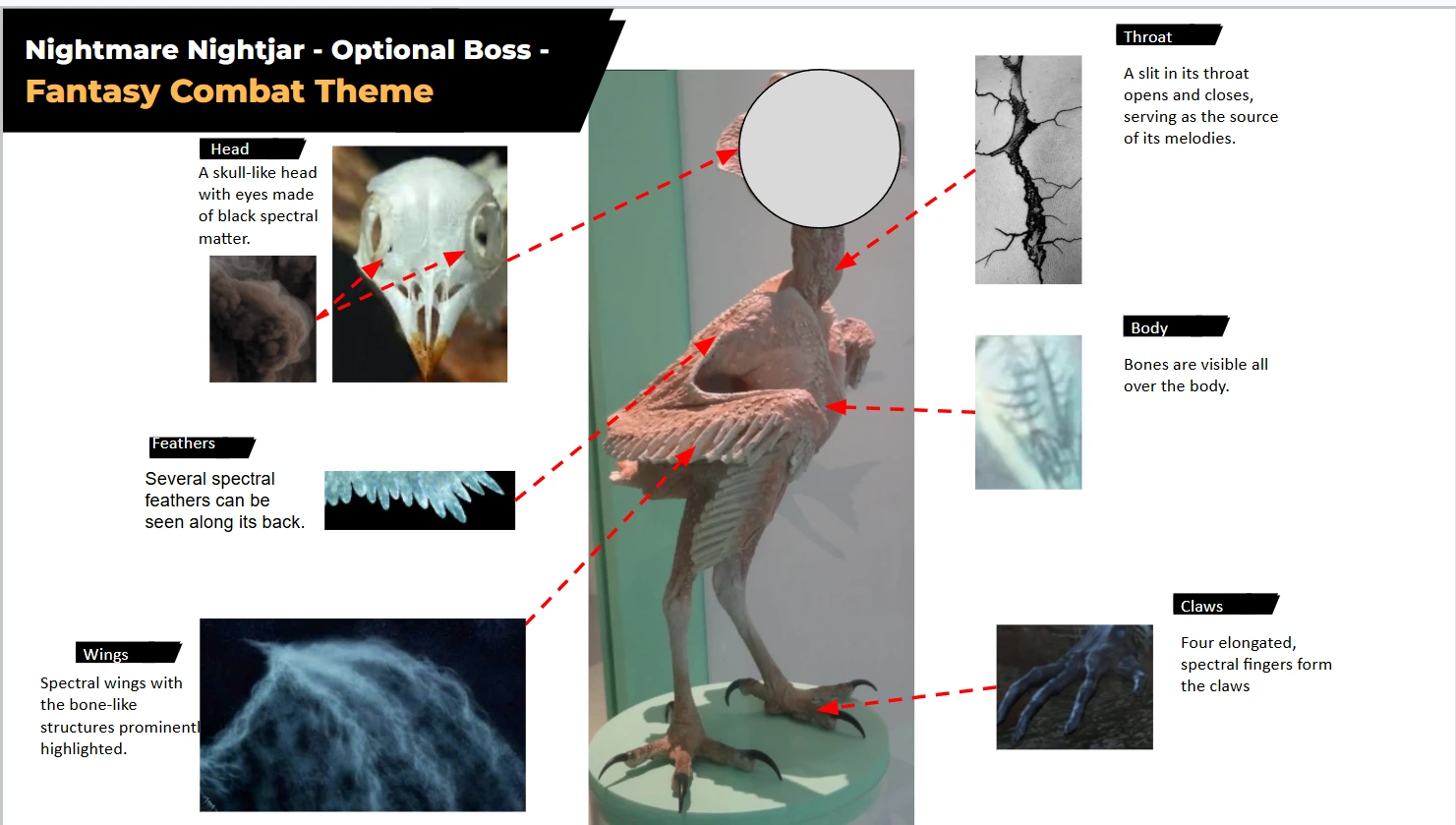
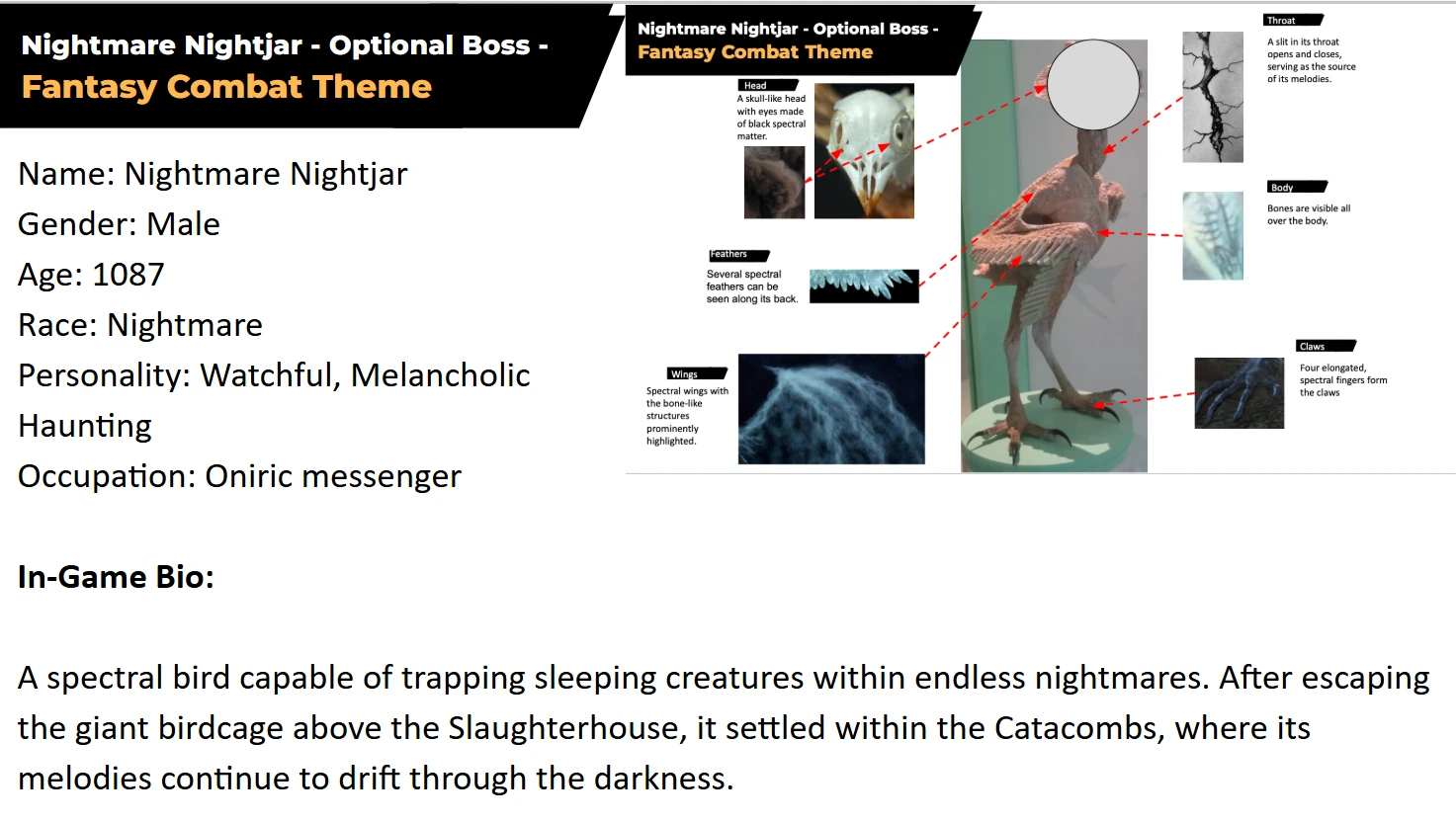
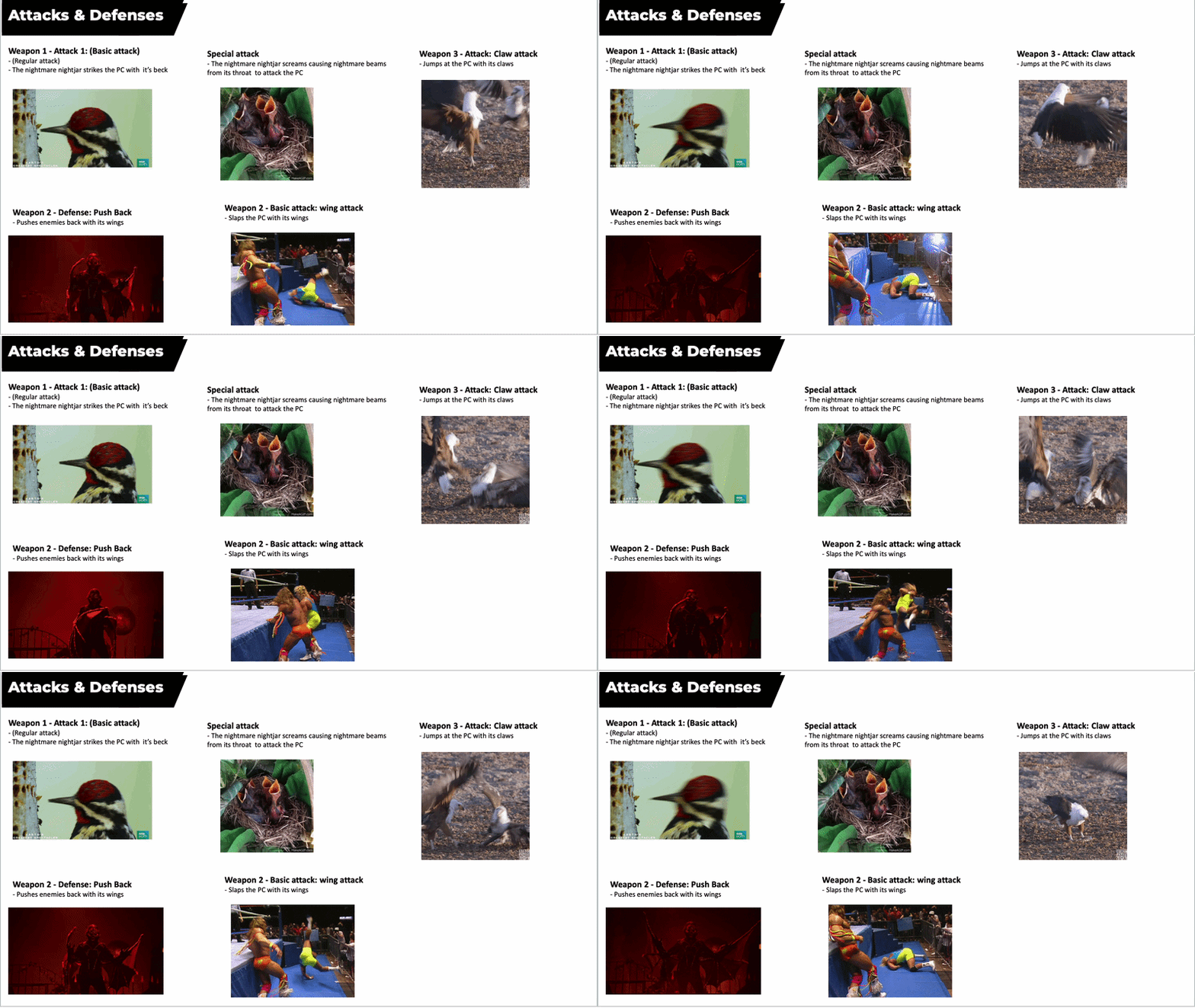
Nightmare Nightjar
 Predatory creatures native to The Cradle’s ecosystem.
- Narrative Purpose. Showcase the ecosystem of The Cradle while presenting nature itself as hostile and unforgiving.
- Combat Role. Fast melee enemies that pressure movement and positioning, supported by a larger boss variant that amplifies their aggression and physical threat.
- Character Design. Their appearance communicates survival and adaptation to the region.
Storyboarding & Trailer Script Writing
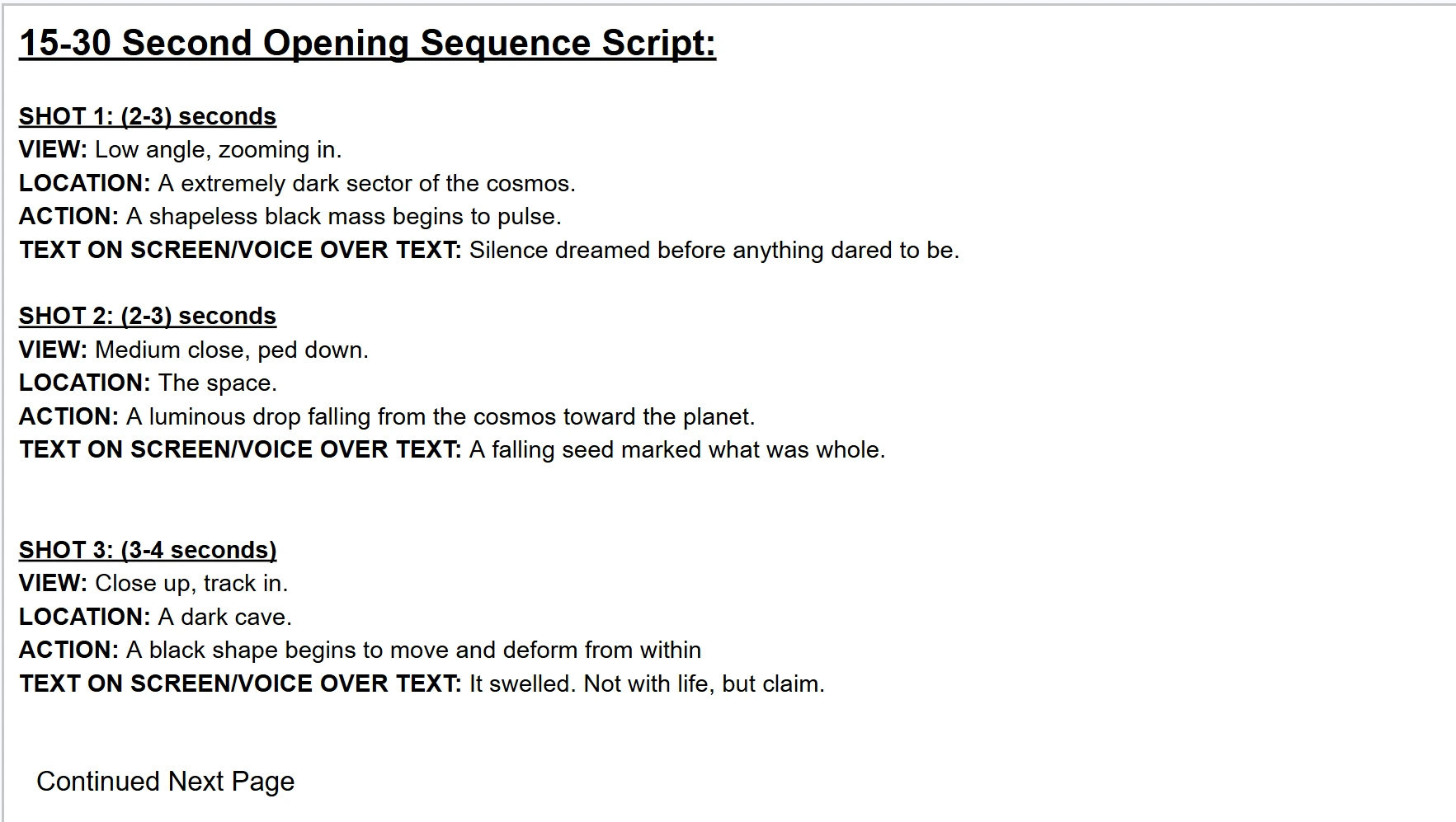
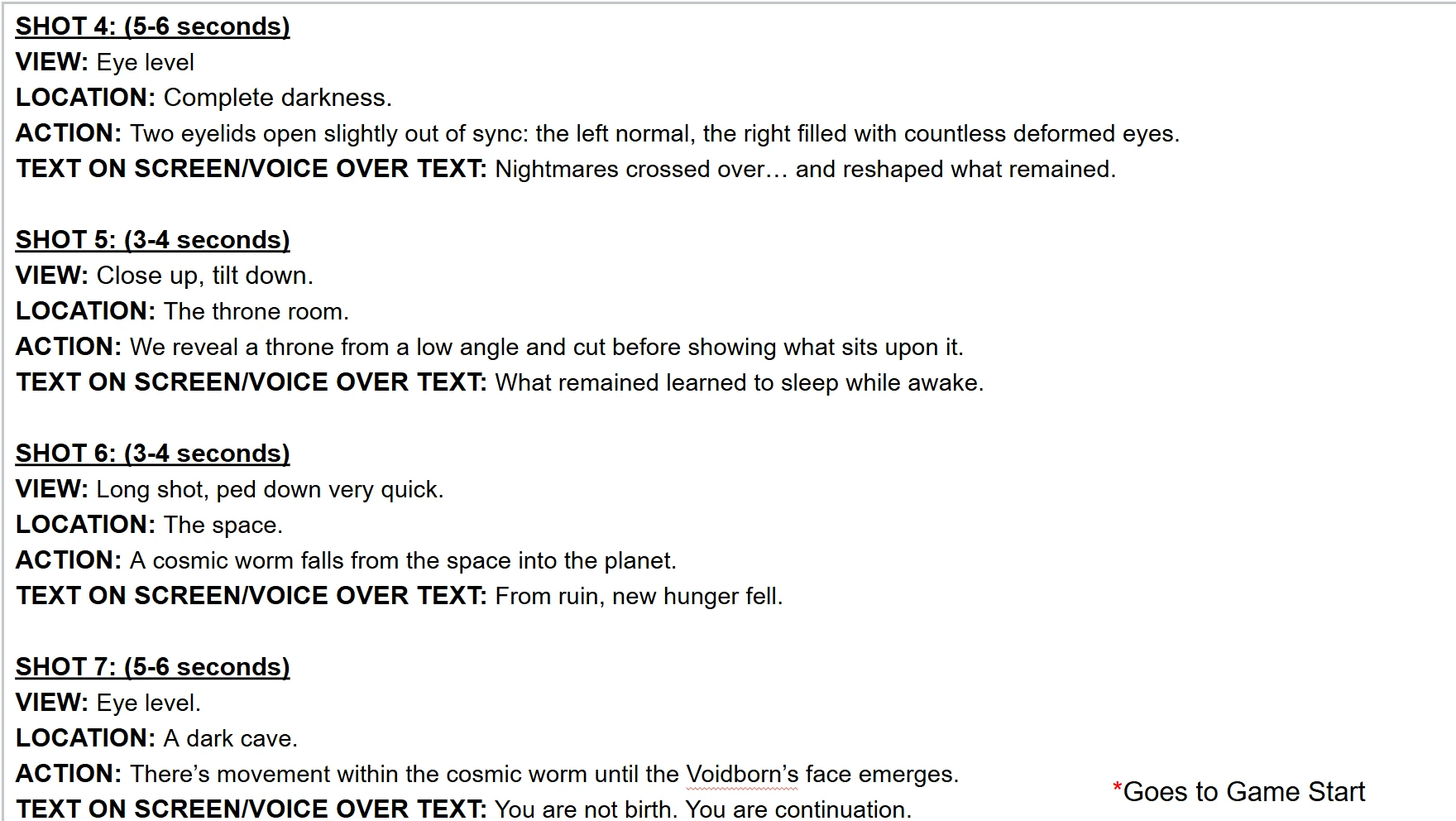
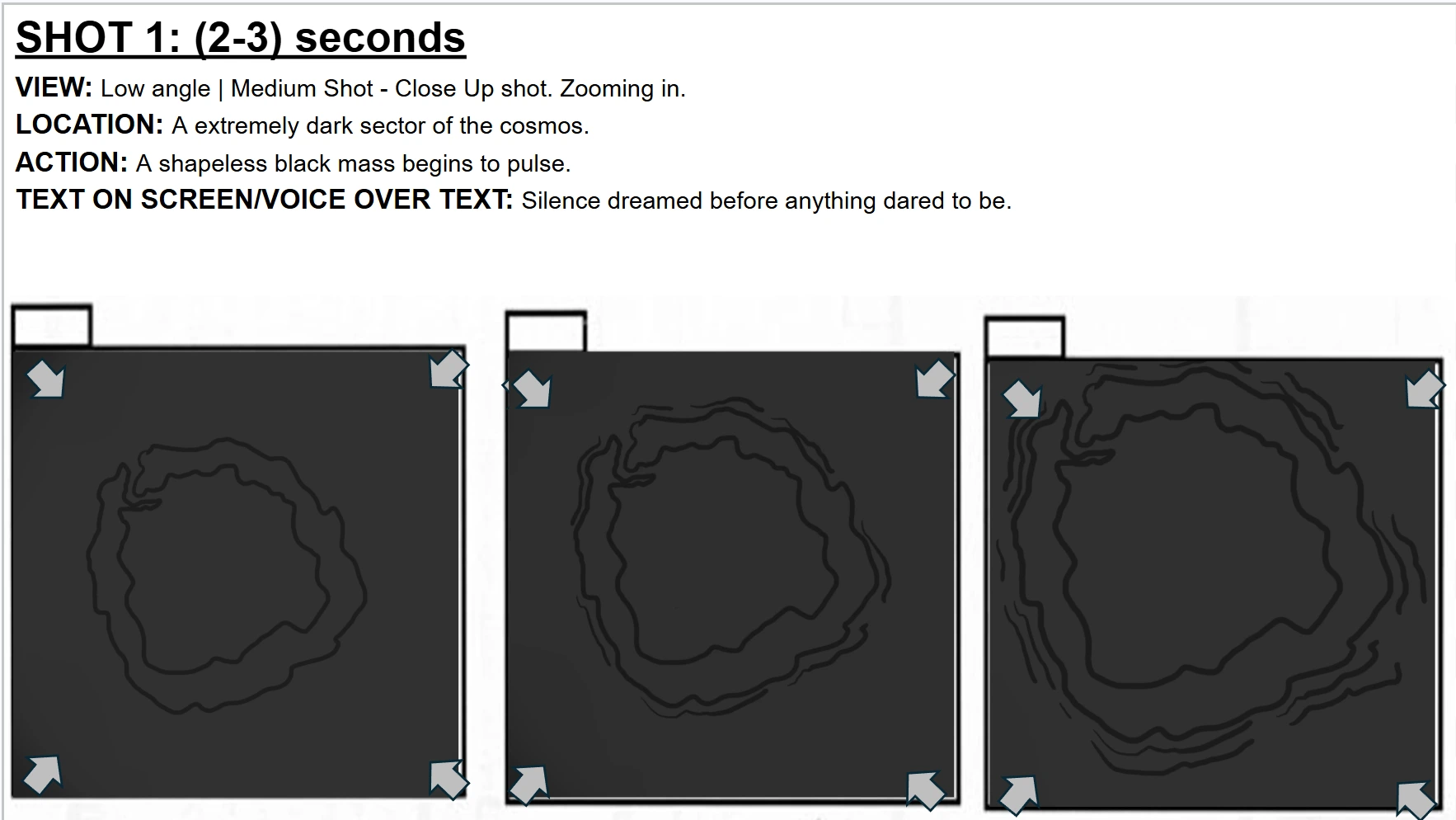
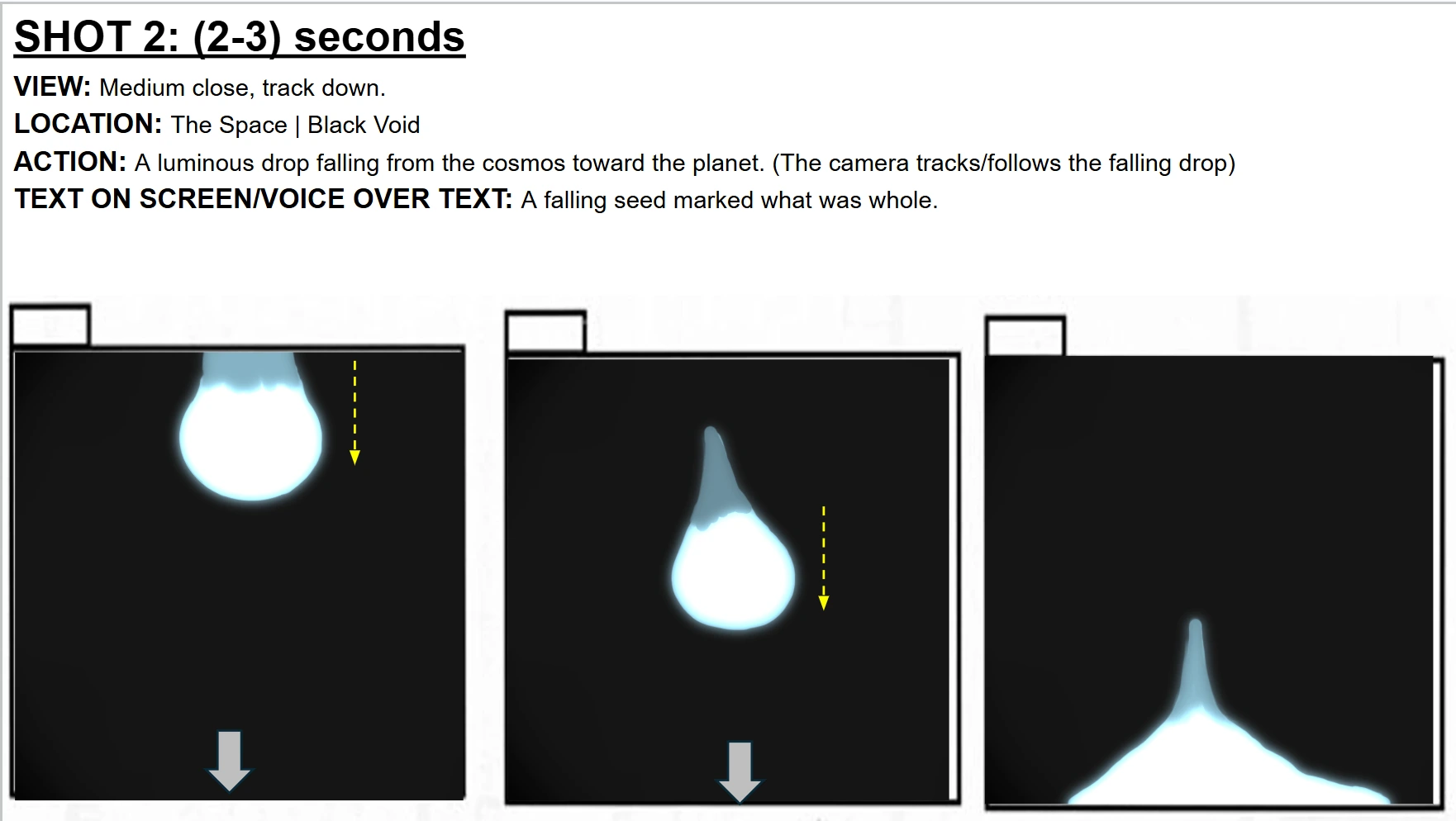
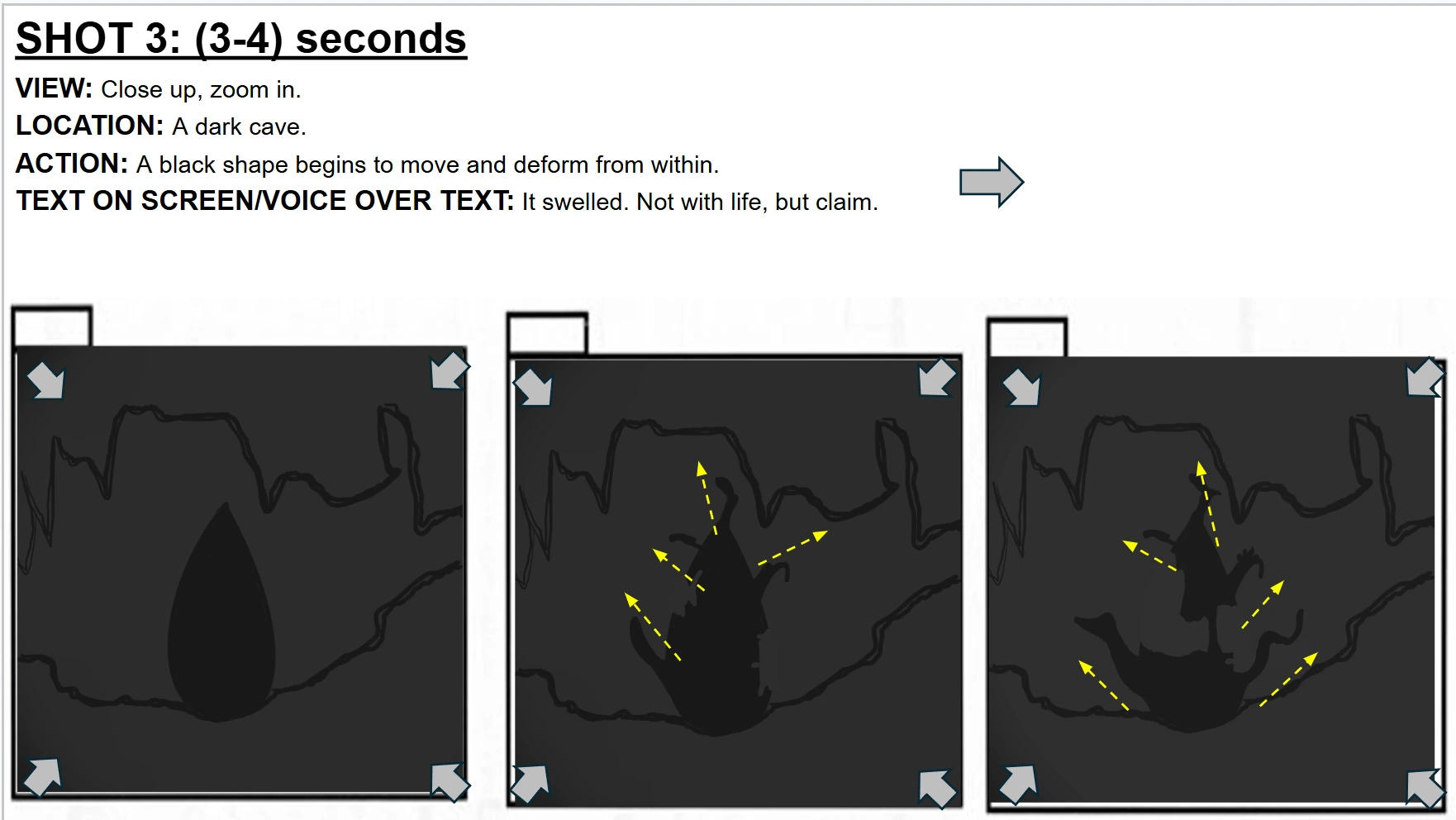
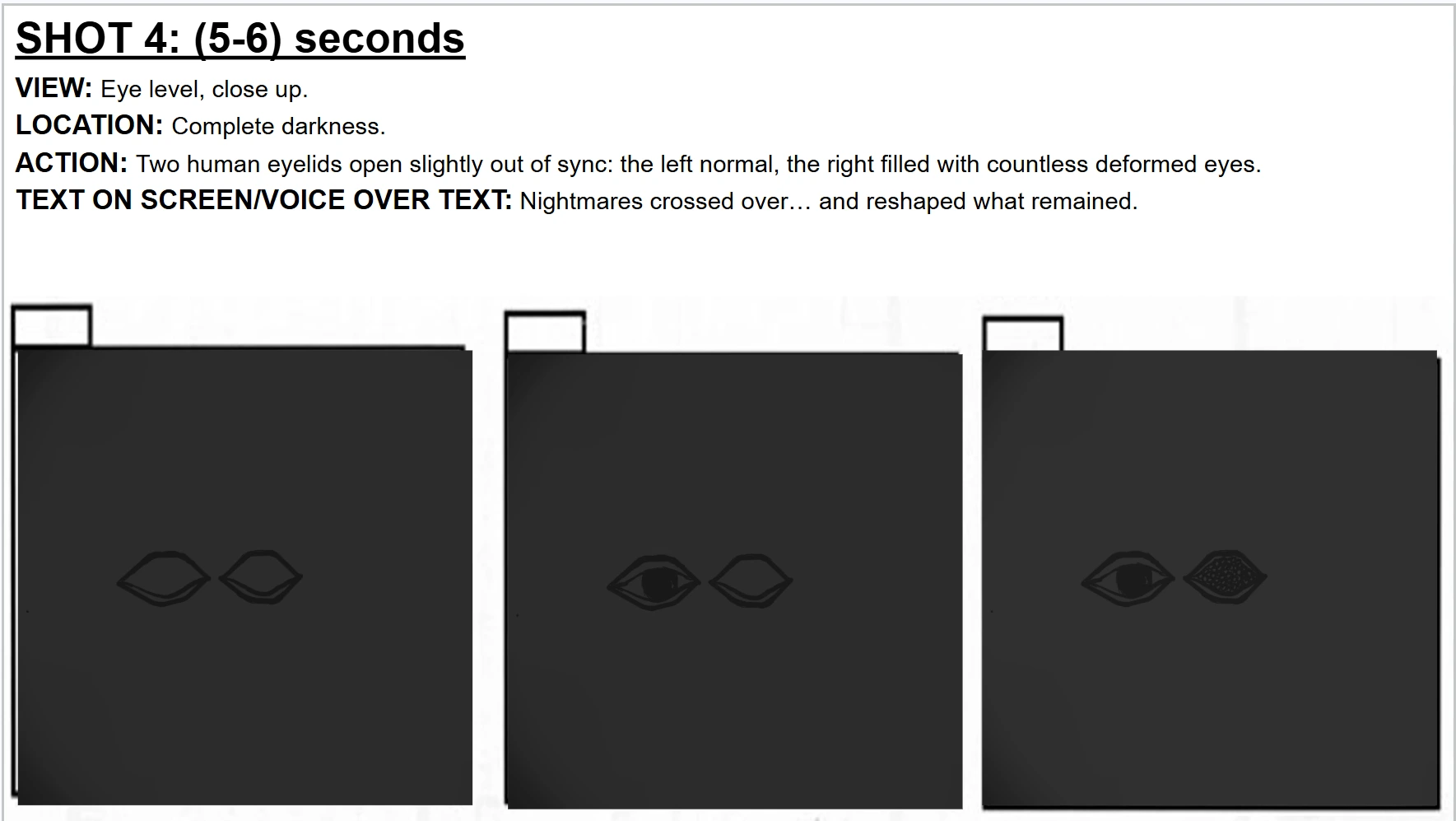
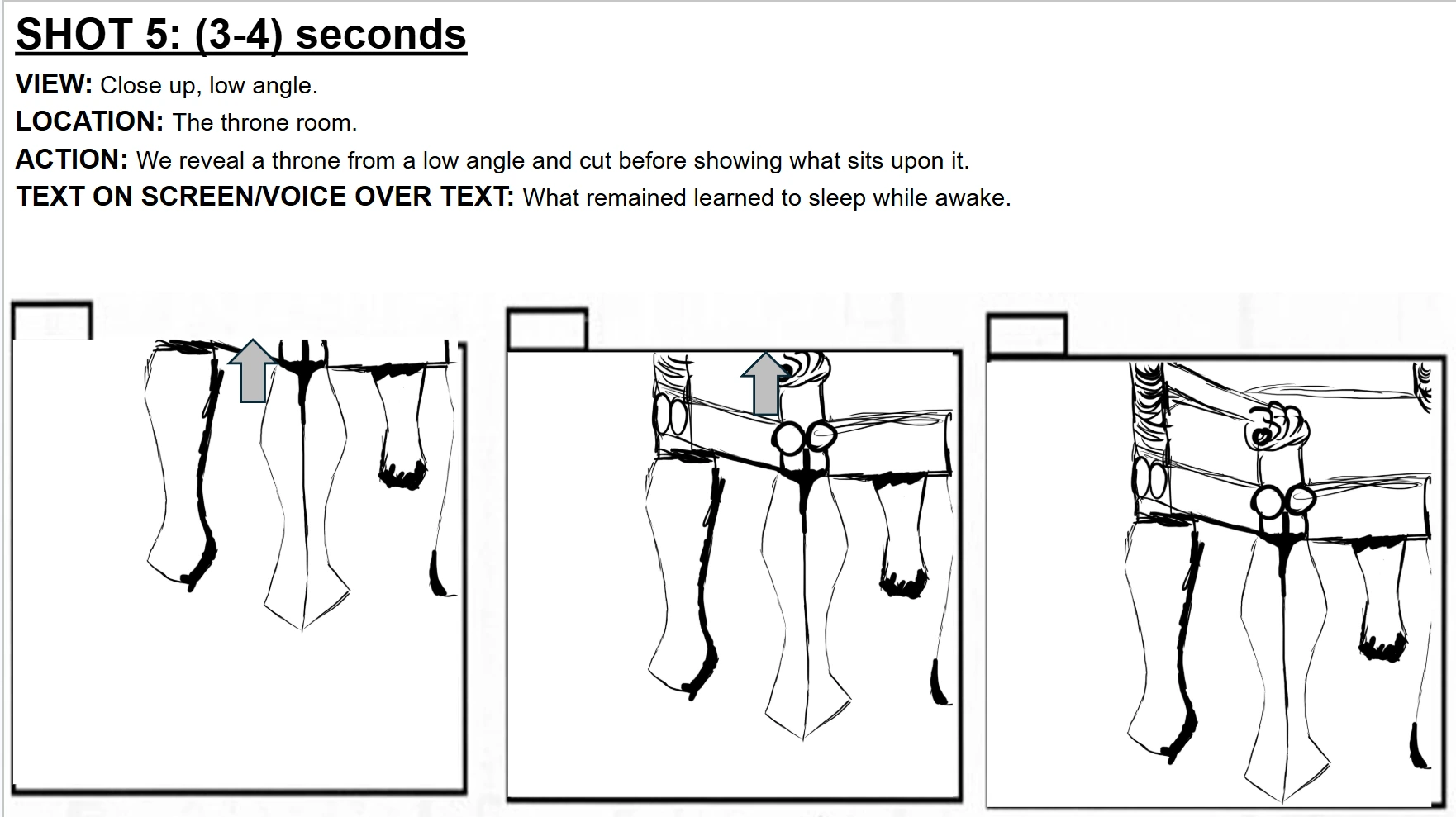
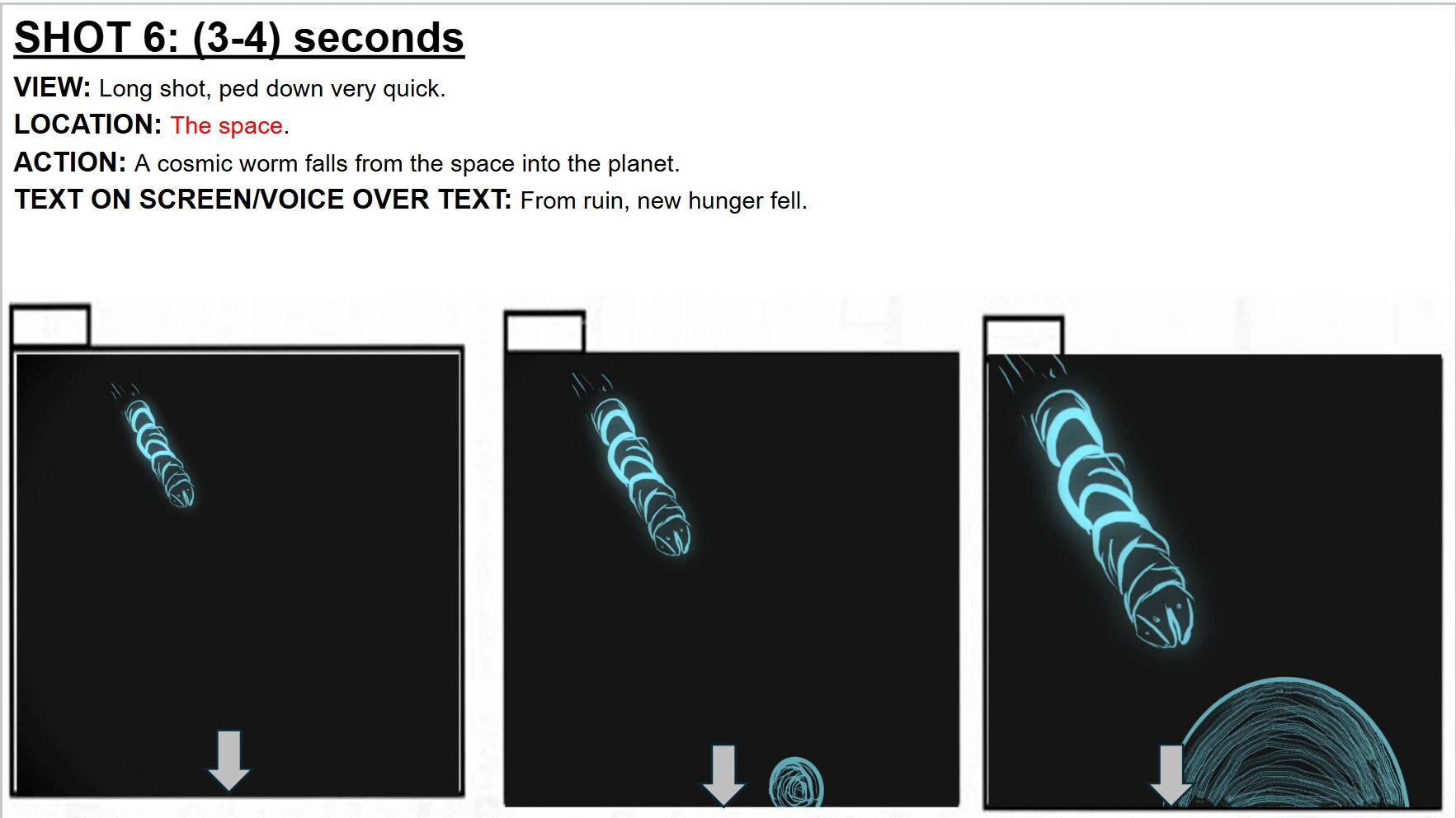
I wrote a storyboard script and created a preliminary storyboard to establish the world’s lore and central conflict while supporting collaboration with art and cinematic teams.
- Designed each shot to communicate key worldbuilding events.
- Defined location, camera framing, action, and narrative intent to provide clear direction for potential art and cinematic implementation.
- Structured the sequence to introduce the world’s origin while preserving discoveries intended to be uncovered through gameplay.
- Created a simplified storyboard prototype to facilitate communication, iteration, and internal review across disciplines.
Voice Over Documentation
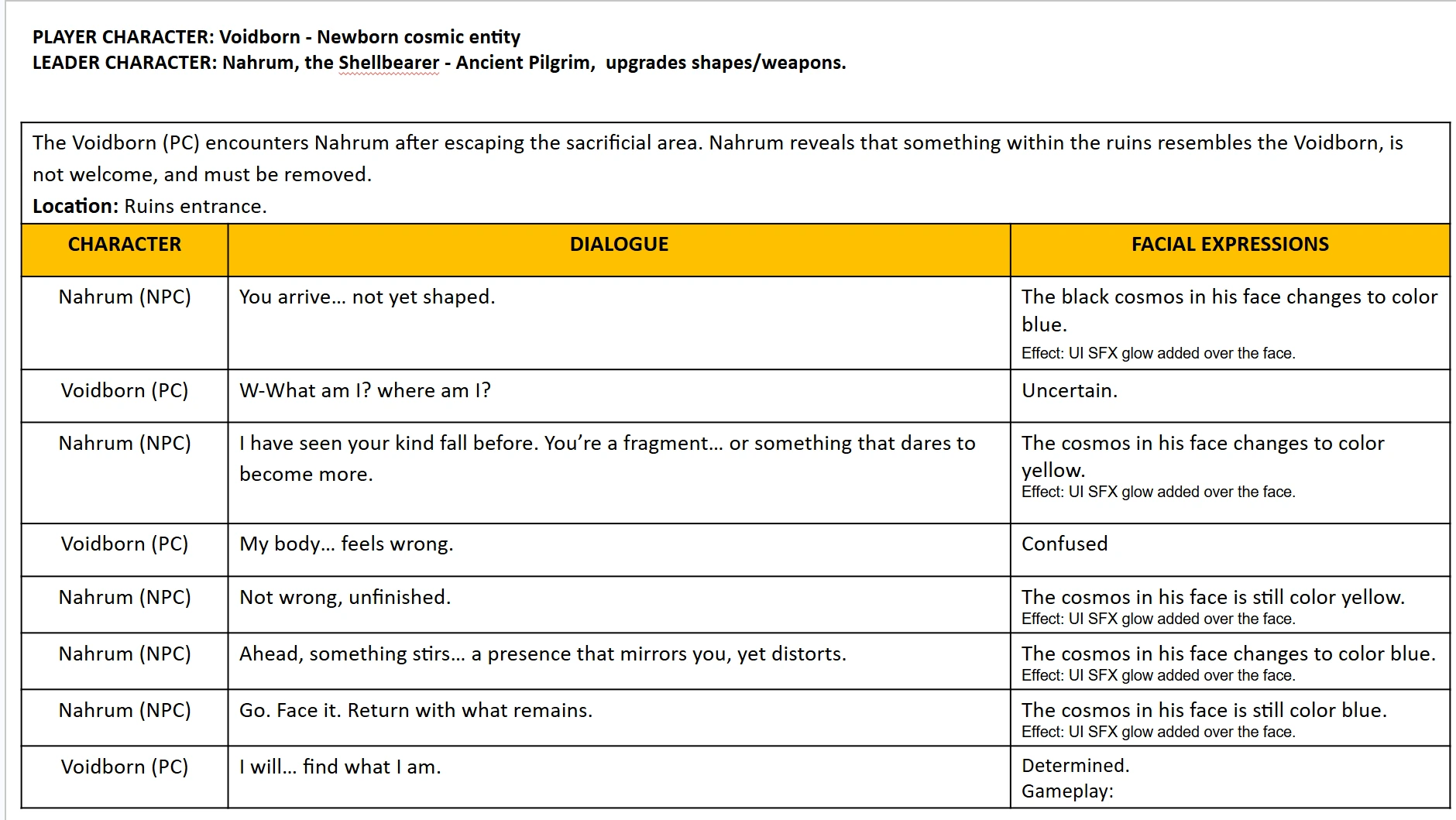
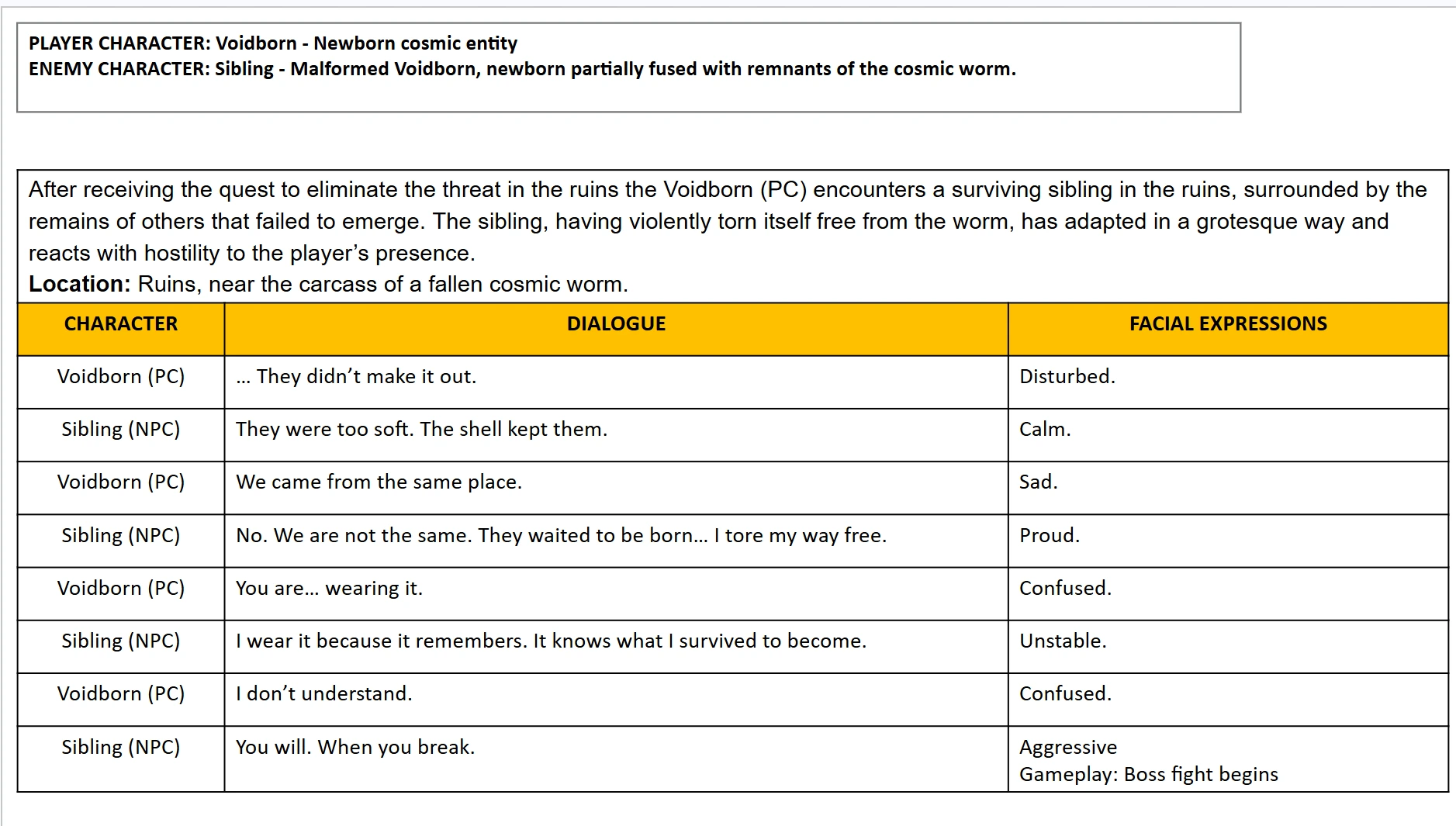
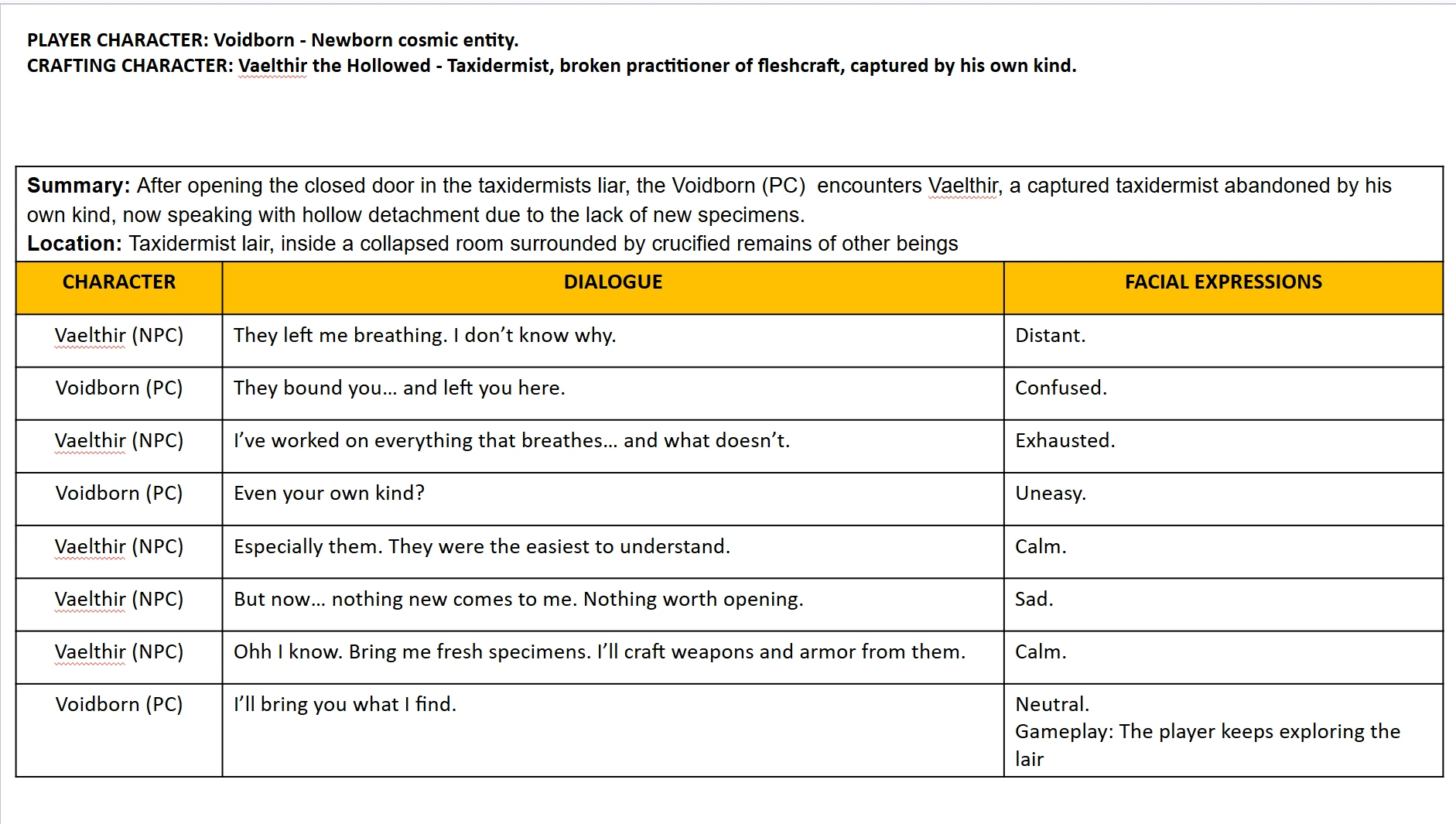
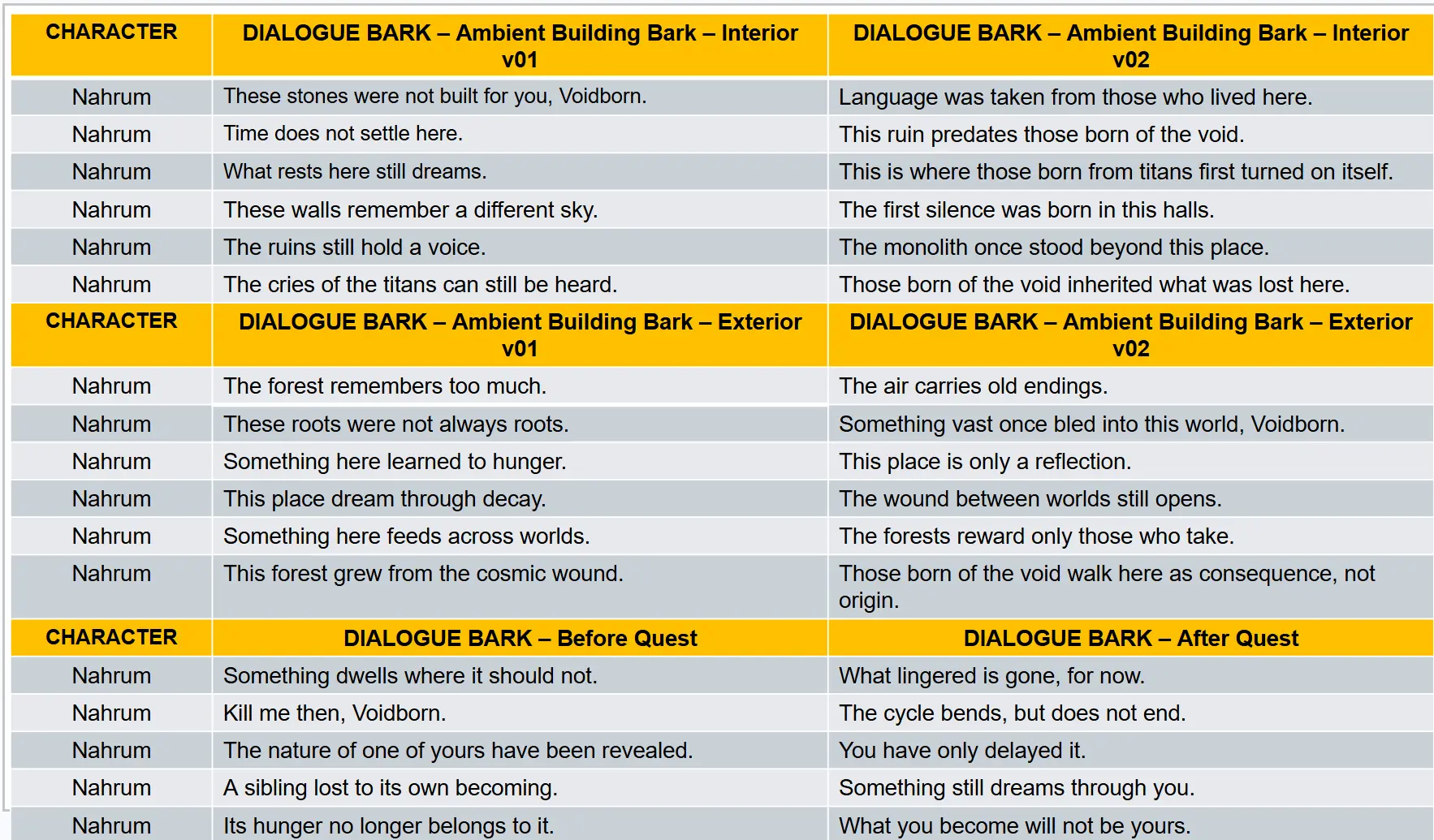
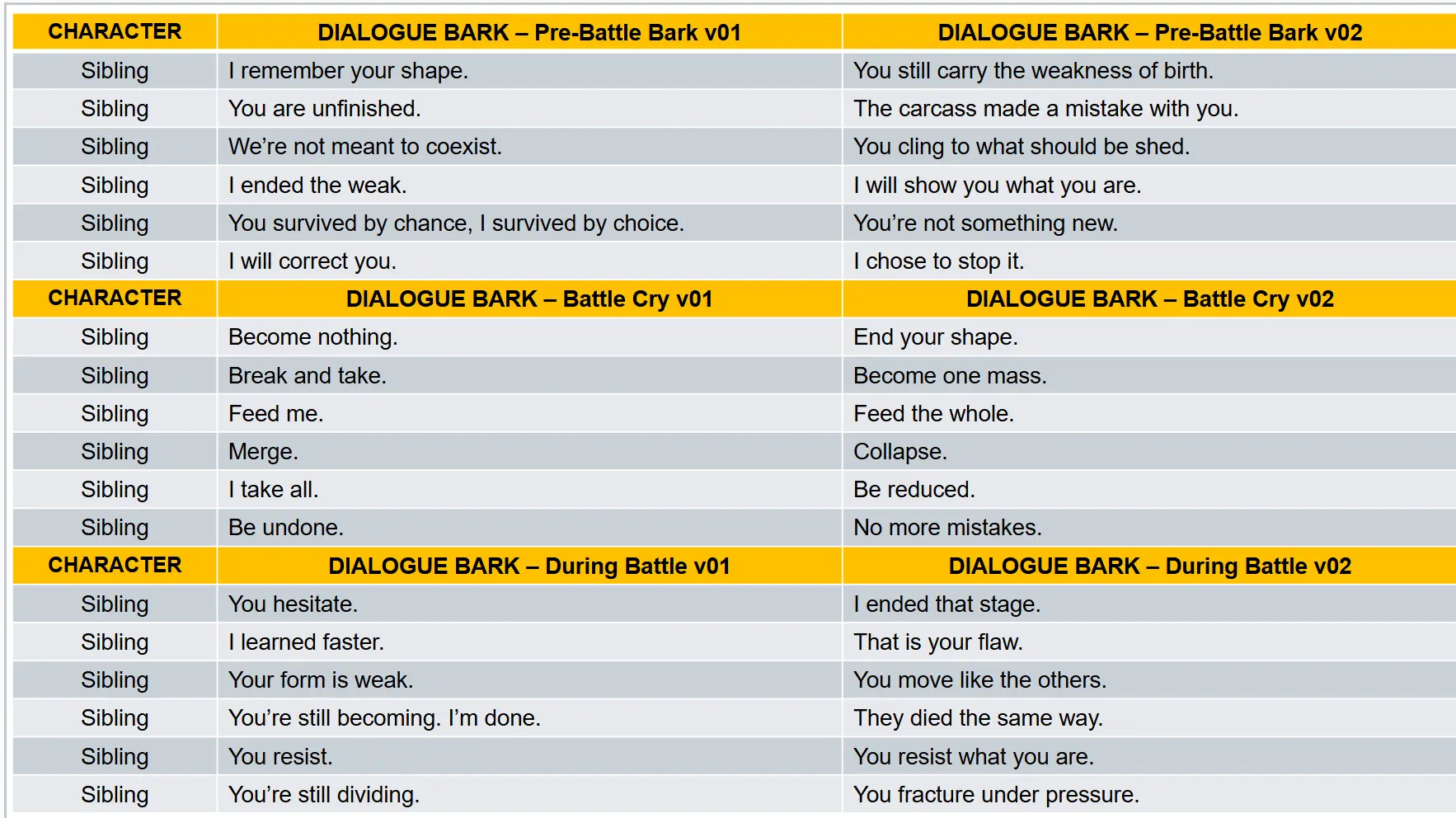
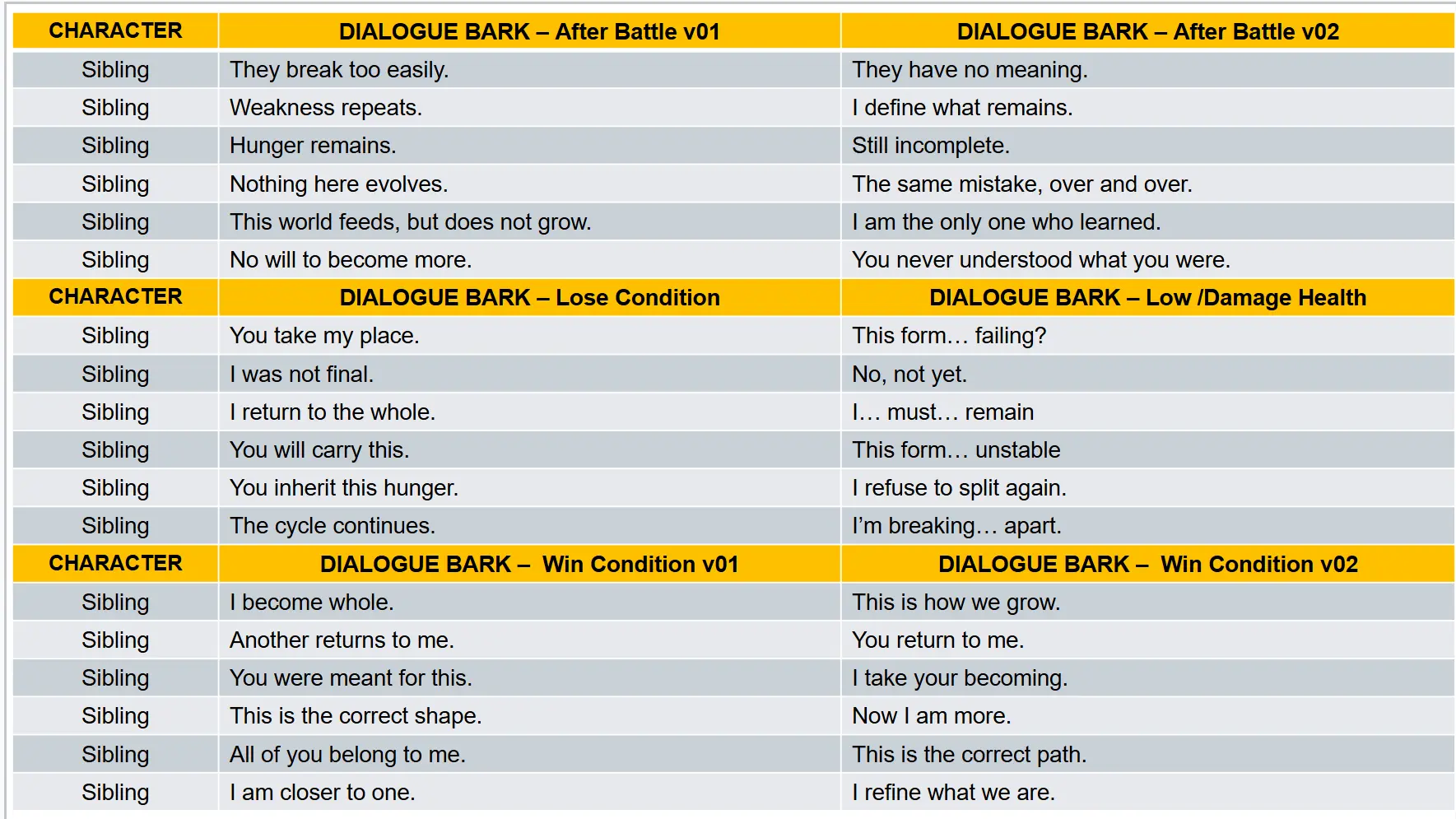
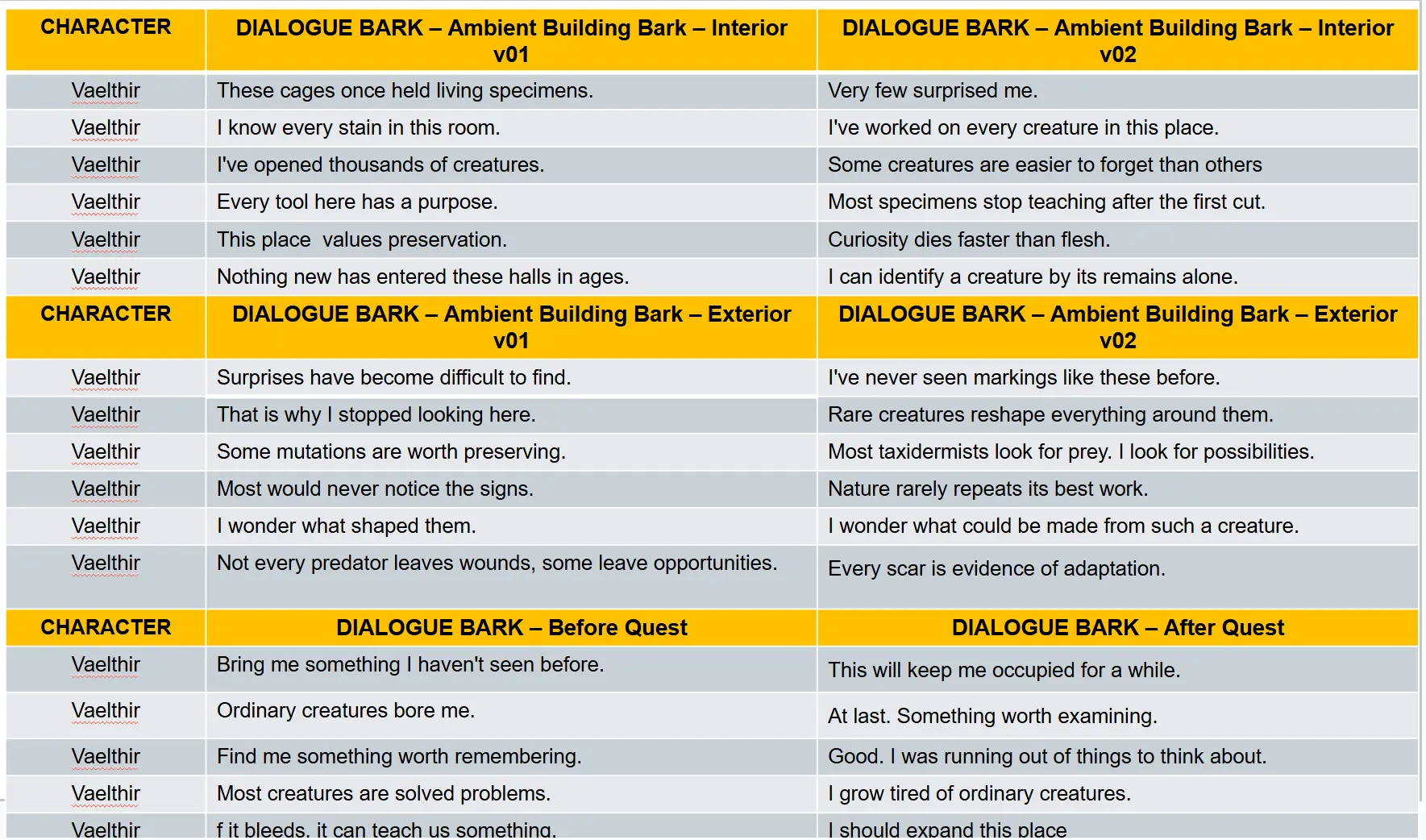
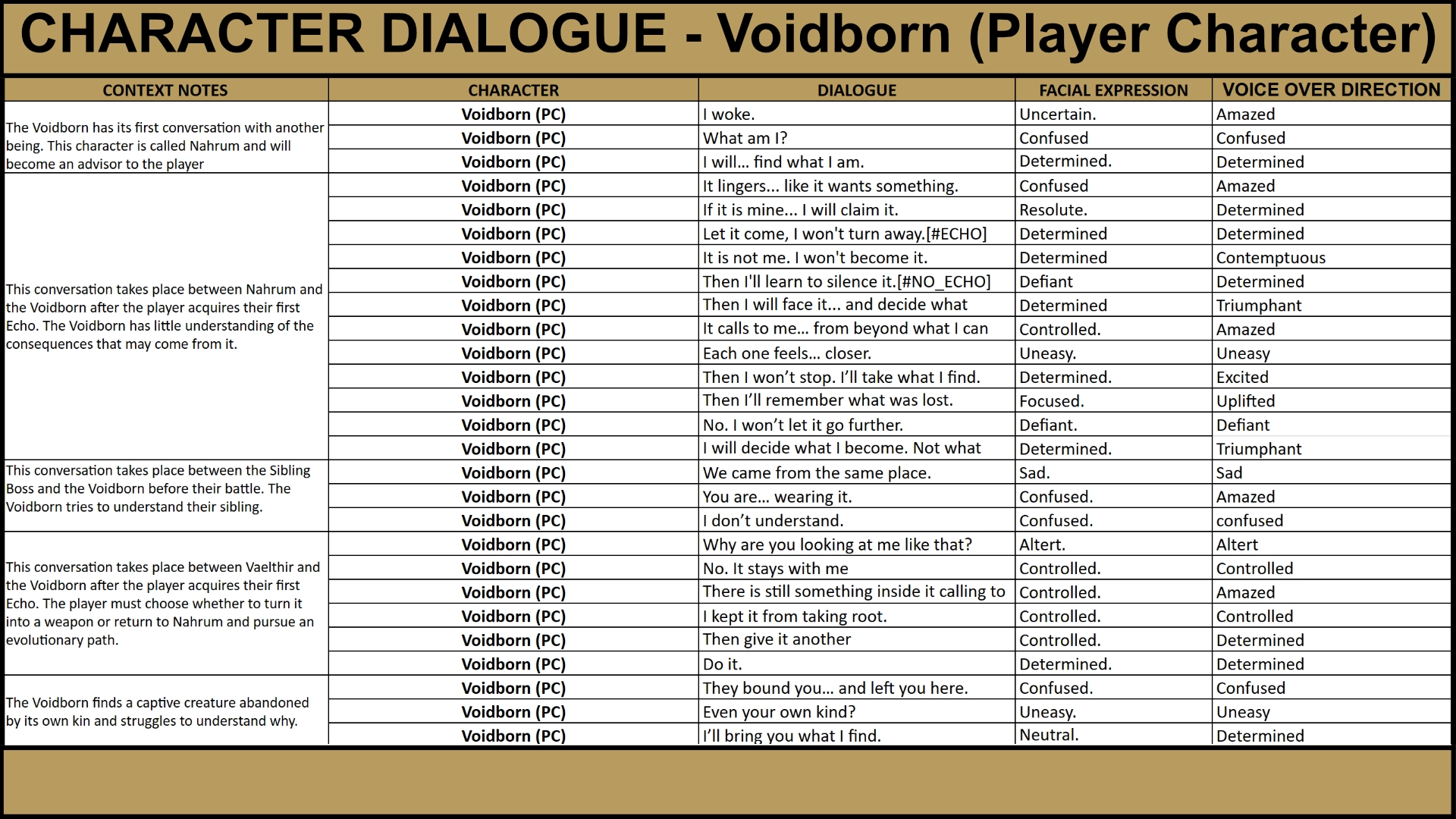
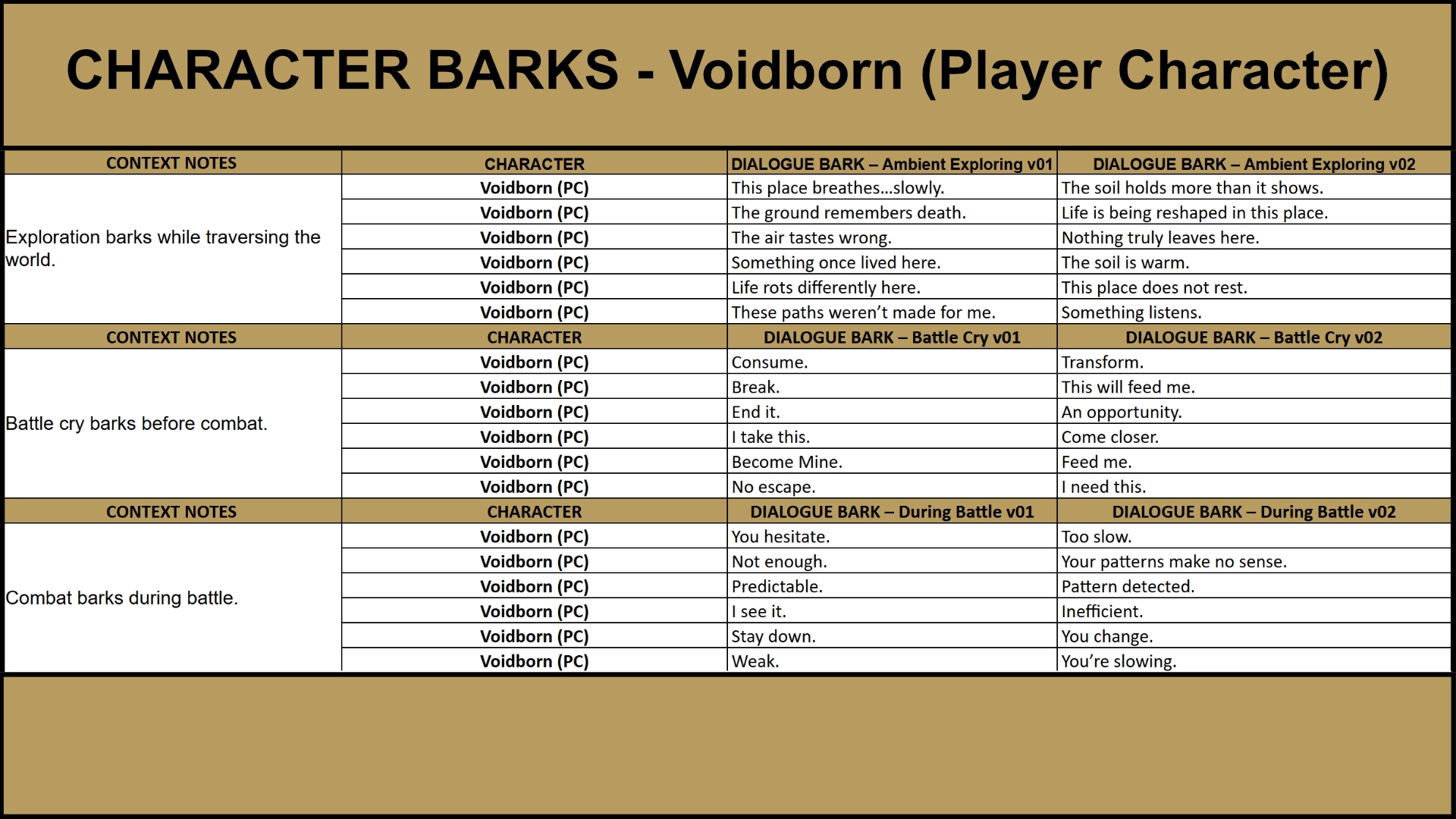
Developed Voice-Over documentation for four key characters (PC, Advisor, Boss and Blacksmith) to support casting and voice recording sessions.
Each Voice-Over document included:
- A Character Information Sheet containing character design references, personality traits, motivations, vocal direction and speech patterns.
- A Dialogue Sheet containing all dialogue lines grouped by quest and narrative sequence, supported by gameplay context, facial expressions, and voice-over direction to ensure consistent performances.
- Quest summaries and narrative context designed to provide actors with a clear understanding of character objectives and emotional intent throughout each interaction.
Worldbuilding
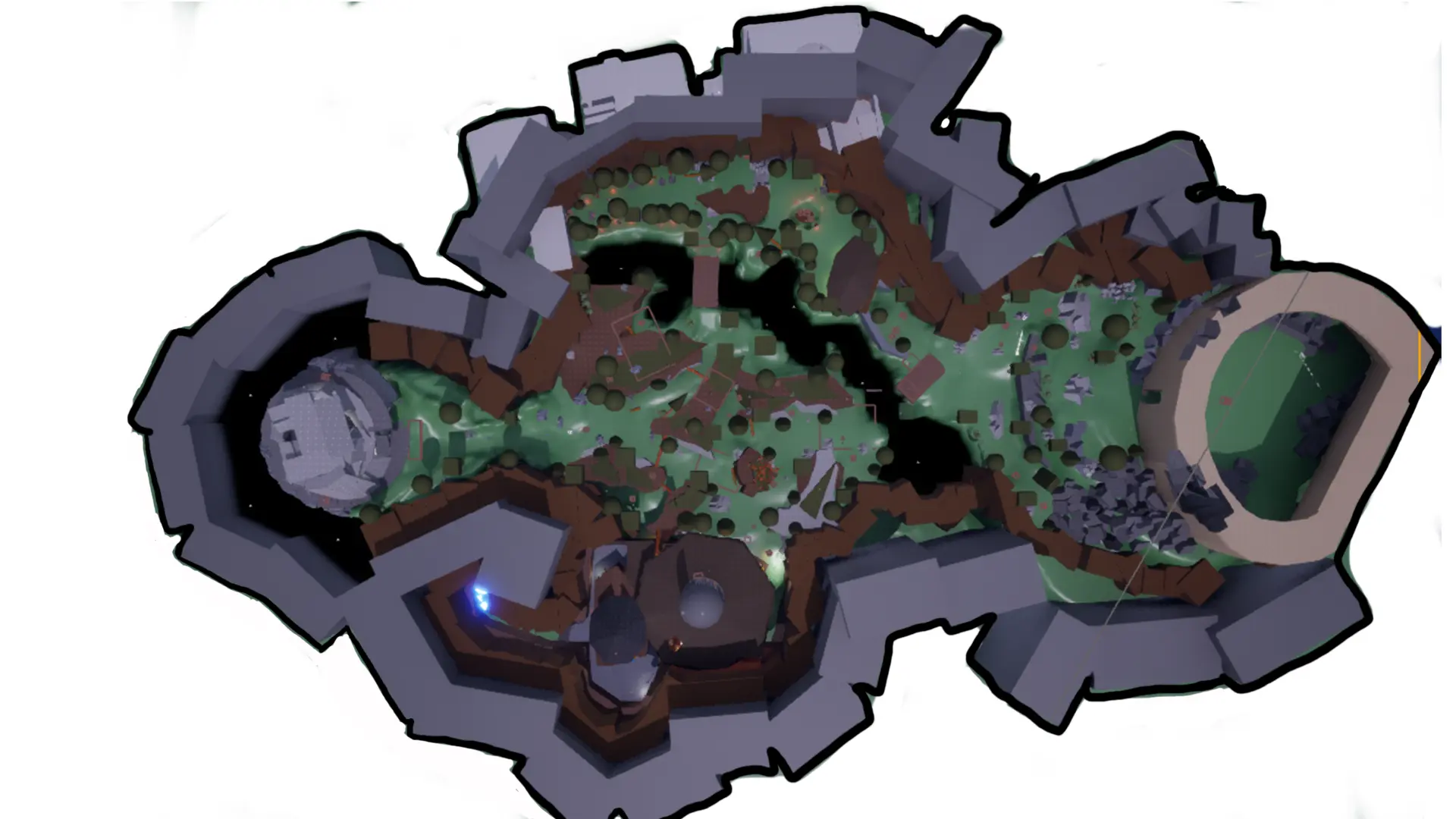
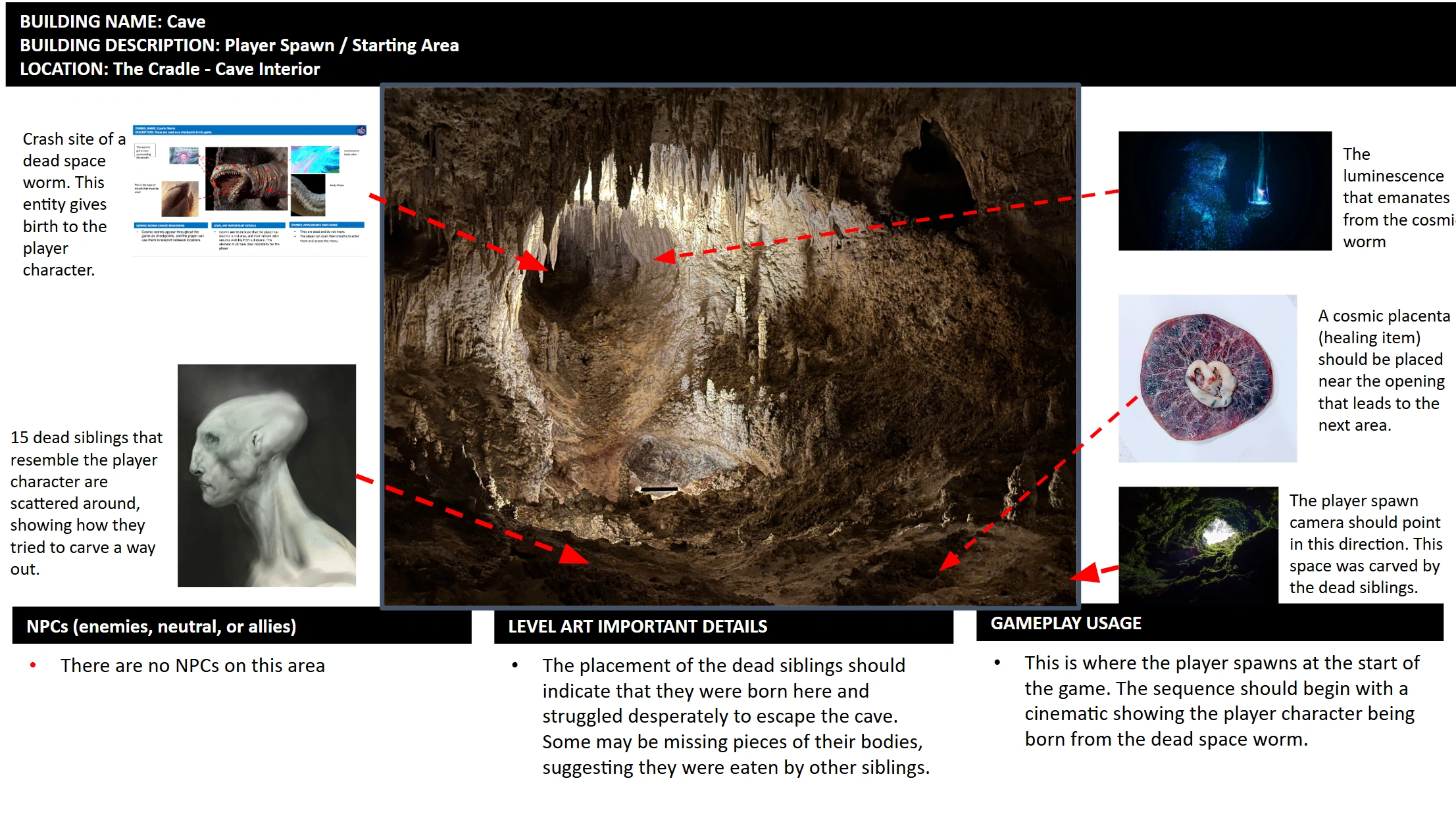
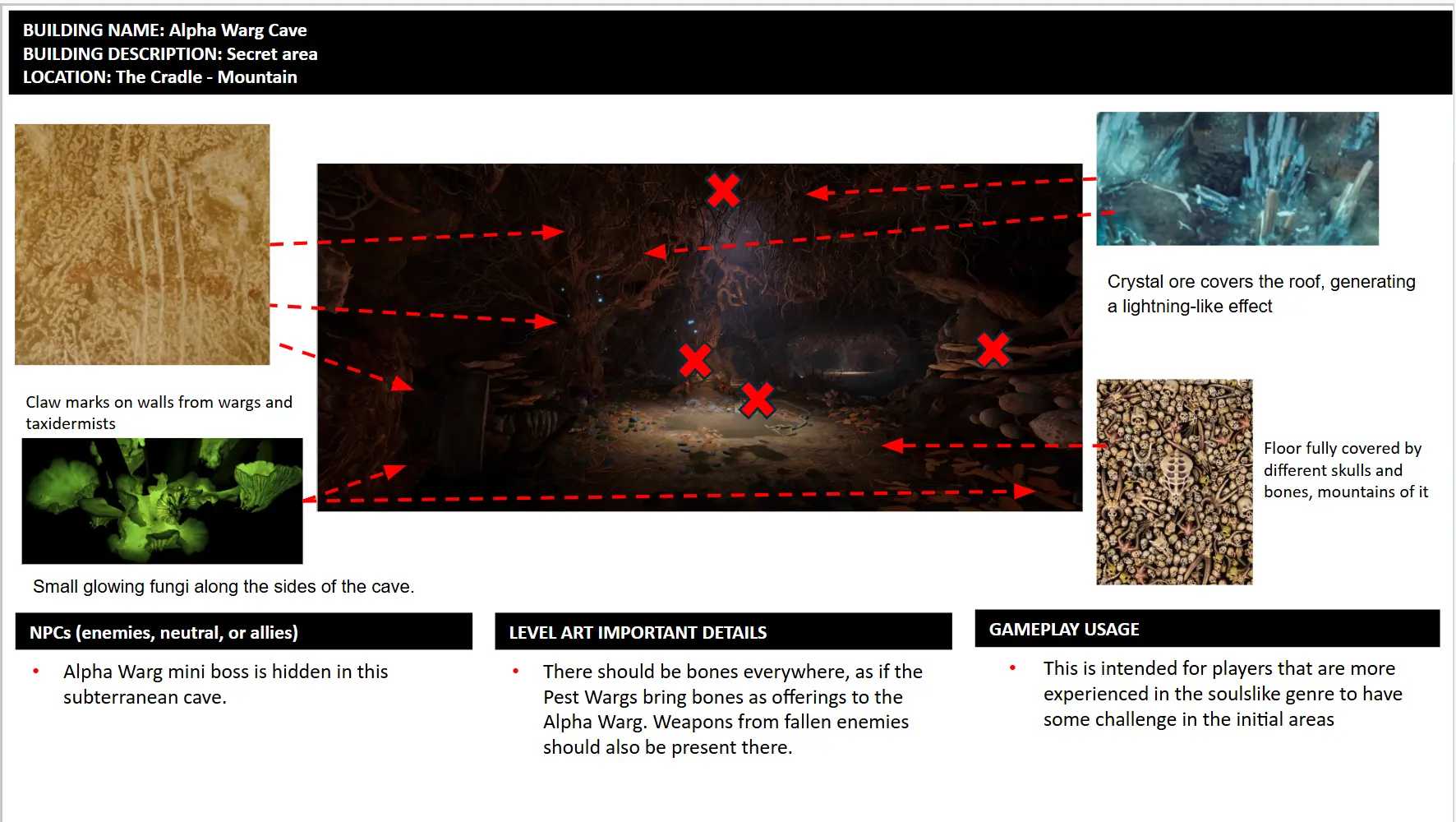
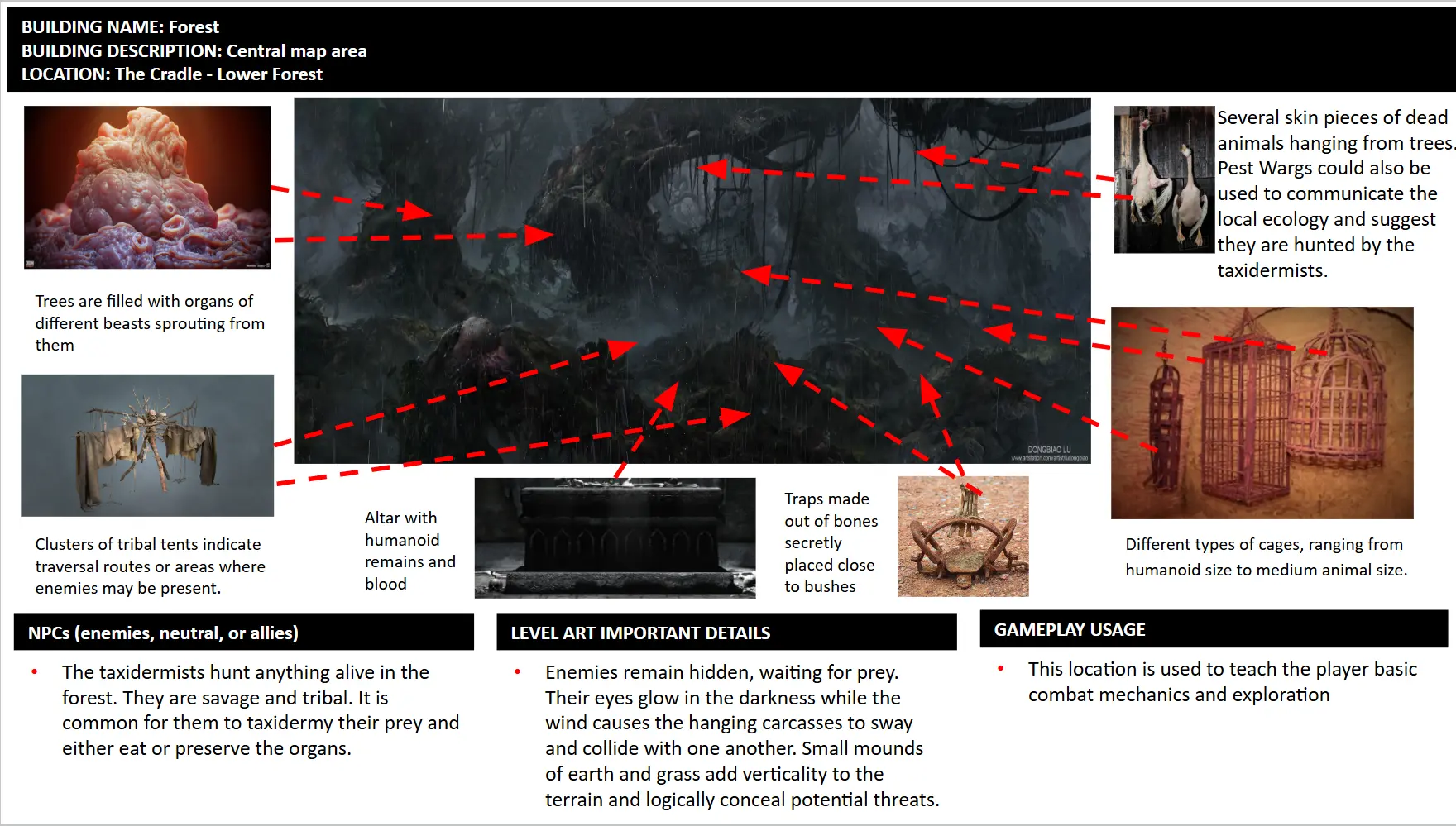
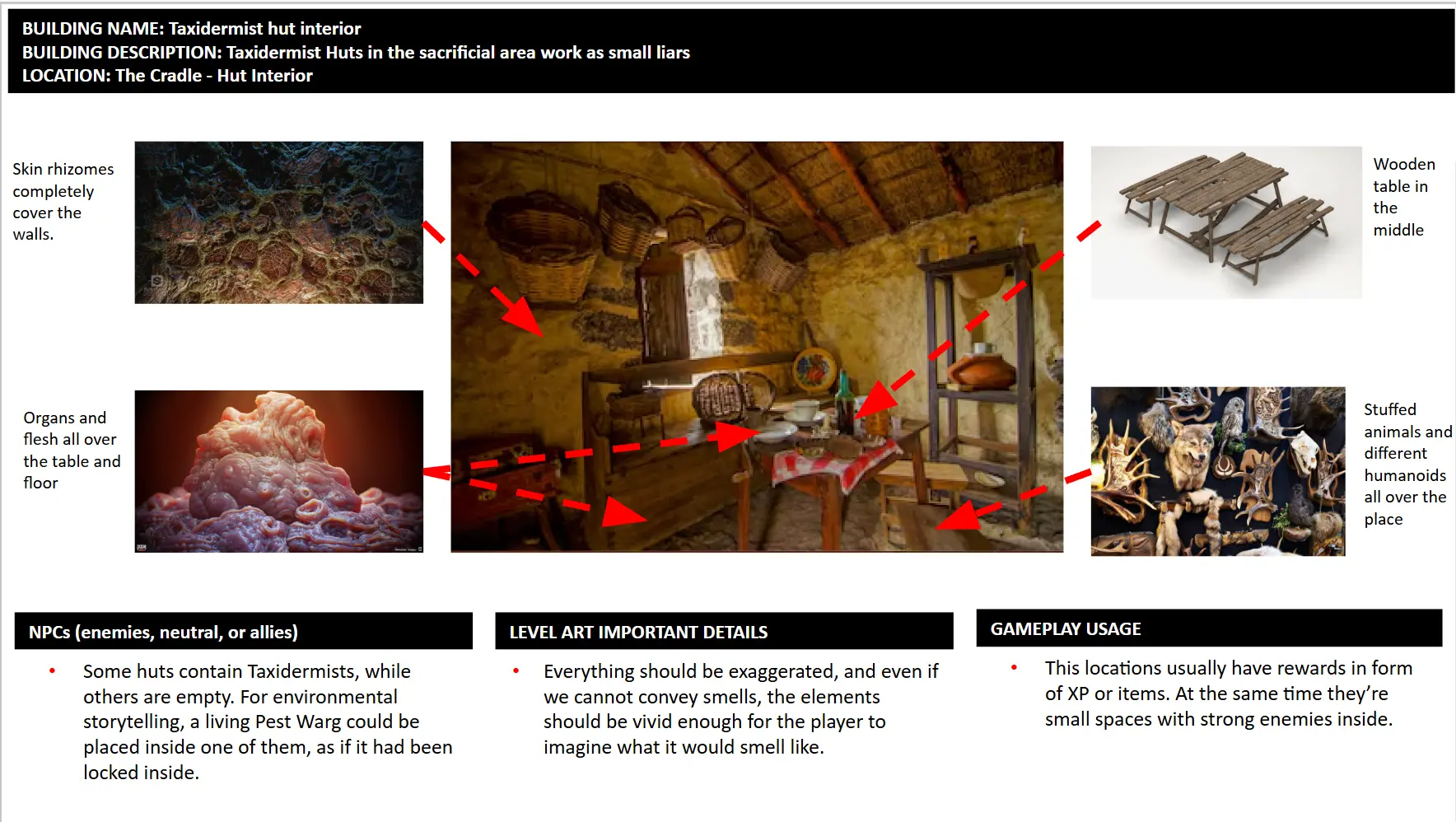
Fleshed Out The Locations for The Map​
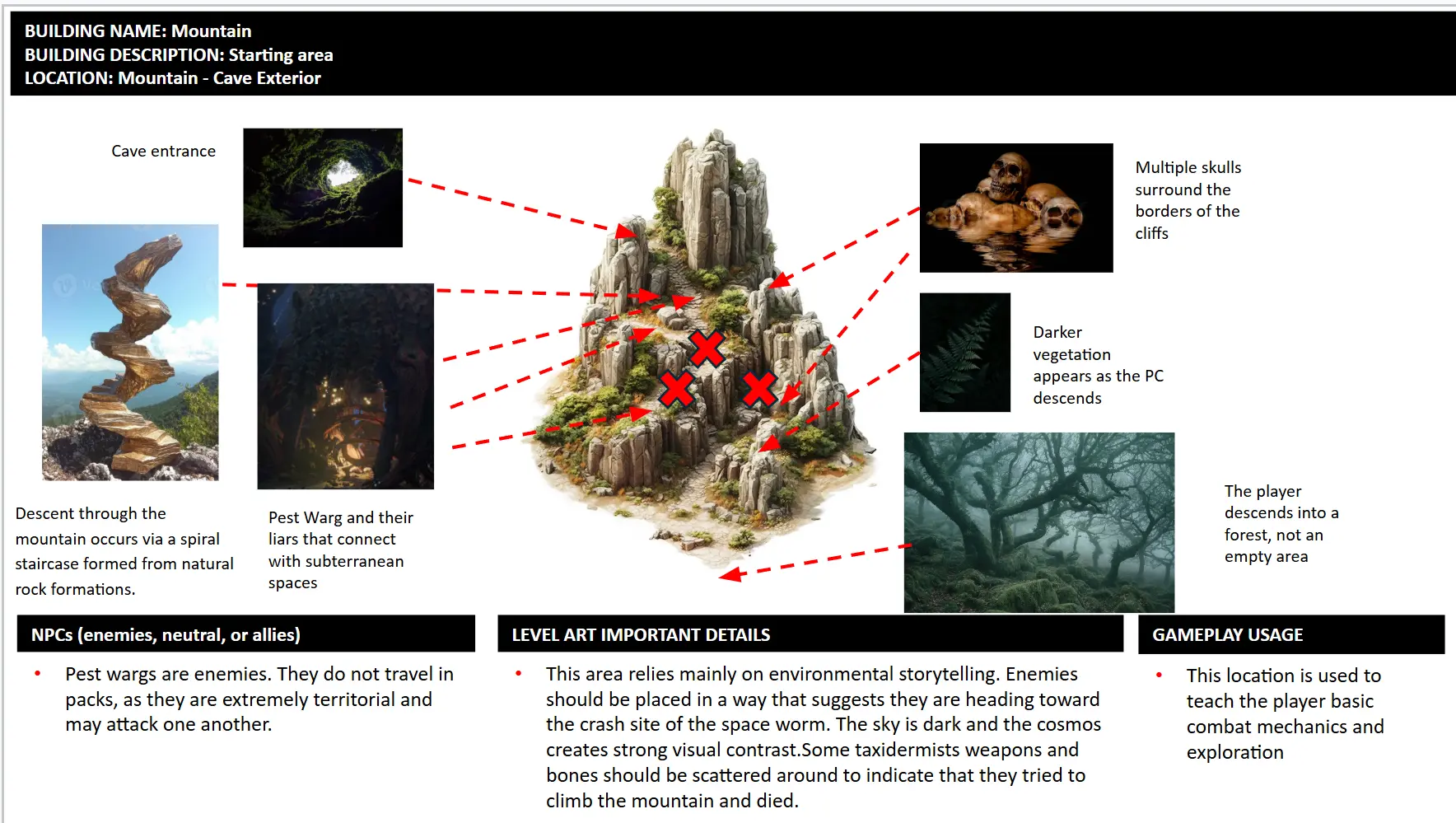
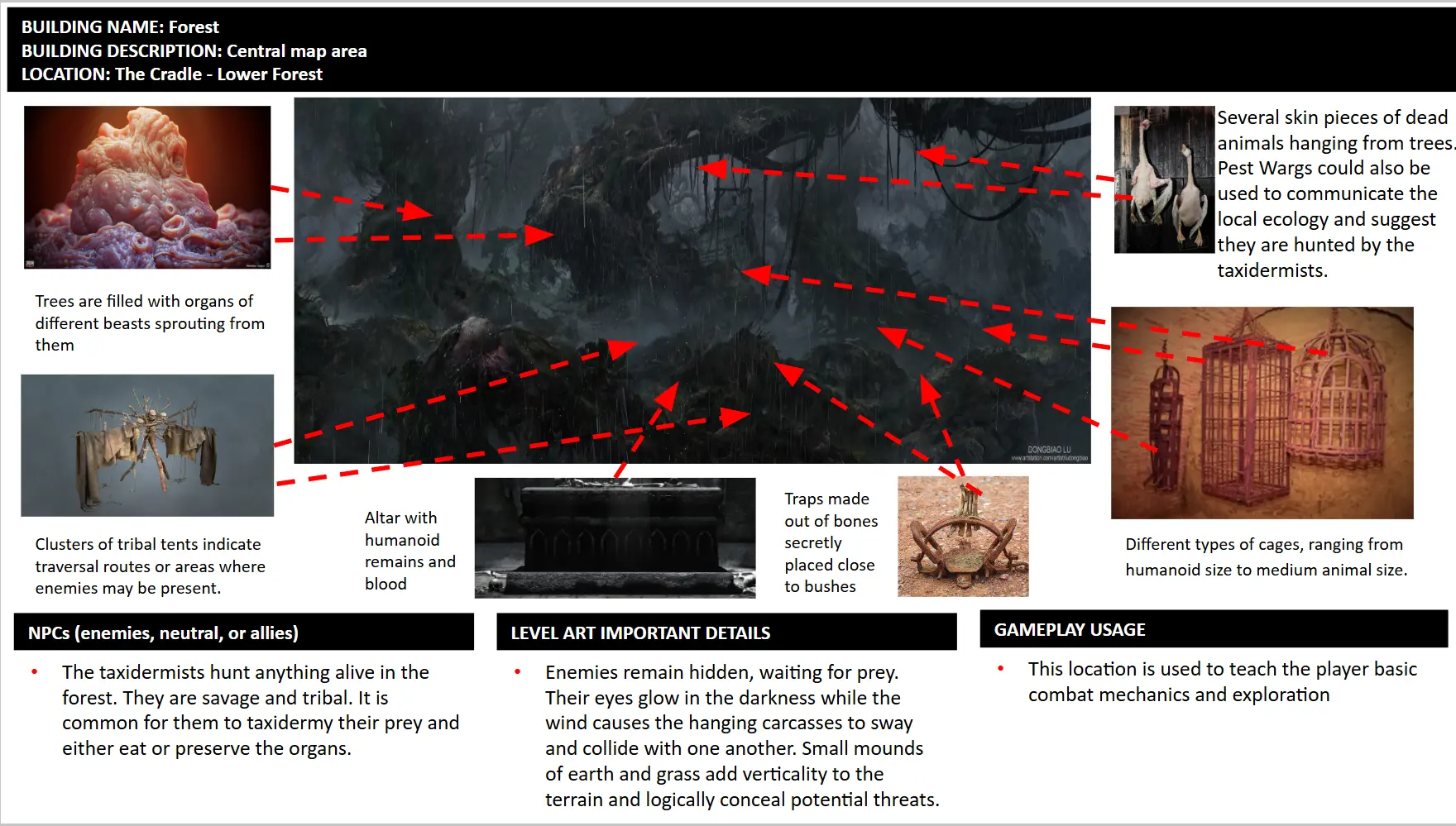
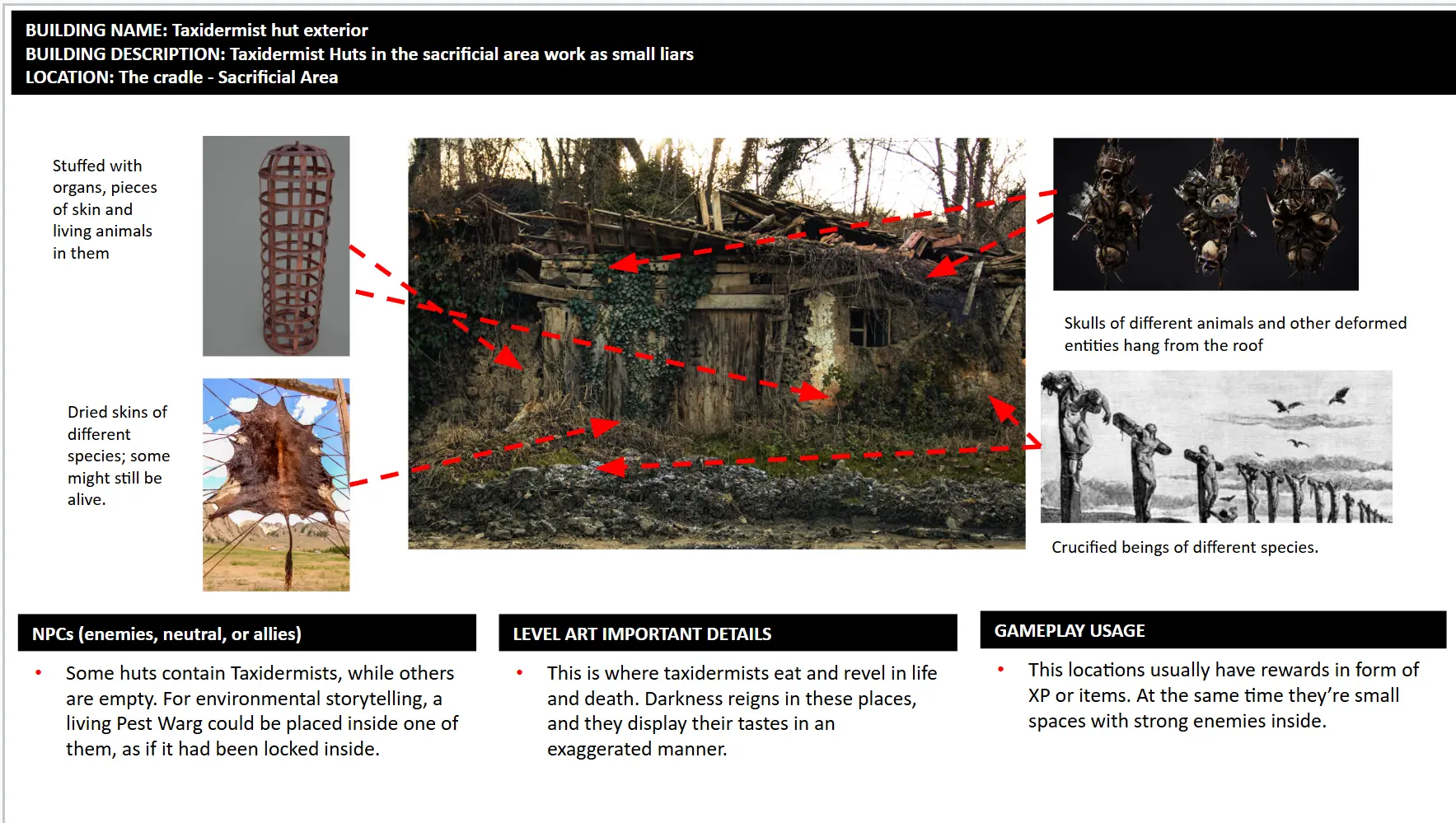
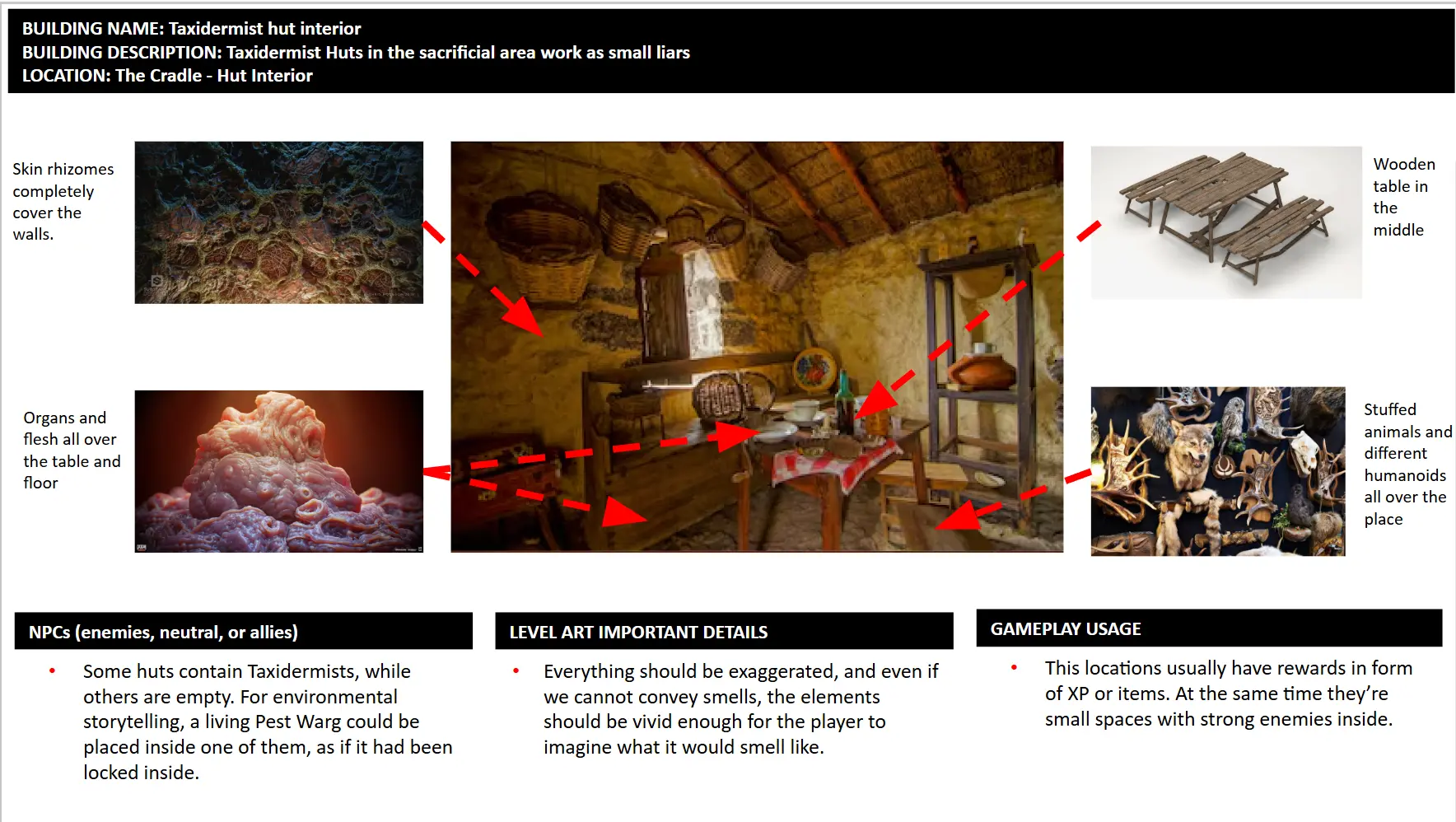
Building documentations:
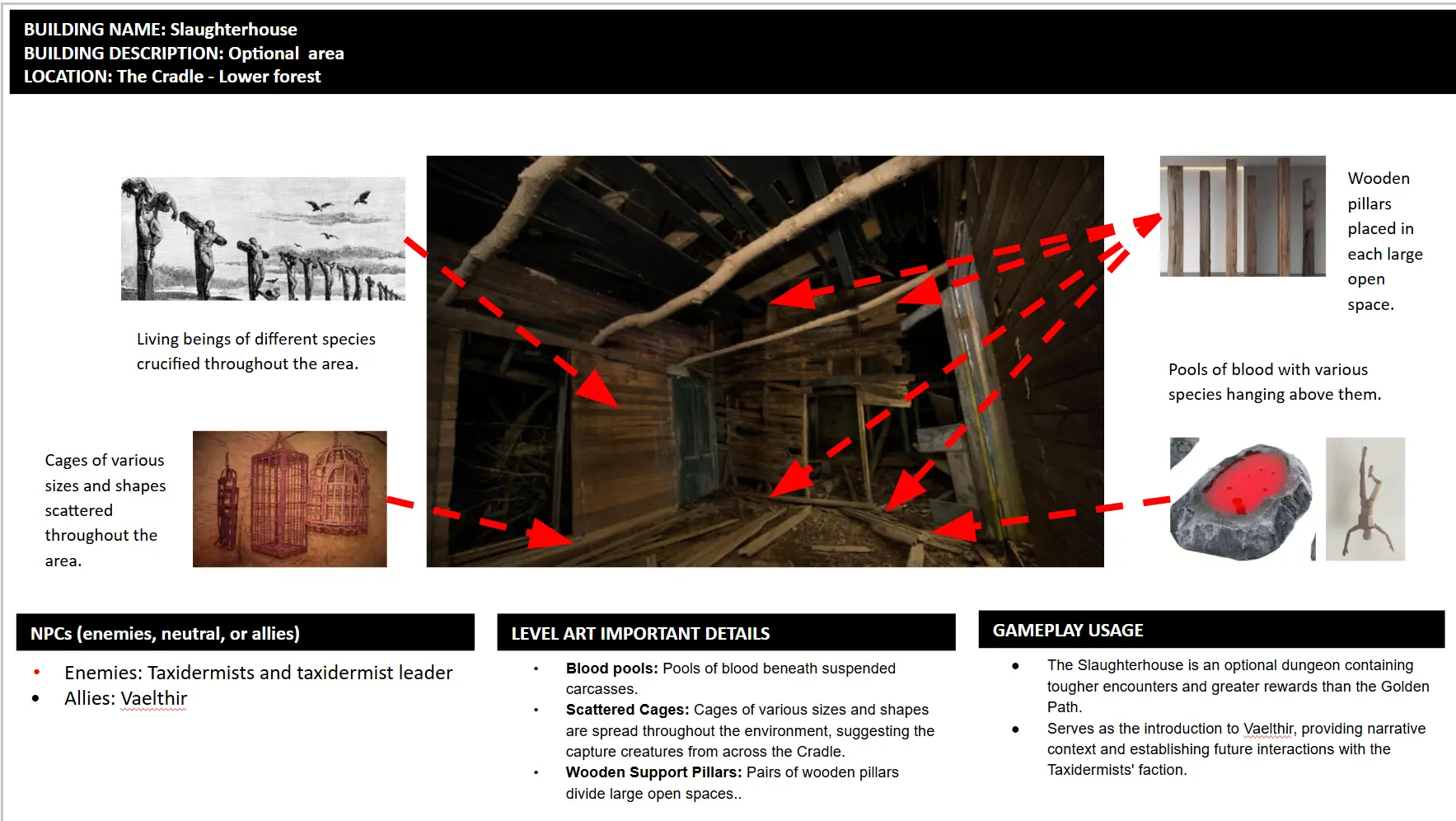
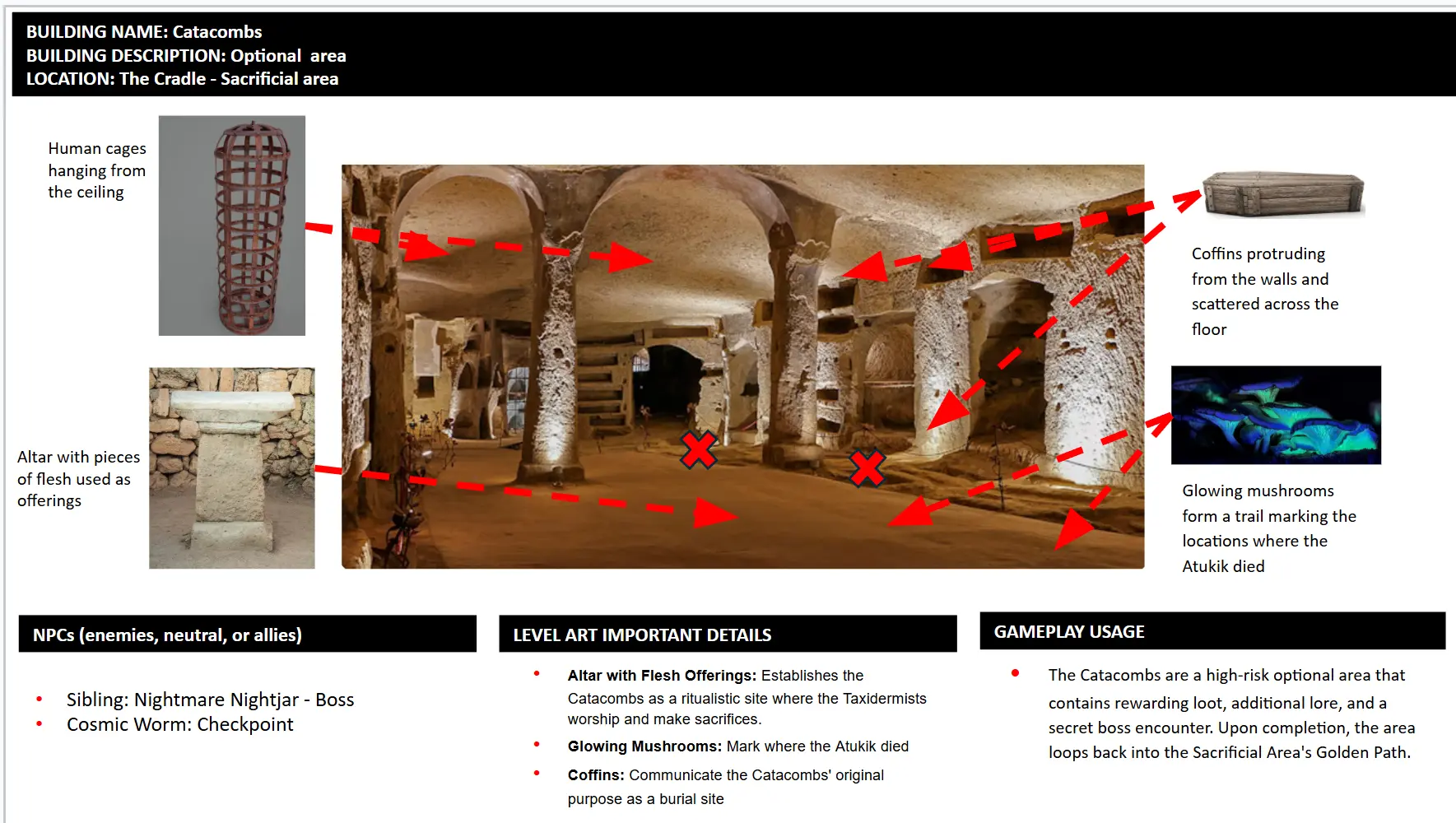
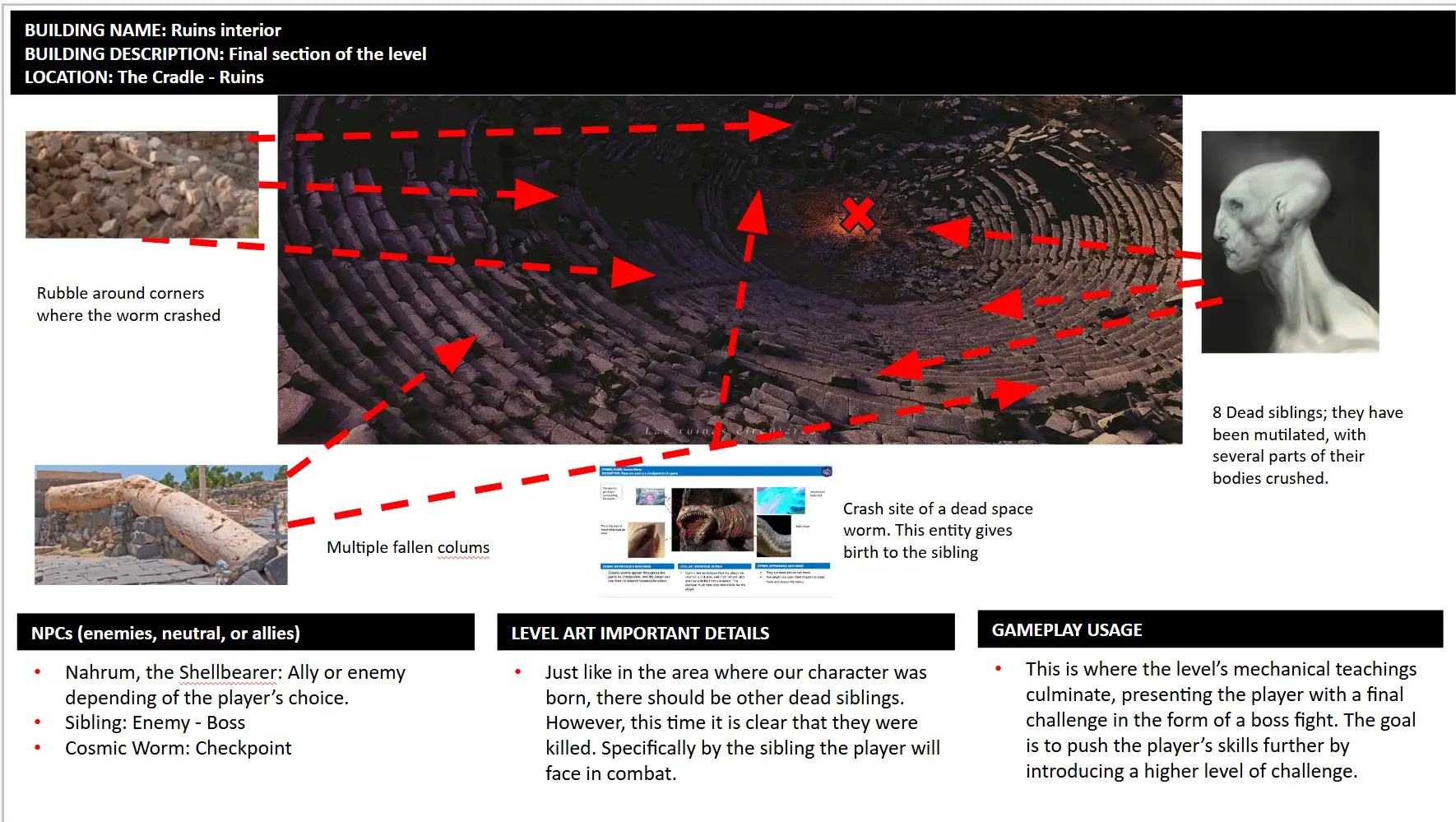
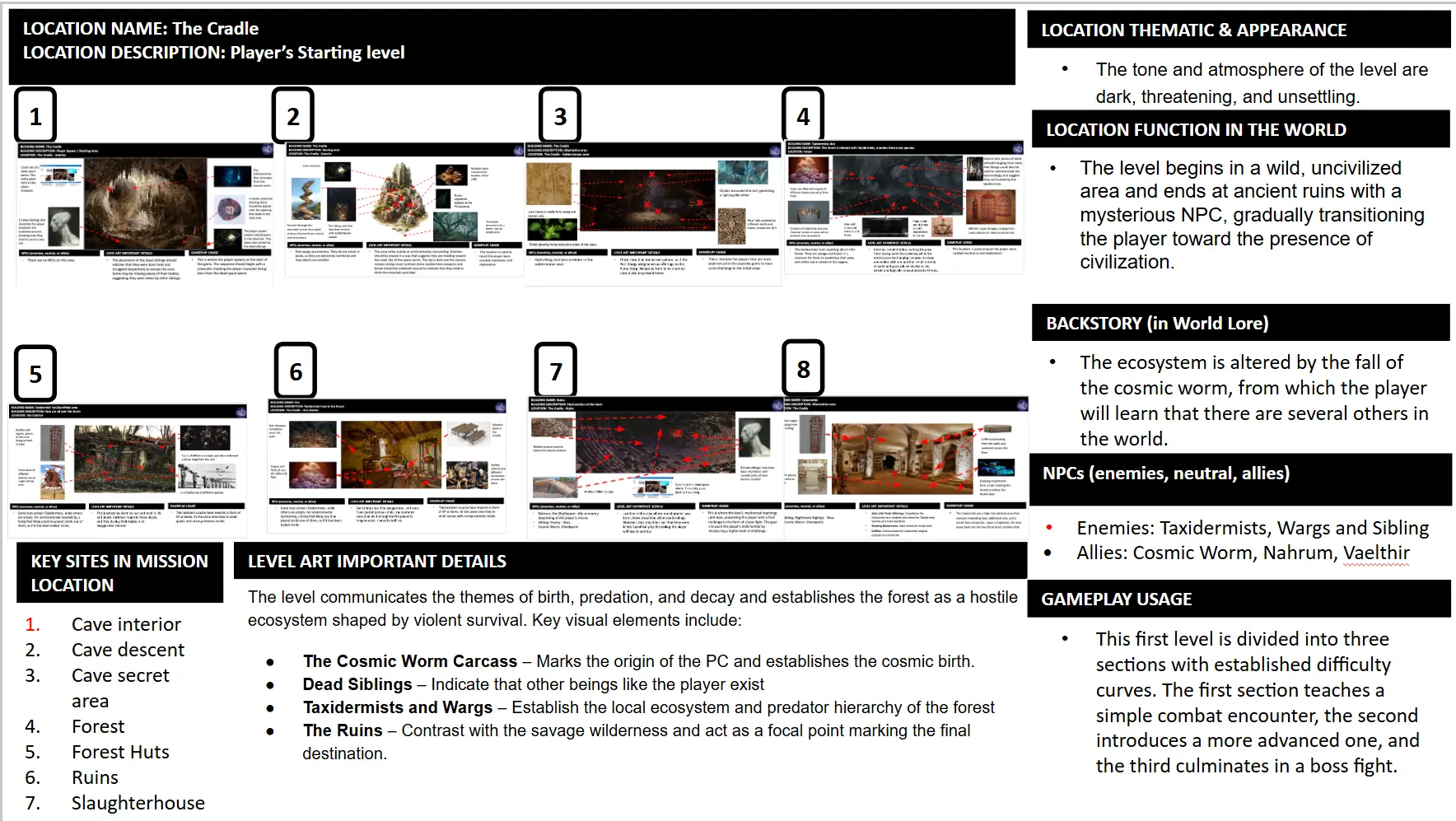
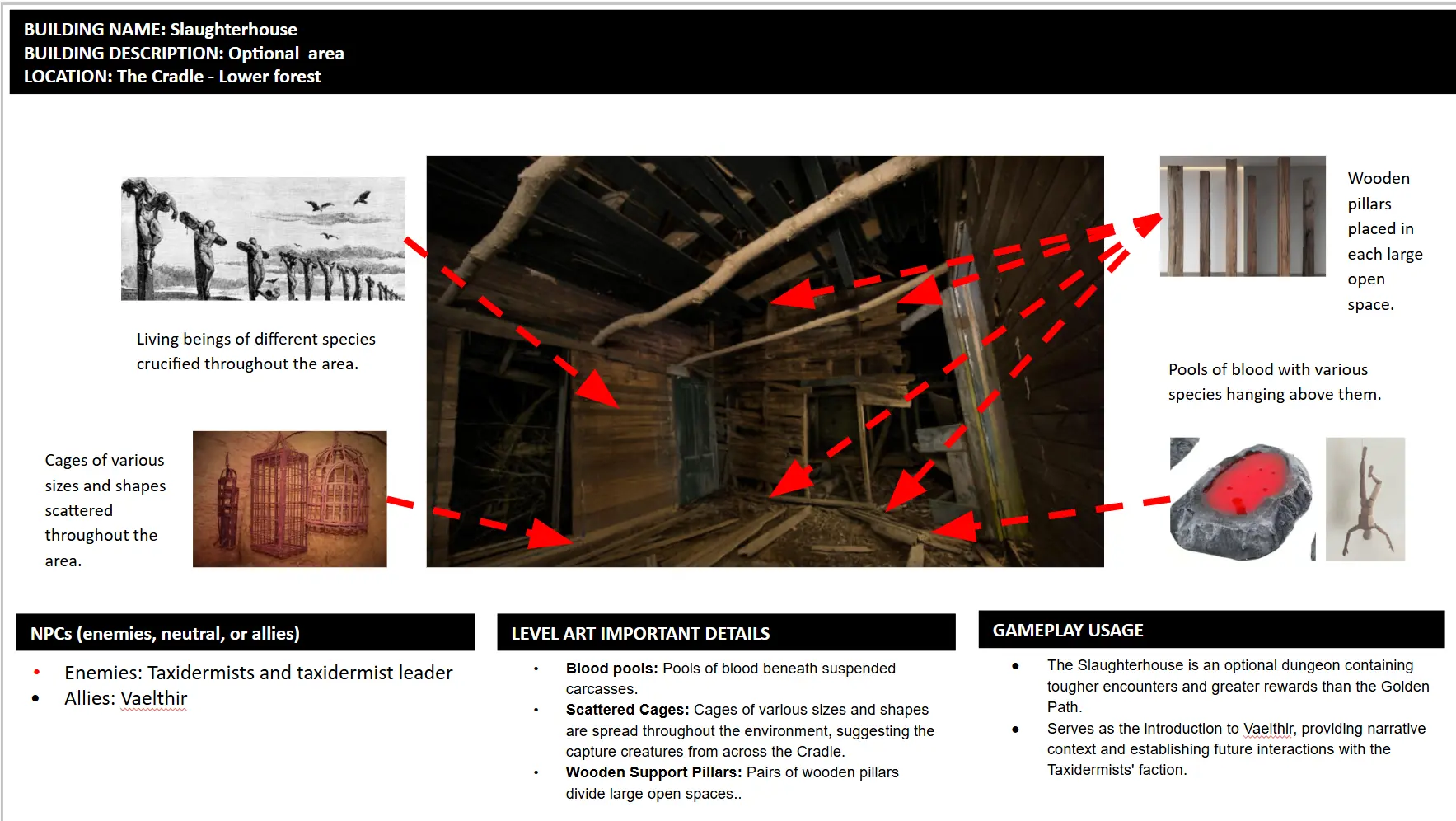
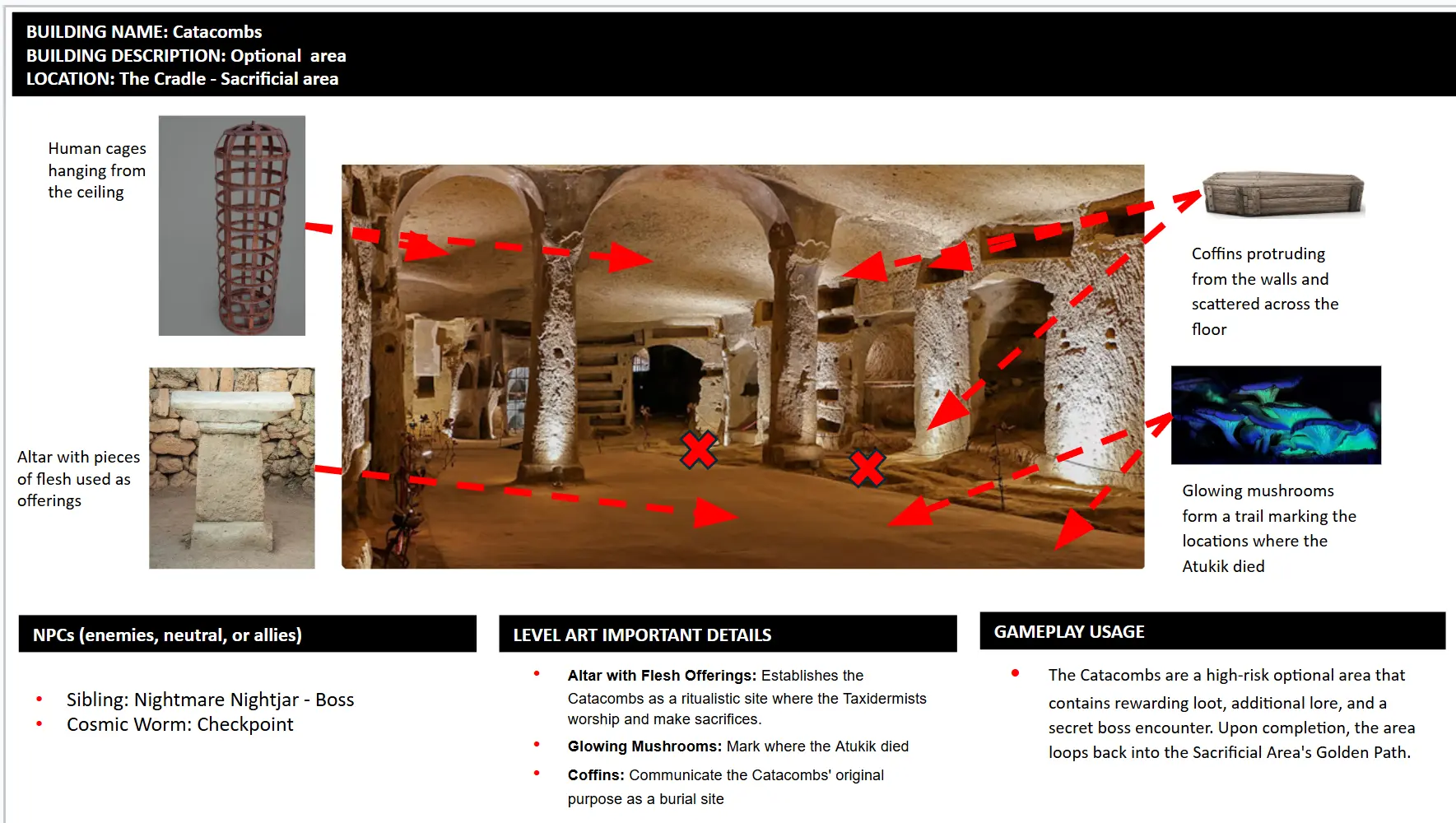
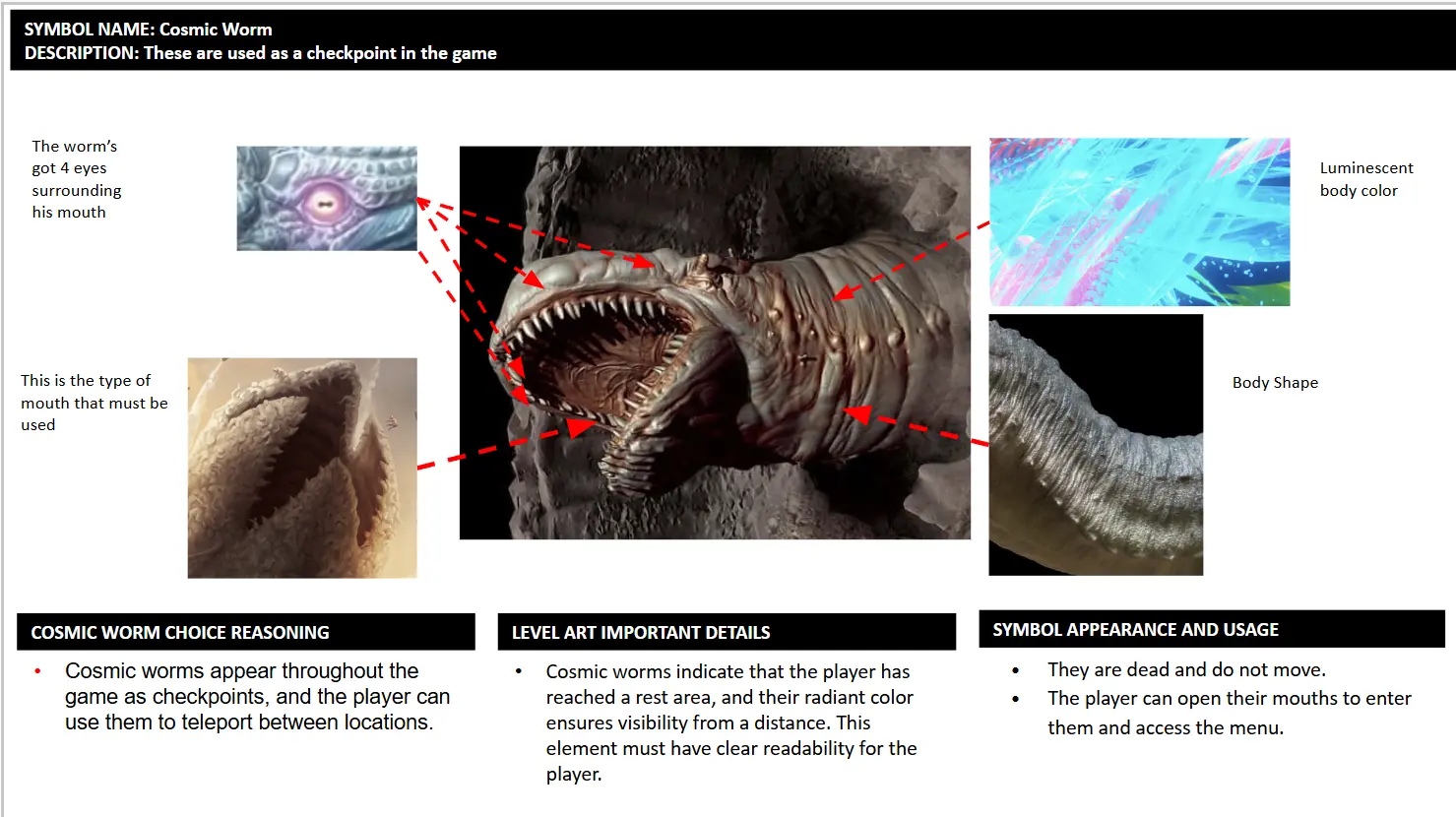
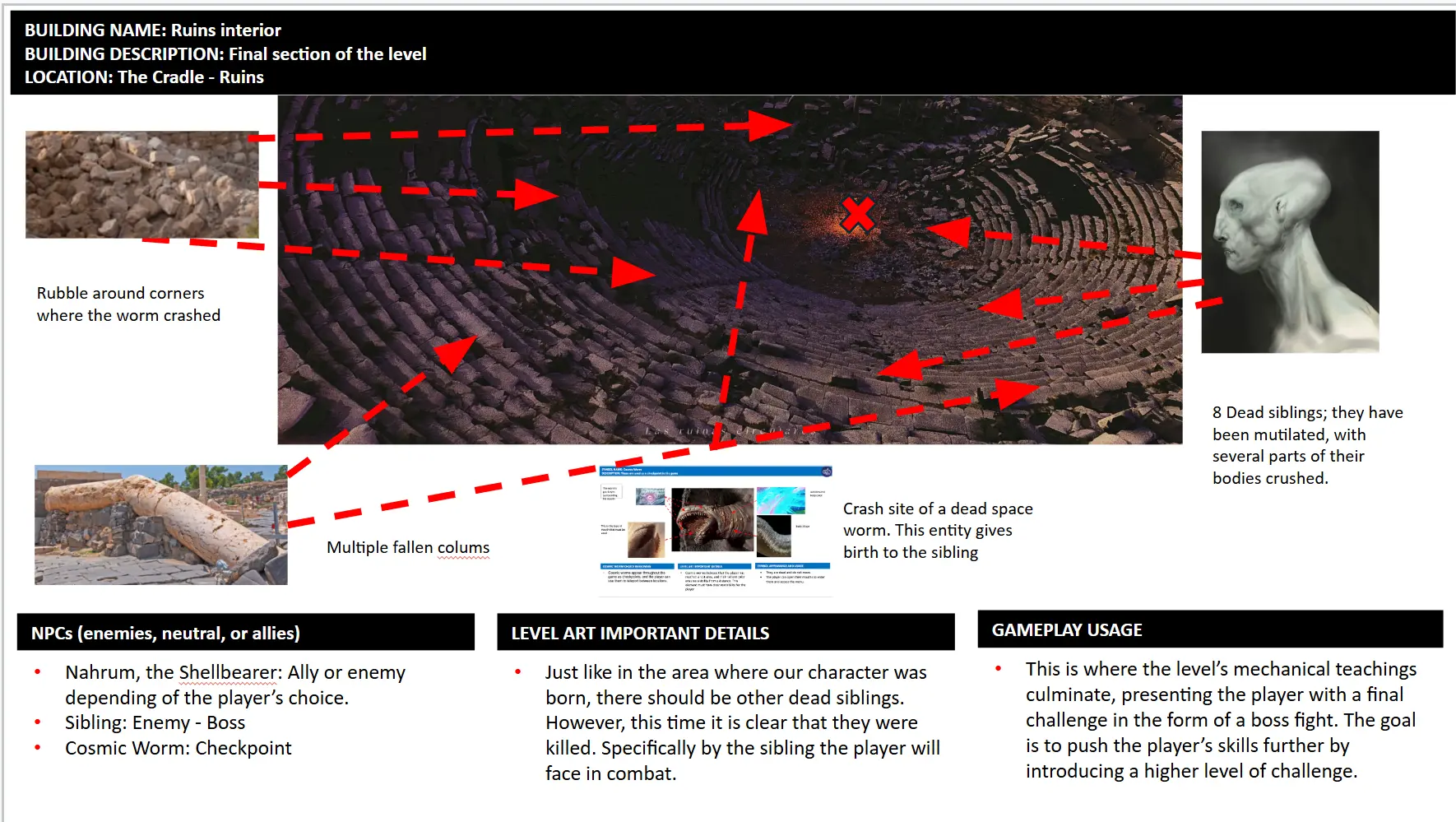
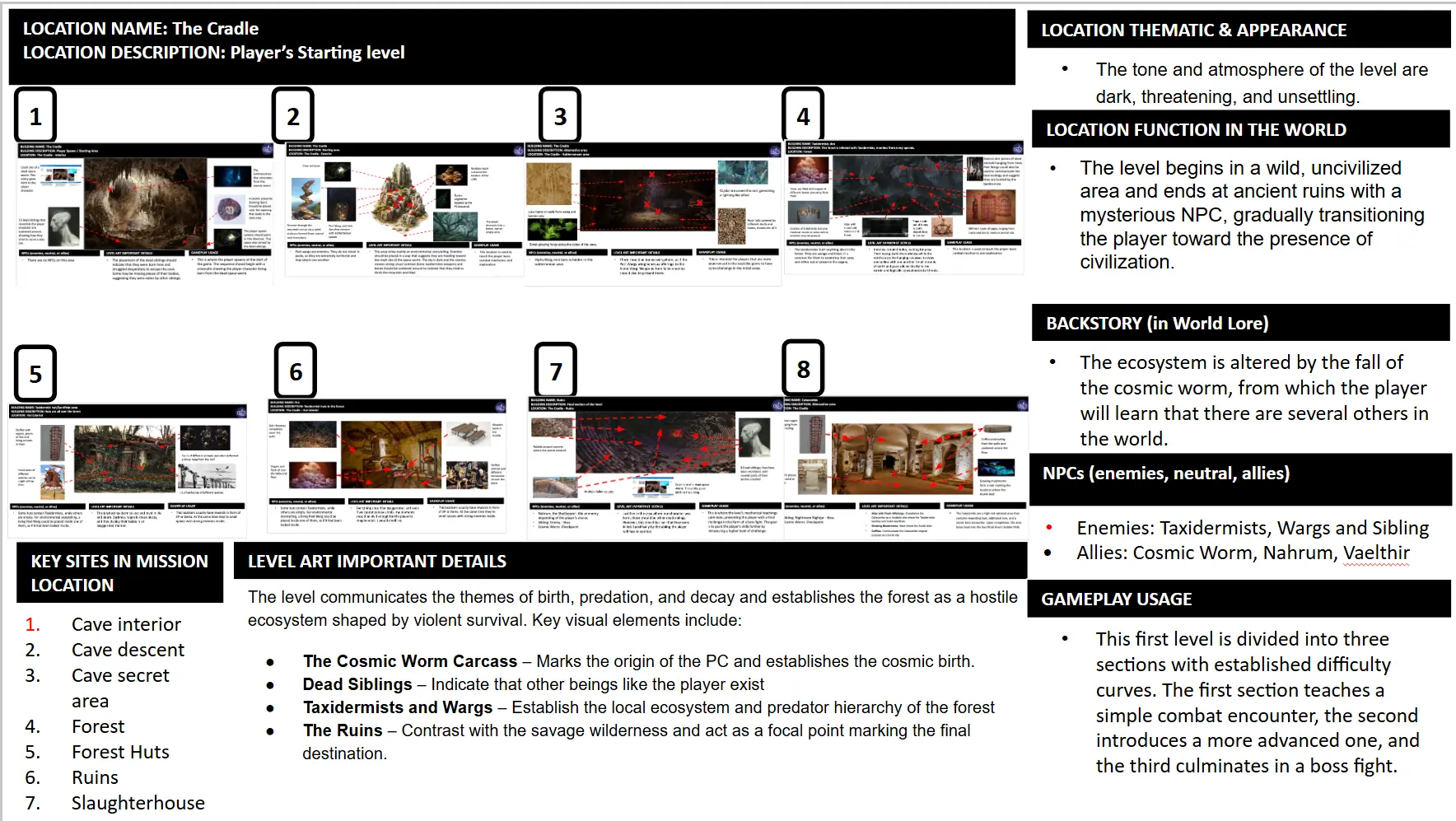
Created building documentation to ensure effective communication between the narrative, art, and level design teams. The goals for this documentation were:
- Provide reference images, visual notes, and contextual information to establish a clear visual identity for locations and key world elements.
- Define the history and narrative context of each location to maintain consistency across all project documentation.
- Include gameplay usage, narrative purpose, environmental storytelling opportunities, and important art details for quick reference during level design, narrative design, and art production.
- Clearly label each building with its name, location number, and interior/exterior designation to facilitate map referencing and cross-team communication.
Designed the (LOCATION)'s Cartography
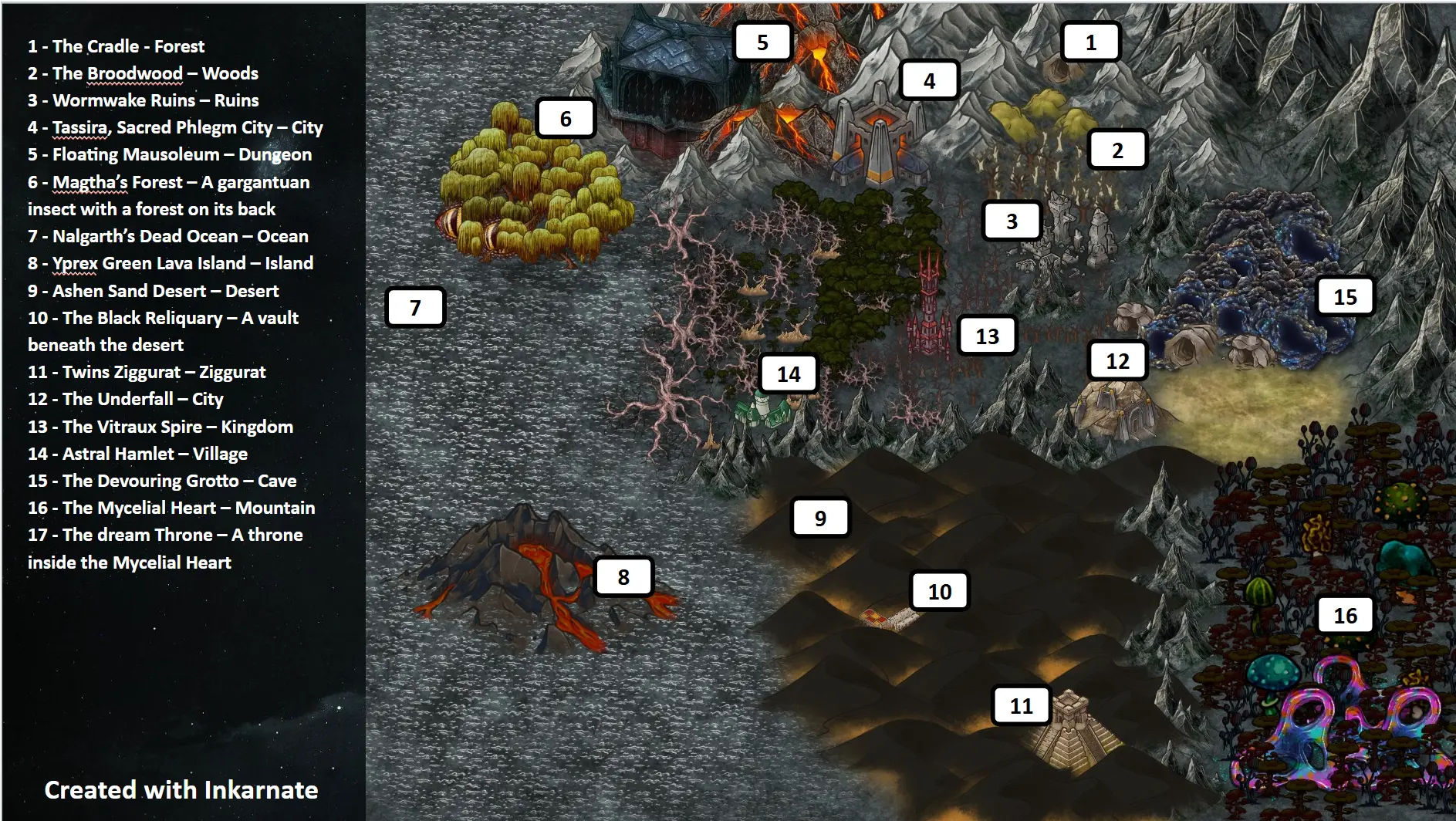
Designed a world map using Inkarnate to expand the setting beyond The Cradle and establish a world driven by mystery, discovery, and fragmented history. The map was created with the following design goals:
- Create distinct regions with strong visual identities that communicate different cultures, ecosystems, and narrative themes.
- Establish key locations and unexplored territories to support future stories and player speculation.
- Reinforce the Soulslike approach to worldbuilding by presenting a world that feels larger than the player’s immediate journey.
- Provide a location key identifying major landmarks and points of interest for use across narrative, level design, and art documentation.
Genre and Content Research
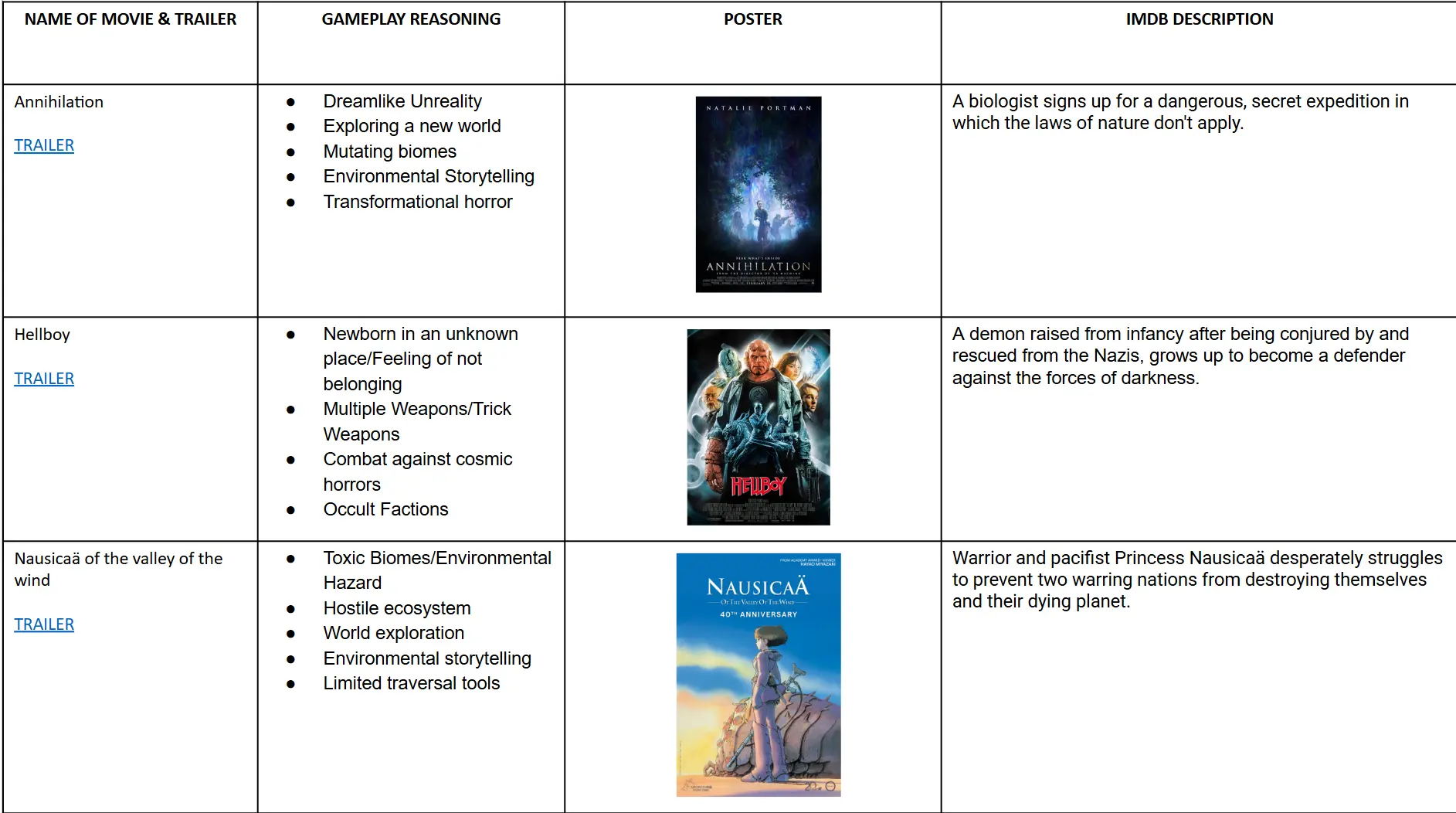
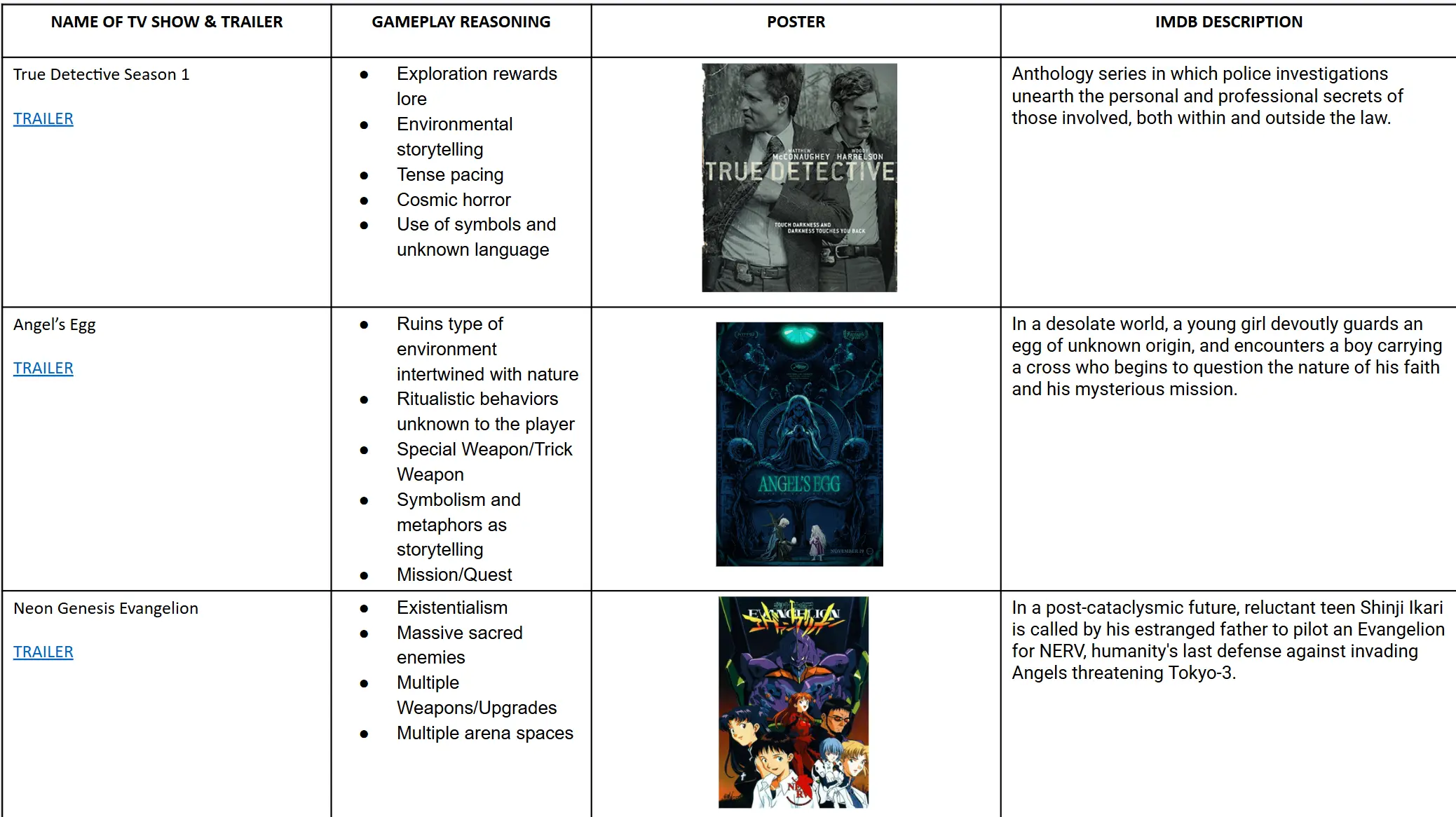
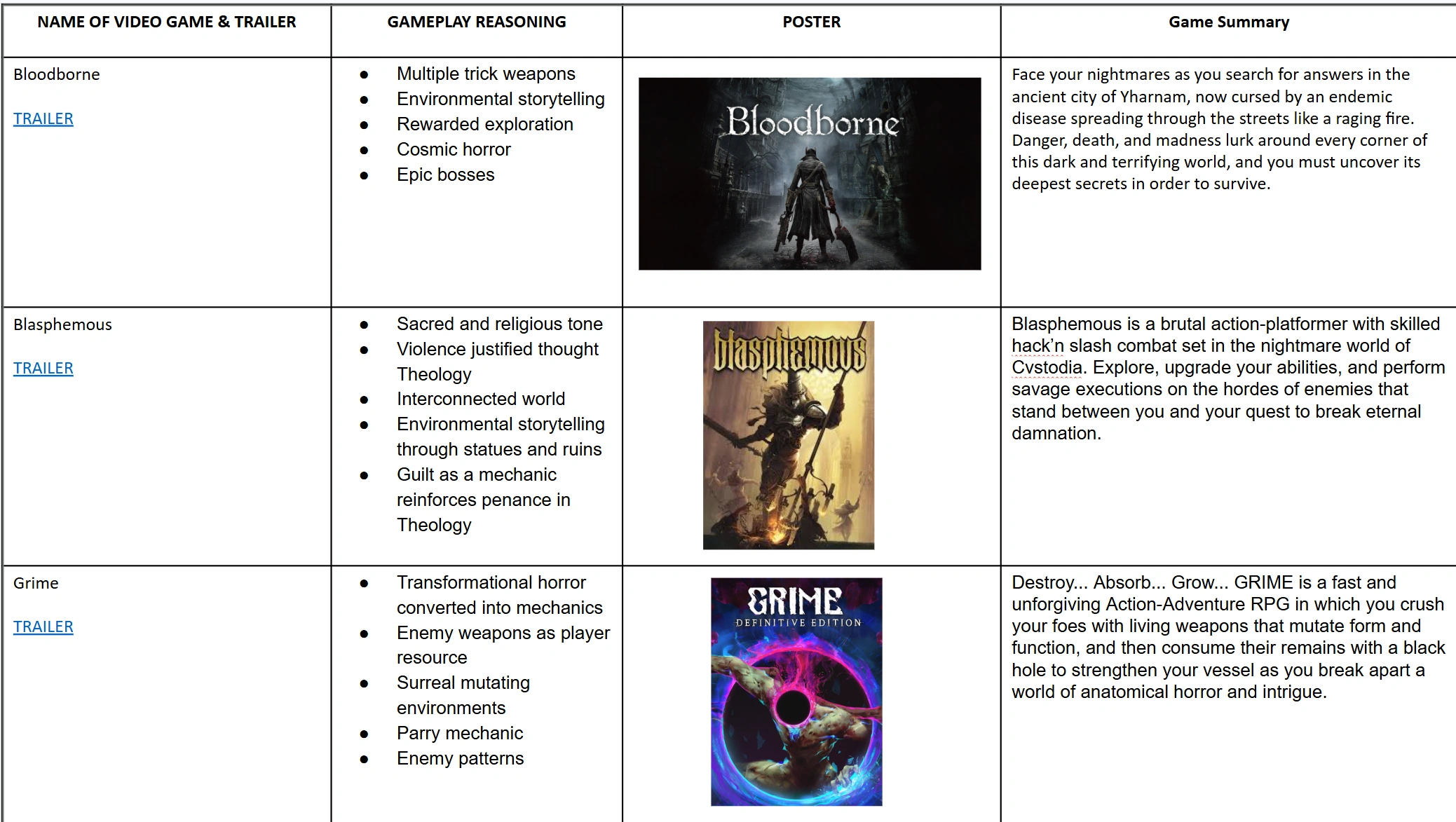
Conducted research documentation to establish the project’s narrative, thematic, and worldbuilding foundations. The document was created with the following goals:
- Analyze games, films, and television series with strong thematic and narrative similarities to identify elements that could be translated in a soulslike experience.
- Document key design takeaways from each reference, highlighting narrative, gameplay, and visual elements relevant to the project’s direction.
- Establish a shared creative reference point for narrative, level design, and art decisions throughout production.
- Compile official summaries, trailers, and reference material to support communication of the project’s tone, themes, and inspirations.
Playtested the storytelling elements
Playtesting was used to validate whether players could successfully uncover and connect fragmented pieces of information distributed across dialogue, item descriptions, environmental storytelling, and exploration. Particular attention was given to distinguishing intentional mystery from unnecessary confusion, ensuring that players could form accurate conclusions about the world, its characters, and its central conflicts through discovery.