The Cradle
- Genre: Soulslike
- Type: Blockout / Open World / Encounter Design
- Engine: Unreal Engine 5
- Duration: 8 Weeks
- Tools: Procreate / Flexible combat system / Miro / Affinity
- Iterations # 8
- Playtests # 30
- Role: Level designer
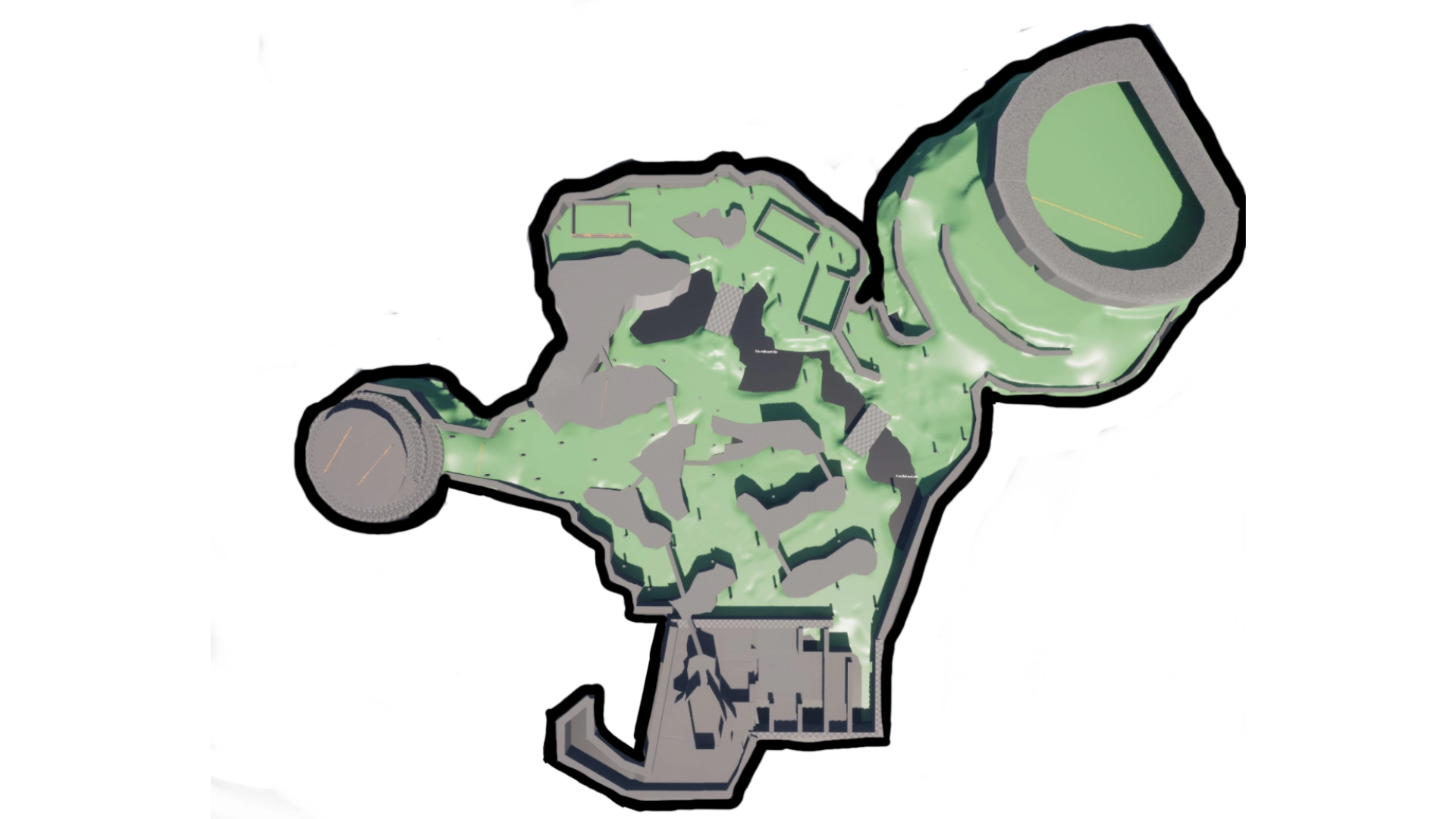
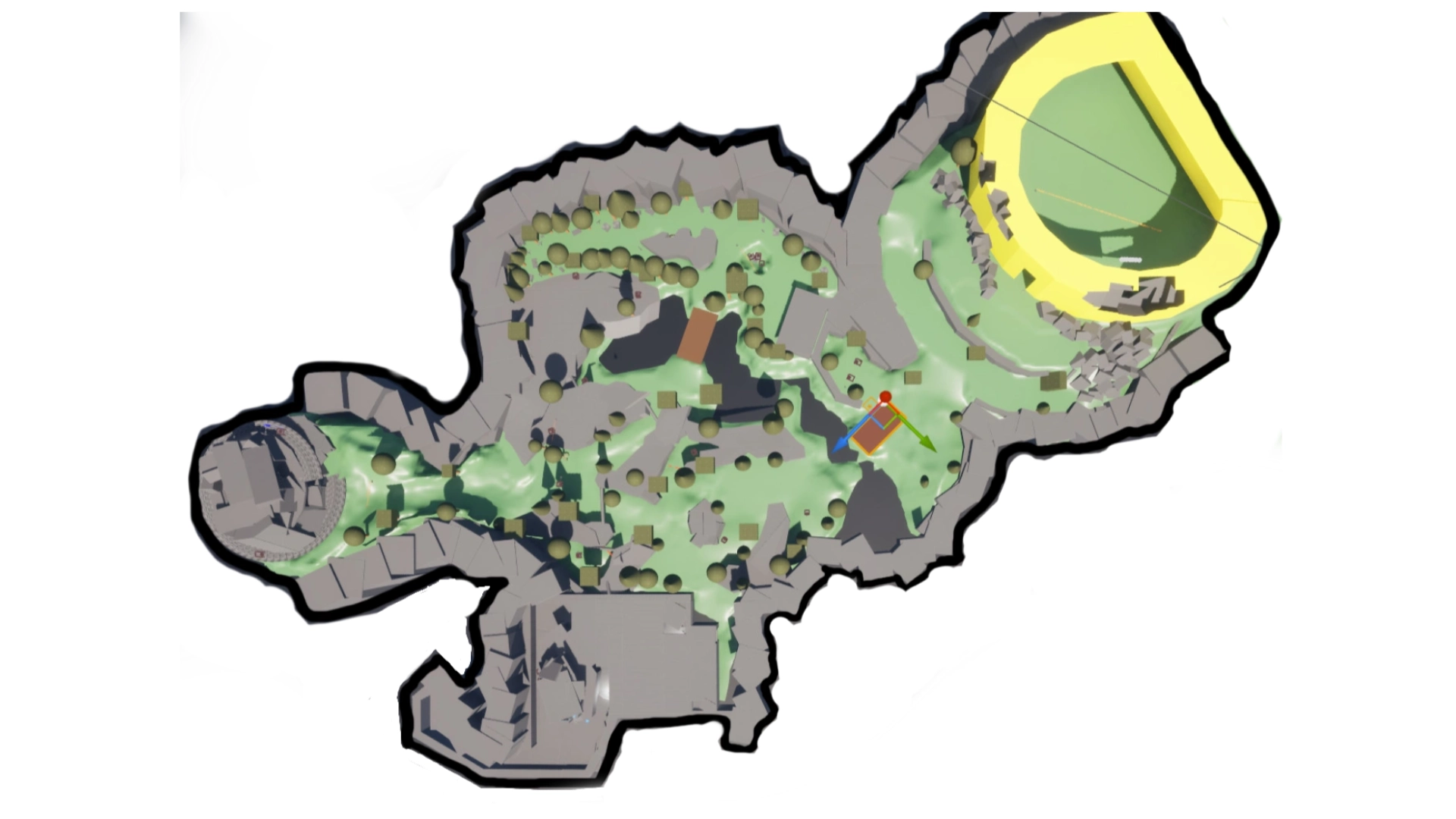
Map Iteration Overview
Goal
The goal was to explore blockout and core level design principles such as layout, player guidance, pacing, and spatial storytelling within a Soulslike framework, building a cohesive, oppressive world interpreted through gameplay rather than exposition.
Strengthen the integration between level design and narrative so both systems support each other.
Improve encounter design through intentional enemy placement, sightlines, and combat rhythm.
Develop clear navigation using lighting, landmarks, and spatial composition.
The level underwent 30+ playtests, iterating on feedback that reinforced the core design pillars and improved encounters, flow, pacing, and overall readability.
This process aimed to validate design decisions through continuous testing and refinement, ensuring that gameplay, layout, and environmental elements clearly communicate intent without relying on explicit explanation.
Level Overview & Technique Highlights
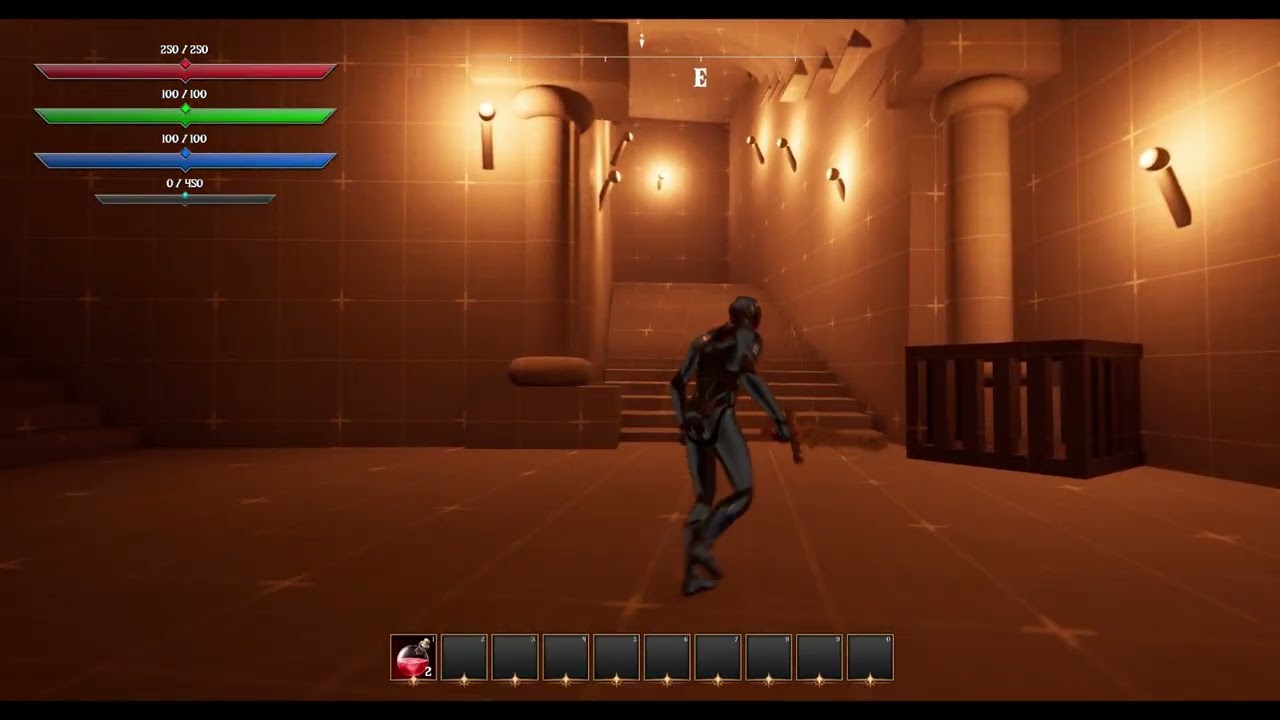
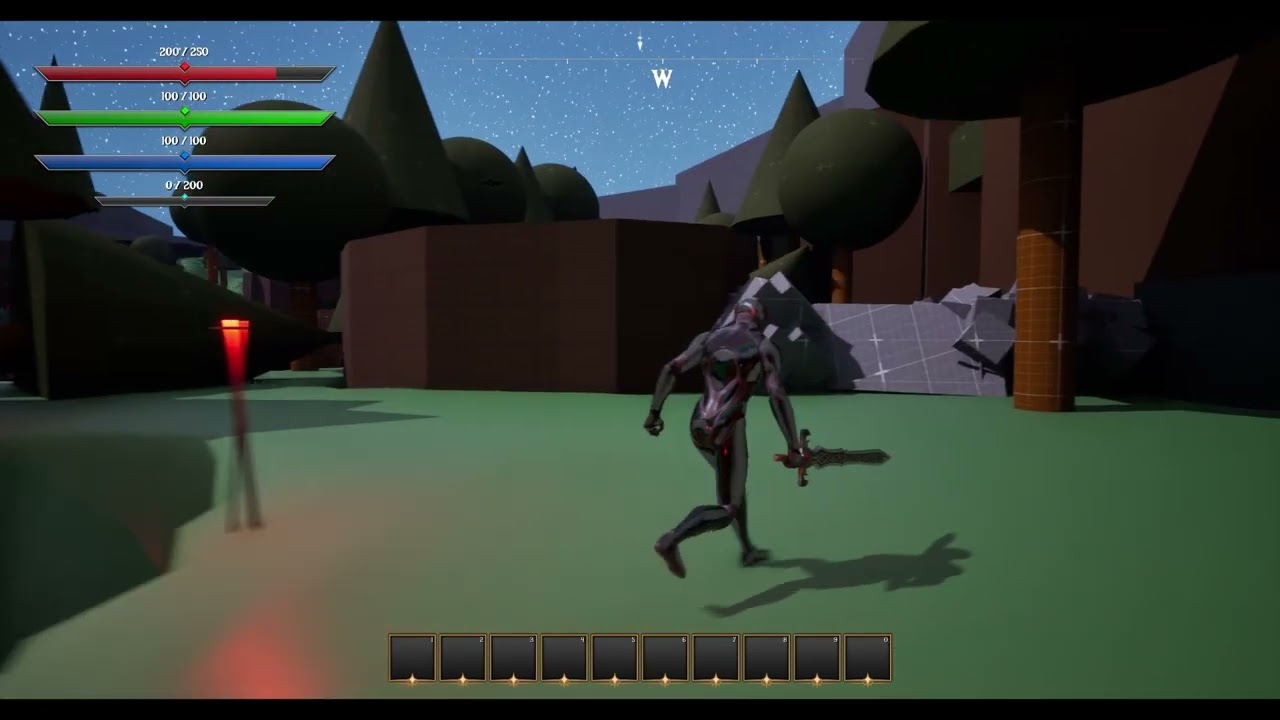
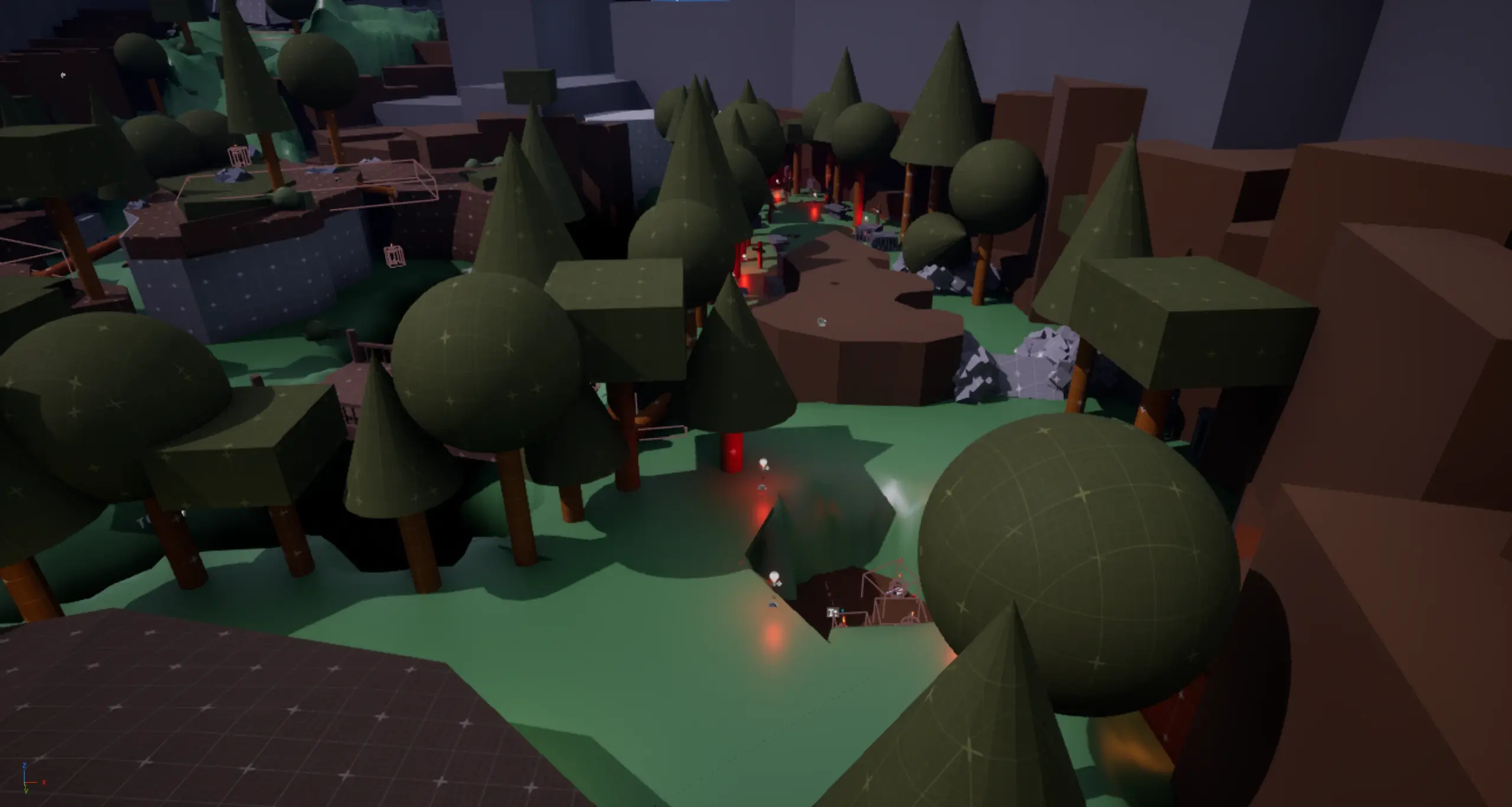
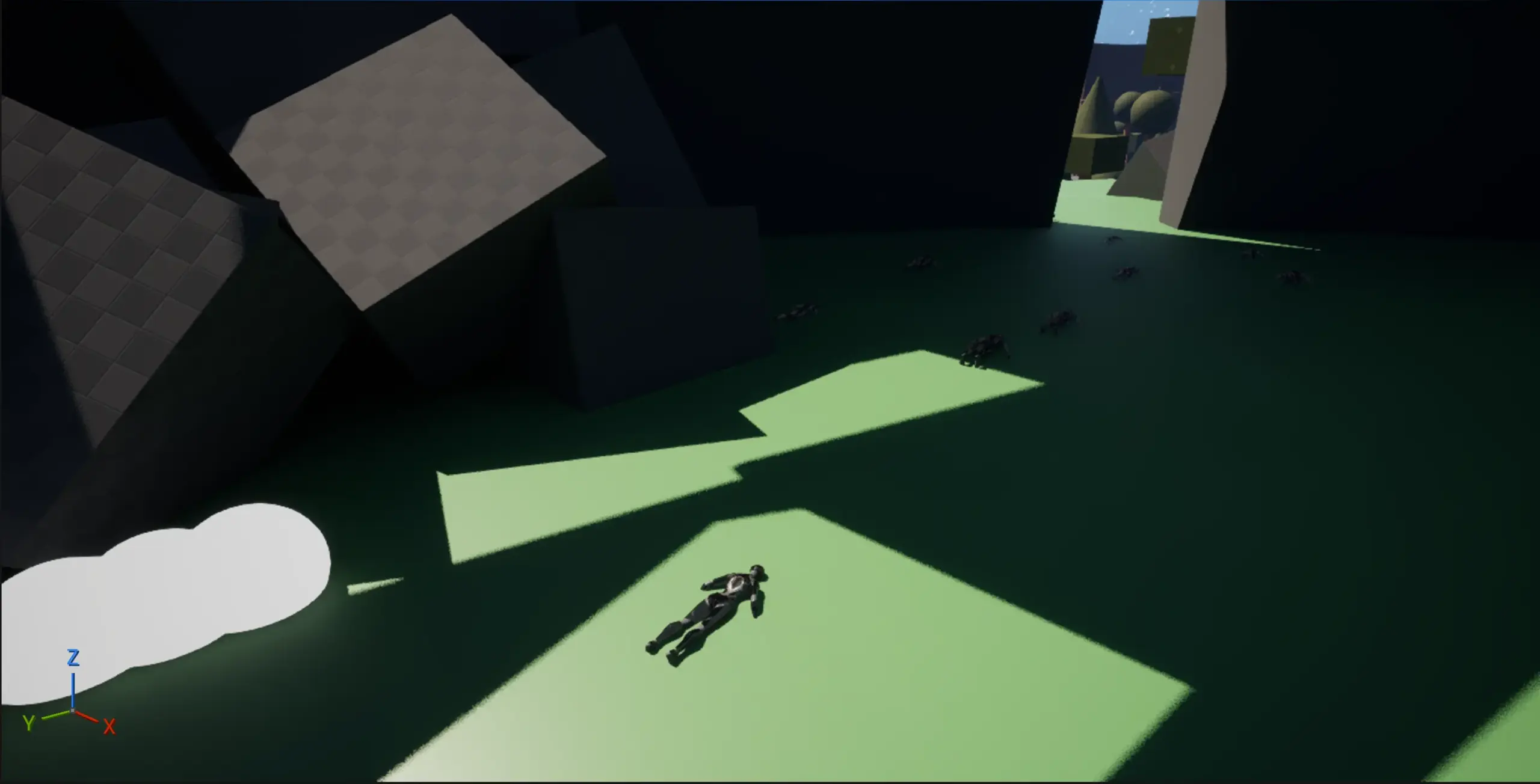
Setting/Synopsis: A Soulslike open-world level where a newborn Void entity explores a corrupted ecosystem shaped by eldritch forces, uncovering fragments of their origin through player-driven progression (cave → forest → ruins).
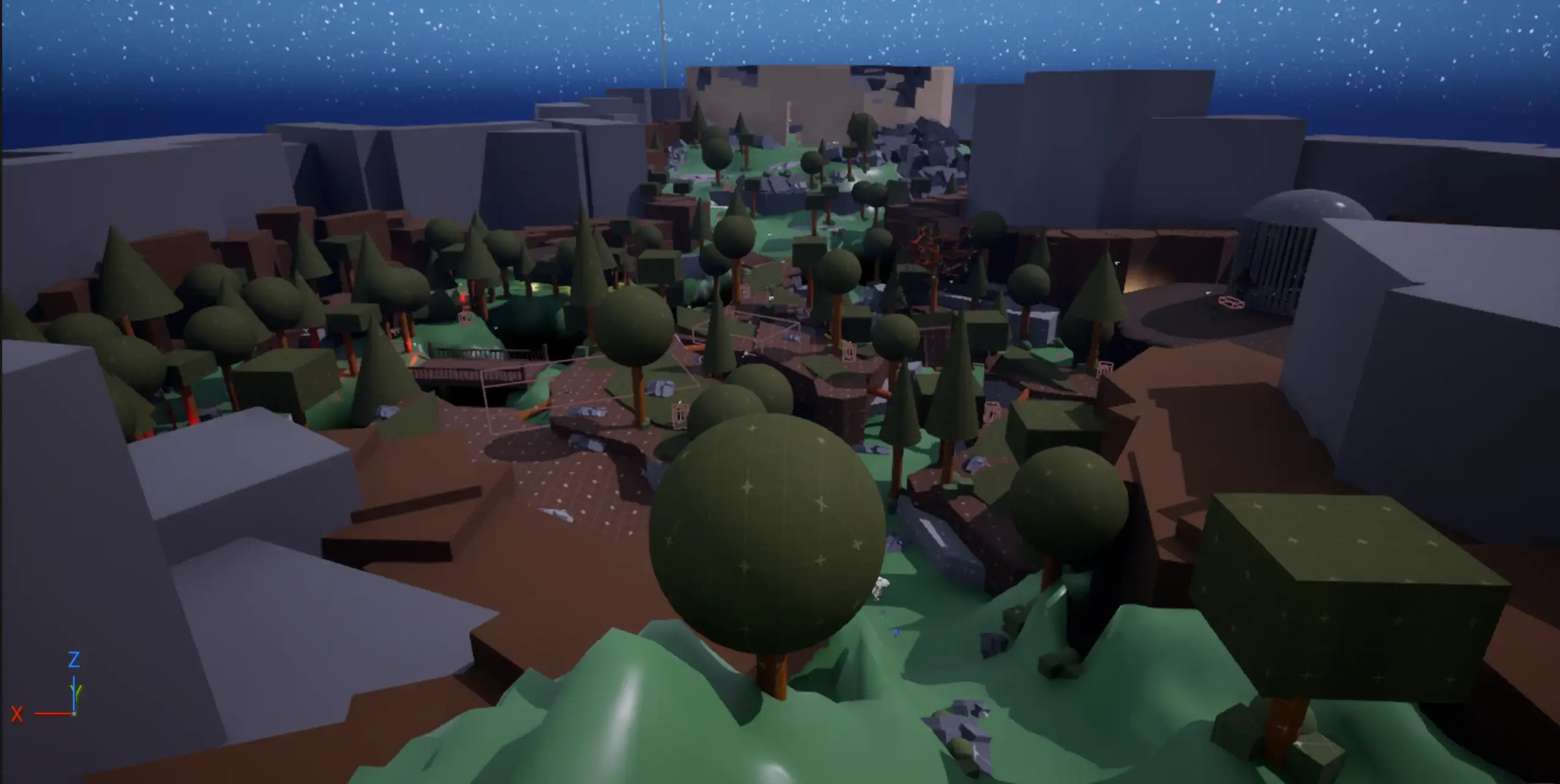
Built around Soulslike principles such as framing, vistas, sightlines, and looping, with diegetic guidance communicated through landmarks and lighting. Encounters emphasize storytelling, intentional enemy placement, and readable combat, while optional paths and multiple routes reinforce player agency and risk vs reward.
Narrative and level design are fully integrated, creating a cohesive world interpreted through gameplay.
Technique Highlight: Encounter Design
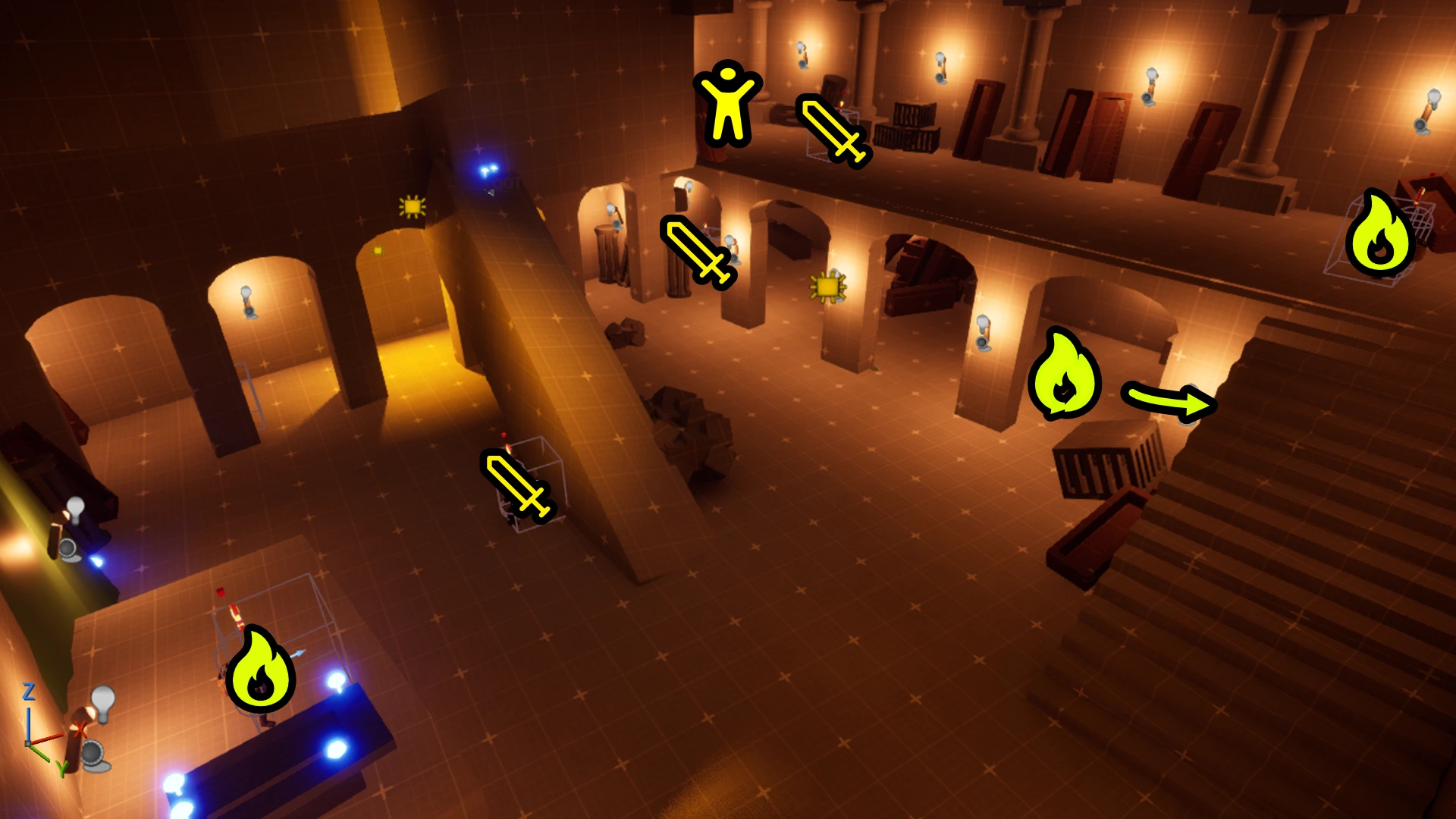
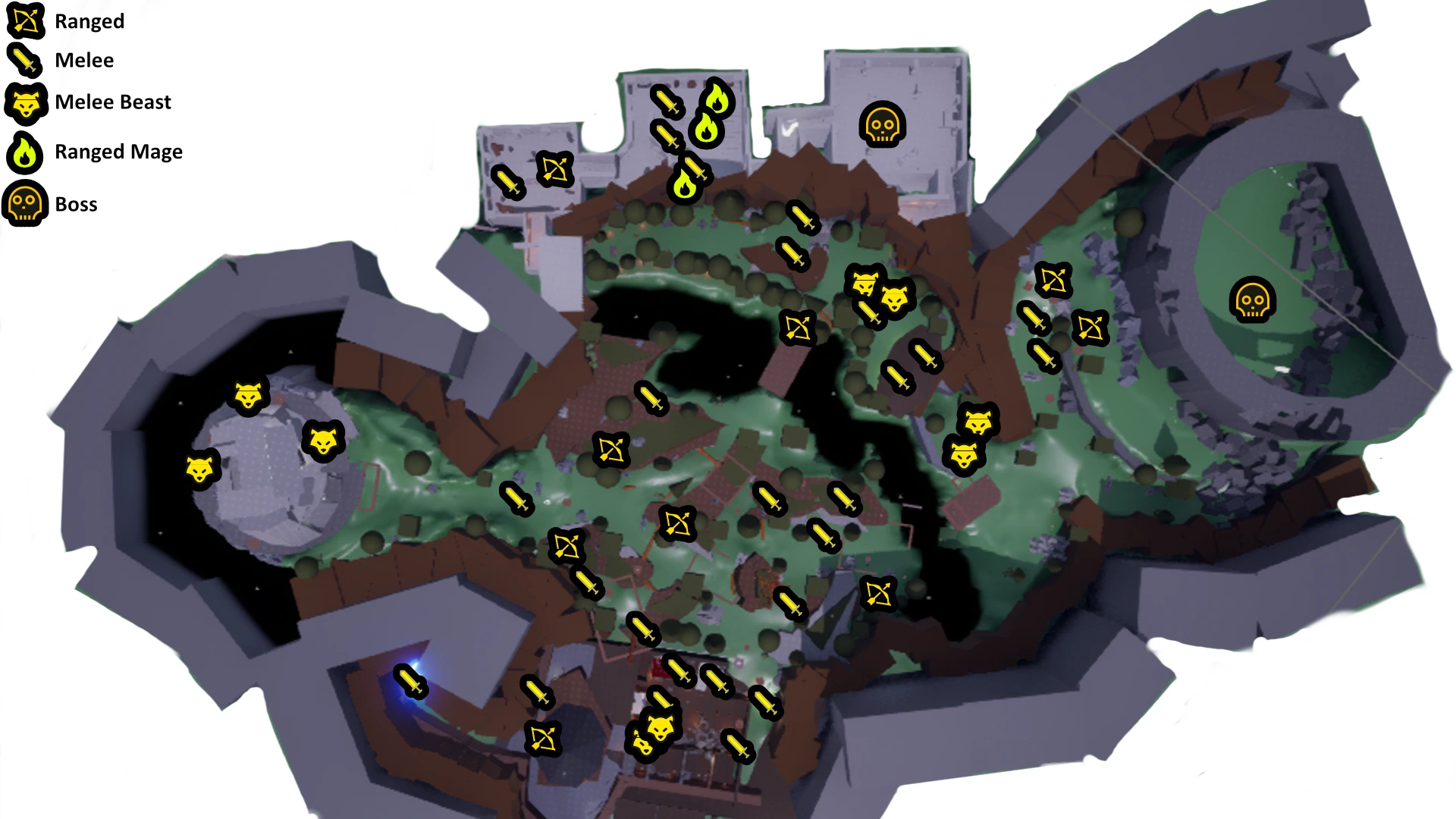
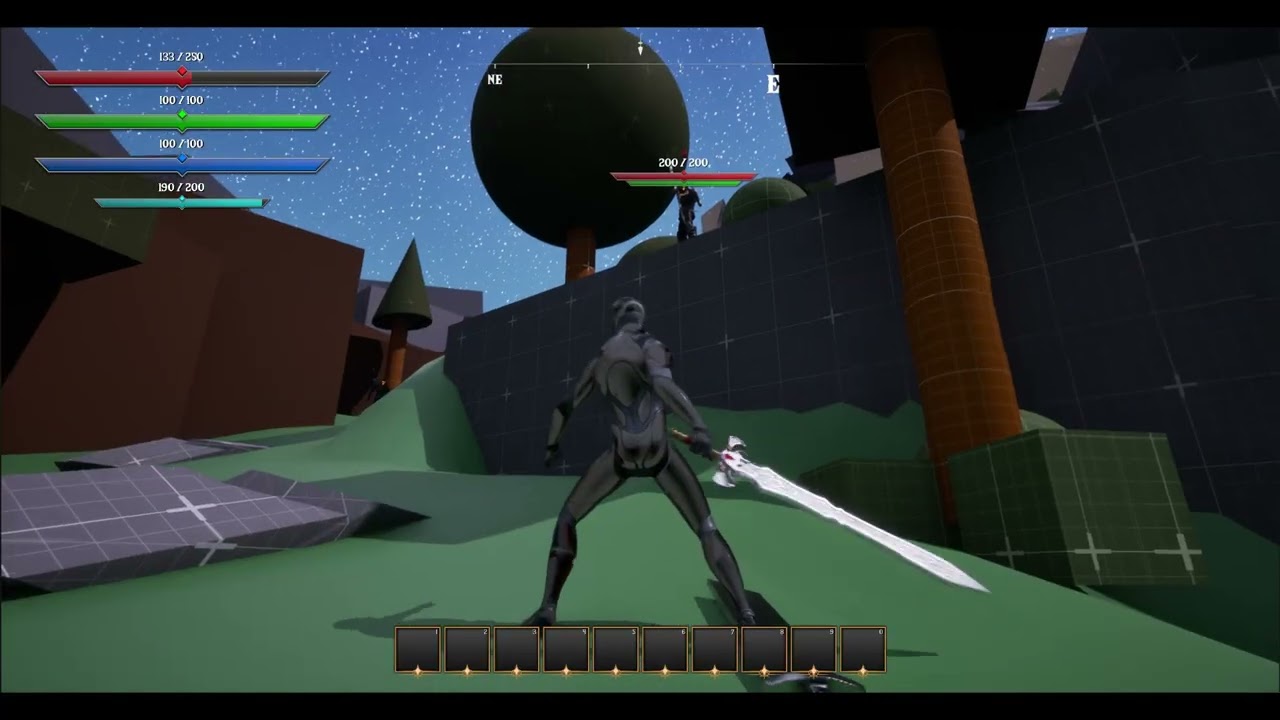
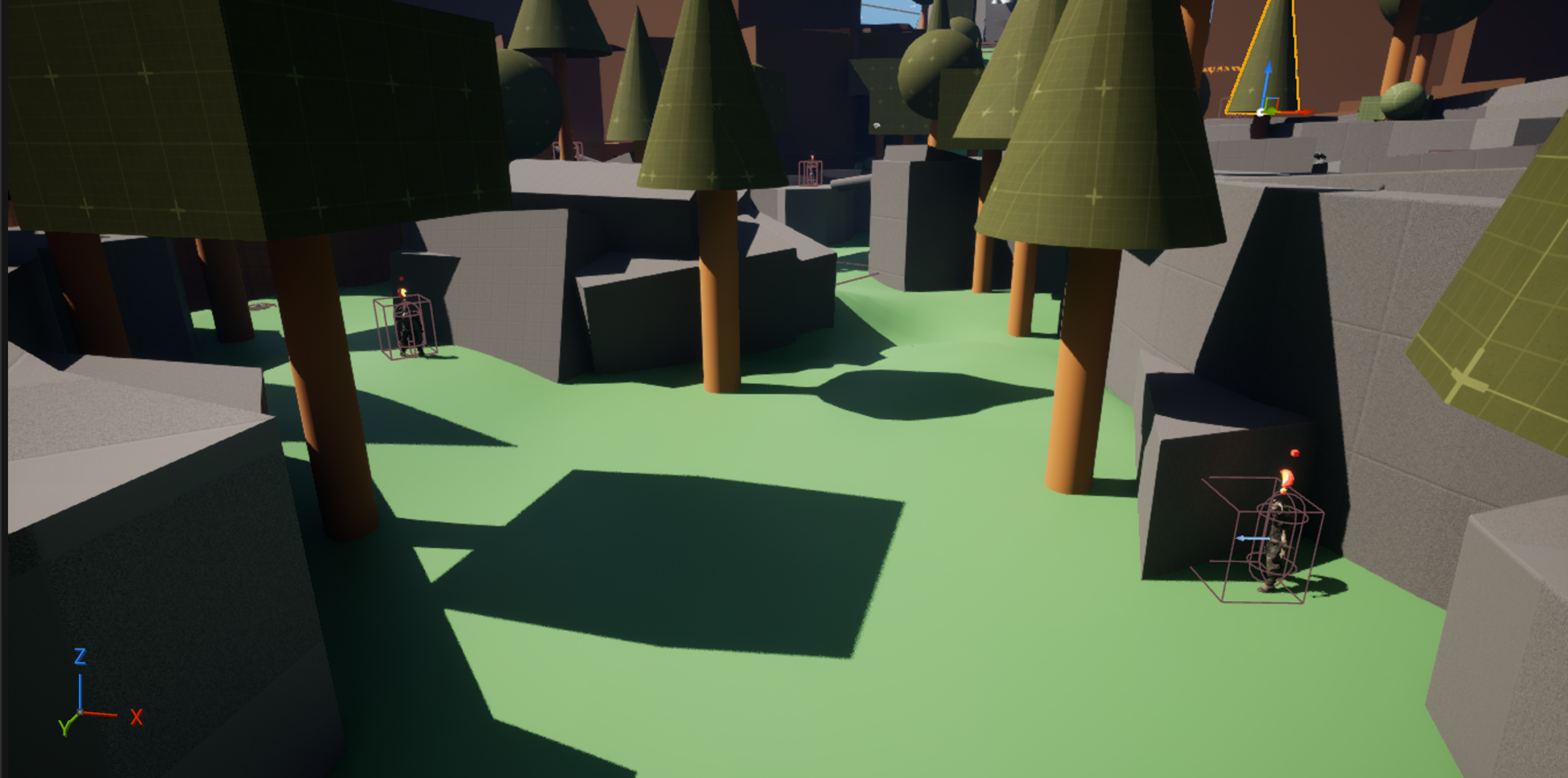
Technique & Use-case: Encounters are designed to teach enemy patterns and the mechanics required to counter them. Most enemies are hunters, which justifies ambushes and hidden positioning, while select placements are used to guide player movement.
Context of Use-case: Encounters are structured as progressive learning beats, leveraging space, visibility, and enemy synergy to encourage varied tactics, positioning, and deliberate engagement.
Technique Detail:
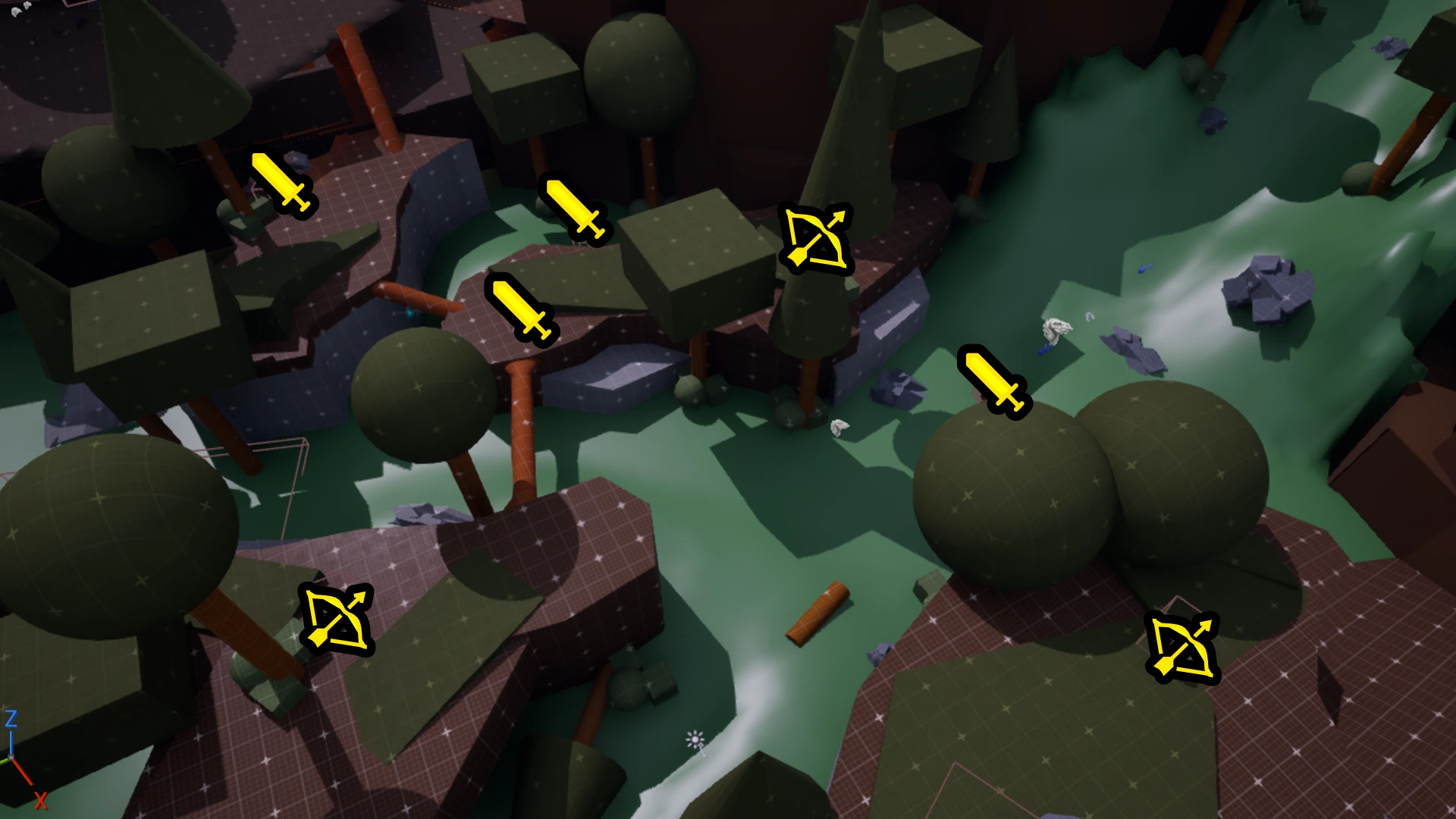
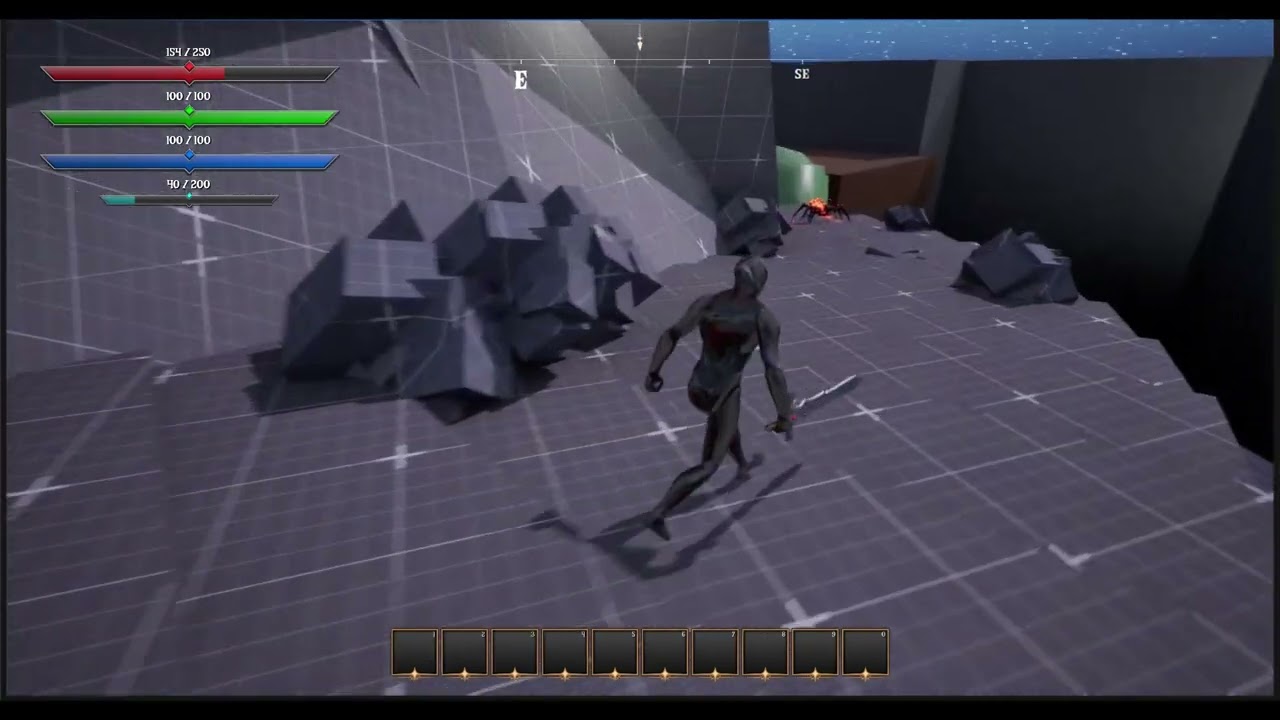
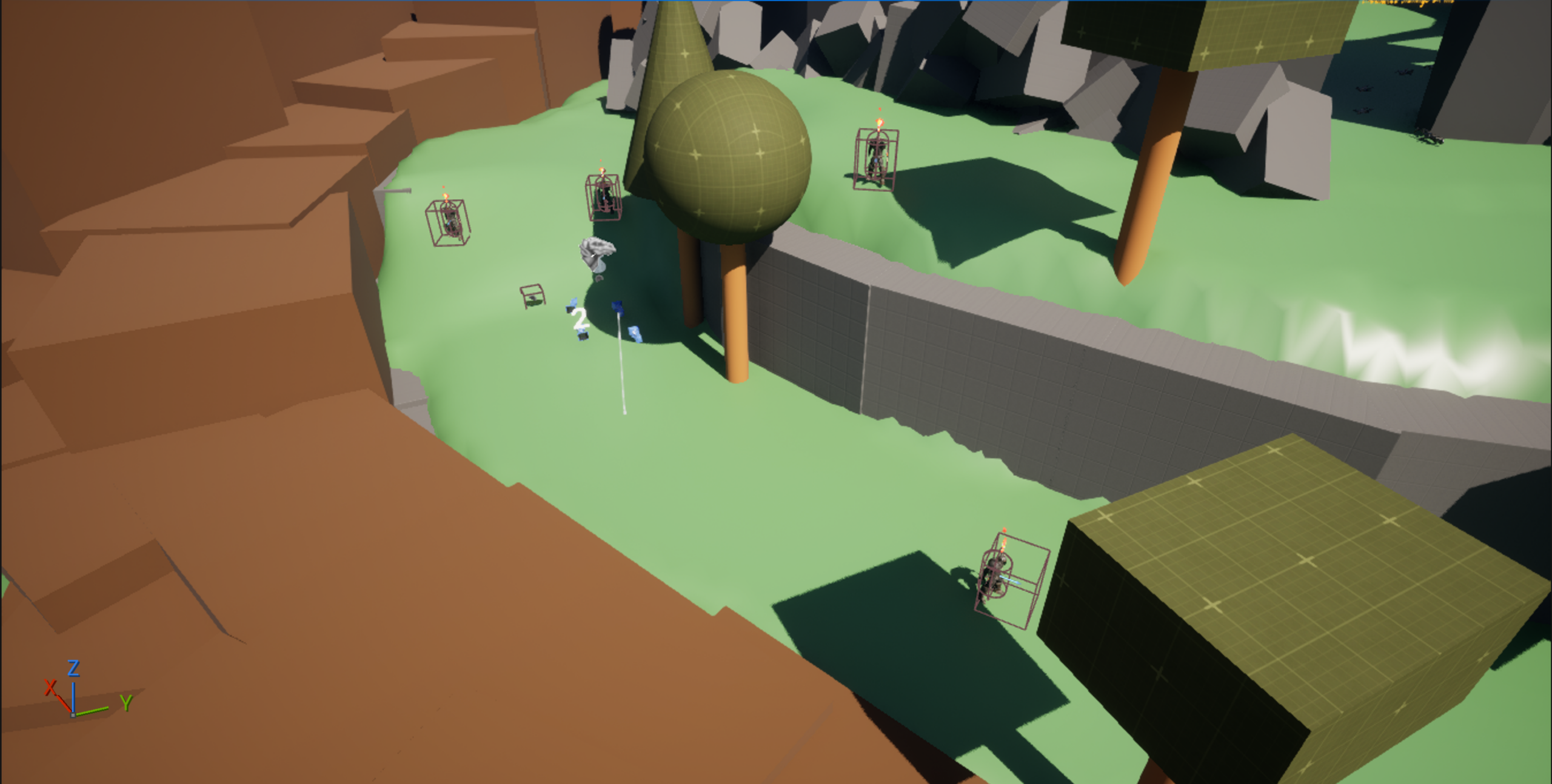
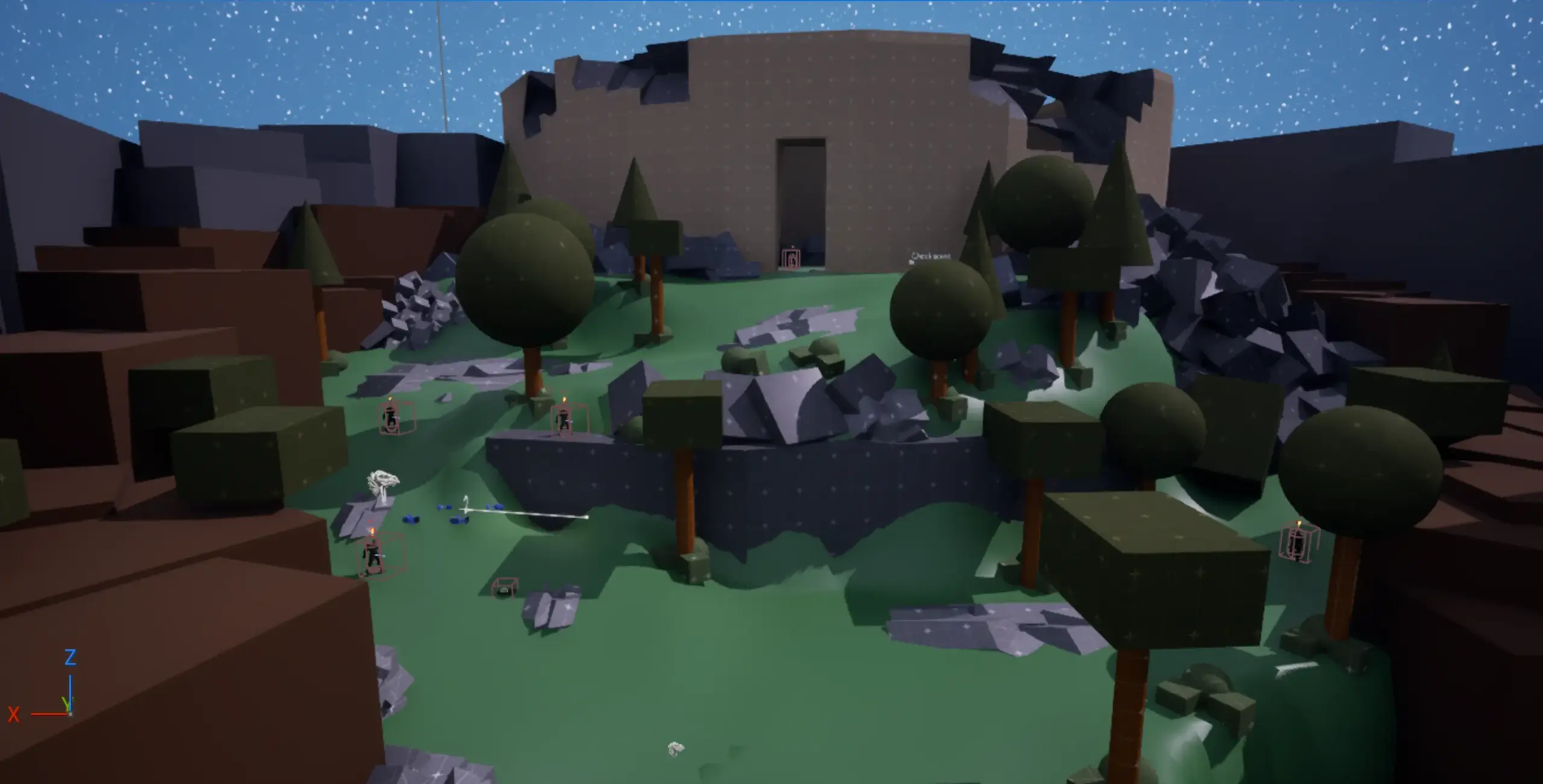
Encounter Area 1: Ranged + melee combinations introduce core combat behaviors. Elevation changes block sightlines for both player and enemies, creating tension and staggered reveals.
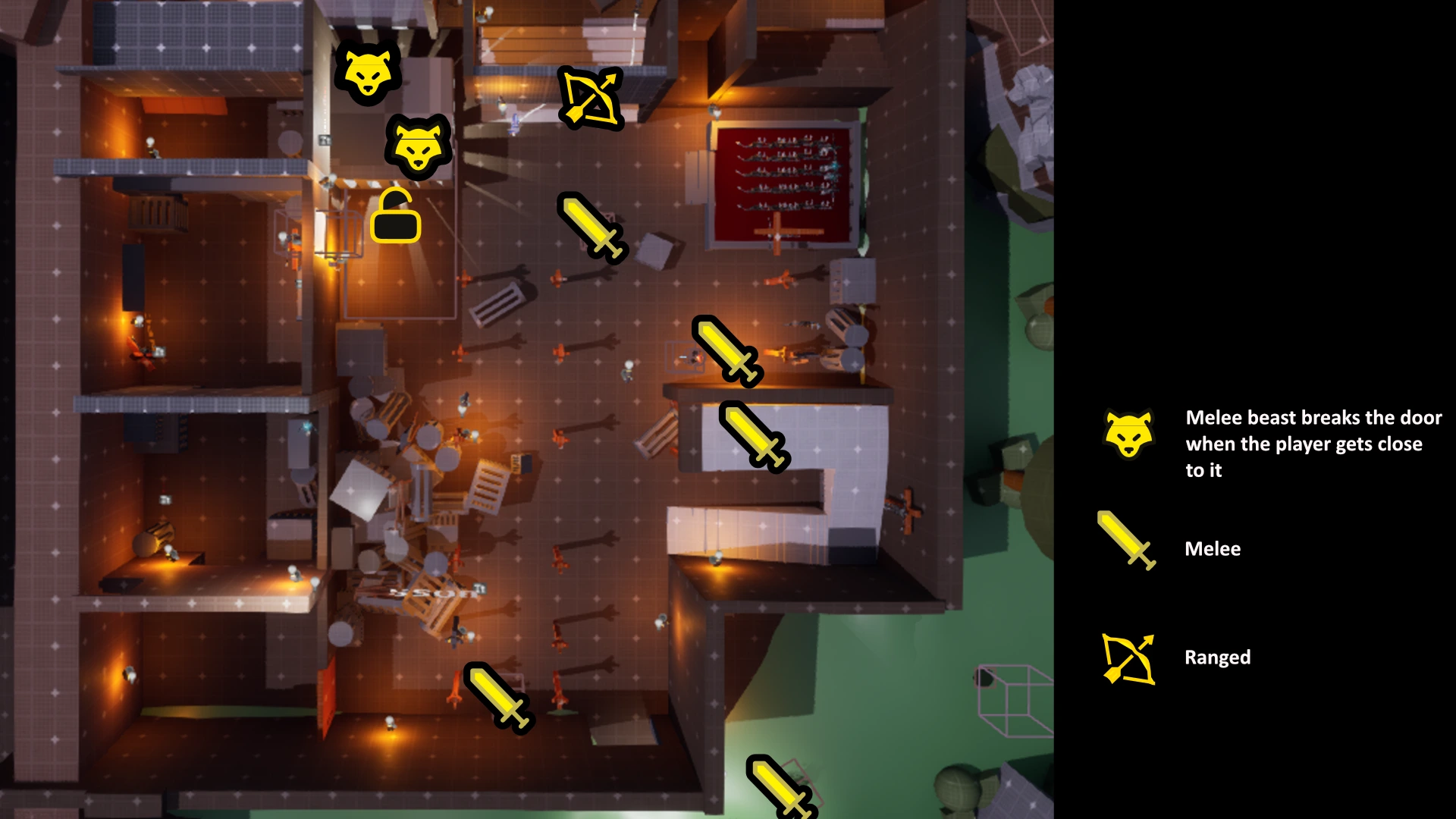
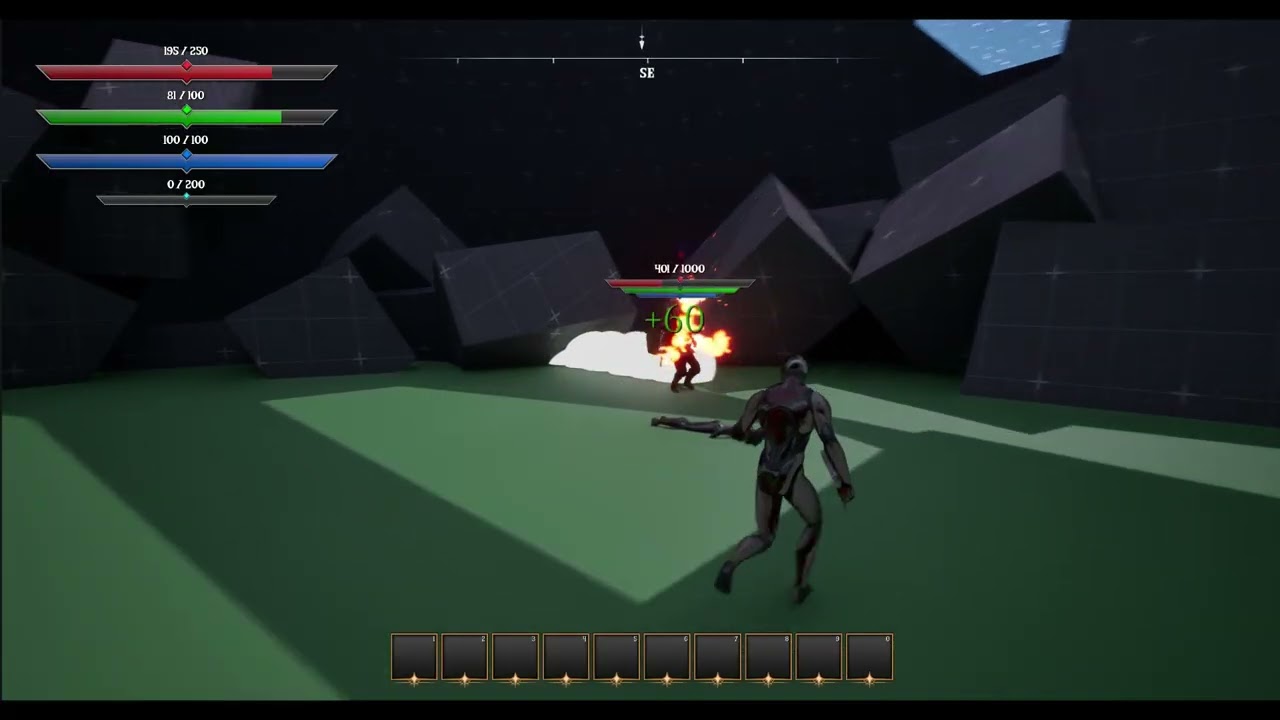
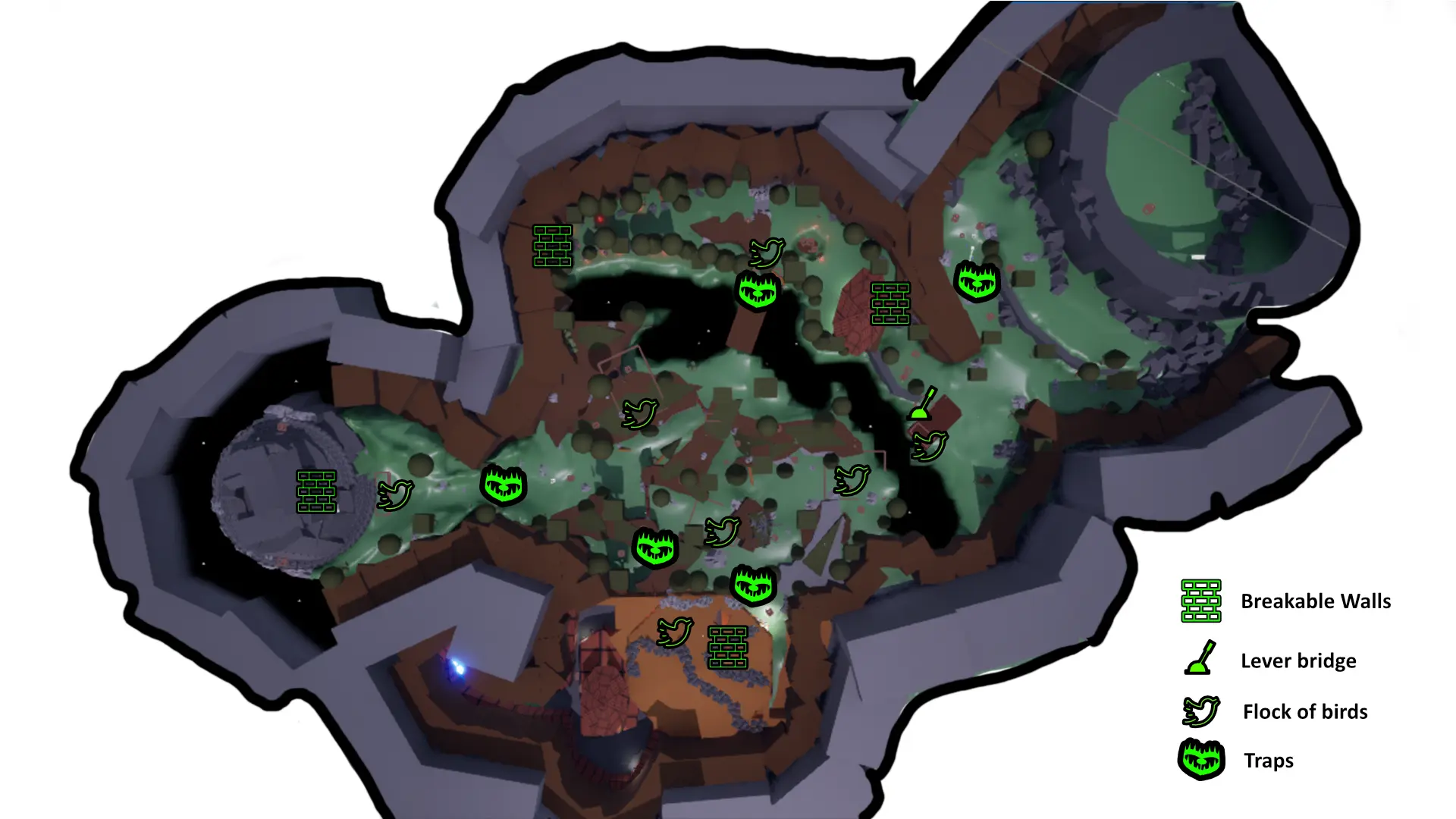
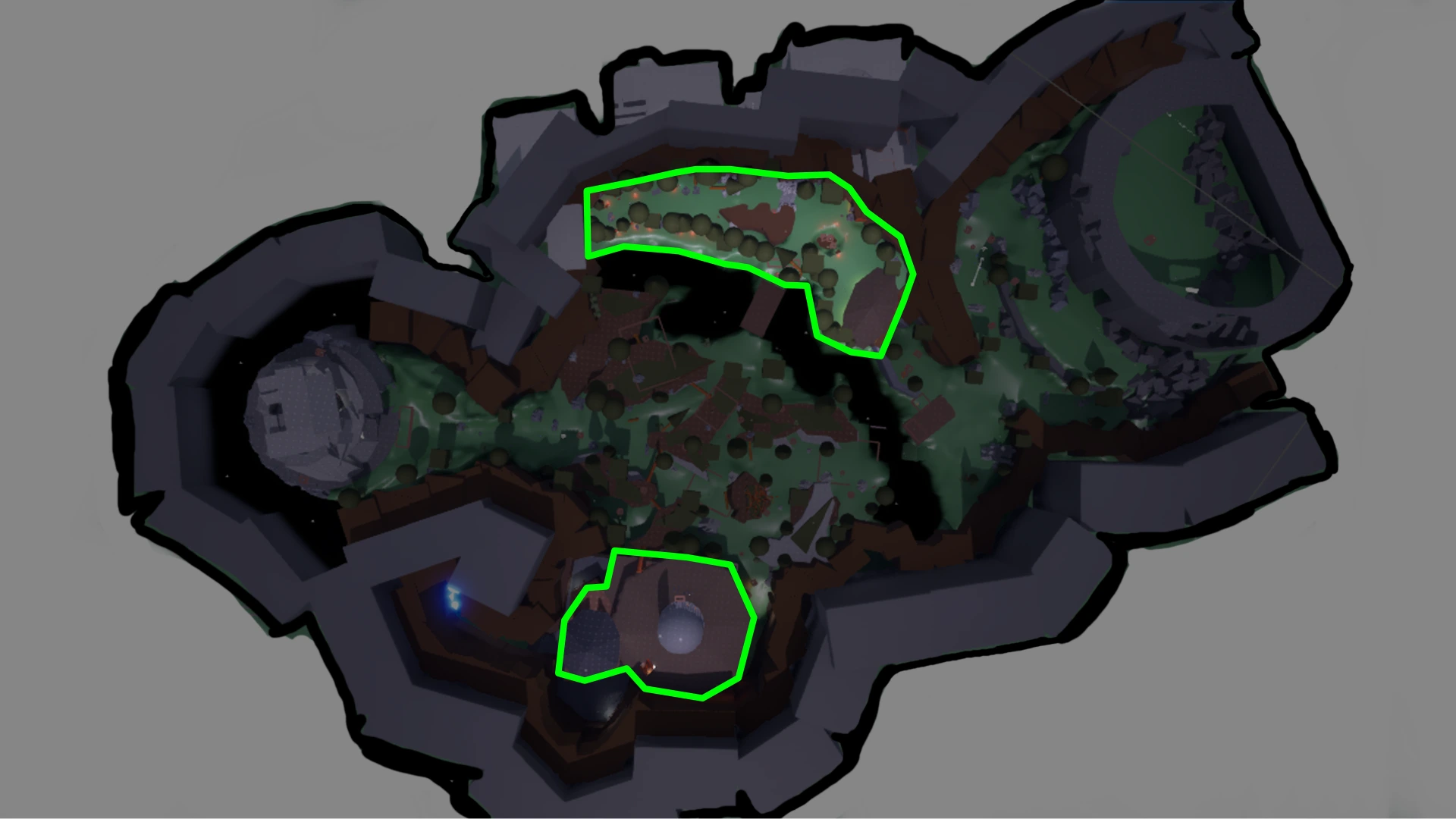
Encounter Area 2: Large trap-like space built on chained triggers. Sequential ambushes force repositioning, while breakable cages release enemies dynamically during combat.
Encounter Area 3: Ranged enemies establish vertical pressure and readability of the upper level. Dual paths create risk–reward choices: the lower path is safer for traversal, but more exposed to ranged threats.
Technique Highlight: Vistas as a goal reinforcing technique
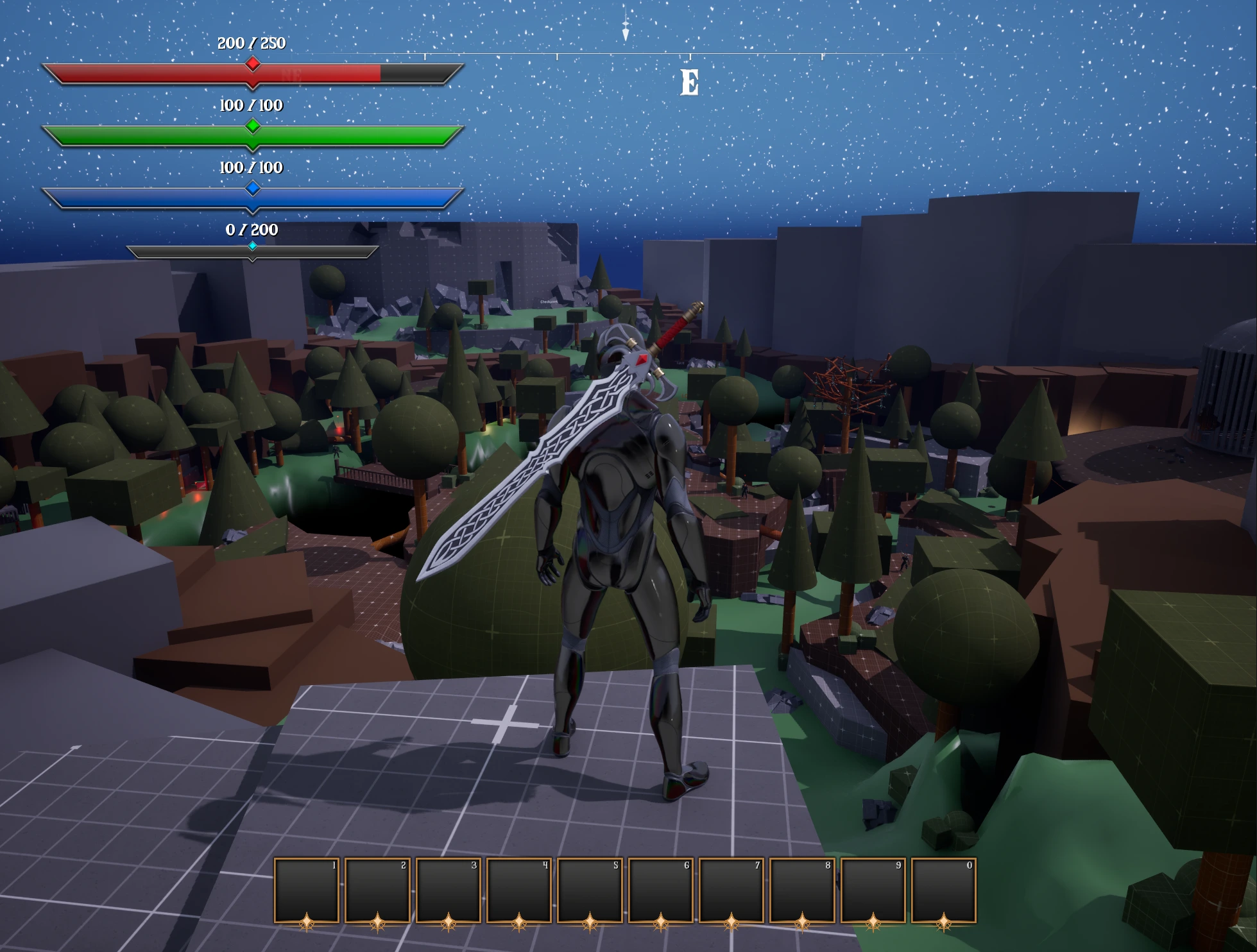
Technique & Use-case: Vistas are used throughout the level to guide the player toward key paths and reveal information about hidden or optional areas.
Context of Use-case: Throughout the level, vistas are used to reinforce navigation without relying on UI elements. Key vistas reveal the Golden Path toward the Ruins while simultaneously exposing optional areas and hidden spaces. They also reconnect players with previous areas, reveal shortcuts, and foreshadow future paths, rewards, and landmarks.
Technique Detail:
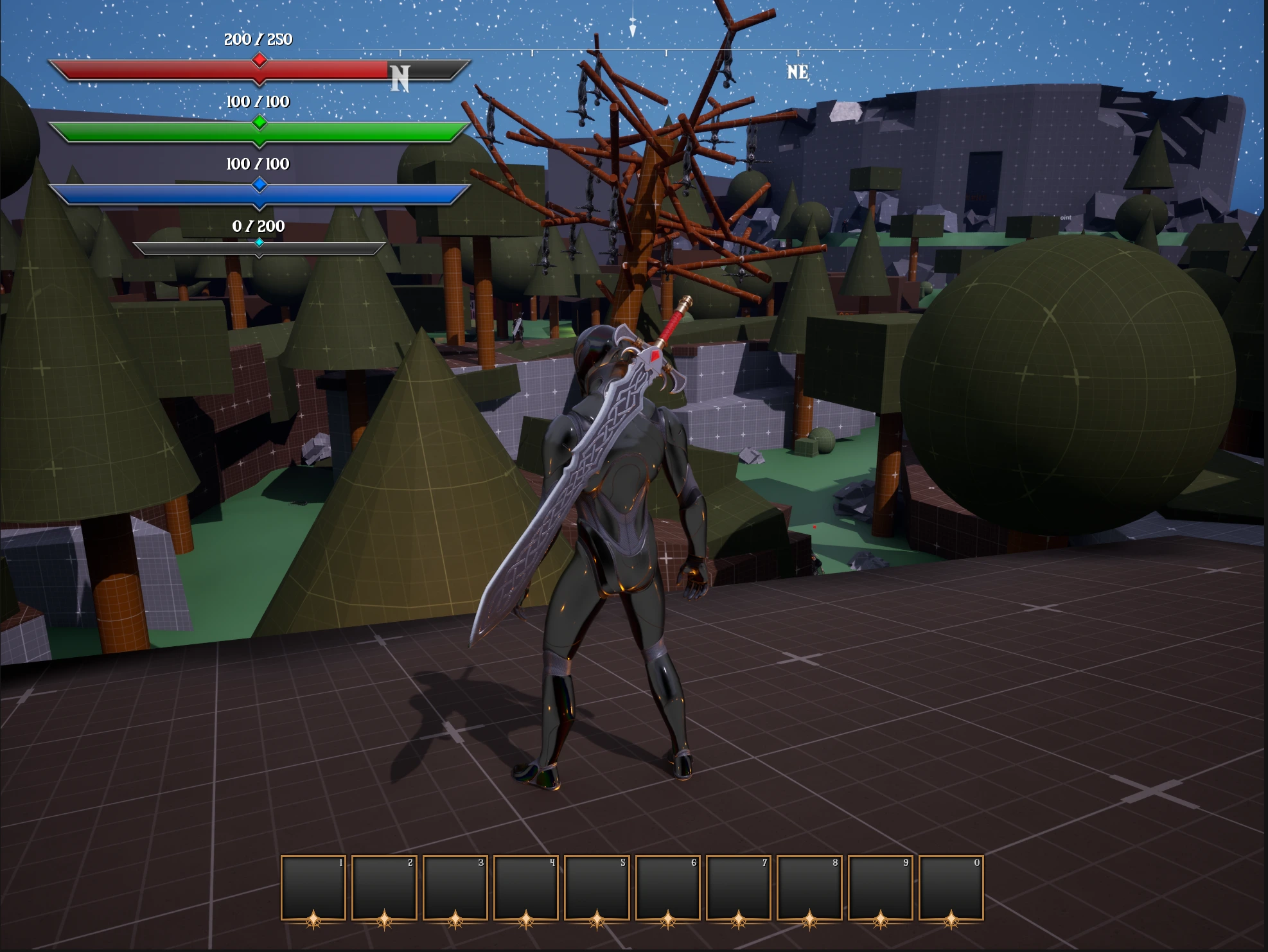
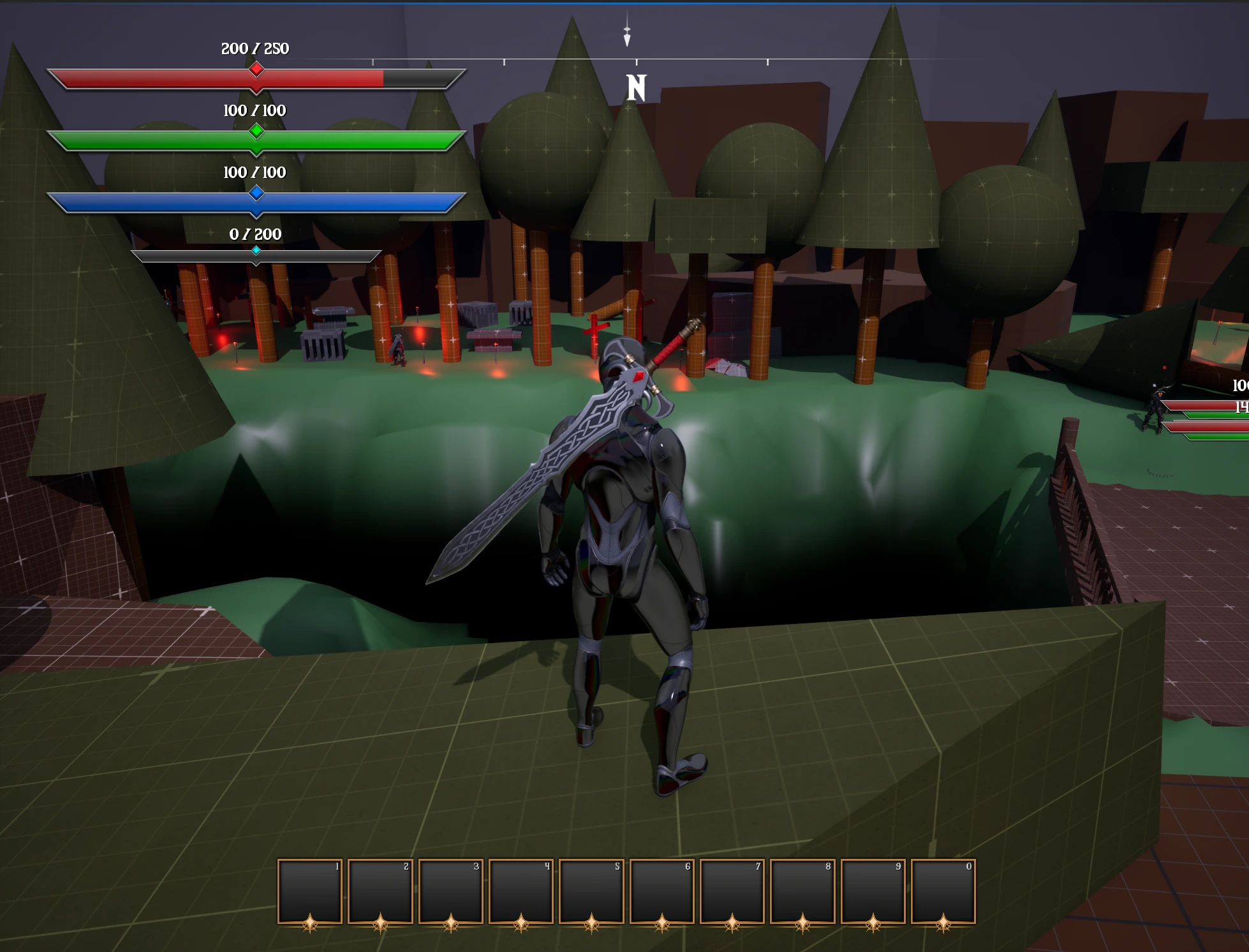
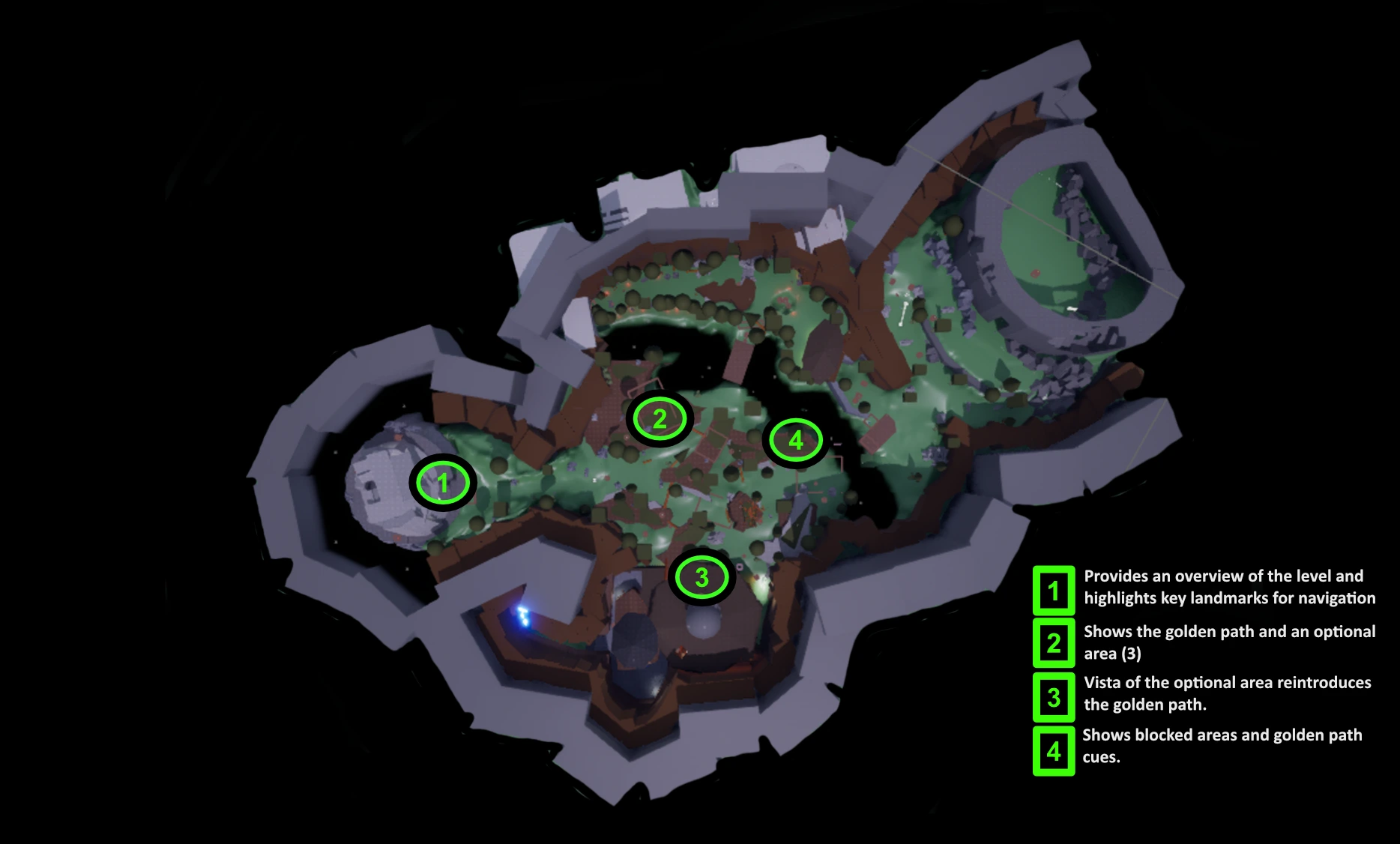
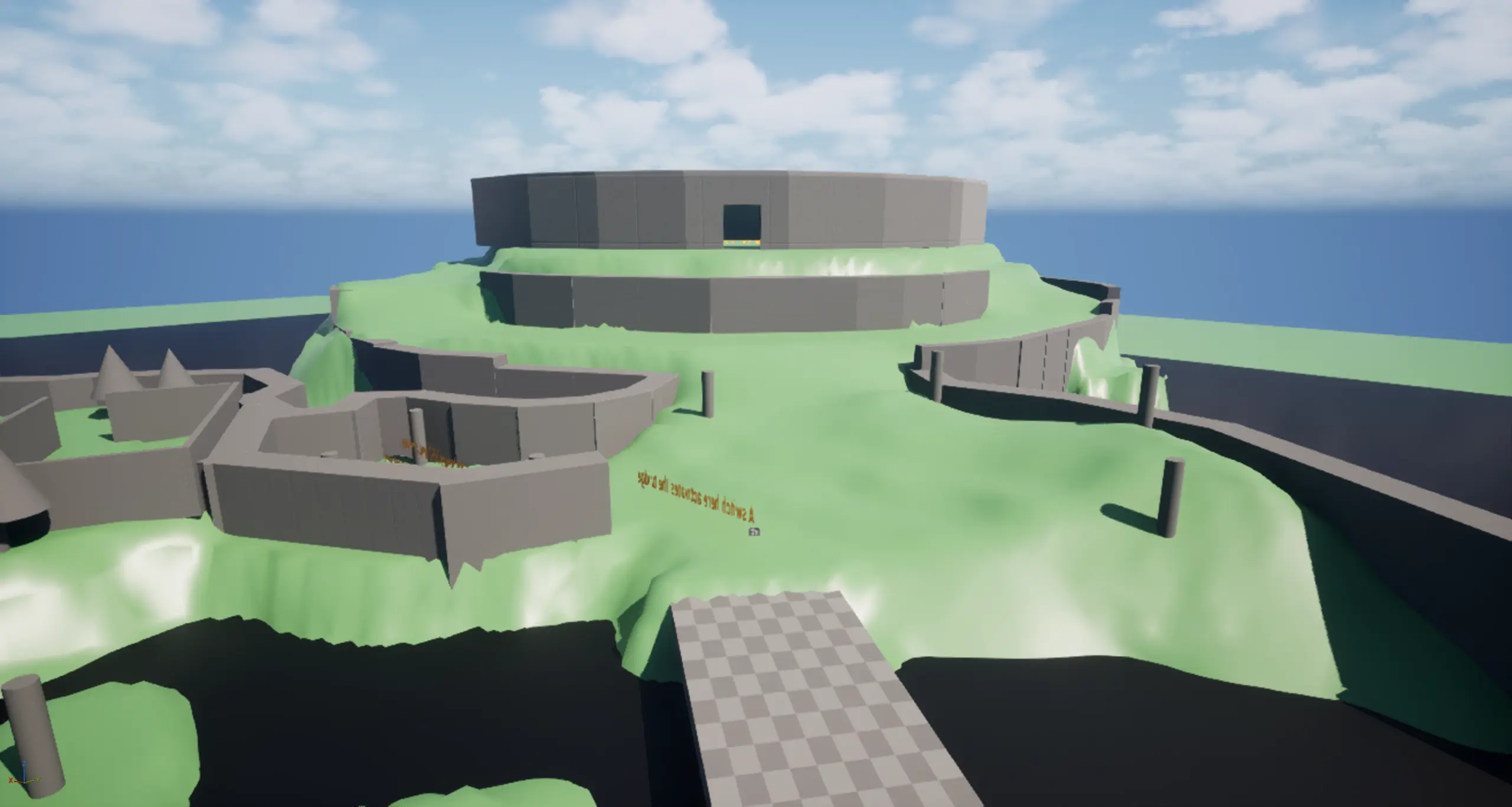
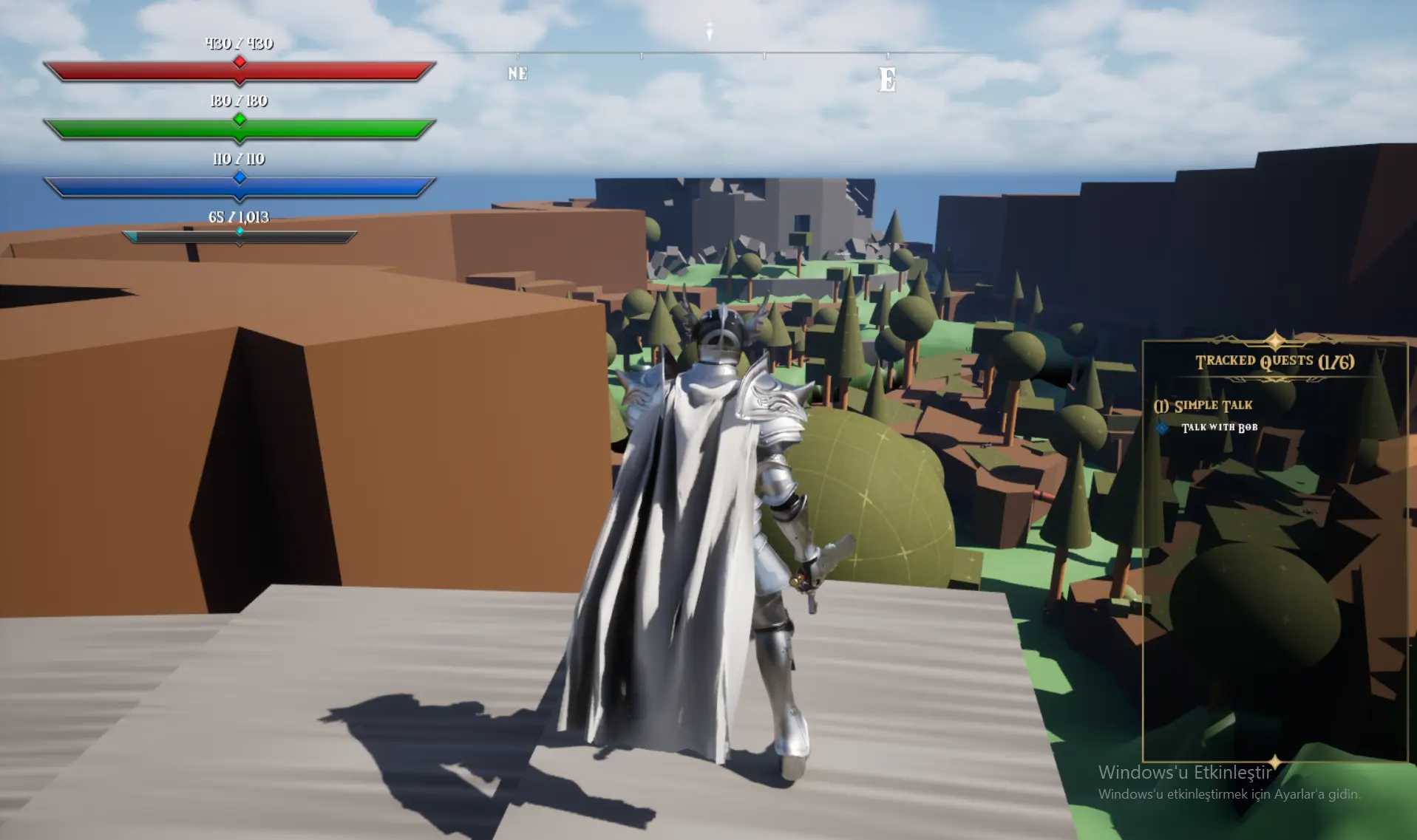
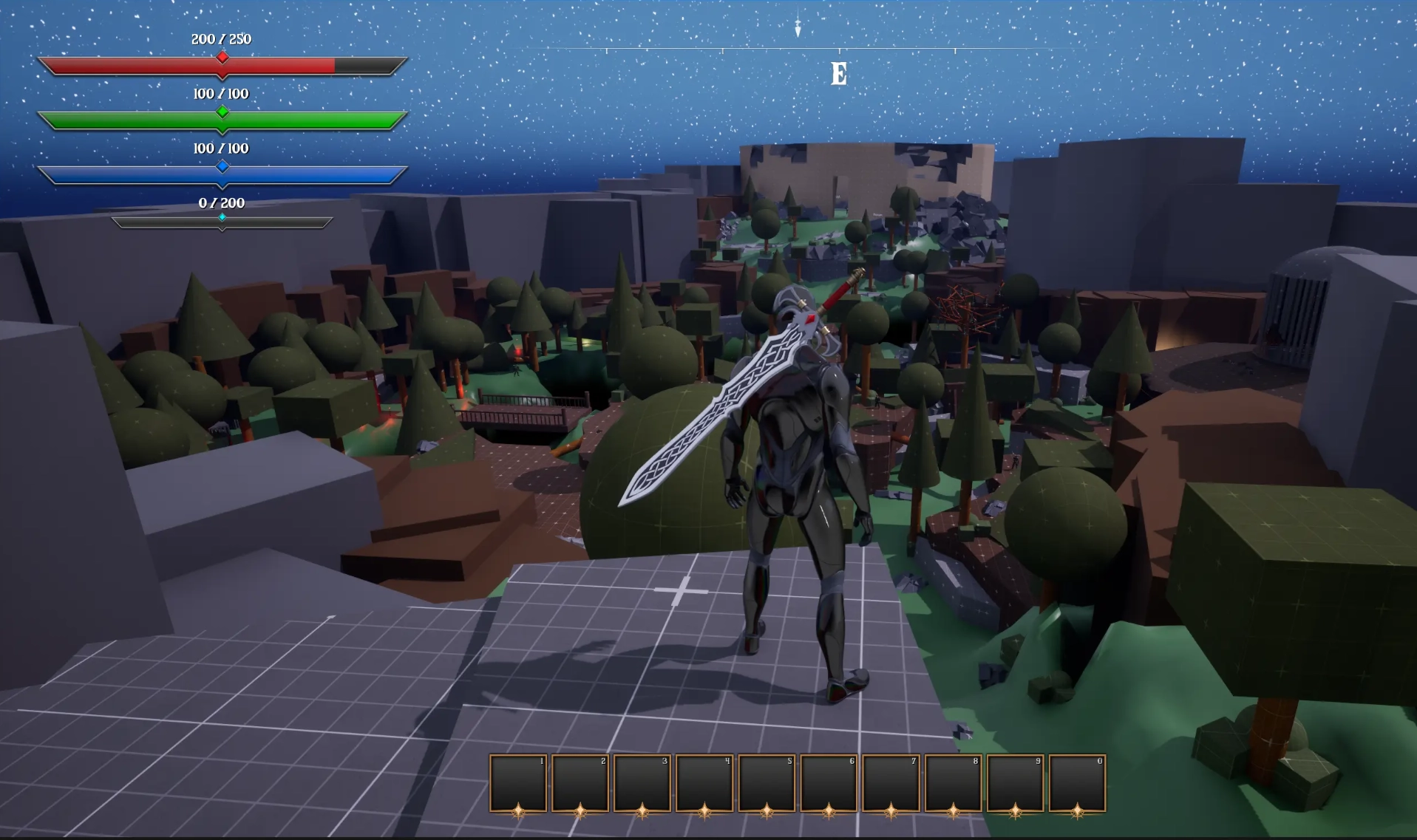
Level Vista 1: At the start of the level, a wide vista provides a clear overview of the space, highlighting the main path and key points of interest.
Level Vista 2: In an optional section, this vista helps the player reorient and reconnect with the Golden Path.
Level Vista 3: At the level’s epicenter, a vista gives spatial context across multiple areas, including both optional routes and the Golden Path.
Technique Highlight: Loops
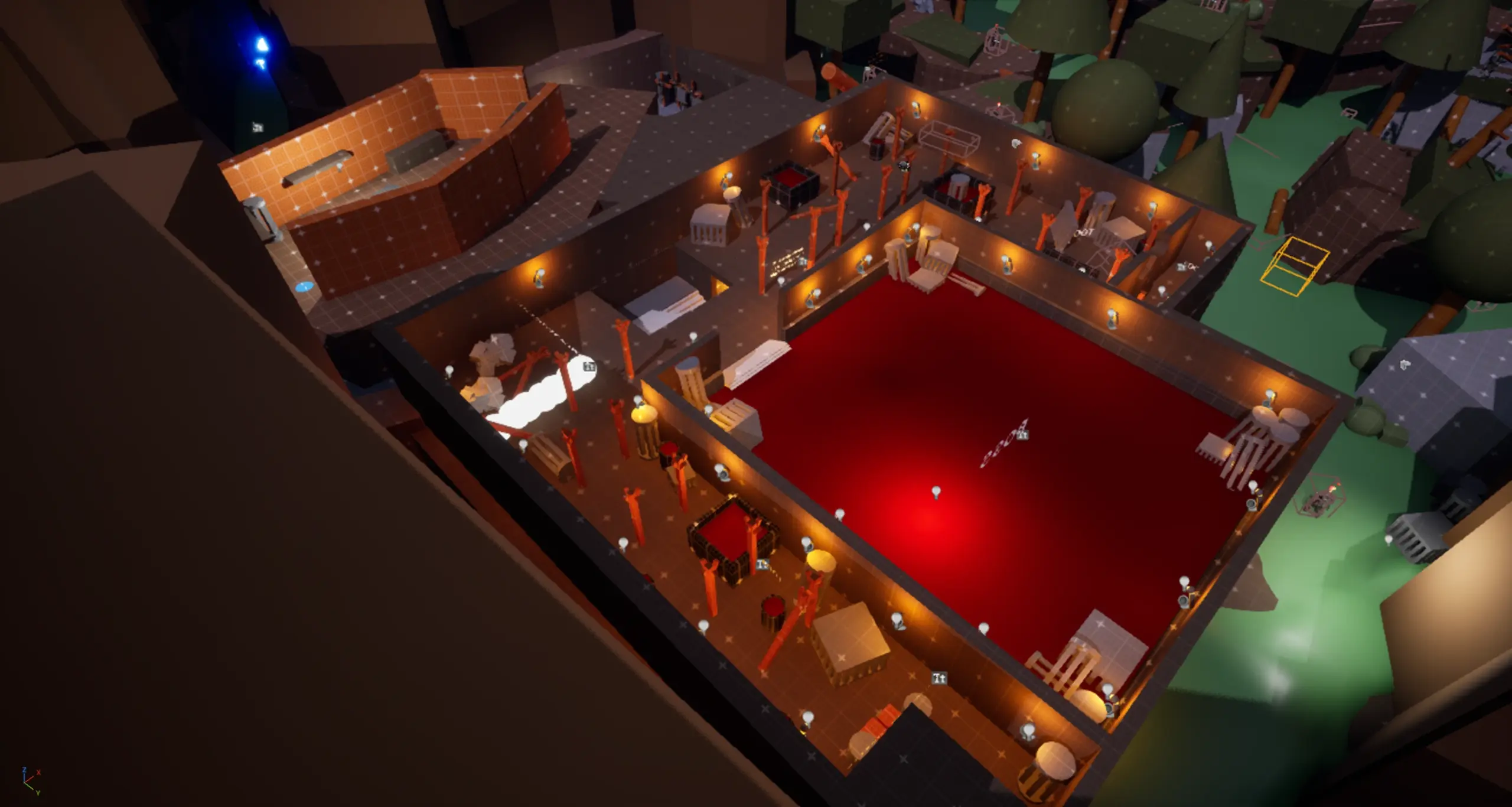
Technique & Use-case: Loops are used to reinforce exploration, reduce player friction, and reward spatial mastery by reconnecting areas through meaningful shortcuts and alternative routes.
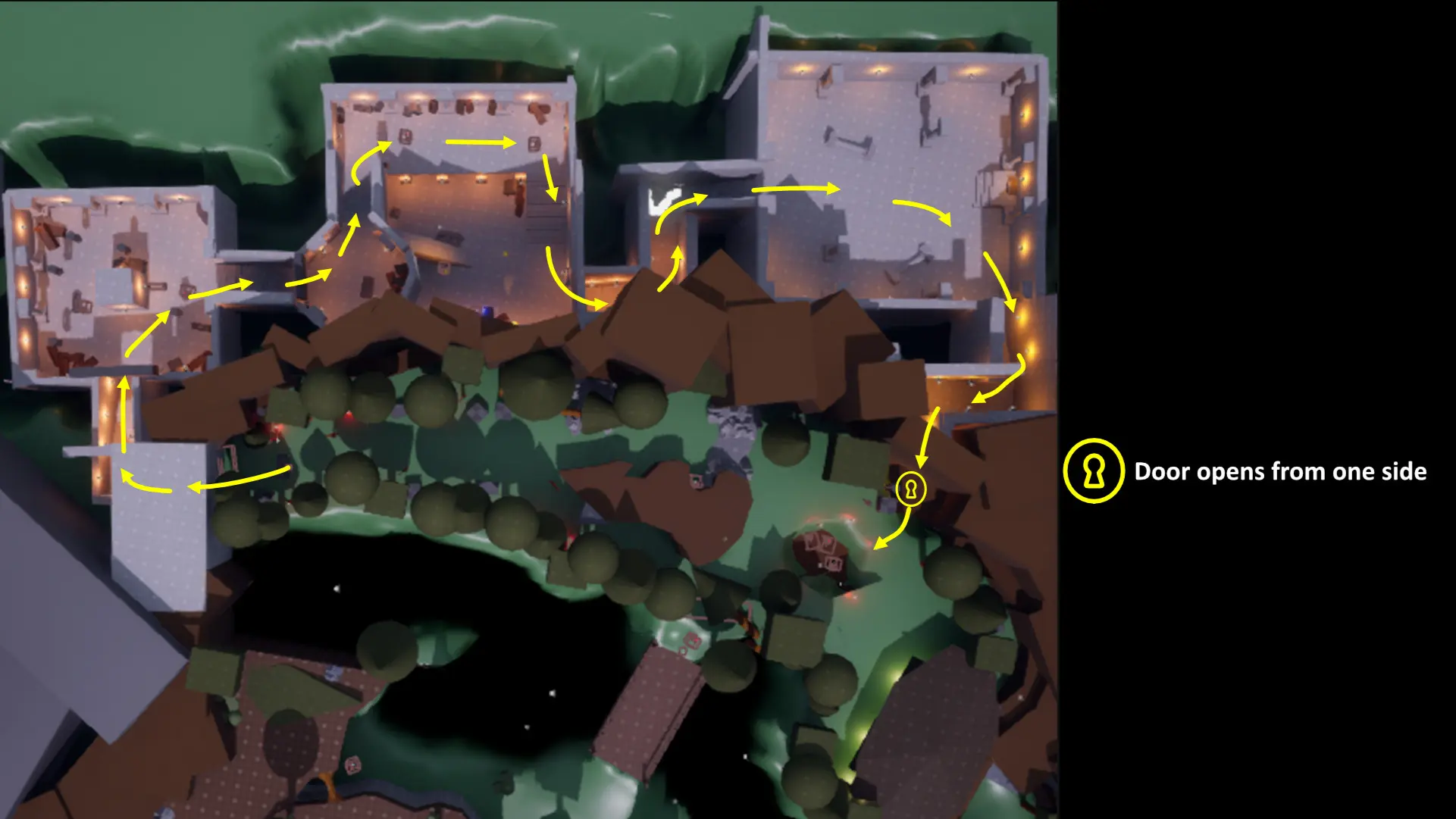
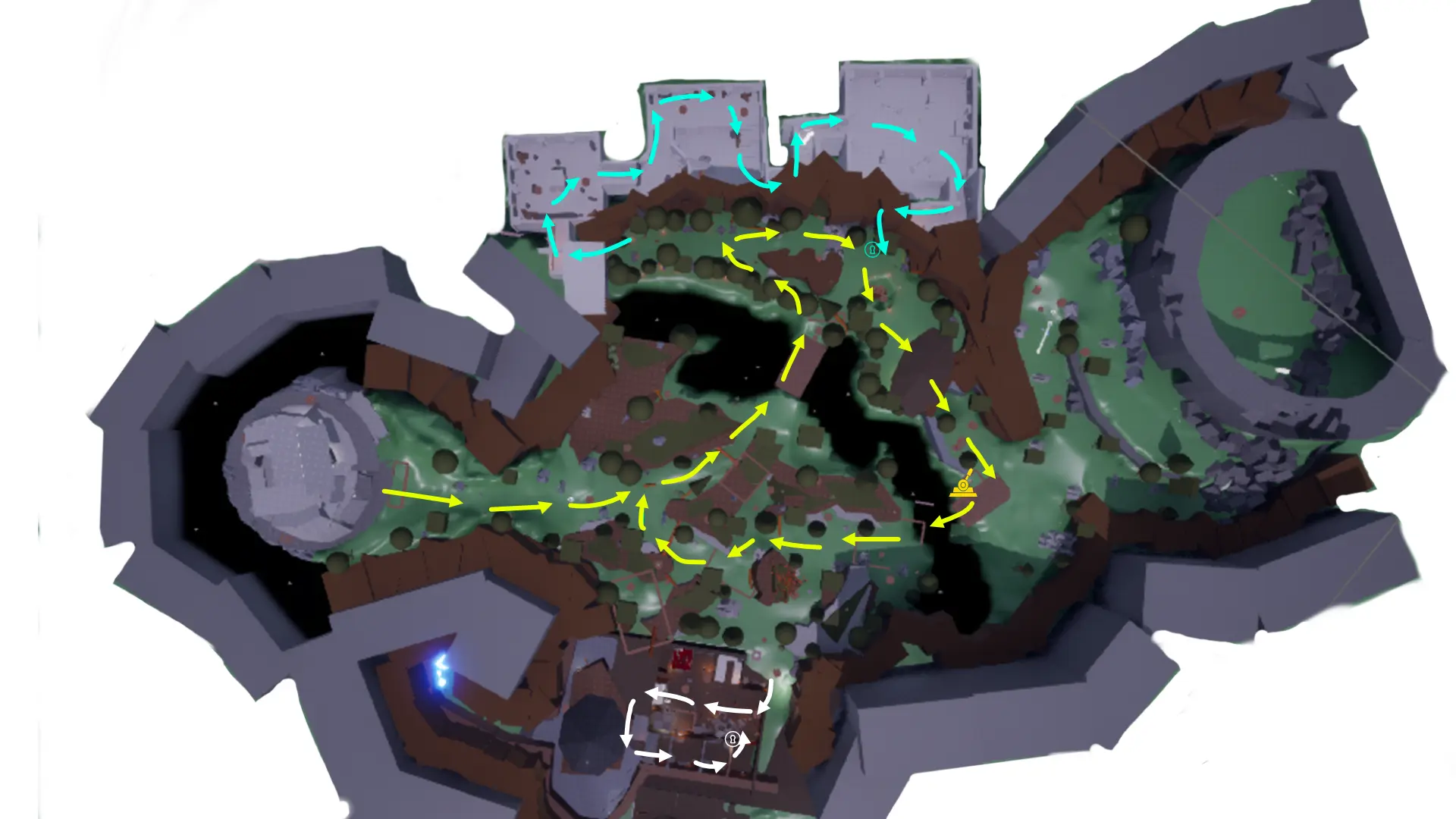
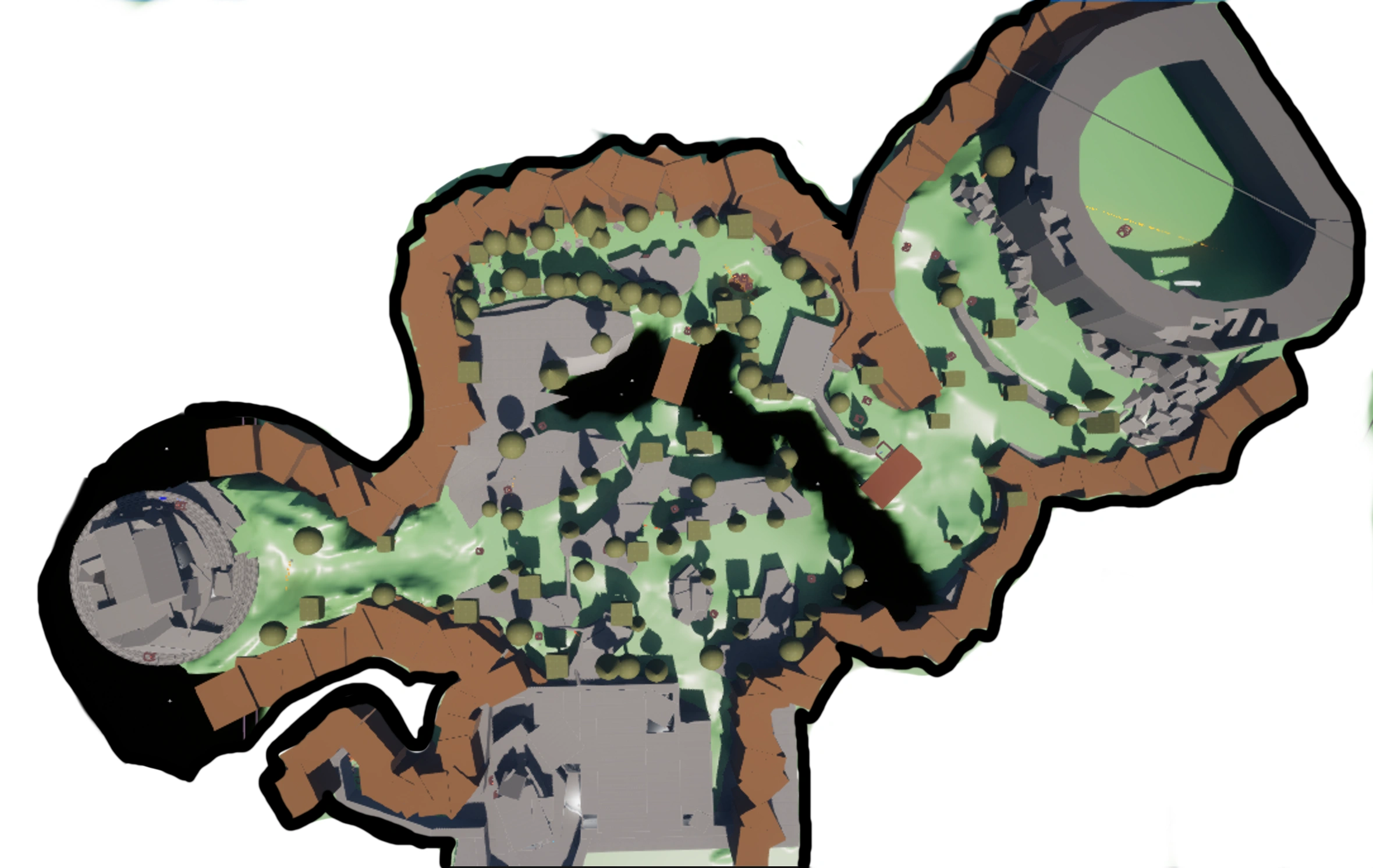
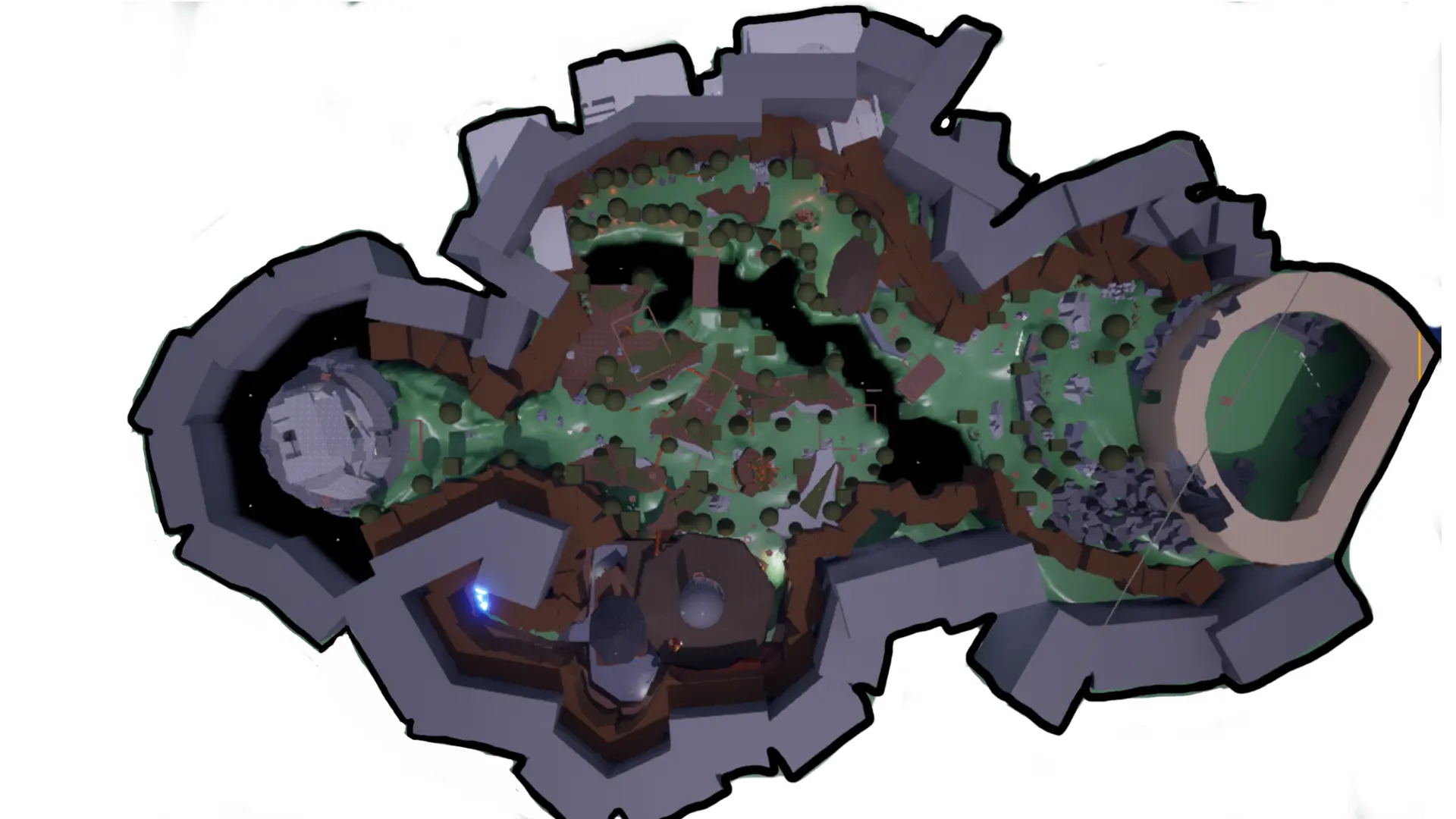
Context of Use-case: Loops are used between the Lower Forest, Slaughterhouse, and Sacrificial Area to reconnect major sections of the map and create a cohesive world structure. They allow optional exploration to flow back into the Golden Path while reducing repetition after death.
Technique Detail:
Loop 1: Connects an optional area back to the Golden Path, rewarding player agency and exploration.
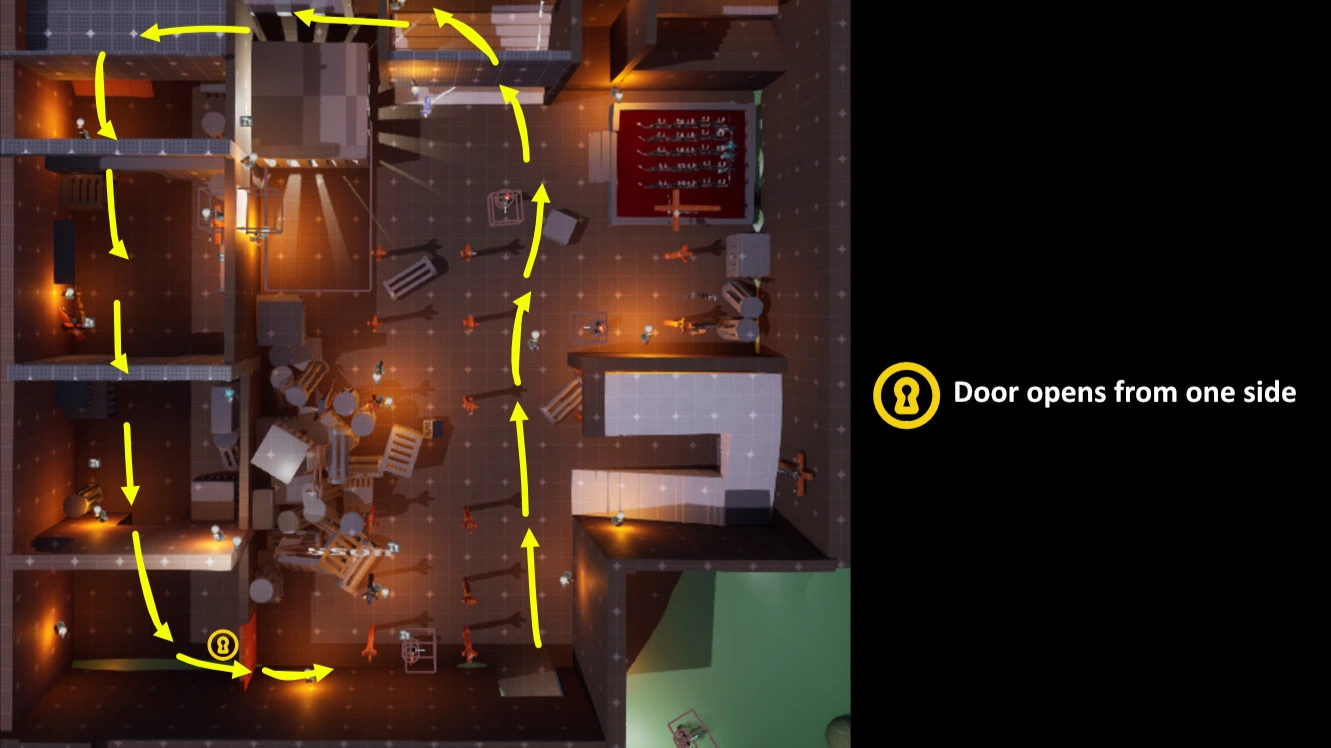
Loop 2: In the Taxidermist Slaughterhouse, creates an exit route through a new area, offering rewards after full space traversal.
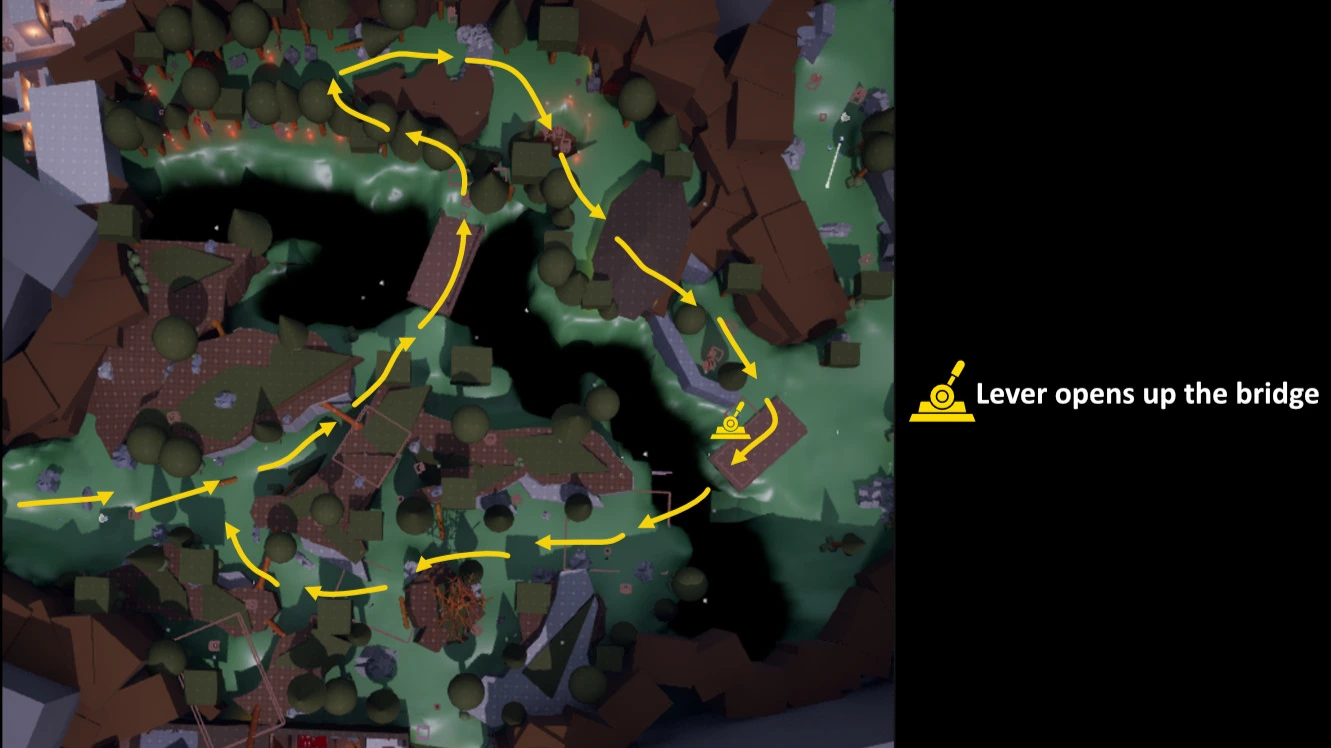
Loop 3: A global shortcut that links major sections of the level, enabling faster navigation and reducing frustration after failure.
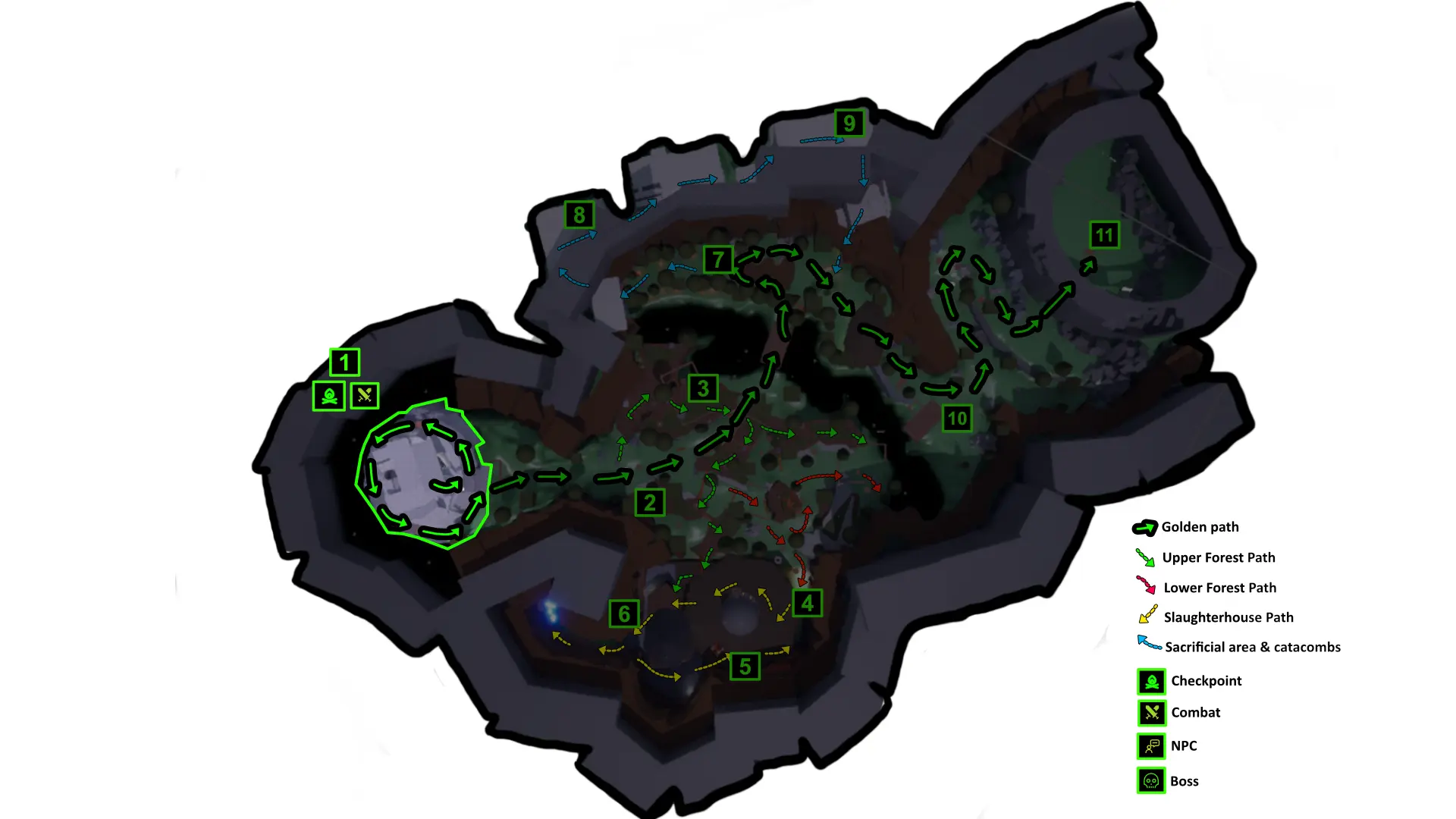
Walkthrough
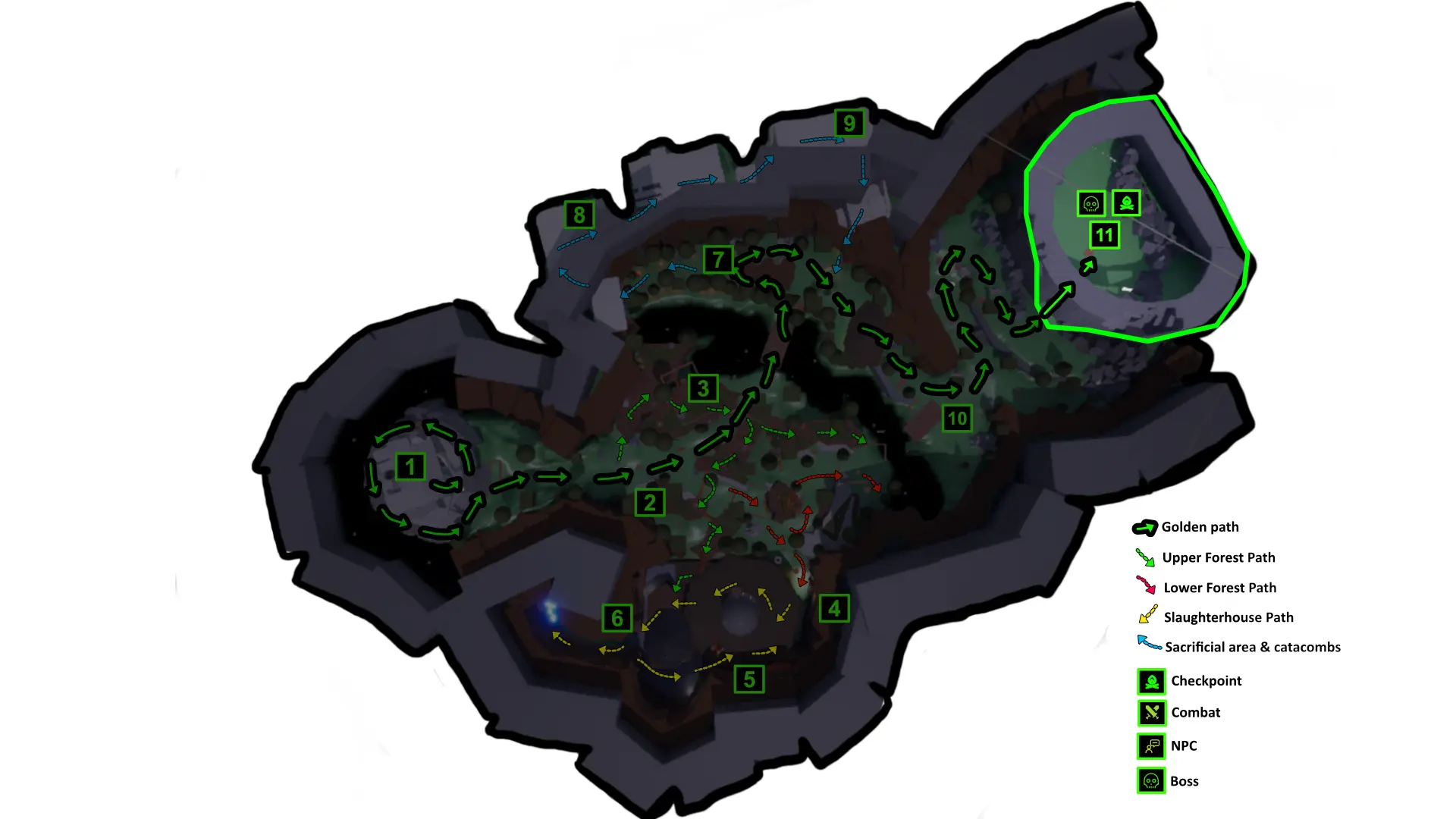
Beat 2 – Forest – Lower Level – Central traversal space connecting the golden path with optional routes, reinforcing combat mastery and player-driven exploration.
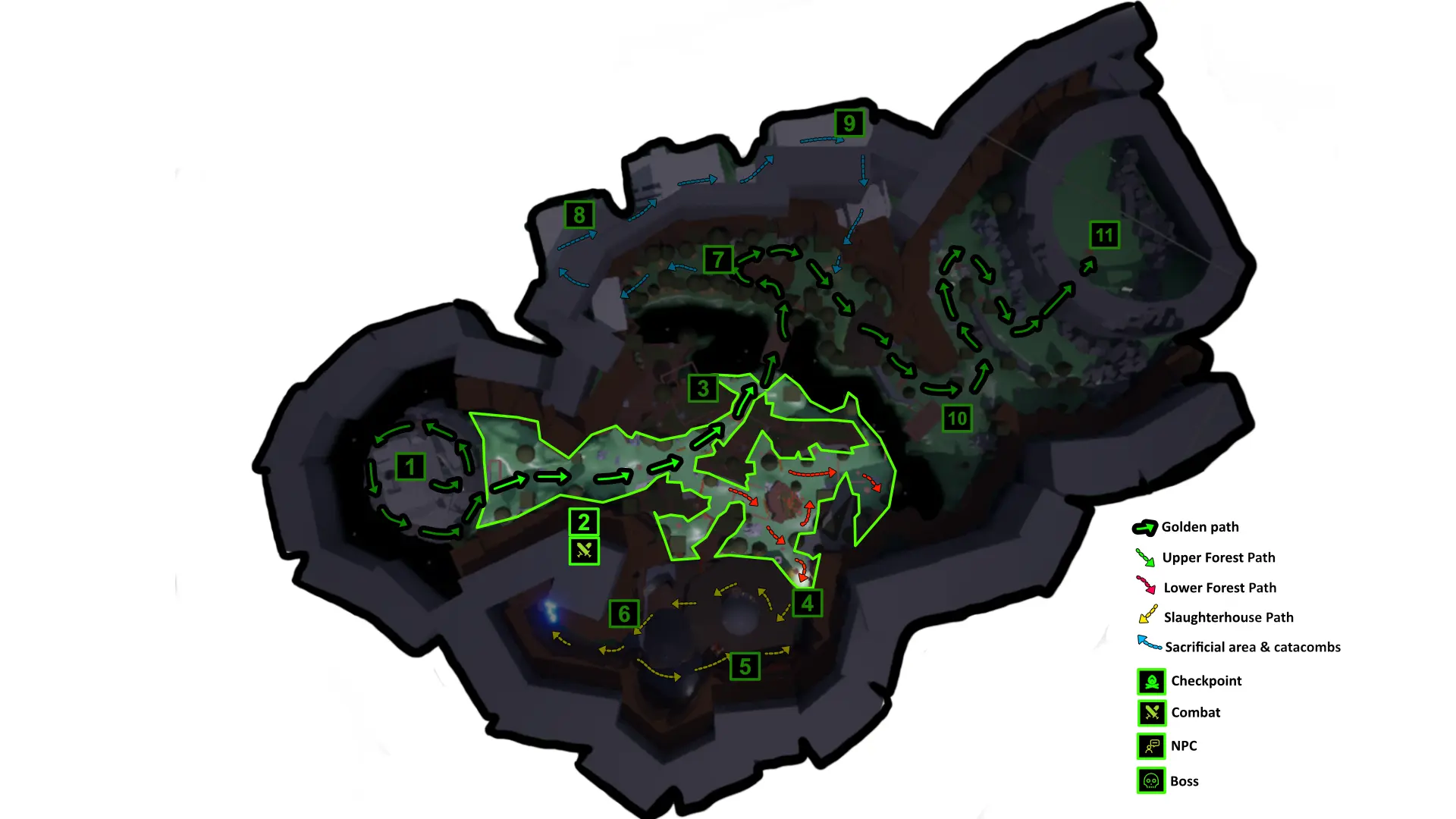
Beat 3 – Forest – Upper Level – Optional elevated route that expands spatial awareness and grants access to otherwise unreachable sections of the level.
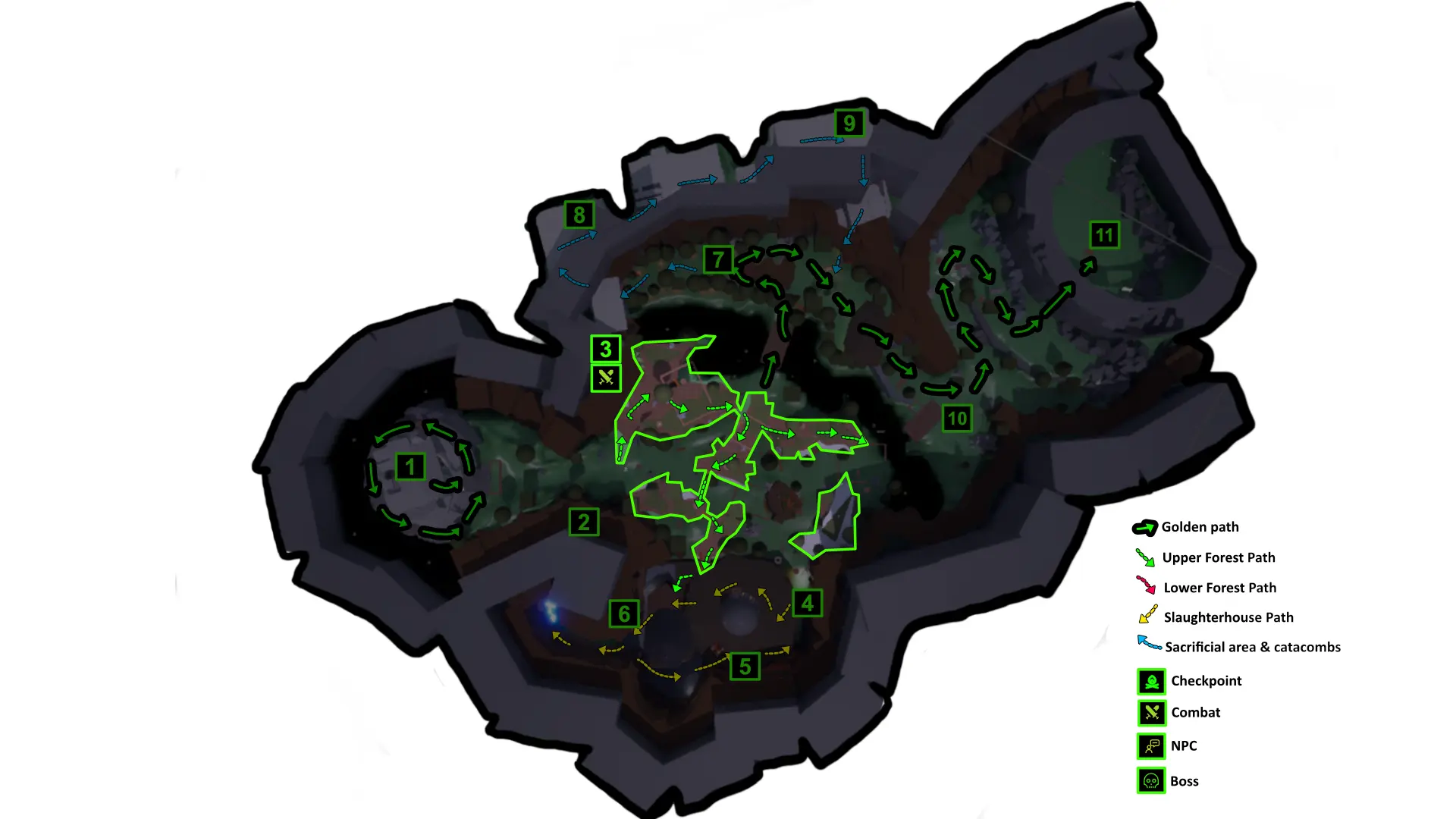
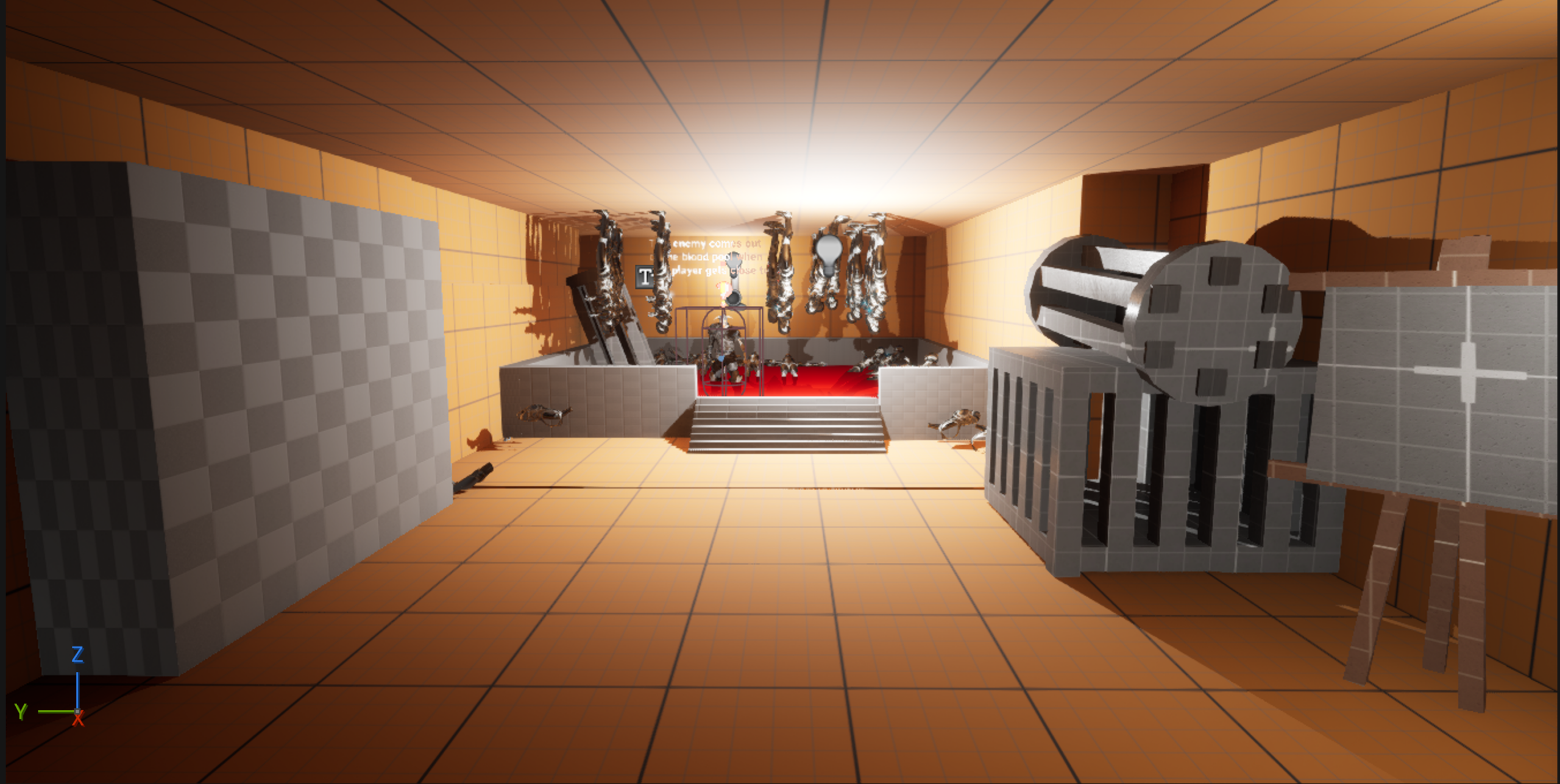
Beat 4 – Taxidermist Slaughterhouse – Optional exploration space that develops the area’s primary faction through environmental storytelling, rewards, and a blacksmith NPC encounter.
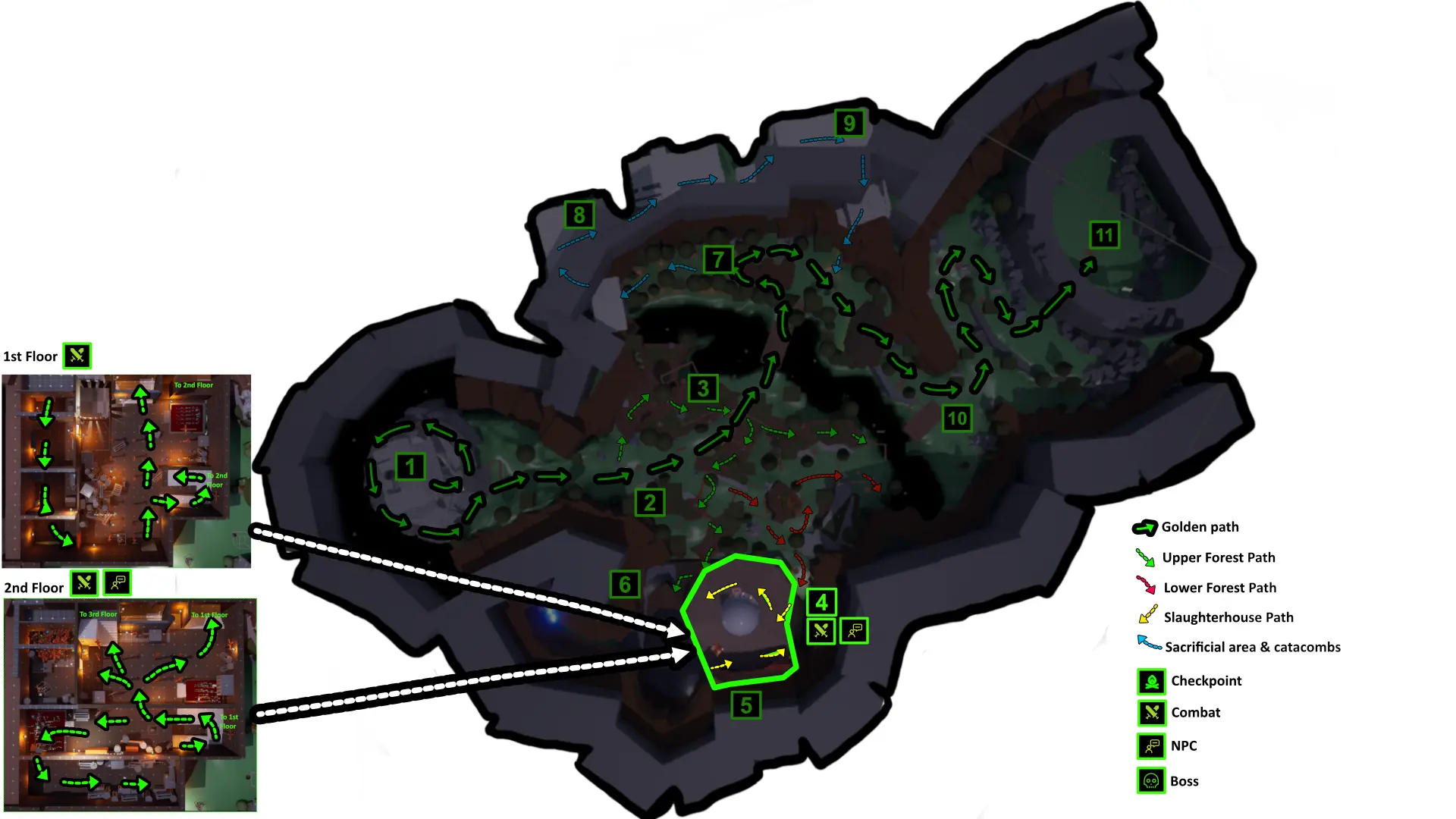
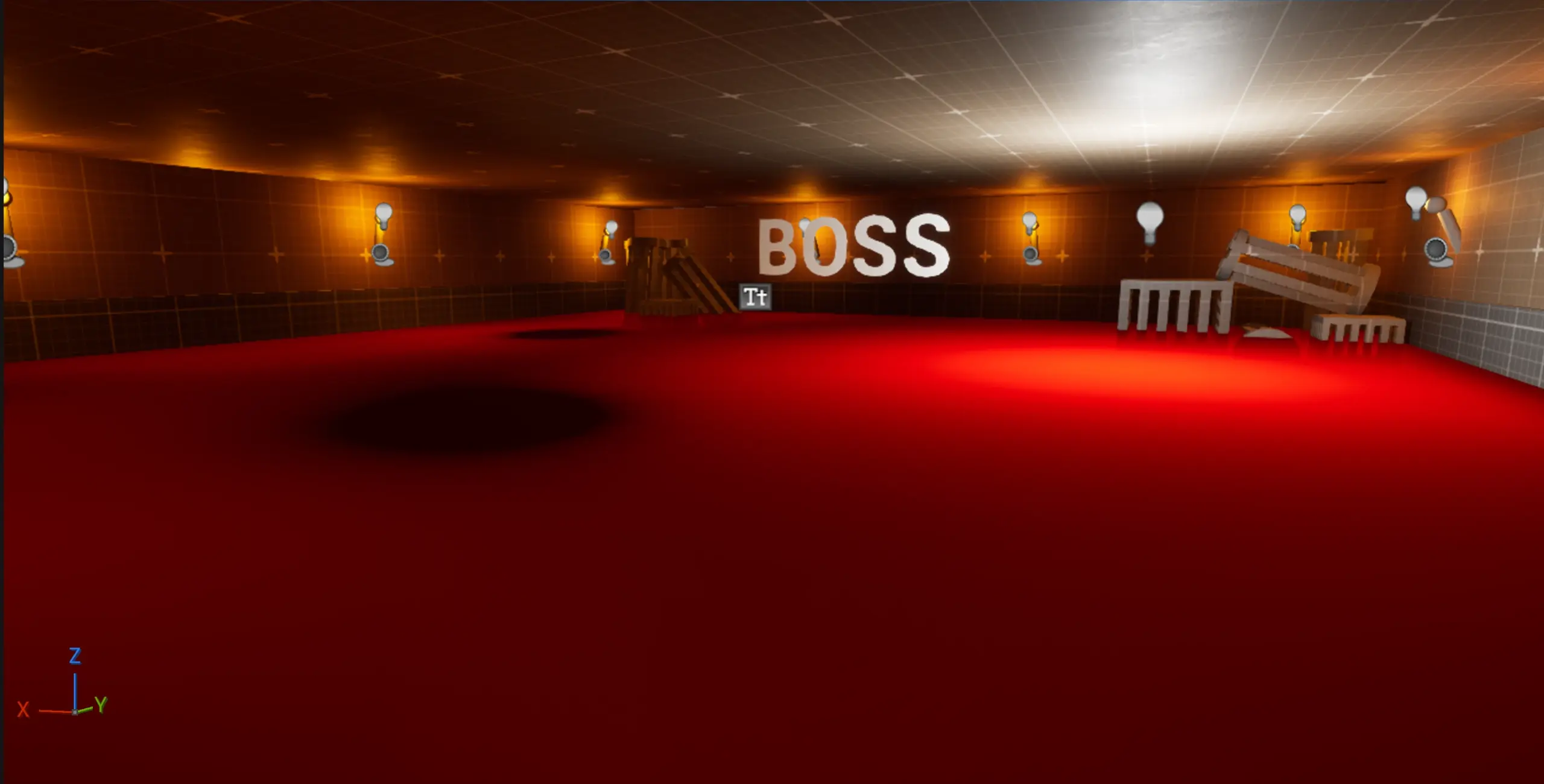
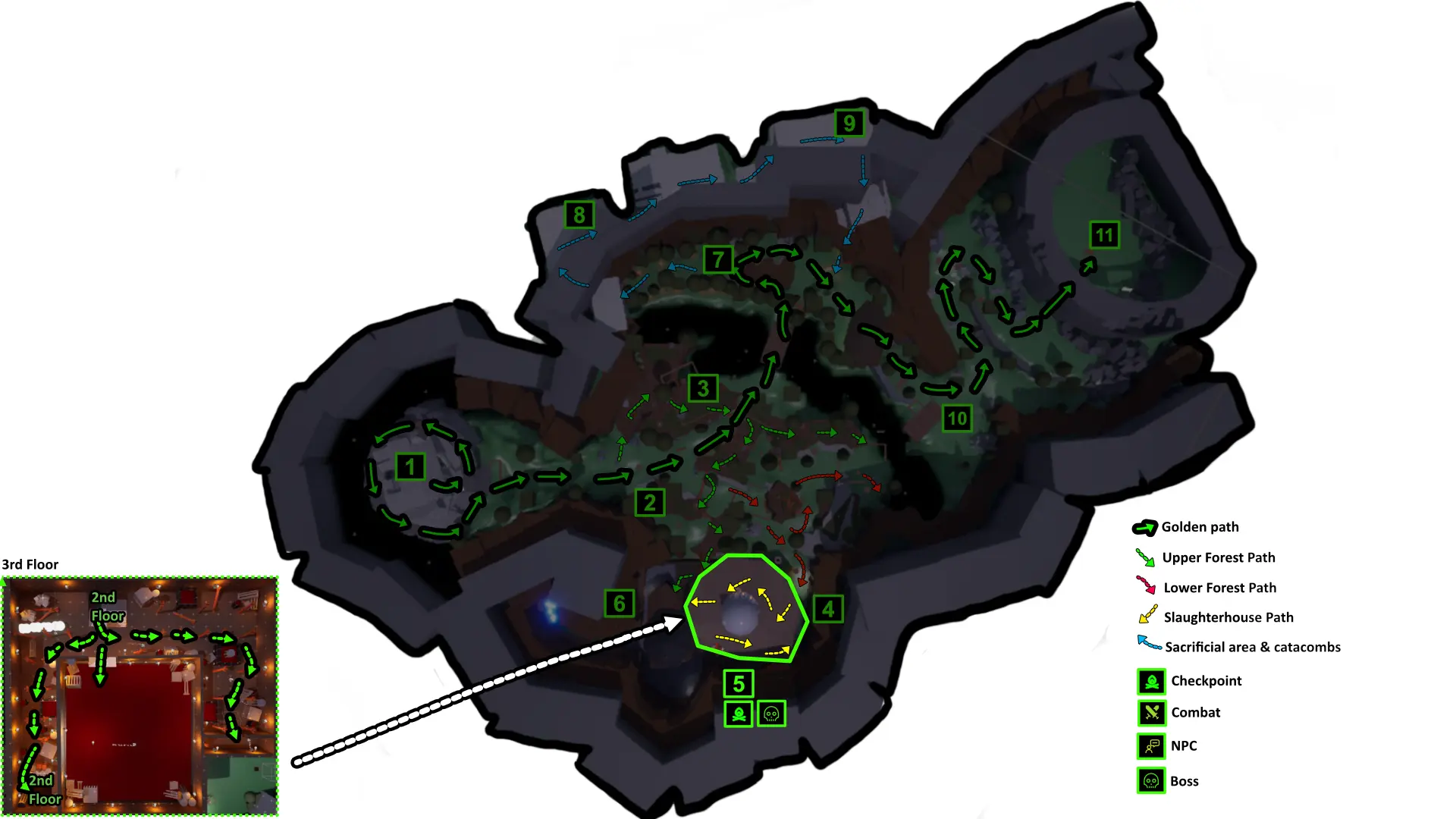
Beat 5 – Taxidermist Slaughterhouse – Boss – Optional boss encounter representing a higher-ranking figure within the Taxidermist faction hierarchy.
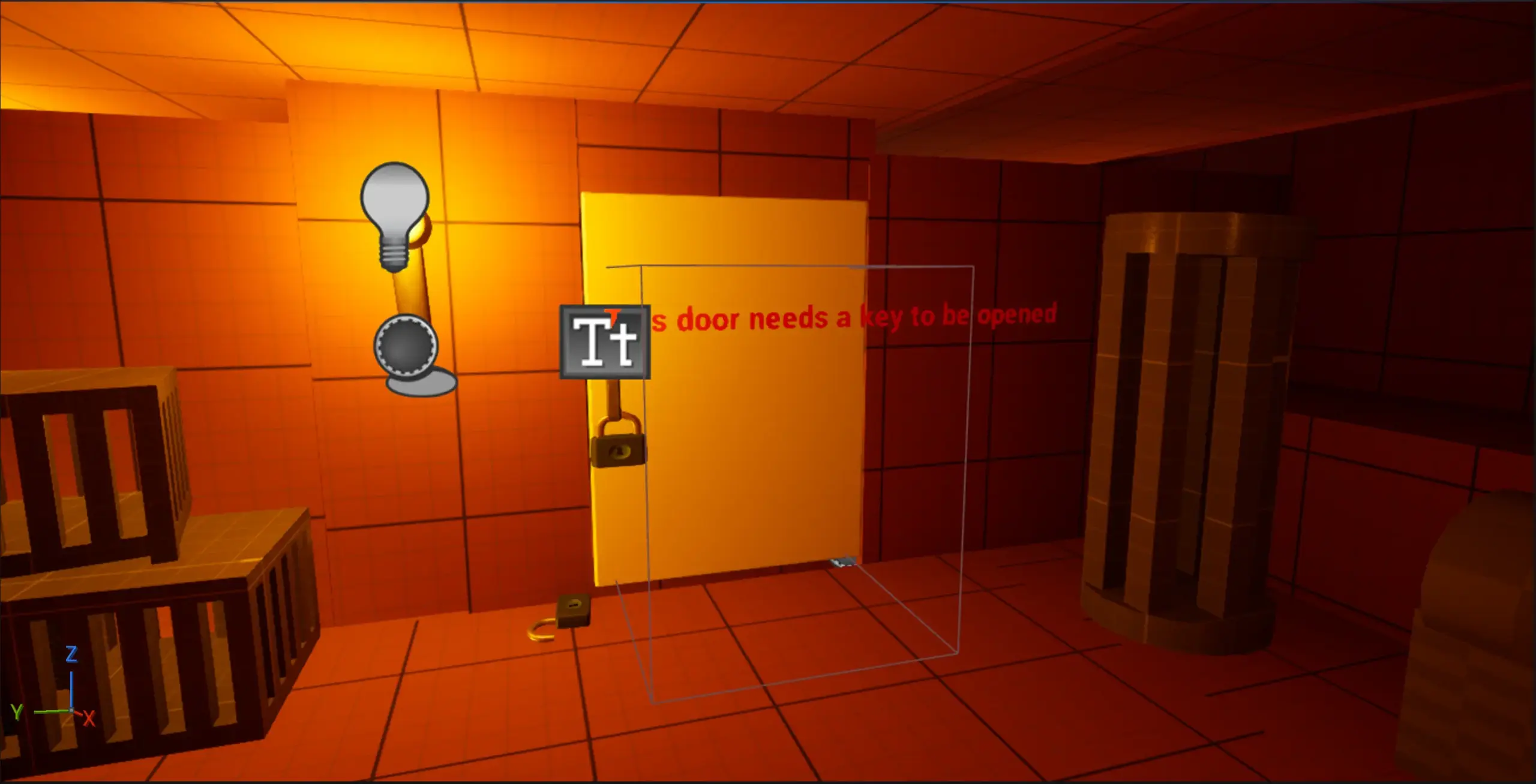
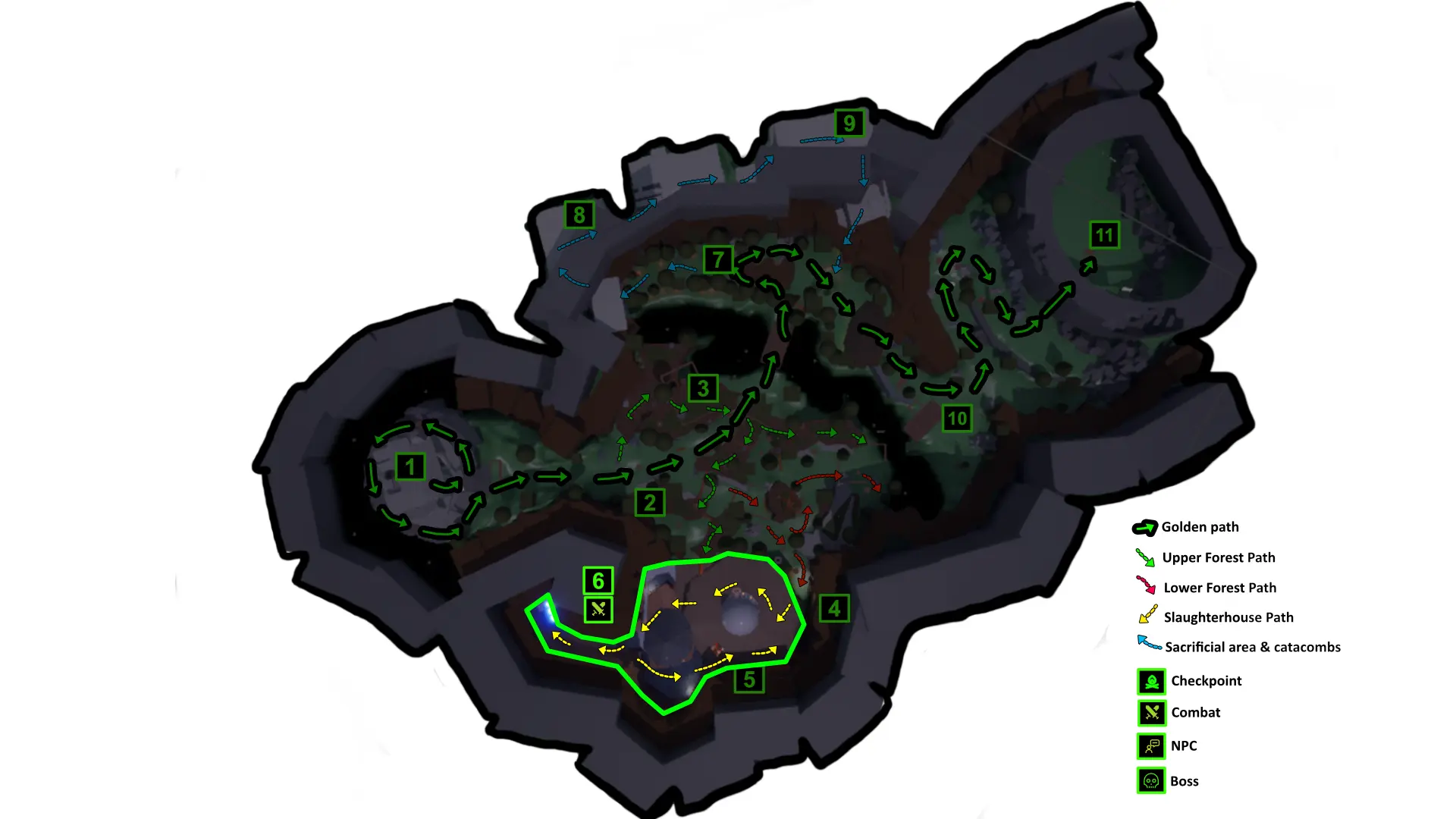
Beat 6 – Taxidermist Slaughterhouse – Backyard/Rooftop – Transitional traversal space functioning as both entrance and exit depending on progression, containing the key required to free the blacksmith NPC.
Beat 7 – Sacrificial Area – Golden path section centered around layered traps, hidden threats, and optional exploration opportunities.
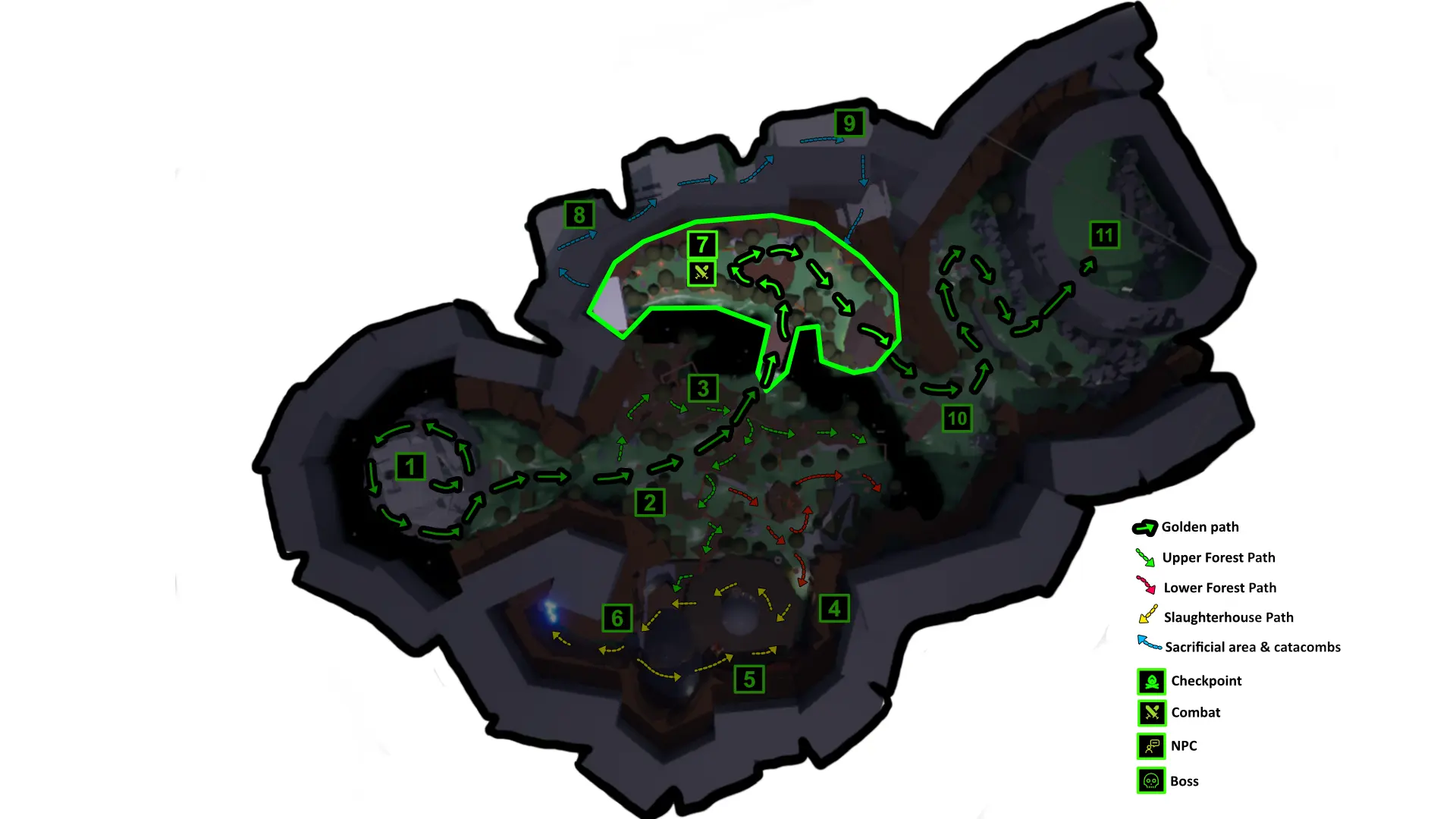
Beat 8 – Catacombs – Optional area with distinct architectural identity that reconnects to the golden path while introducing new enemy archetypes and traversal dynamics.
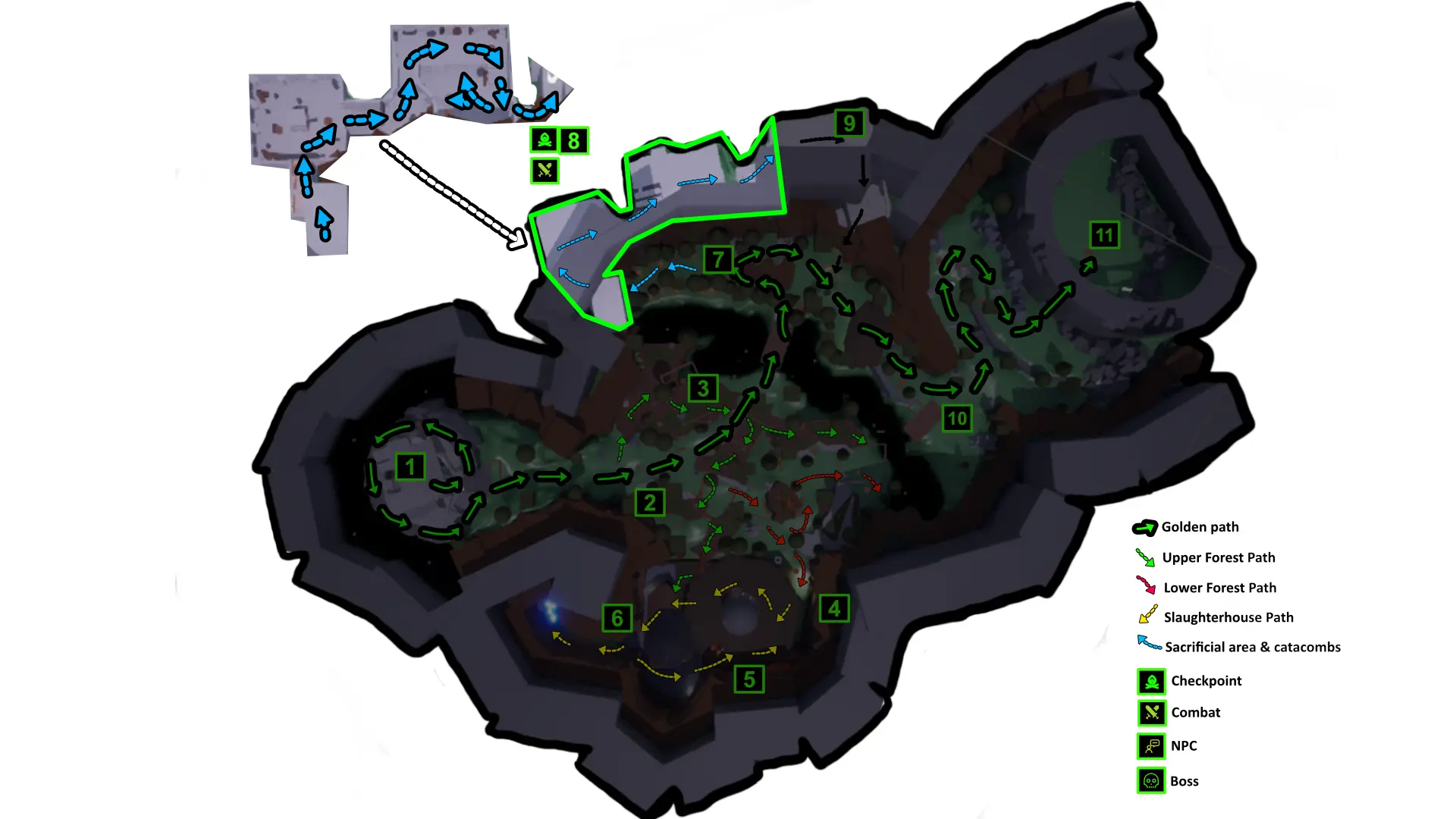
Beat 9 – Catacombs – Boss – Optional encounter that reinforces the level’s thematic closure while expanding narrative context and lore comprehension.
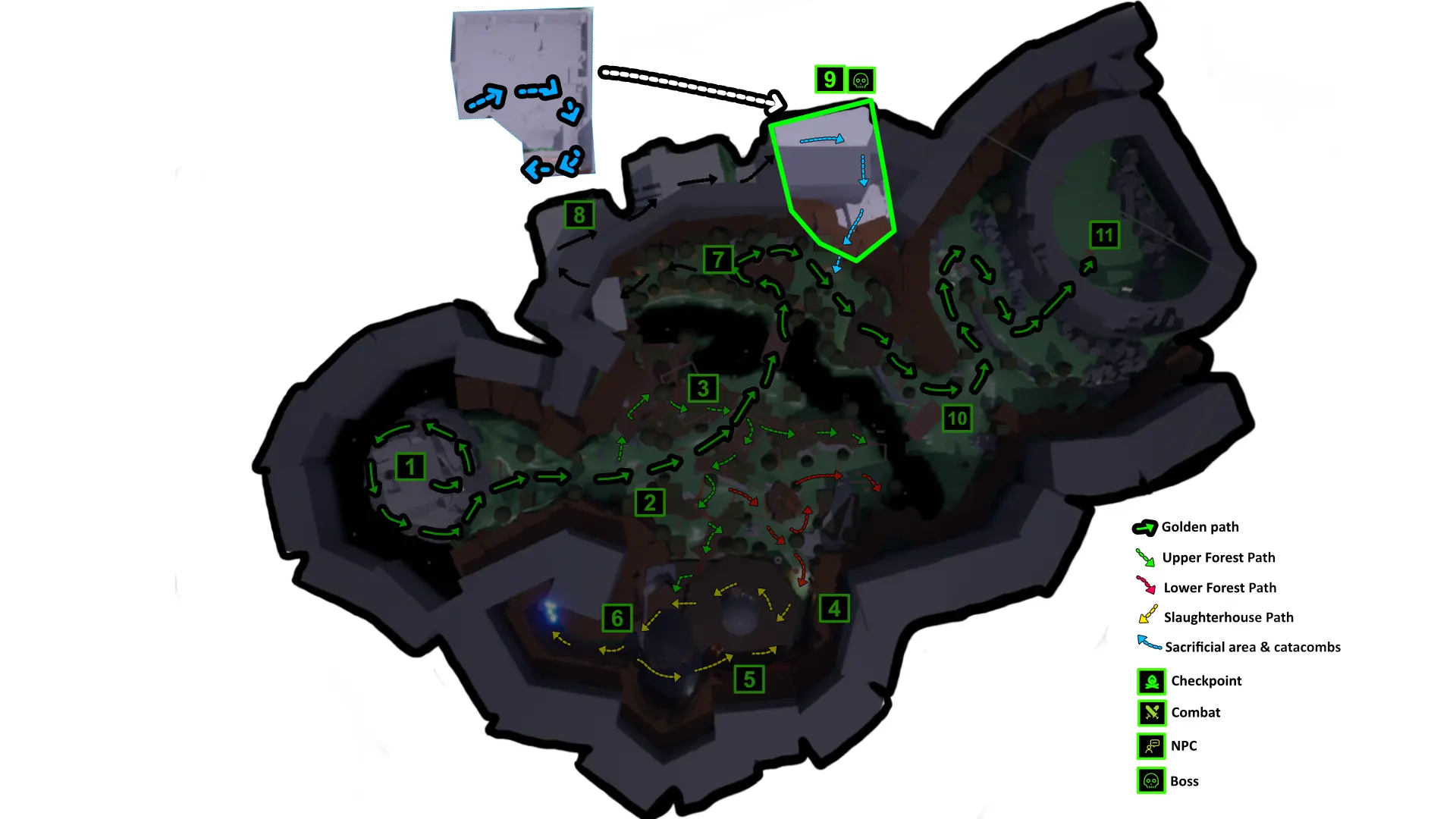
Beat 10 – Pre-Ruins – Golden path connector that unlocks a shortcut to Beat 2, reducing traversal friction and supporting iterative exploration.
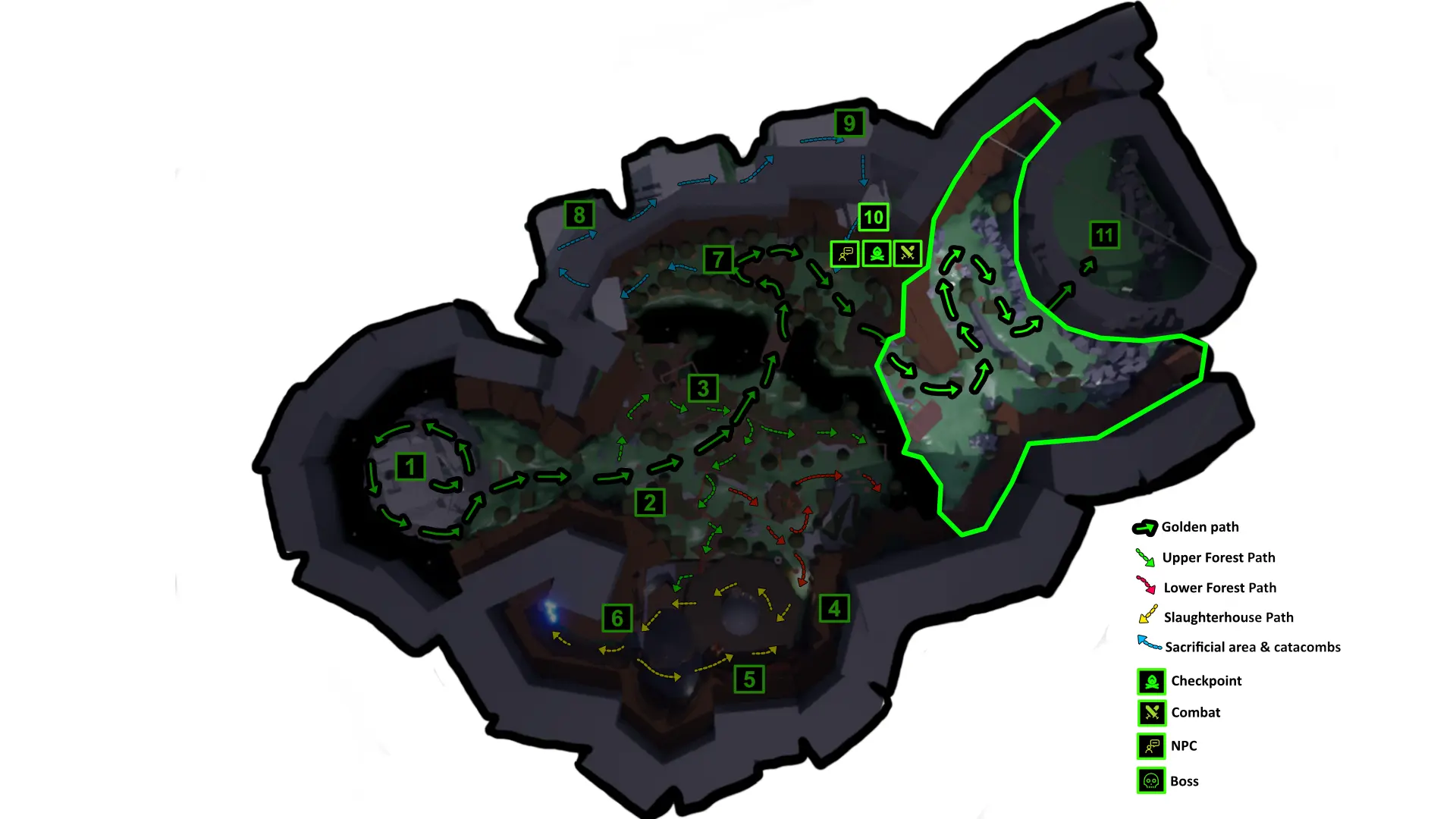
Beat 11 – Ruins – Boss Fight – Climactic final encounter delivering the level’s primary narrative and mechanical payoff.
Iterations Overview
Pre-Production
1. Research, Ideation & Planning
This pre-production phase focused on defining the level’s structural, atmospheric, and narrative foundations before entering engine production. Gameplay analysis, environmental research, and visual references were used to establish direction for traversal, combat pacing, environmental storytelling, and worldbuilding.
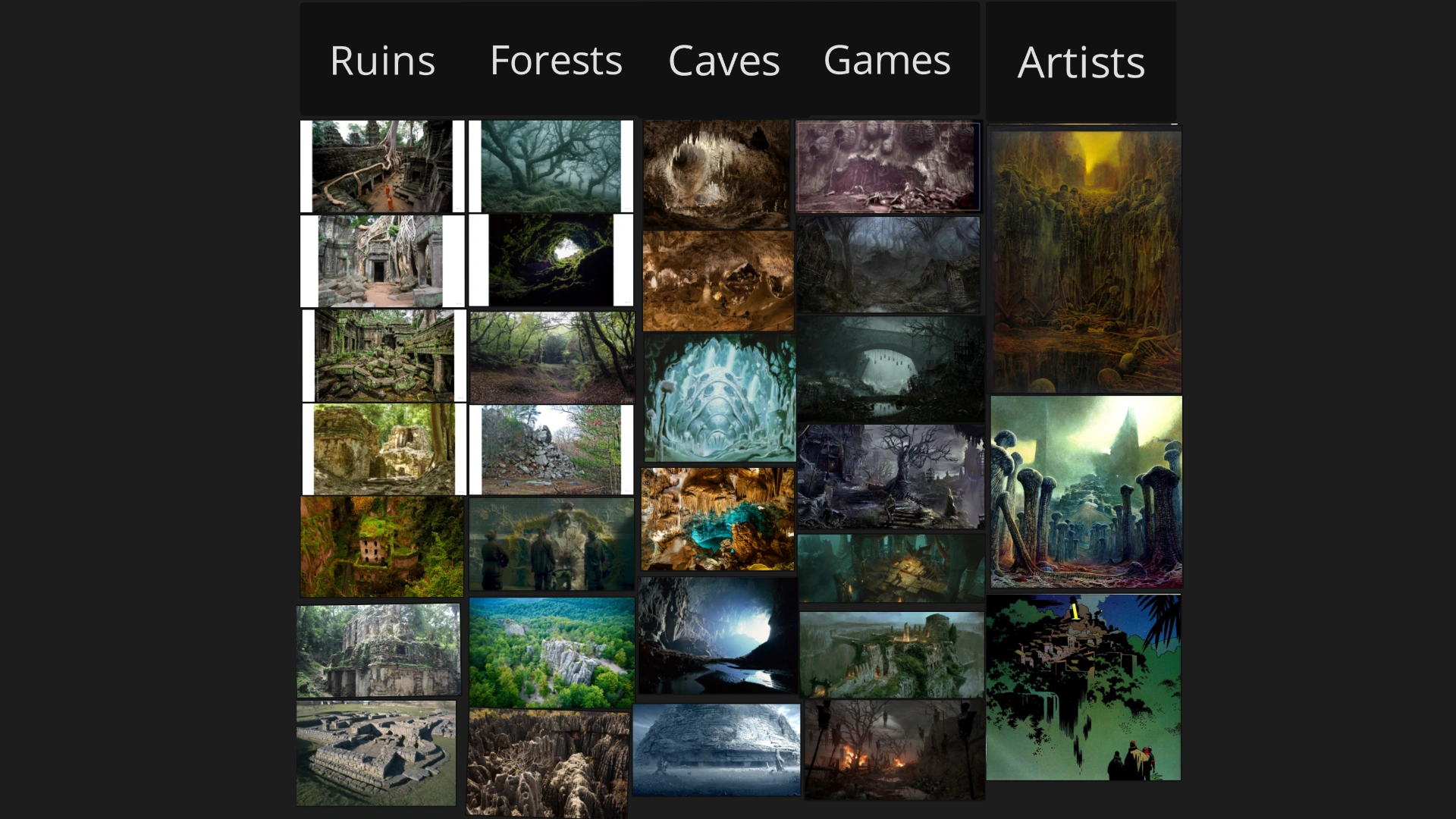
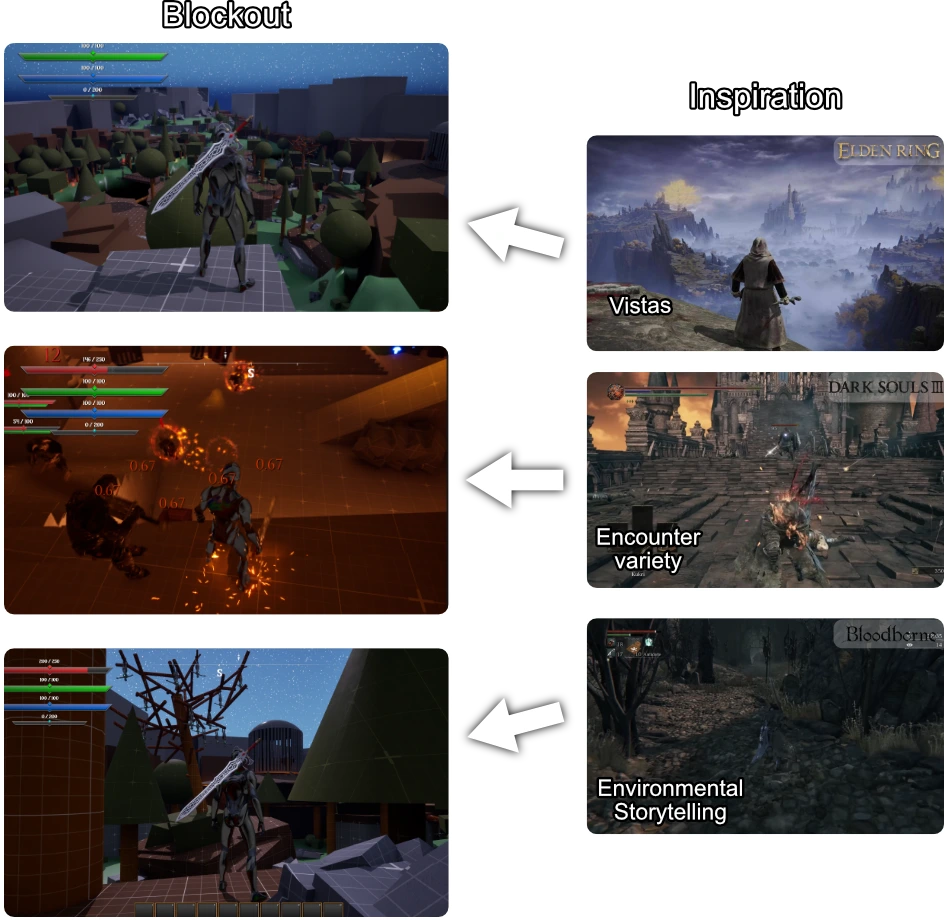
Analyzing Games: References such as Bloodborne and Dark Souls III were studied to understand interconnected layouts, environmental framing, and enemy ambush placement within Soulslike level design.
Researching Real-World References: Ruins, forests, caves, and damaged structures were researched to help define layered spaces, traversal flow, and believable environmental composition during the roughout phase.
Exploring Other Media: Works such as Annihilation and art by Zdzisław Beksiński inspired oppressive atmospheres, organic transitions, and environmental storytelling.
2. Level Design Document
LDD: The LDD defined The Cradle as a Soulslike level built around narrative documentation, justifying the player’s origin, enemy factions, NPCs, Golden Path, optional areas, shortcuts, and environmental storytelling before production.
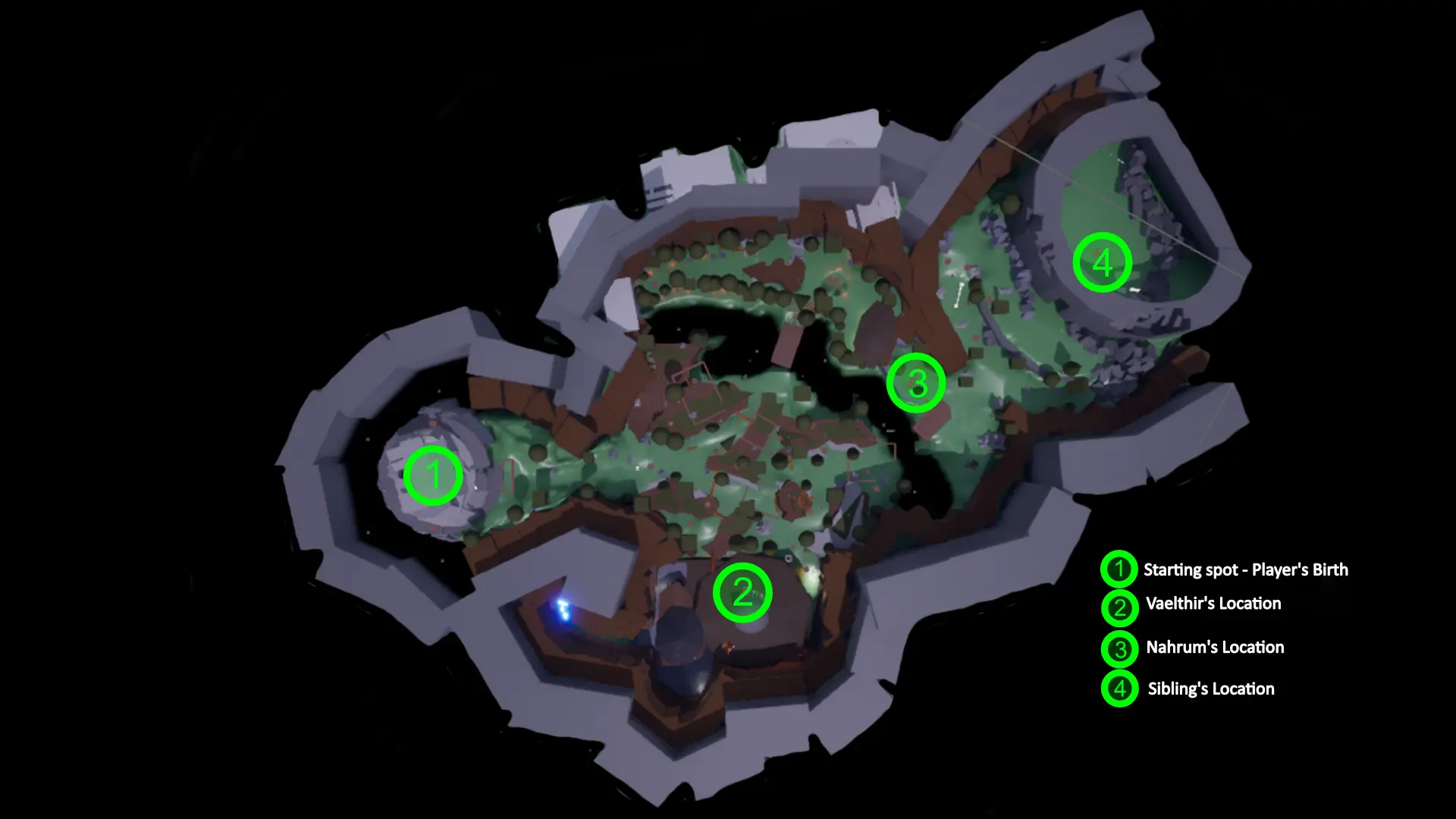
Beat Sheet: The beat sheet mapped the level’s possible routes and intensity by separating exploration, combat, narrative, and boss beats. This helped evaluate pacing across both the Golden Path and optional areas without forcing a linear difficulty curve.
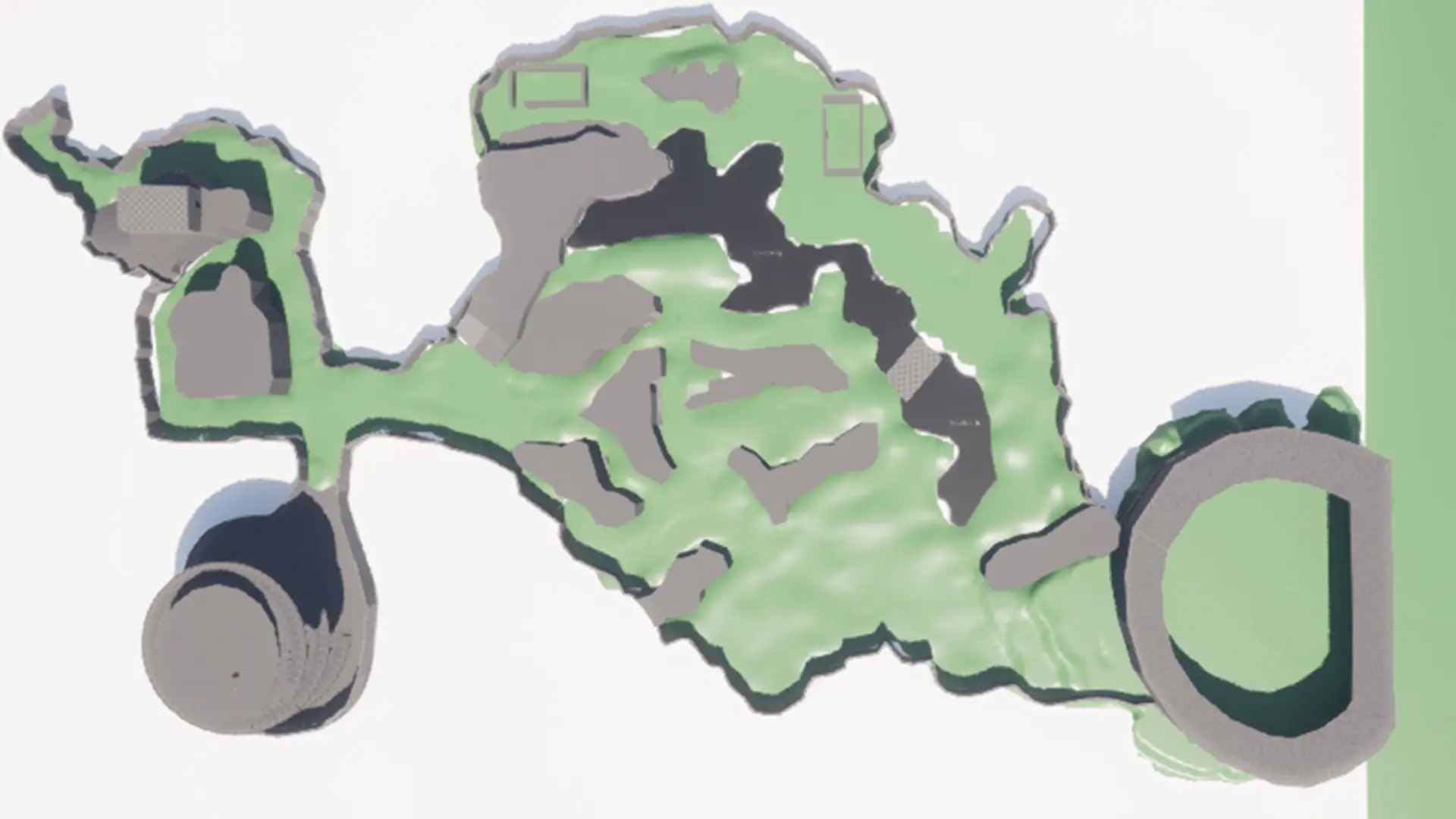
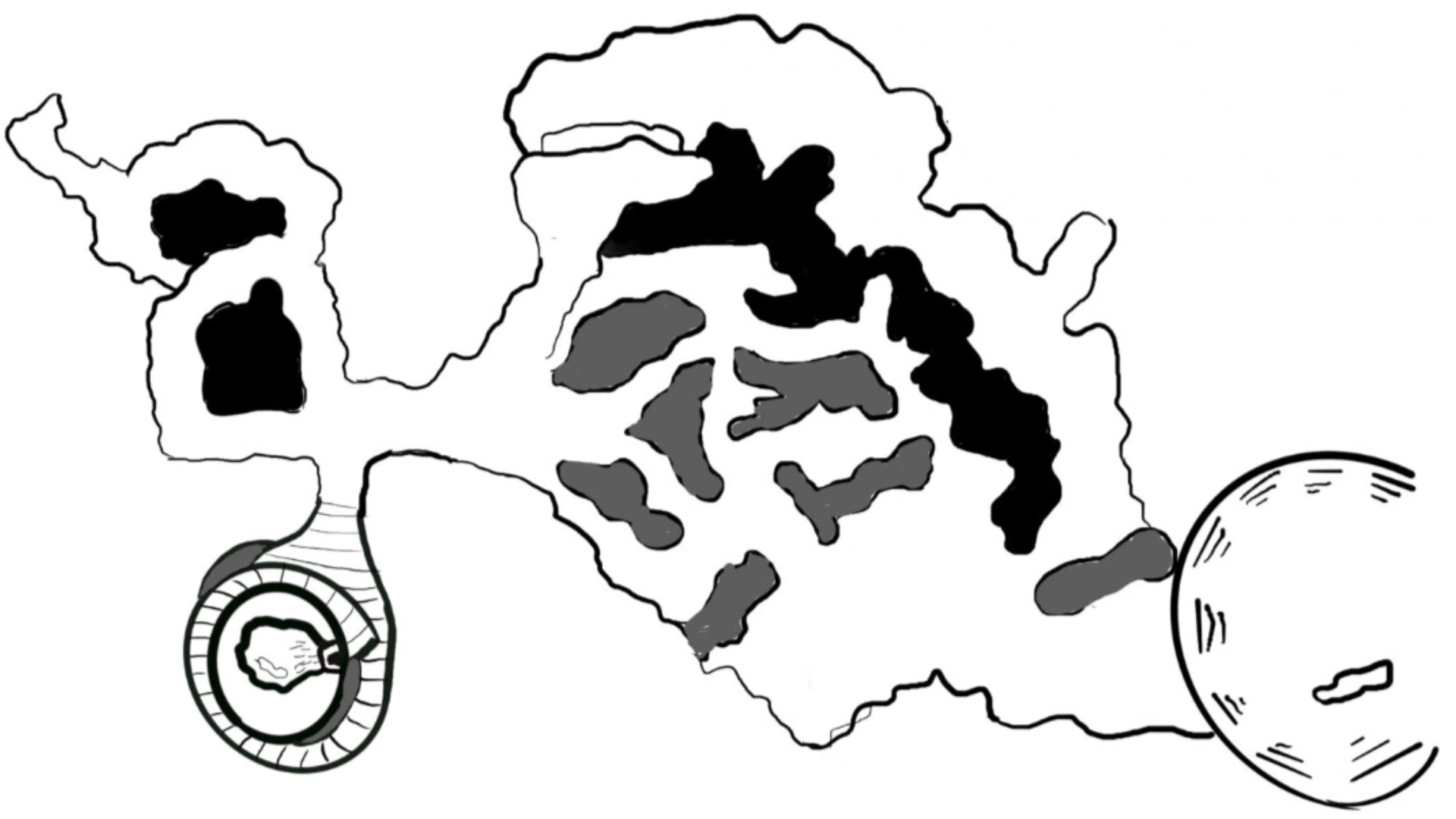
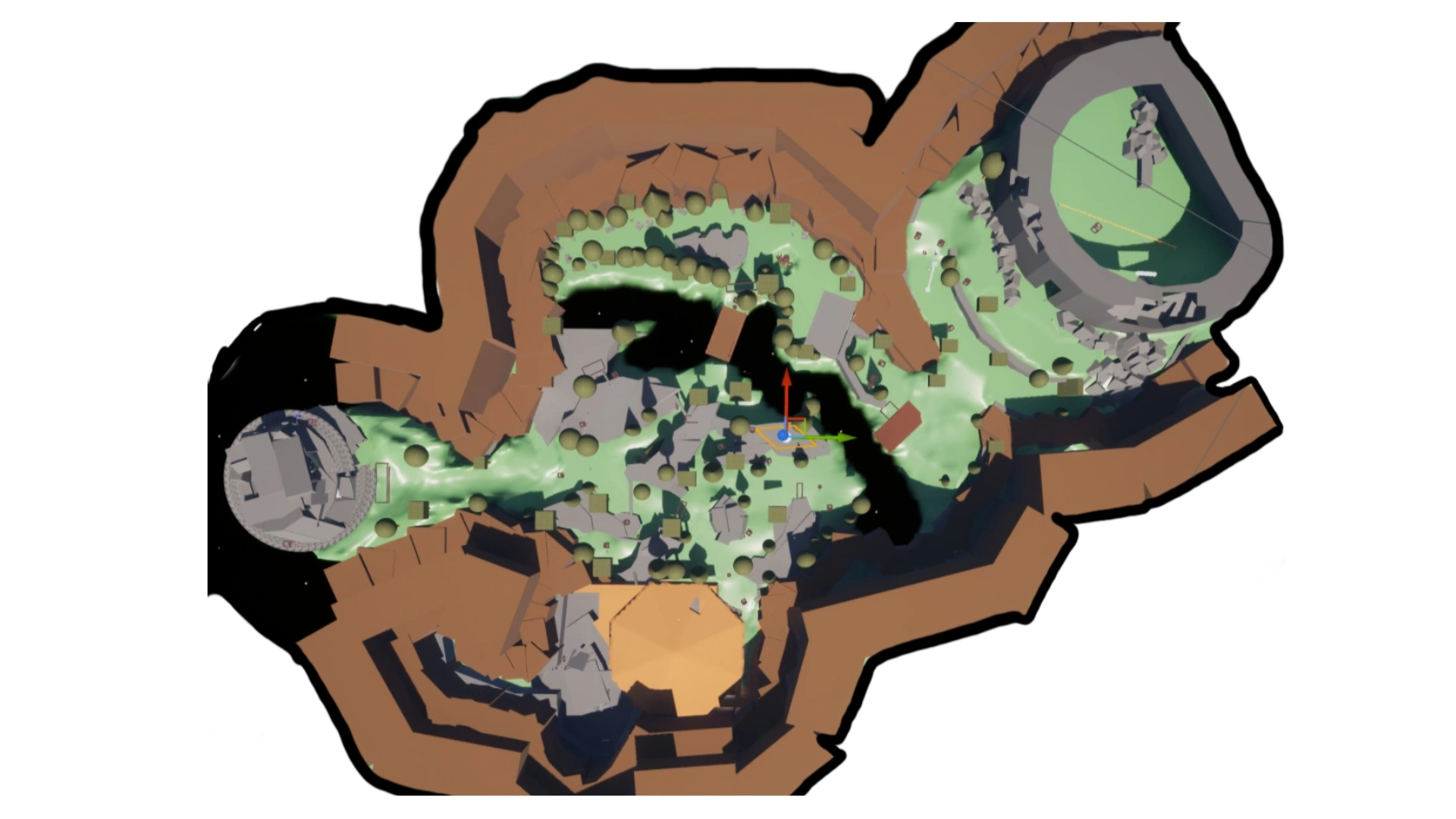
2D Map Layout: The 2D layout structured the Lower Forest as the central hub, with routes branching toward the Sacrificial Area and Ruins as part of the Golden Path, while planning loops, landmarks, and optional exploration.
Process Breakdown
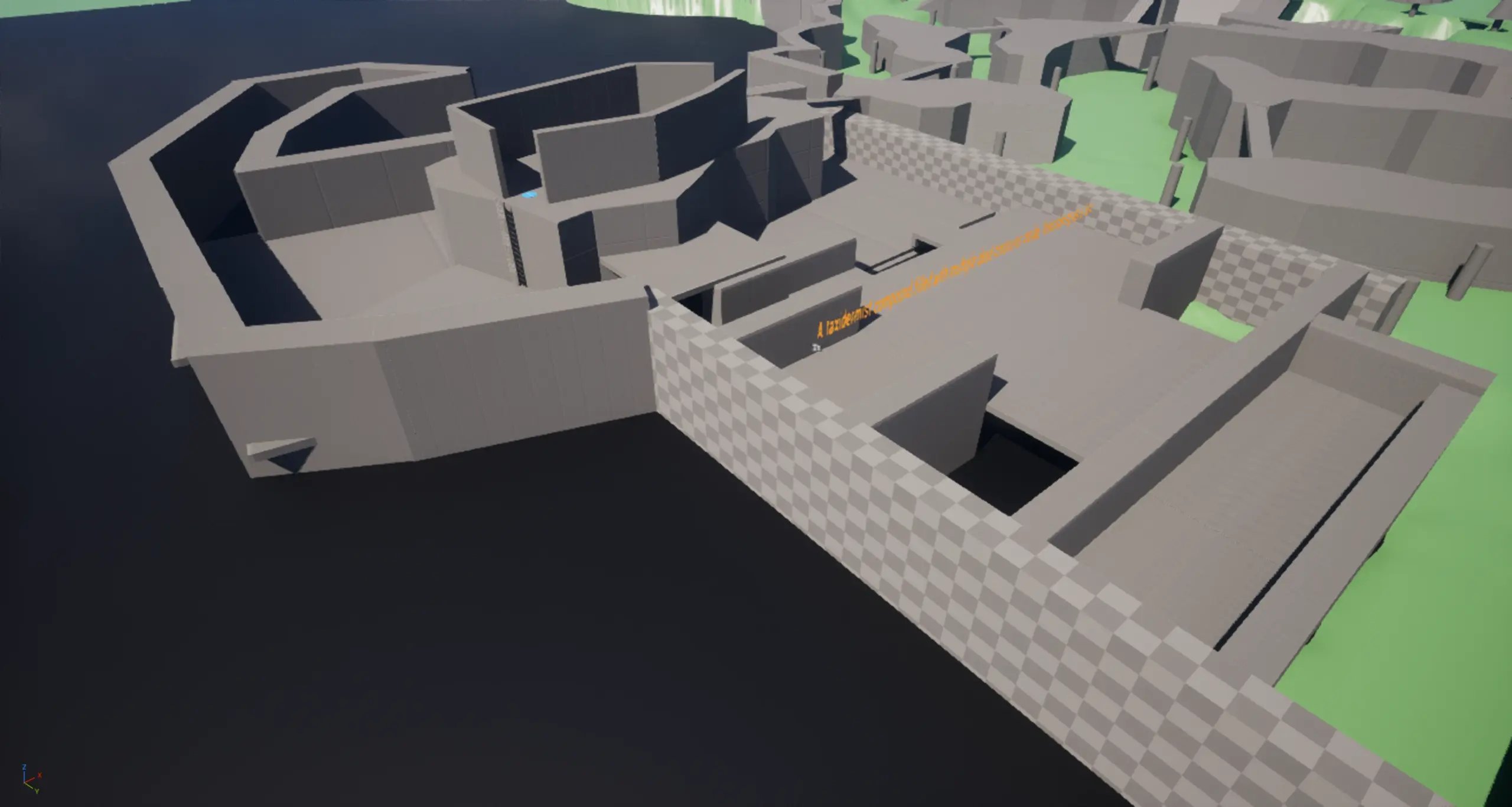
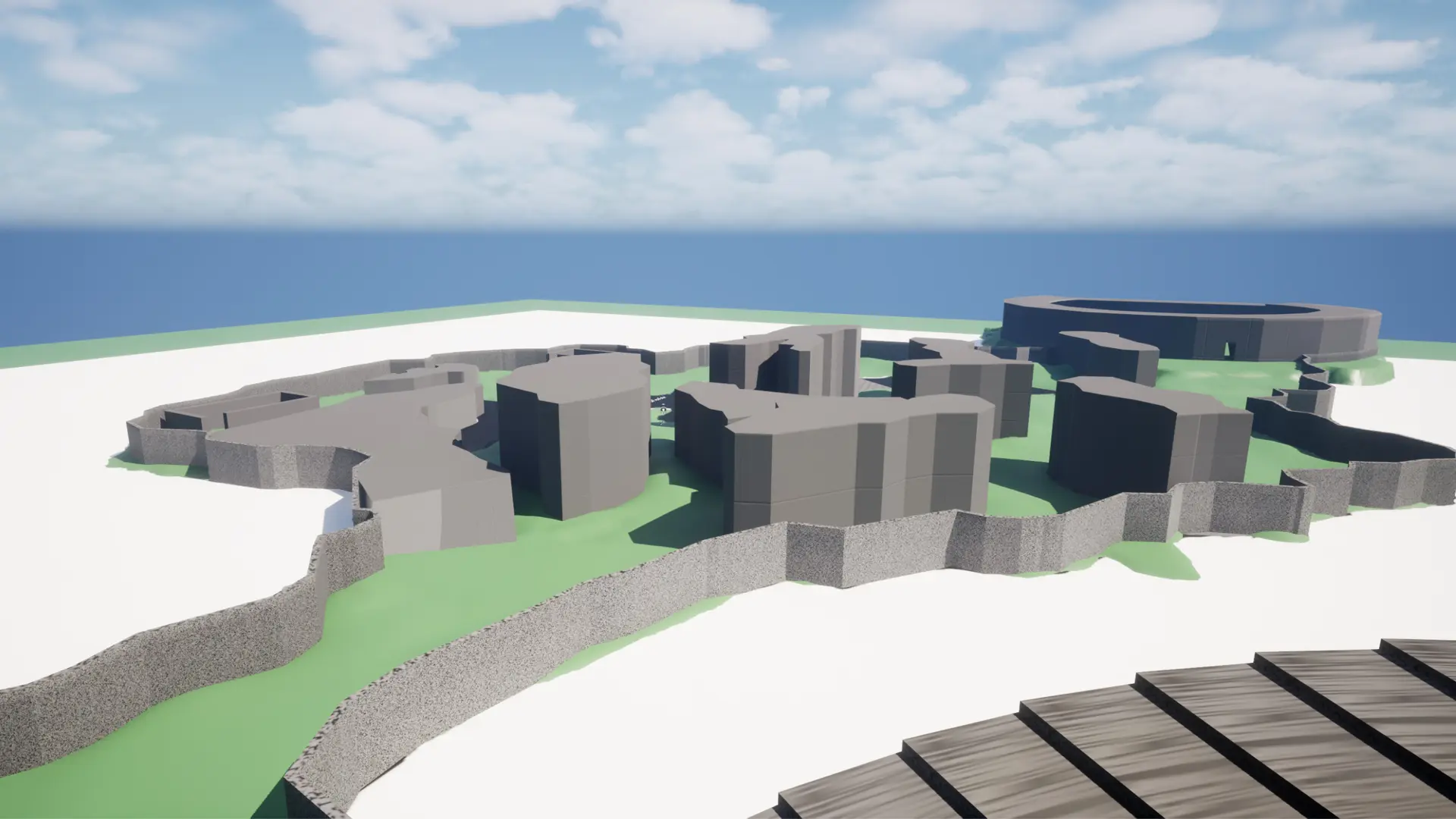
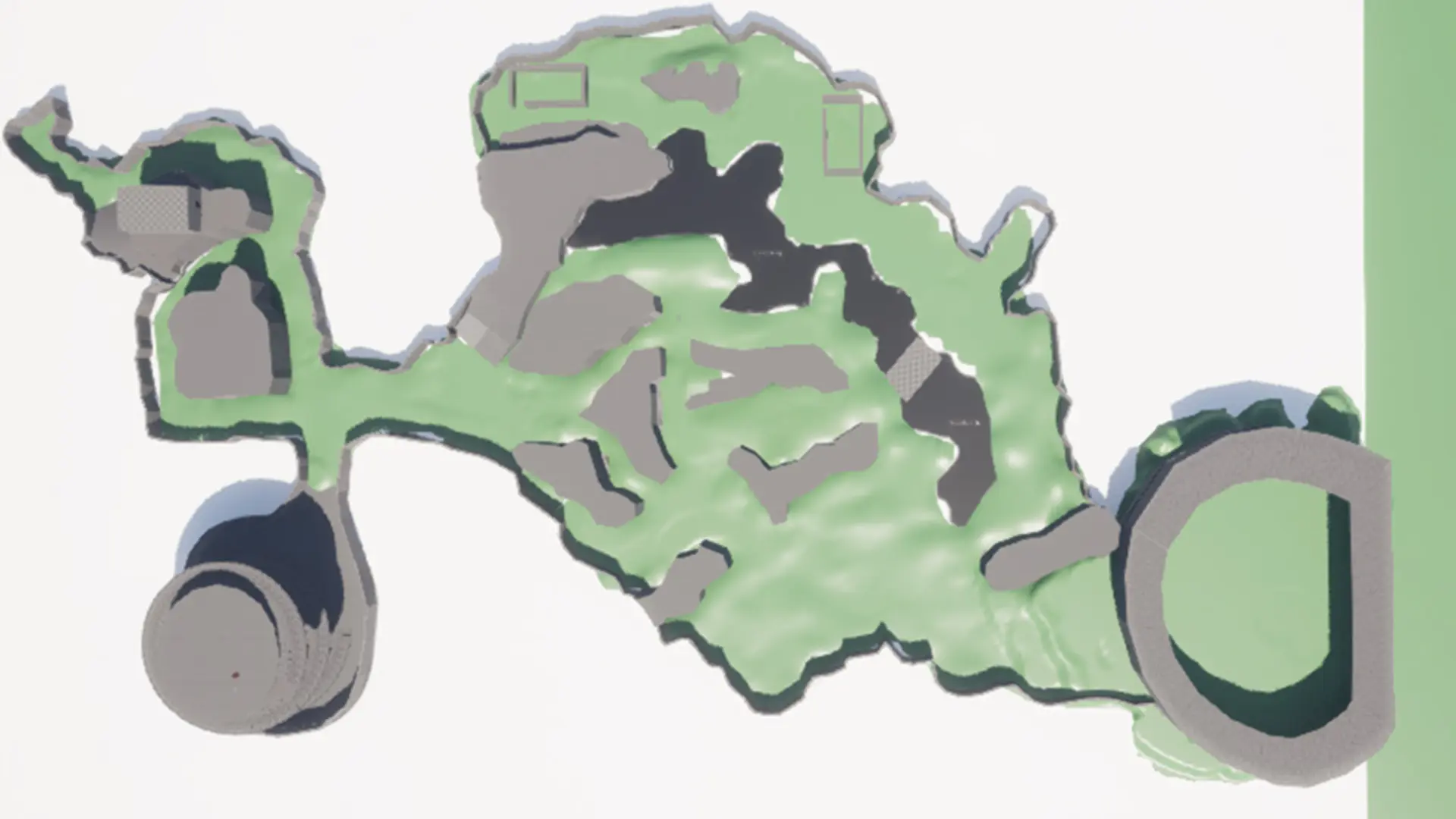
3. The First Roughout
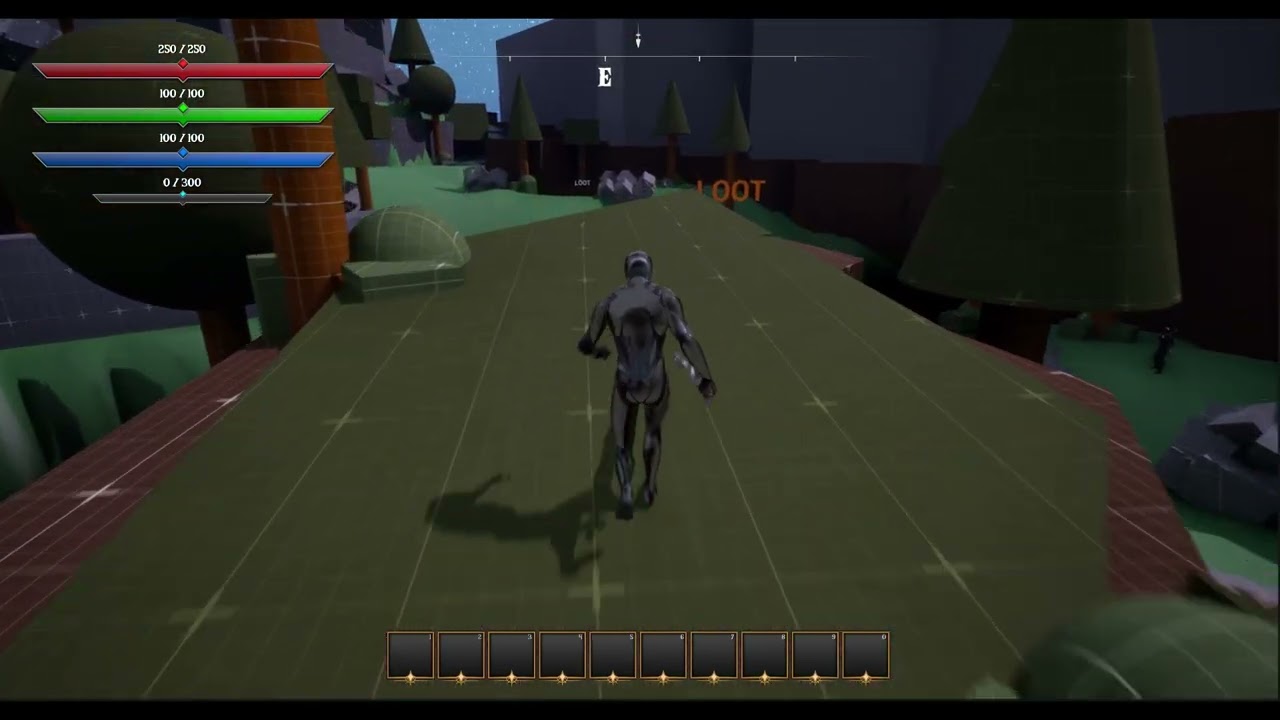
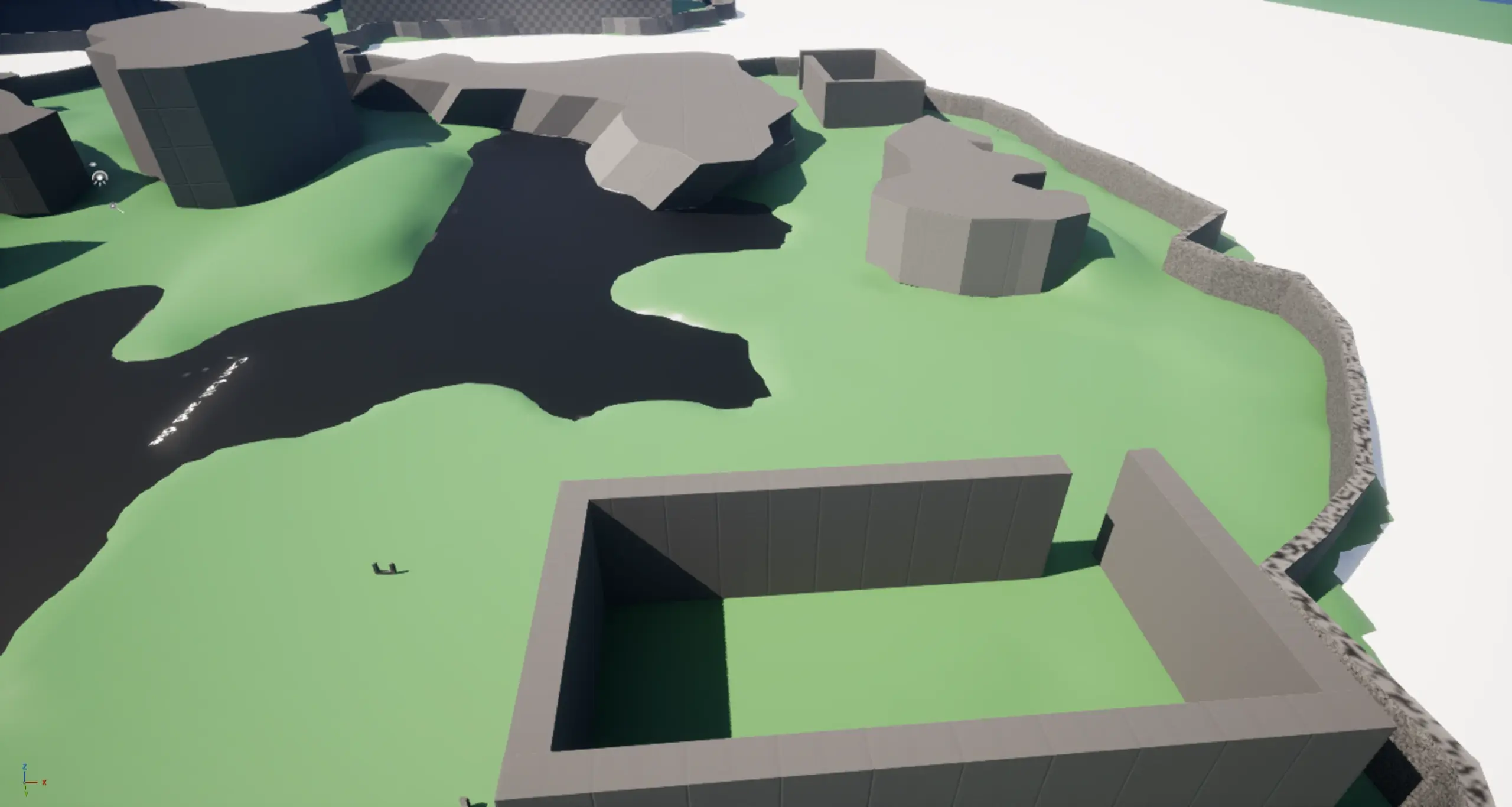
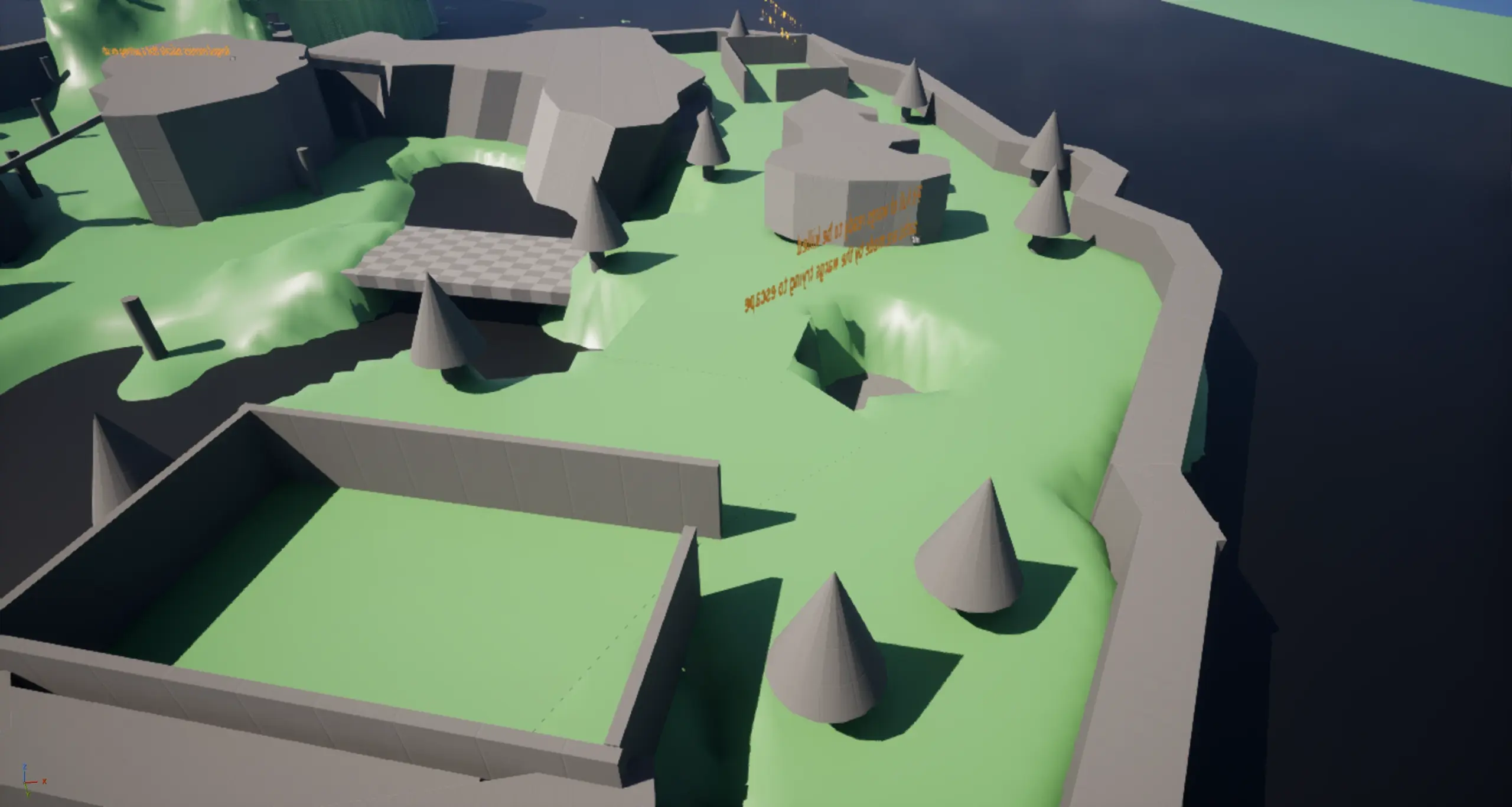
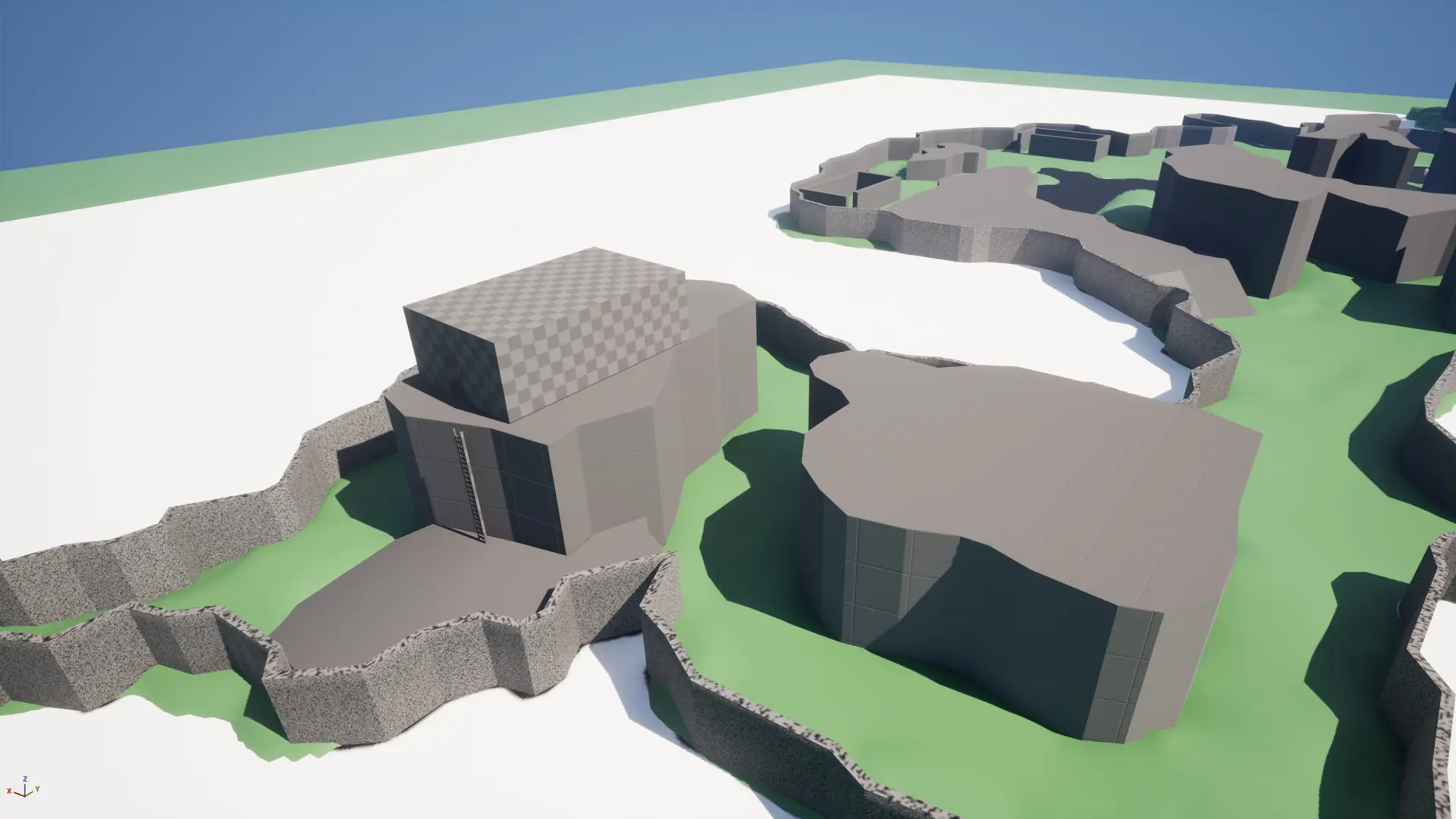
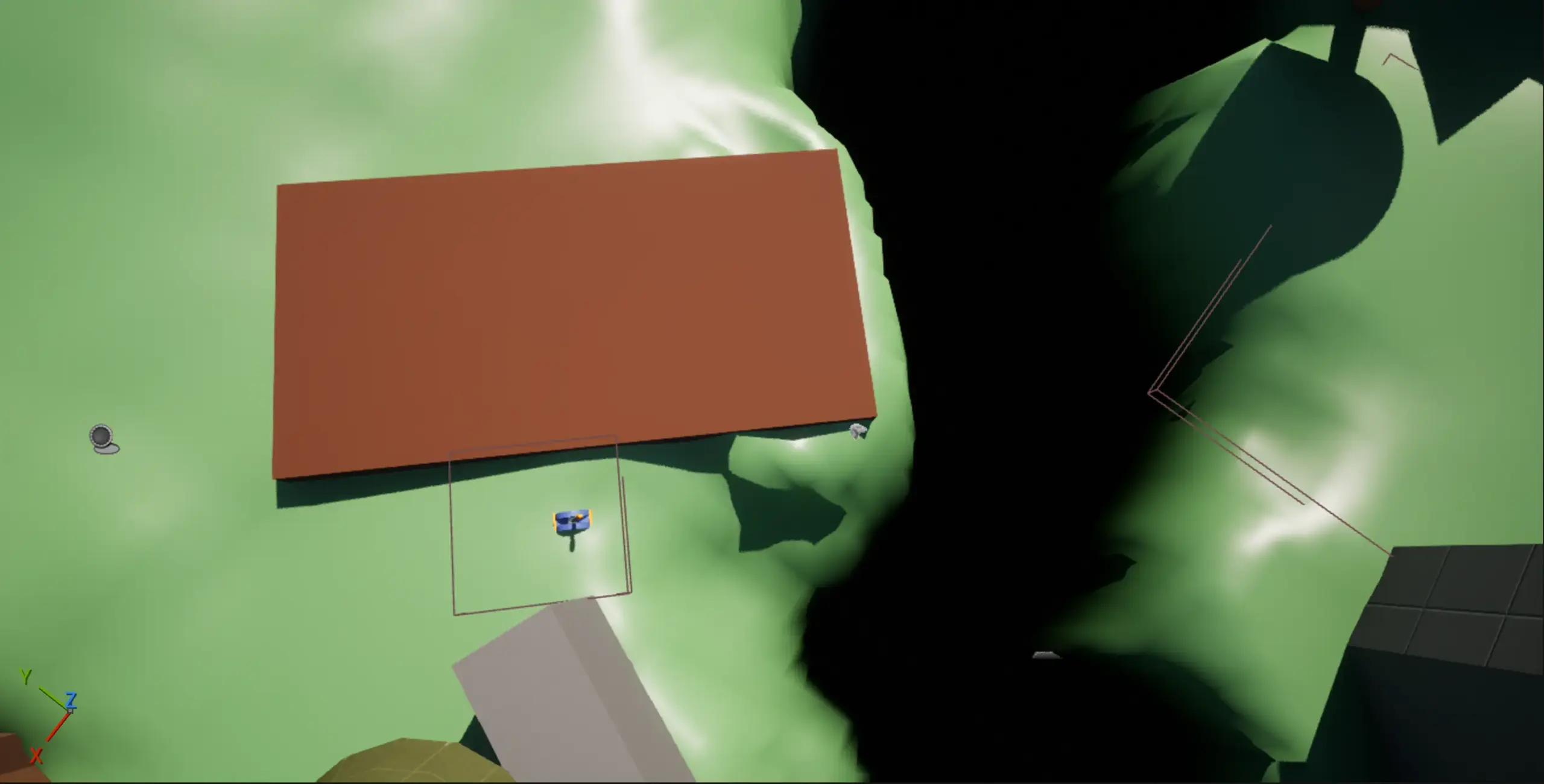
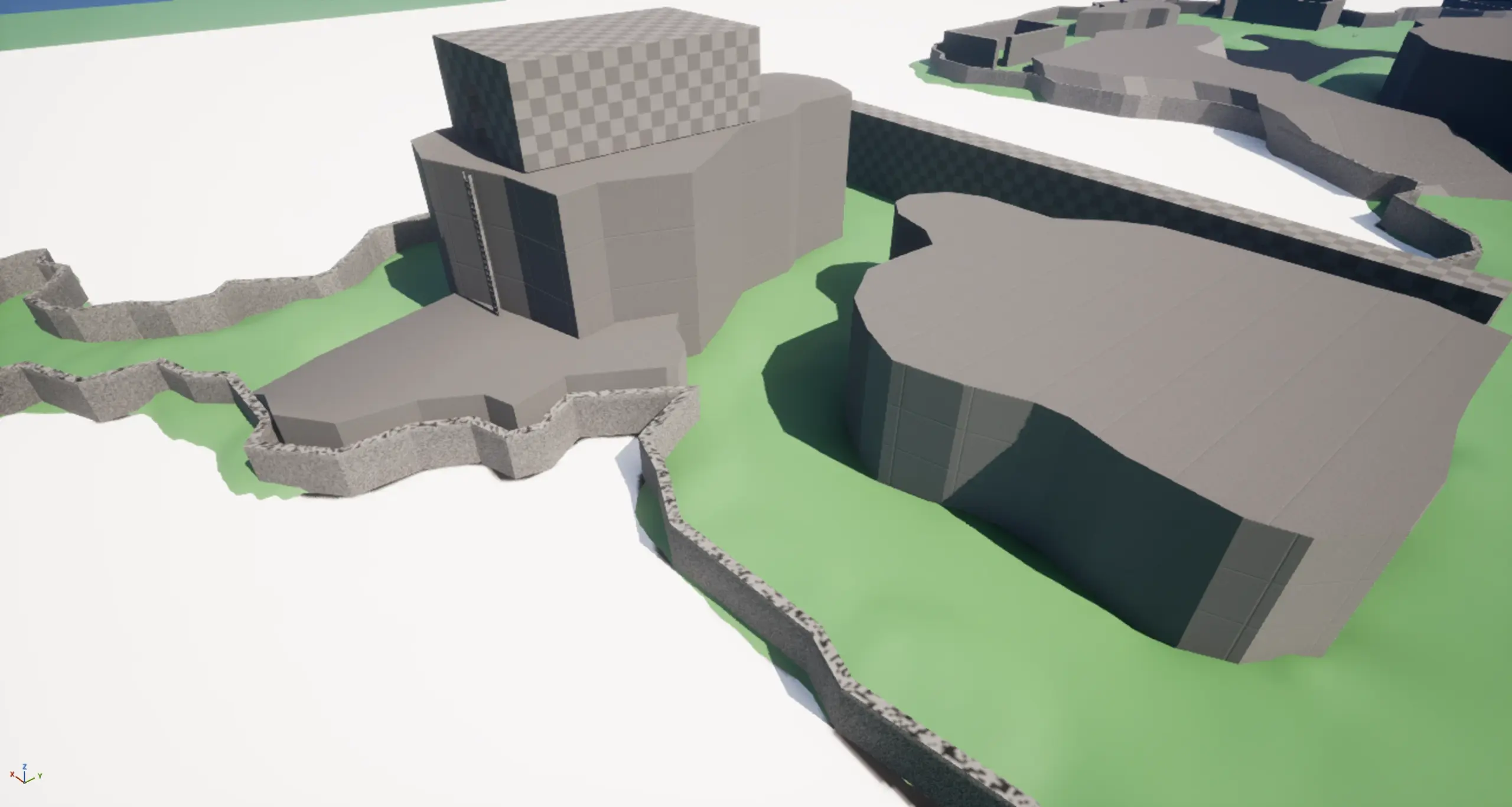
Results: The transition from 2D to 3D helped establish the level’s scale, pacing, and spatial flow. Early roughout testing revealed oversized and overly flat areas, leading to later iterations focused on tighter spaces, stronger elevation changes, and more intentional traversal.
Goal: Validate scale, traversal flow, pacing, and spatial readability directly in-engine by translating the 2D layout into a navigable 3D space.
Implementation / Execution
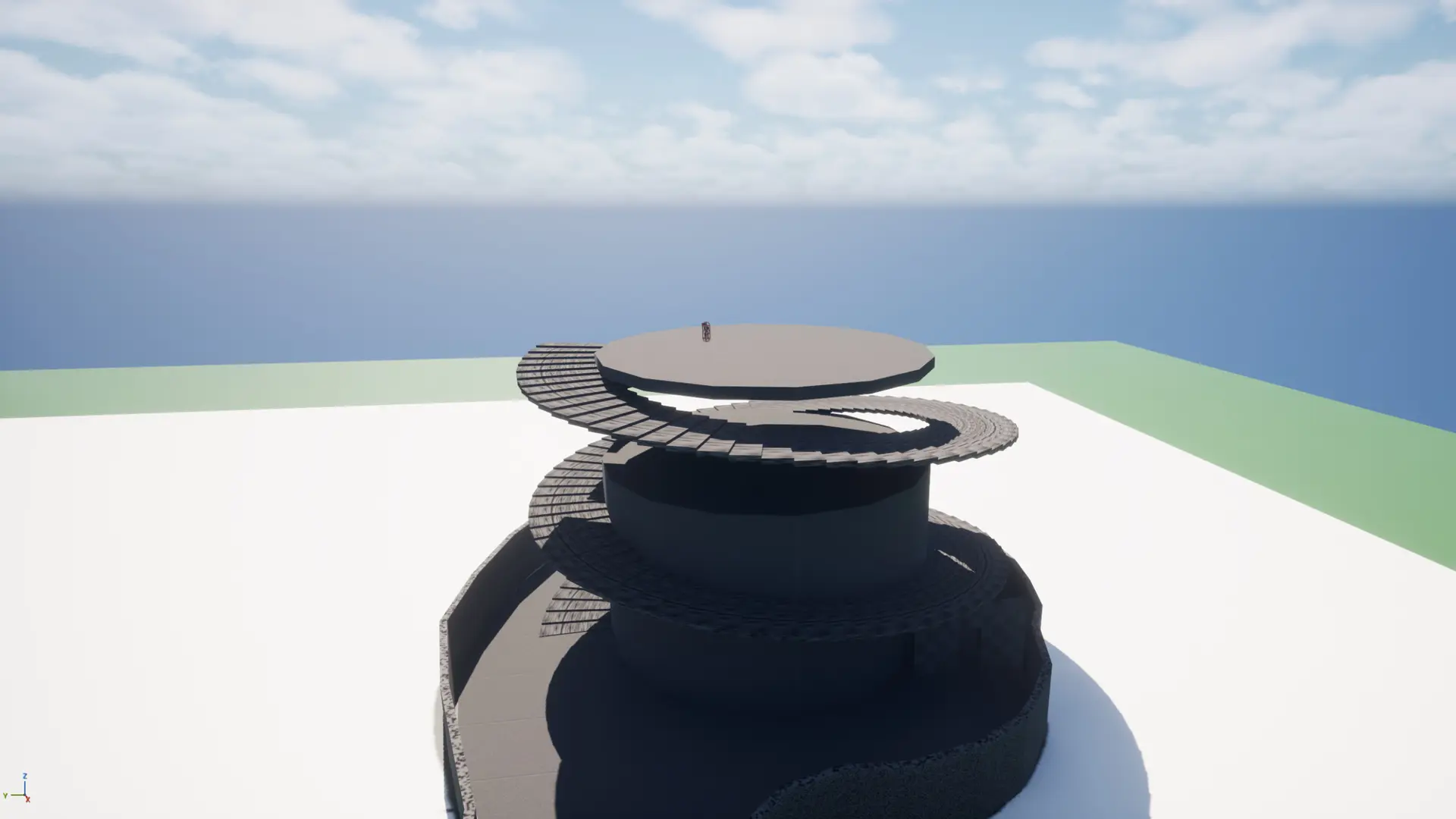
Spatial Blockout: Primitive geometry was used to establish the level’s overall scale, traversal routes, combat spaces, and environmental composition.
Layout & Verticality: Terrain elevations, curved paths, and early landmark placement were implemented to test visibility, navigation, and combat readability within the playable space.
Flow & Exploration: Initial loops, optional paths, and progression routes were iterated directly in-engine to evaluate pacing, exploration flow, and player orientation.
4. Narrative Pass
Results: Create a cohesive narrative layer that supports player navigation, enemy ecology, and progression through environmental storytelling, landmarks, NPC placement, and worldbuilding.
Goal: The narrative pass reinforced the level’s identity by making exploration, encounters, and optional areas communicate lore organically, helping players understand faction relationships, progression context, and the world’s ecosystem without relying on cinematics.
Implementation/Execution:
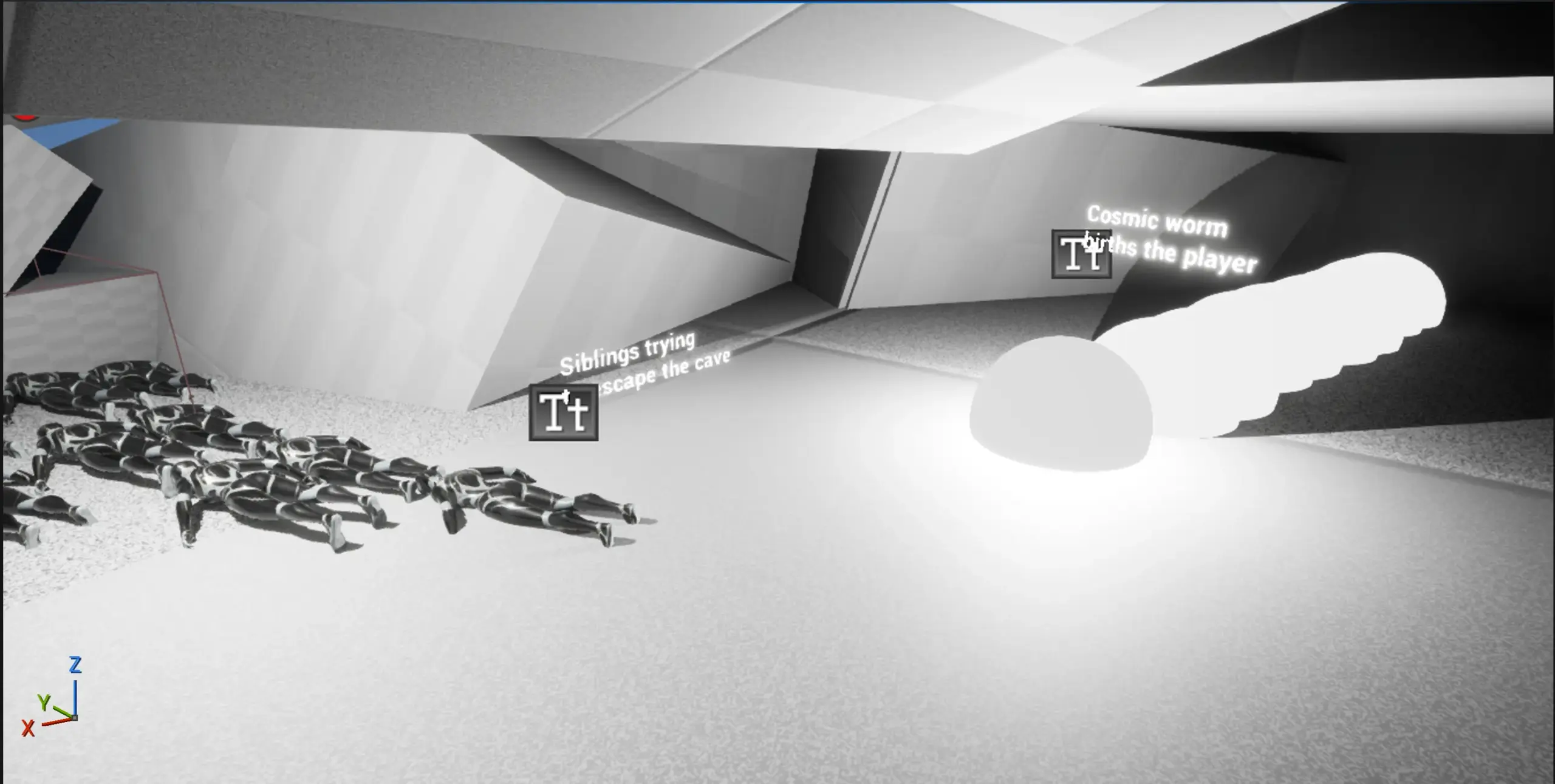
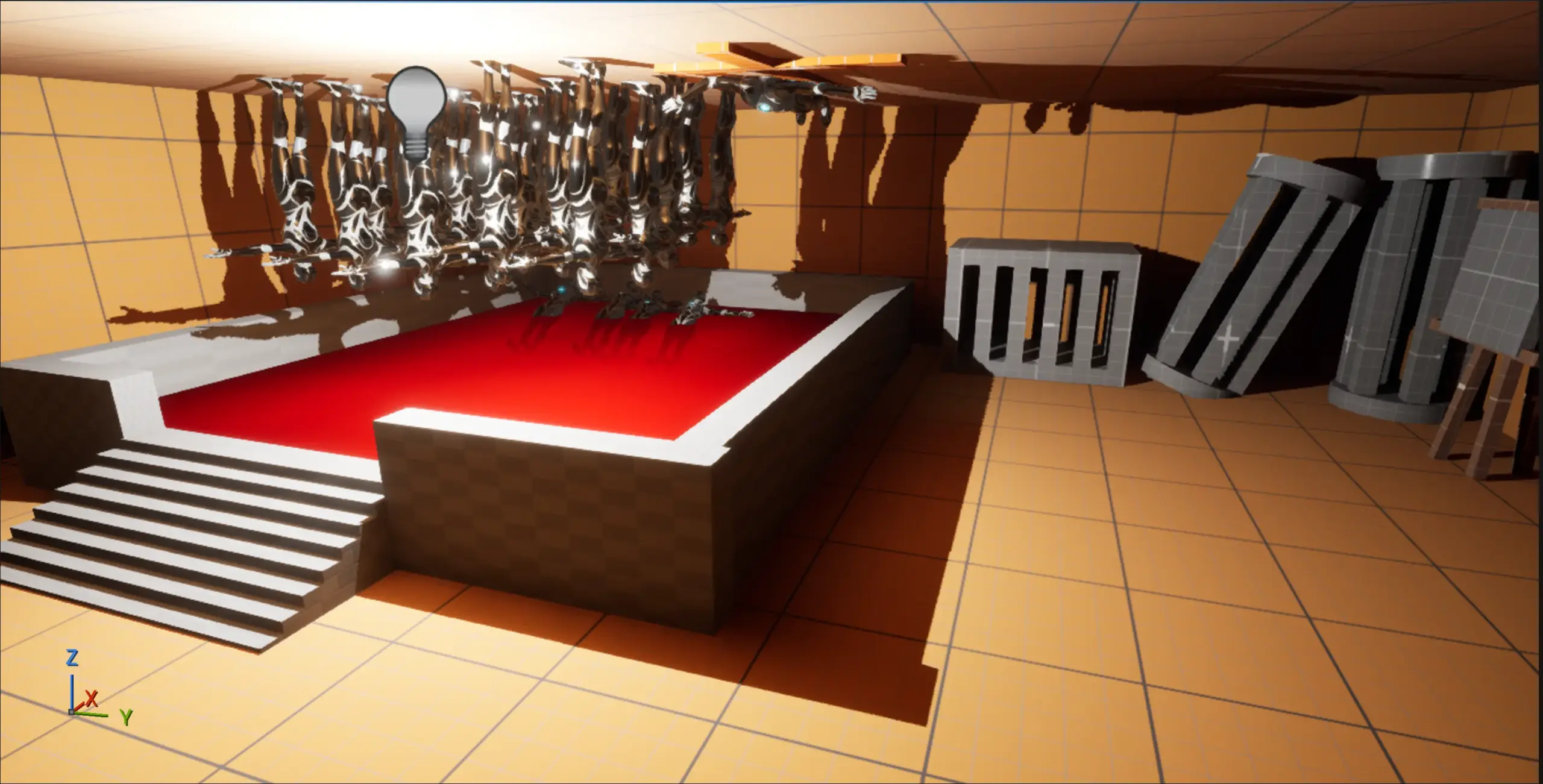
Environmental Storytelling: Narrative information was integrated through corpses, cages, altars, blood pools, enemy placement, architecture, and cosmic worm remains to communicate the world’s history and ecosystem.
NPC & Quest Integration: Characters such as Nahrum and Vaelthir were positioned to naturally intersect with progression paths and optional exploration.
Spatial Narrative Design: Area transitions were used to gradually shift tone, atmosphere, and visual storytelling throughout the level.
5. Enemy Encounters Pass
Results: The encounter pass improved combat flow and gameplay readability by creating more intentional enemy placement and clearer combat spaces. Enemy positioning and environmental composition helped reinforce pacing, tension, and progression throughout the level.
Goal: Establish combat spaces, enemy readability, and encounter variety throughout the level while reinforcing exploration, tension, and environmental storytelling.
Implementation/Execution:
Enemy Roles & Synergy: Enemy types were designed around complementary behaviors, combining melee pressure, ranged attacks, ambushes, and traversal denial.
Encounter Composition: Combat spaces were structured through elevation, occluded sightlines, chokepoints, and layered enemy placement to create deliberate combat scenarios.
Exploration & Risk/Reward: Optional encounters, hidden enemies, and traps were used to reward awareness, exploration, and player positioning.
6. Scripted Sequences Pass
Results: The scripting pass improved pacing, navigation clarity, and encounter variety while making the level feel more reactive and interconnected through scripted events and traversal systems.
Goal: Implement scripted interactions to reinforce player guidance, pacing, environmental storytelling, and level progression while creating more reactive and memorable gameplay moments.
Implementation/Execution:
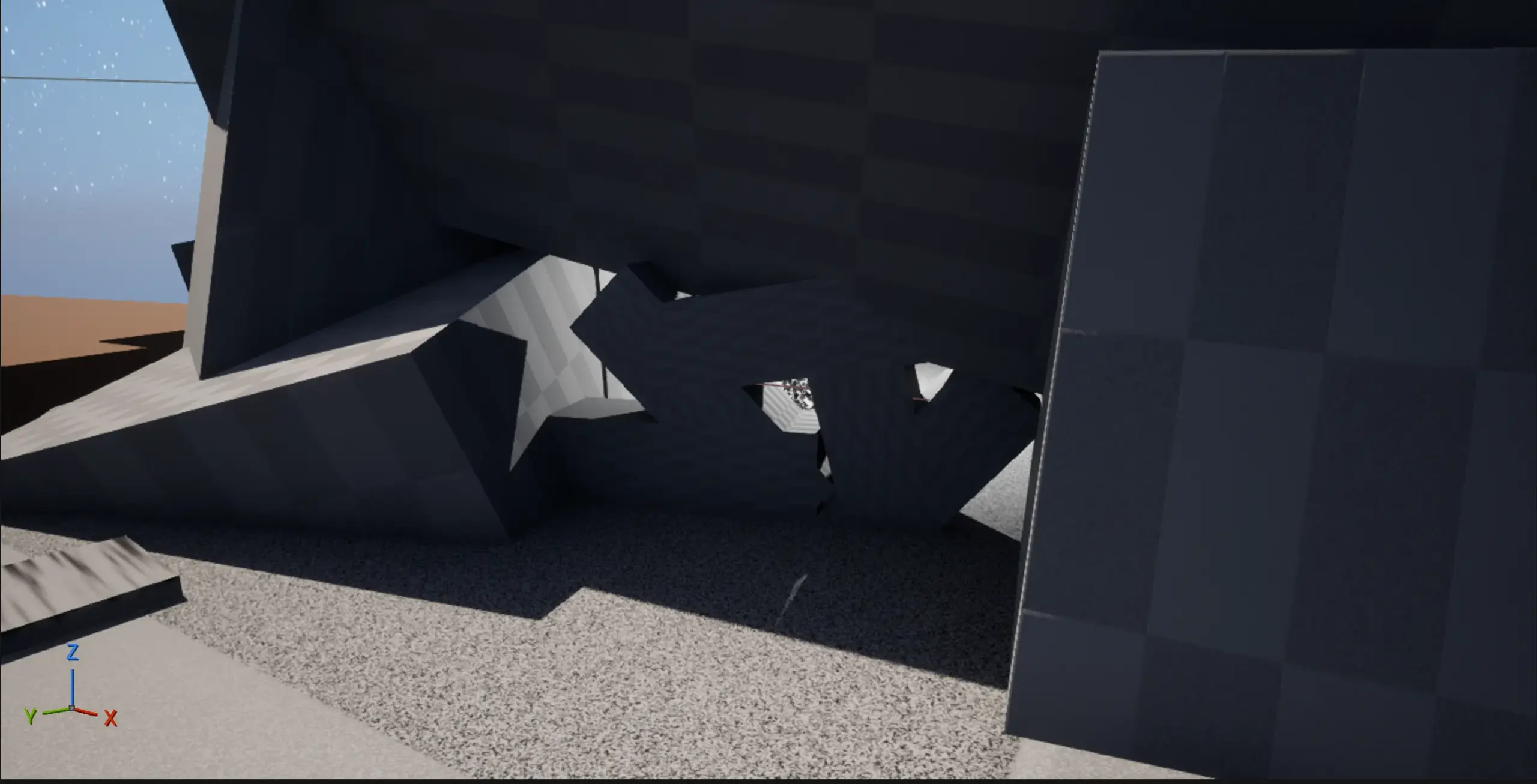
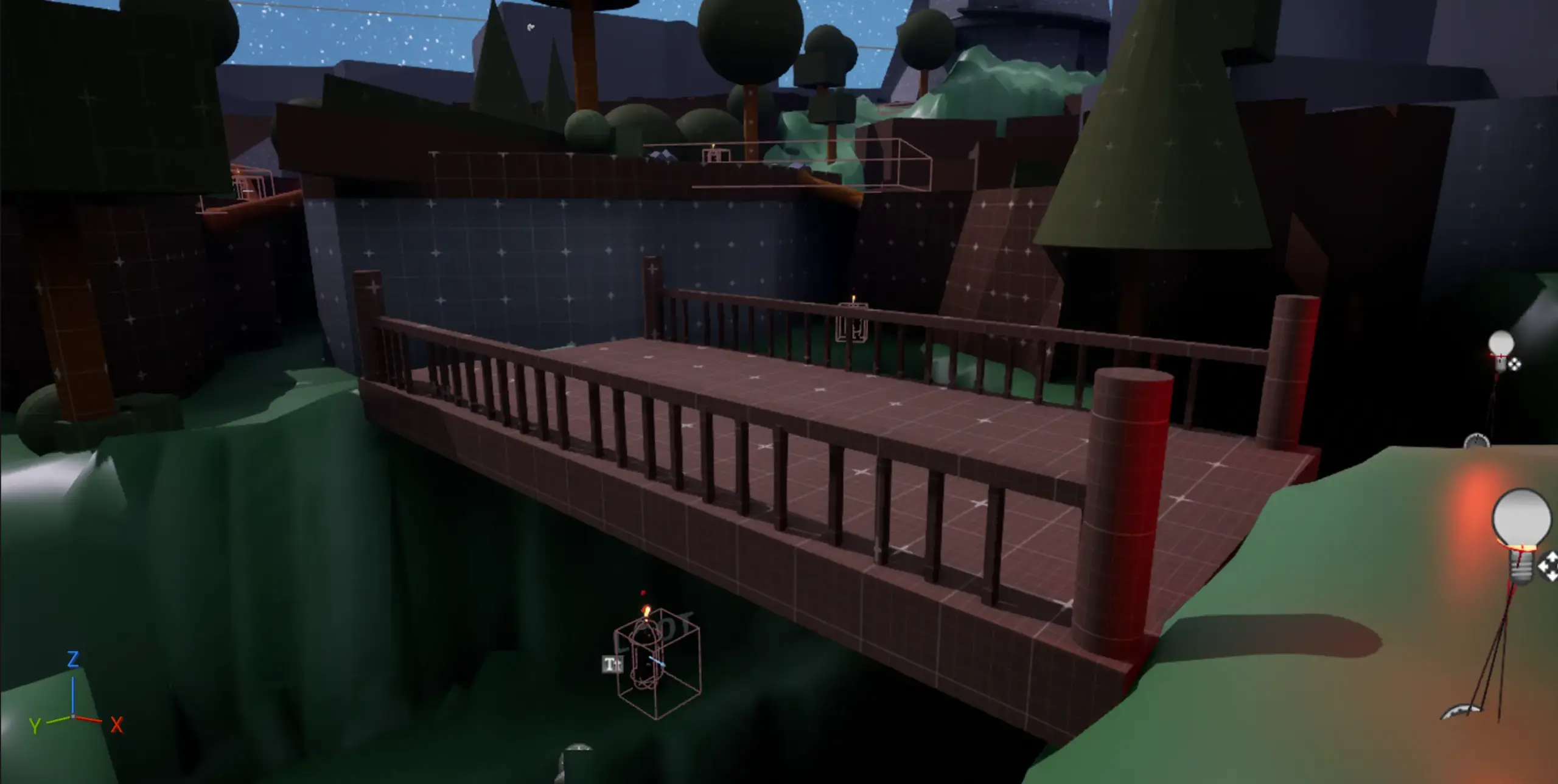
Traversal & Progression Systems: One-way doors, breakable rubble passages, and a bridge shortcut switch were implemented to establish a common language with the player, reinforcing loops, shortcuts, progression flow, and exploration incentives.
Combat Events & Traps: Ambush encounters, immobilizing traps, and scripted enemy reveals were used to create tension spikes and more dynamic combat scenarios.
Diegetic Player Guidance: Trigger-based bird flocks were implemented as visual signposting tools, subtly directing players toward the Golden Path or optional areas without relying on UI.
7. Worldbuilding Pass
Results: The worldbuilding pass strengthened the level’s cohesion by making spaces, enemies, and traversal feel grounded within the world’s ecosystem and narrative logic. Environmental storytelling and spatial composition helped communicate lore passively through exploration and gameplay.
Goal: Strengthen the world’s logic by aligning layout, enemy placement, traversal, and environmental storytelling with the level’s narrative themes and ecosystem.
Implementation/Execution:
Layout & Spatial Logic: The forest functions as the Taxidermists’ hunting ground, while the Slaughterhouse and Sacrificial Area were positioned deeper into optional spaces to reinforce the idea that prey is captured in the forest and taken back to these ritualistic locations.
Enemy Placement & Faction Identity: Enemy positioning was adjusted to reflect hunting behaviors, using vegetation, elevation, ambushes, and sightline control to reinforce the Taxidermists’ role within the world.
Environmental Storytelling: Cosmic Worm remains, dead siblings, rituals, cages, blood pools, NPC placement, bosses, and dialogue were used to communicate the world’s history, factions, and player origin through observation and exploration.
8: Key Improvements & Playtesting
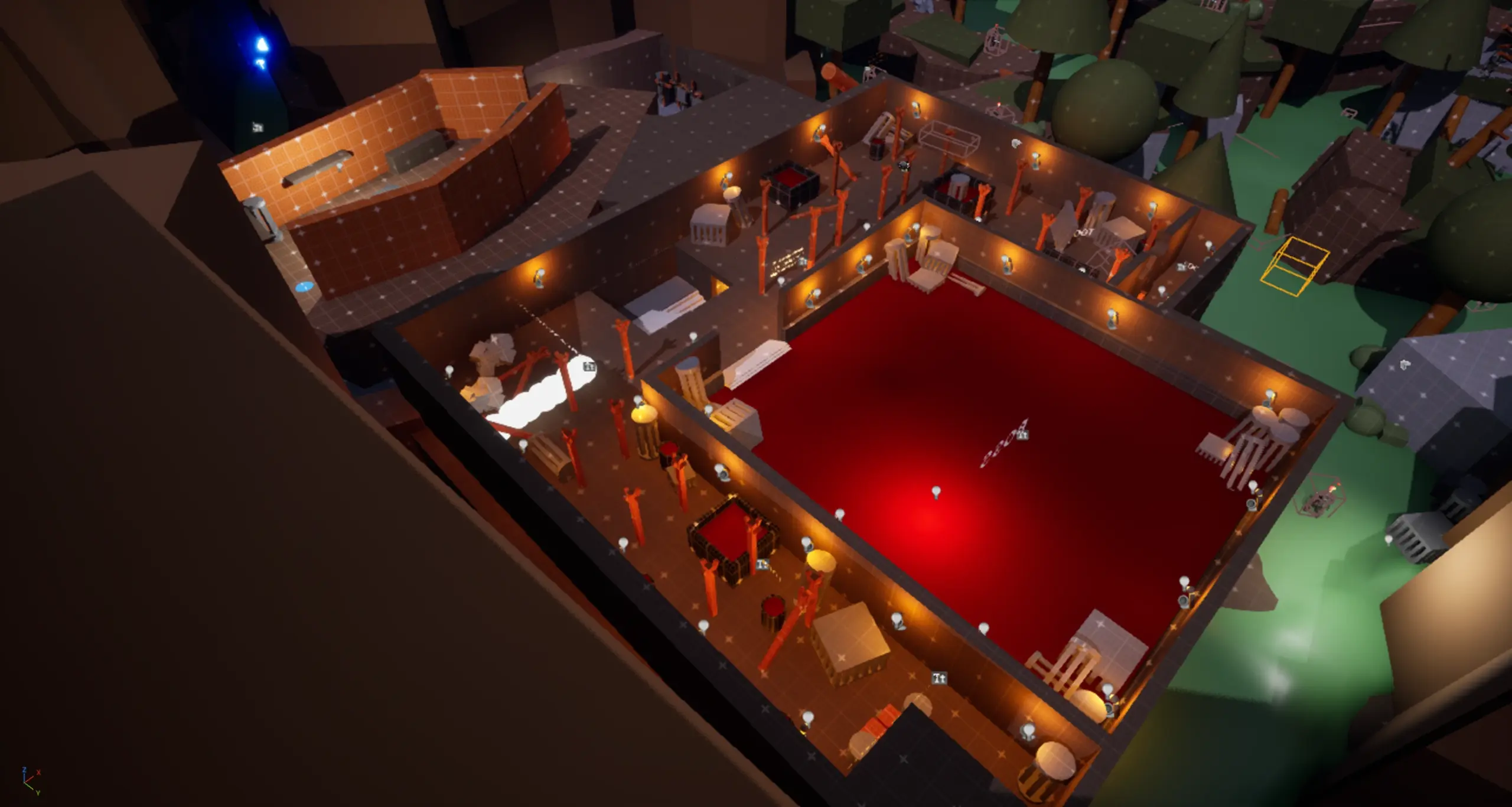
Iteration Highlight 1 - Peer Feedback - Slaughterhouse

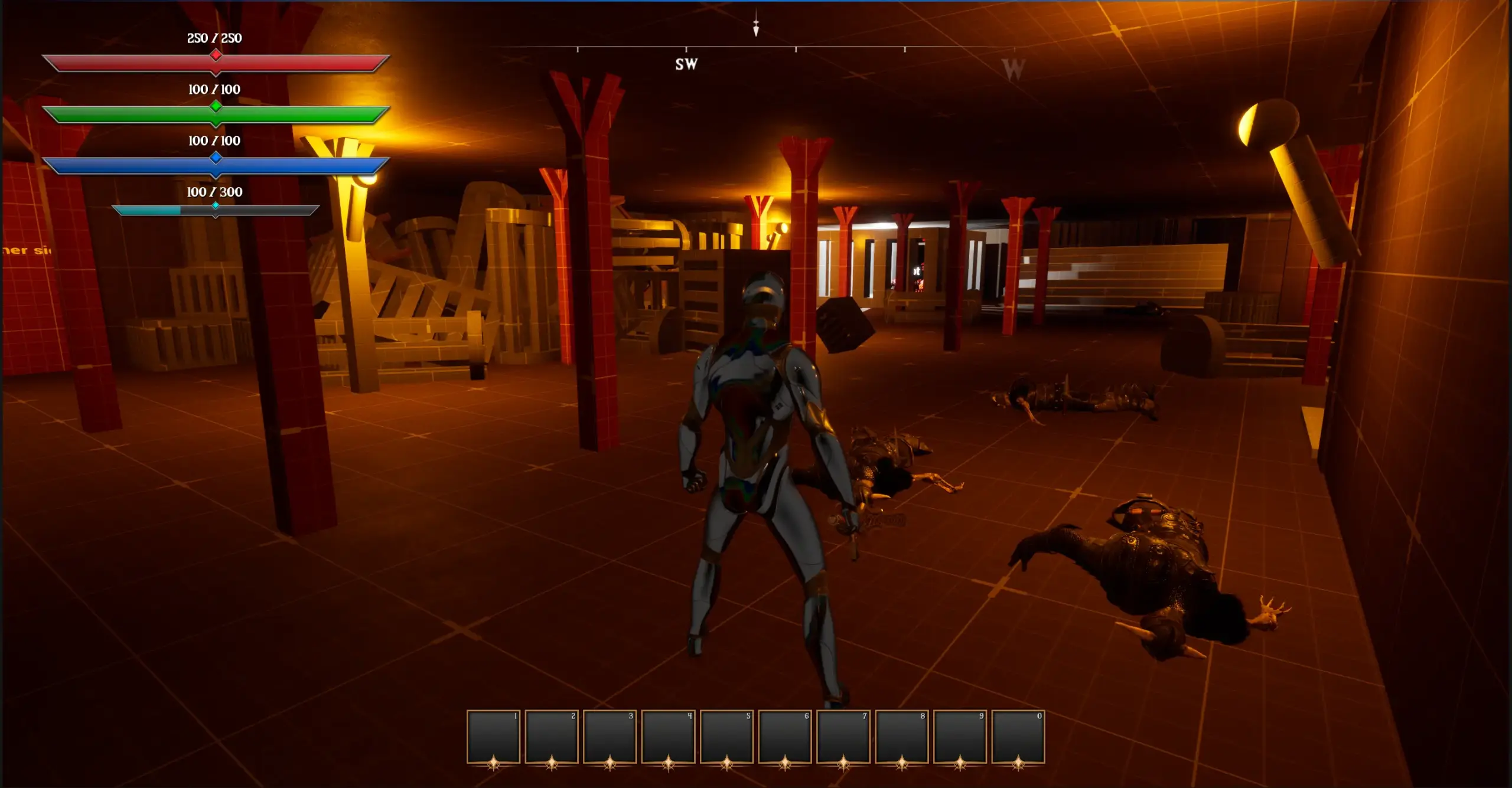
Results: The iteration improved the Slaughterhouse’s combat readability and environmental identity, creating a more tactical and believable combat space.
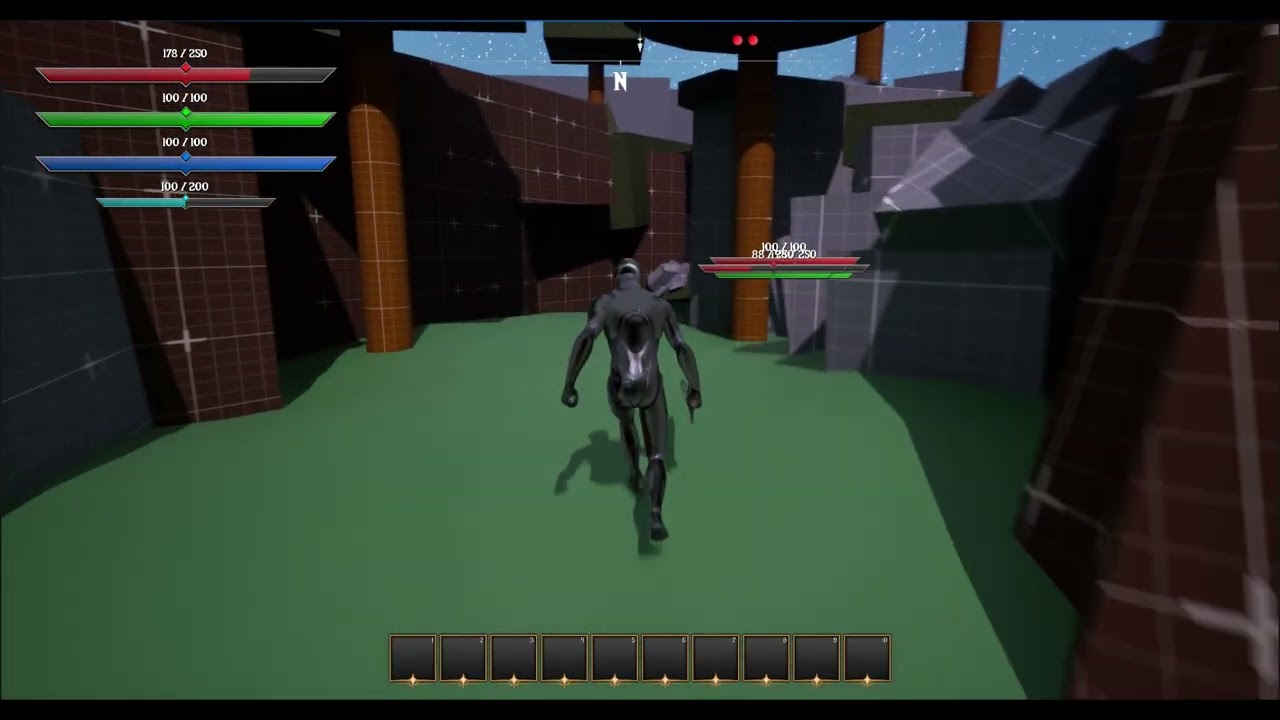
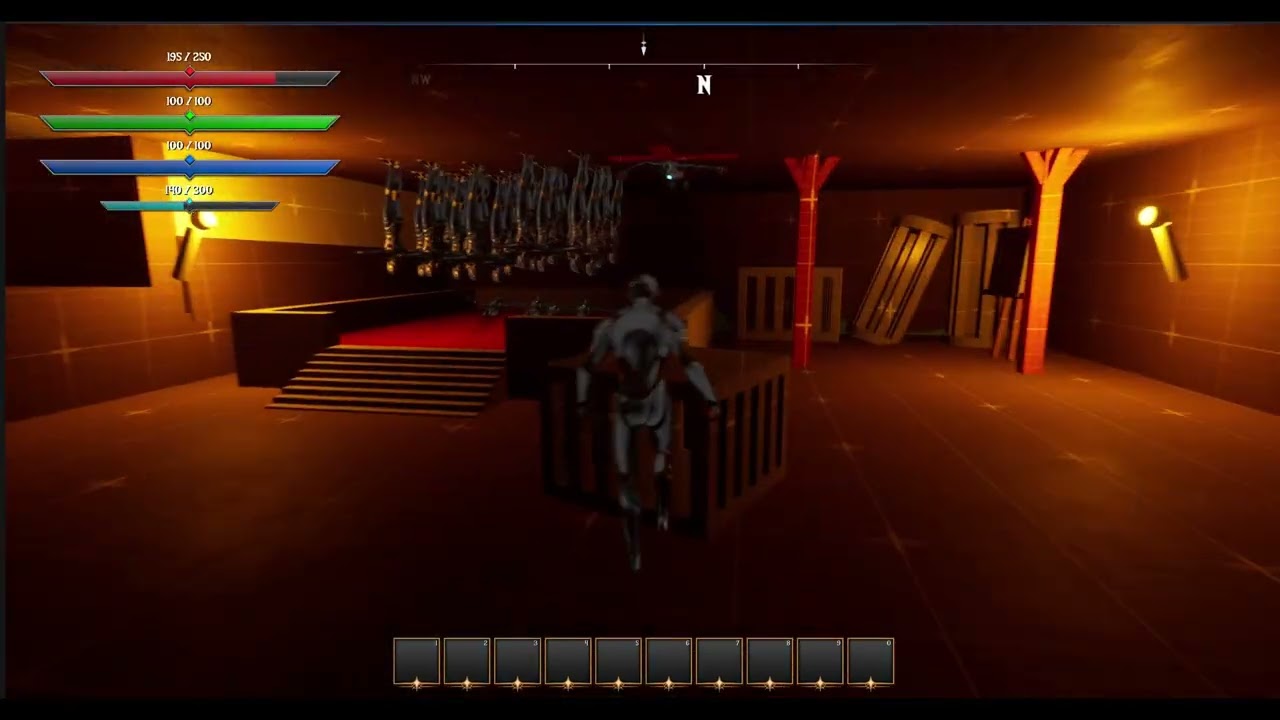
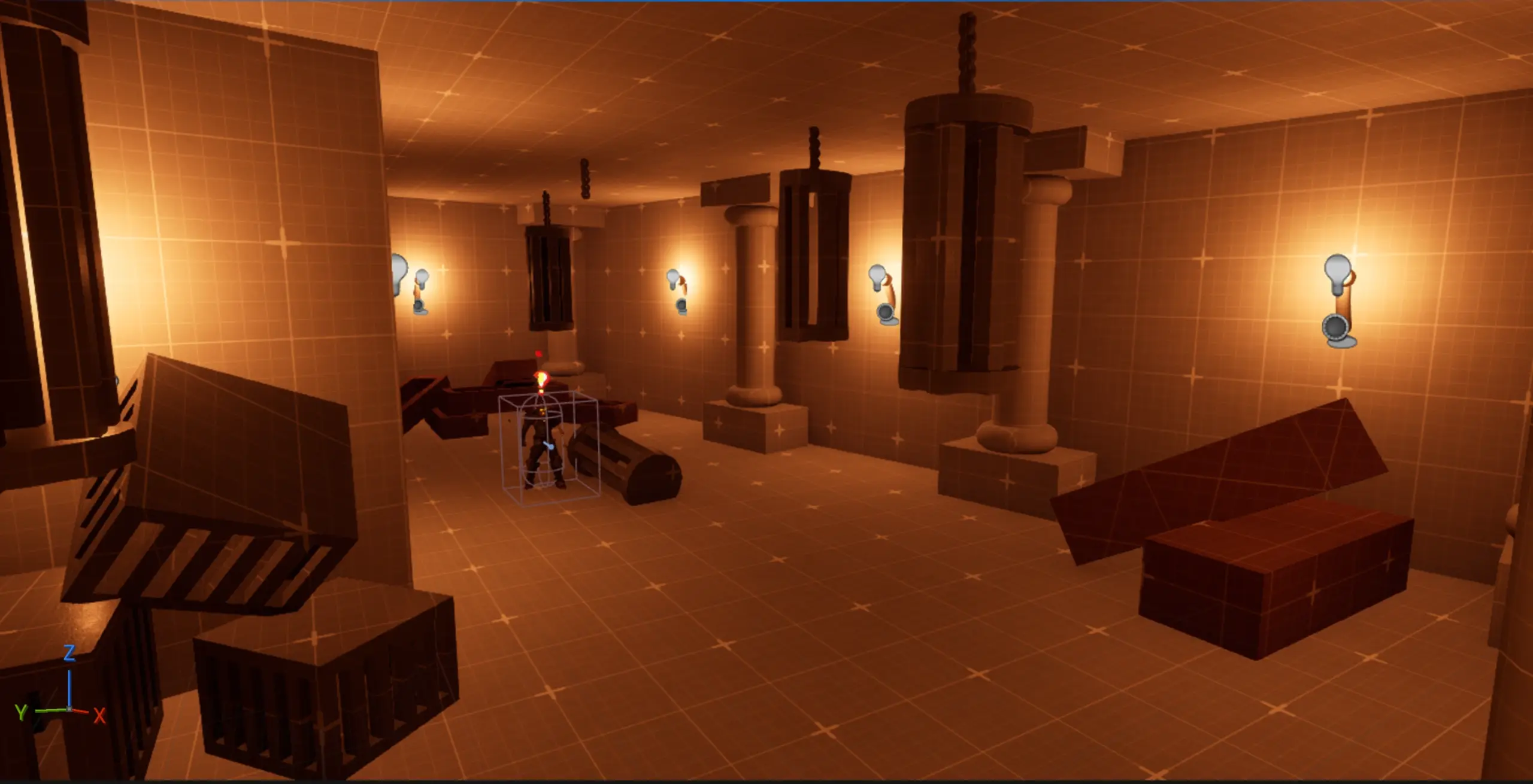
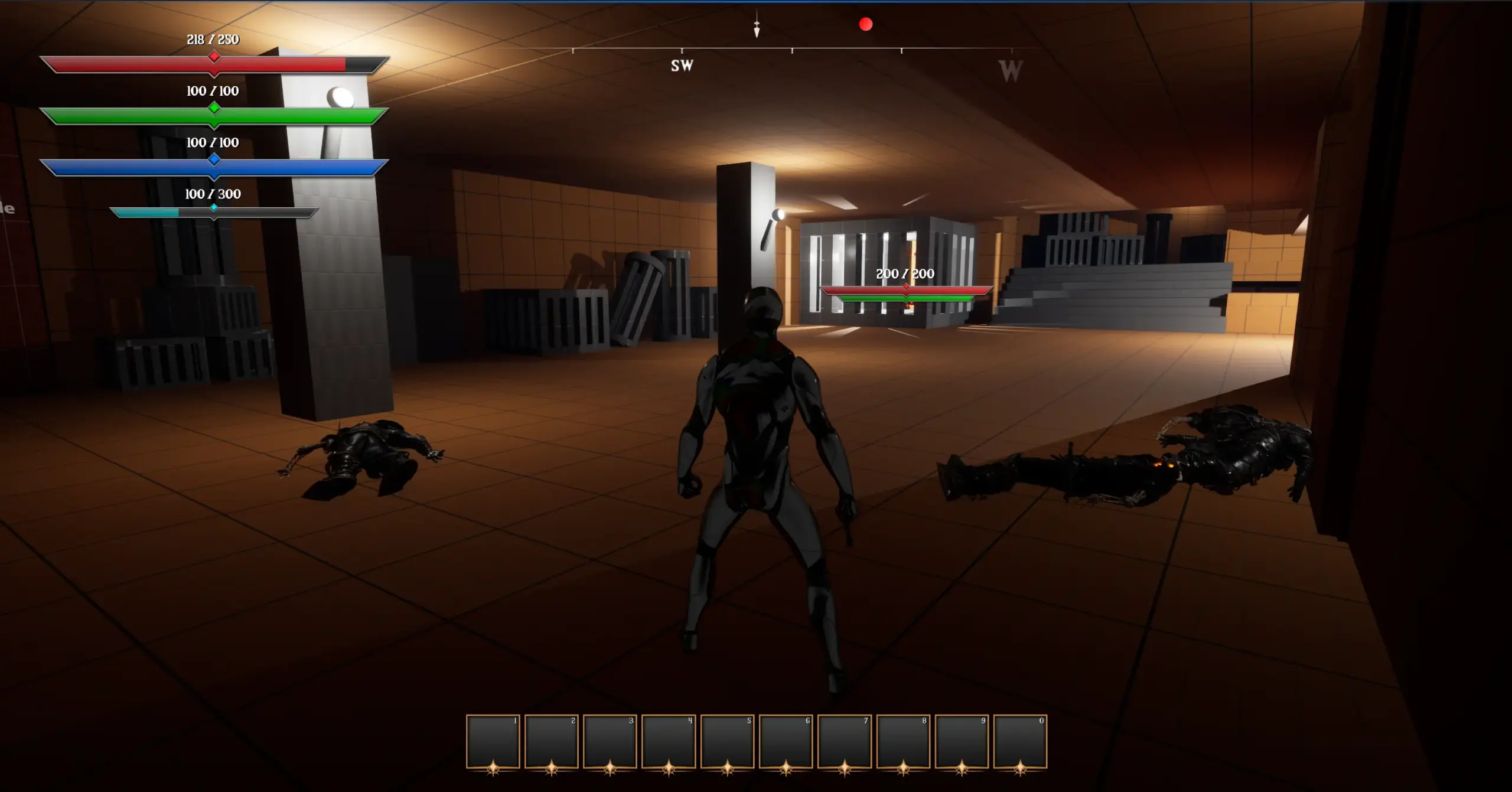
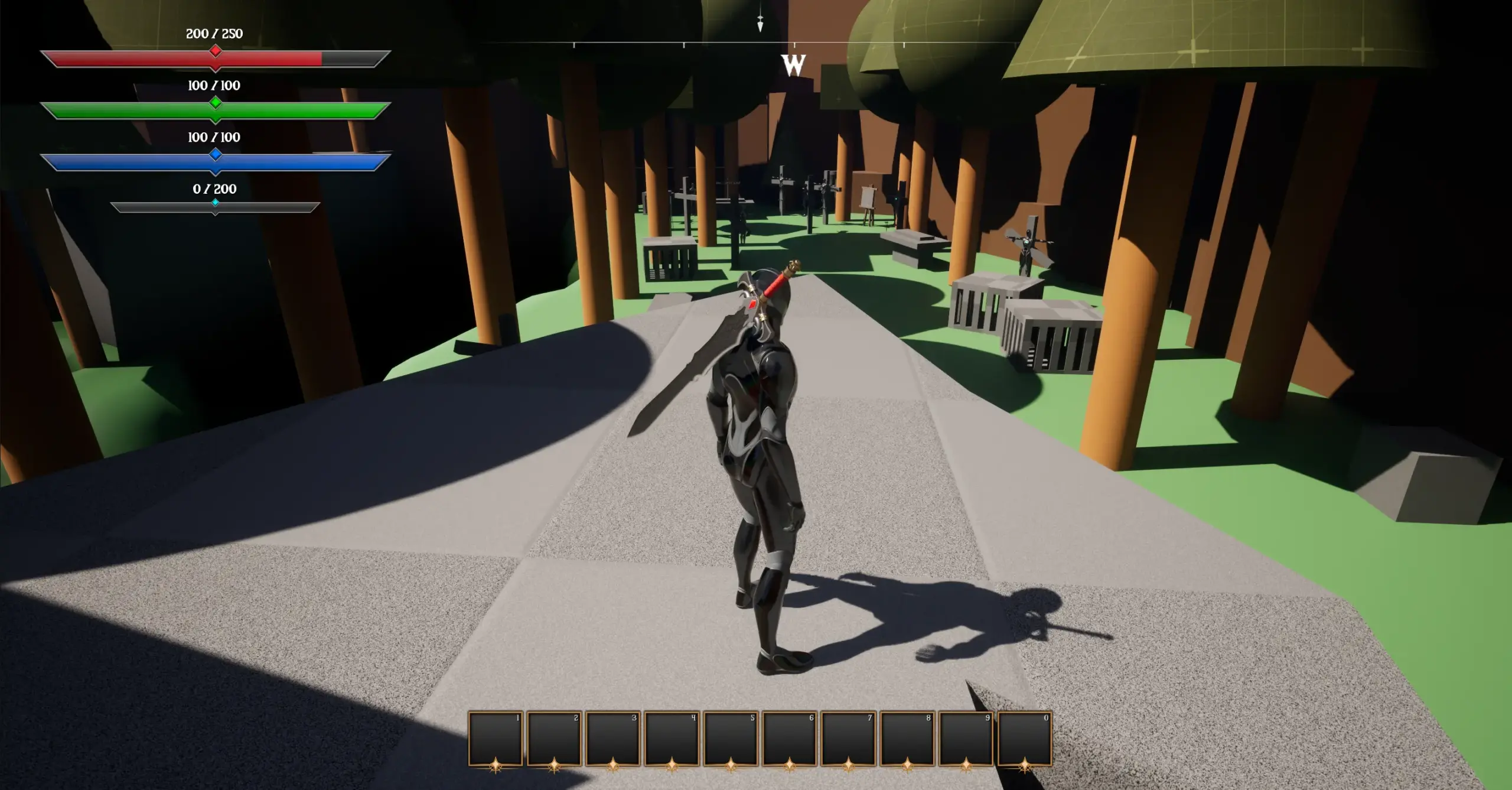
Feedback & Problem: The Slaughterhouse did not clearly feel like a wooden structure, and the interior space was too open, resulting in less interesting combat encounters.
Solutions:
Solution Detail 1: Added multiple wooden pillars to reinforce the structure’s material identity and create more intentional combat flow.
Solution Detail 2: Added a large pile of broken crates to introduce pacing variation and more tactical combat opportunities.
Solution Detail 3: Reworked wall thickness and proportions to make the structure feel closer to a grounded wooden construction.
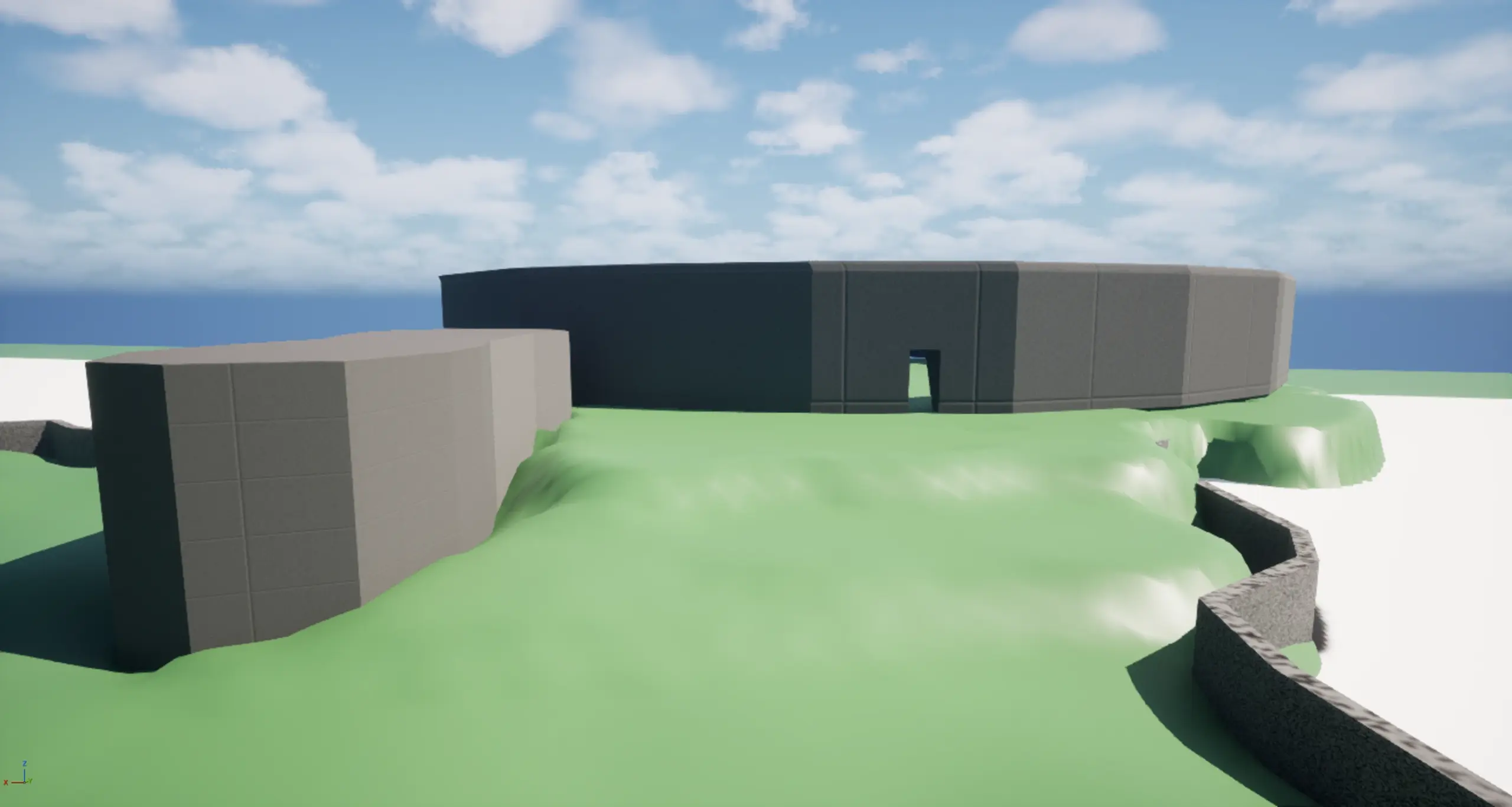
Iteration Highlight 2 - Peer Feedback - Vista

Results: The iteration improved player guidance, landmark readability, and spatial clarity by creating stronger visual orientation and making major progression paths more recognizable from the main vista.
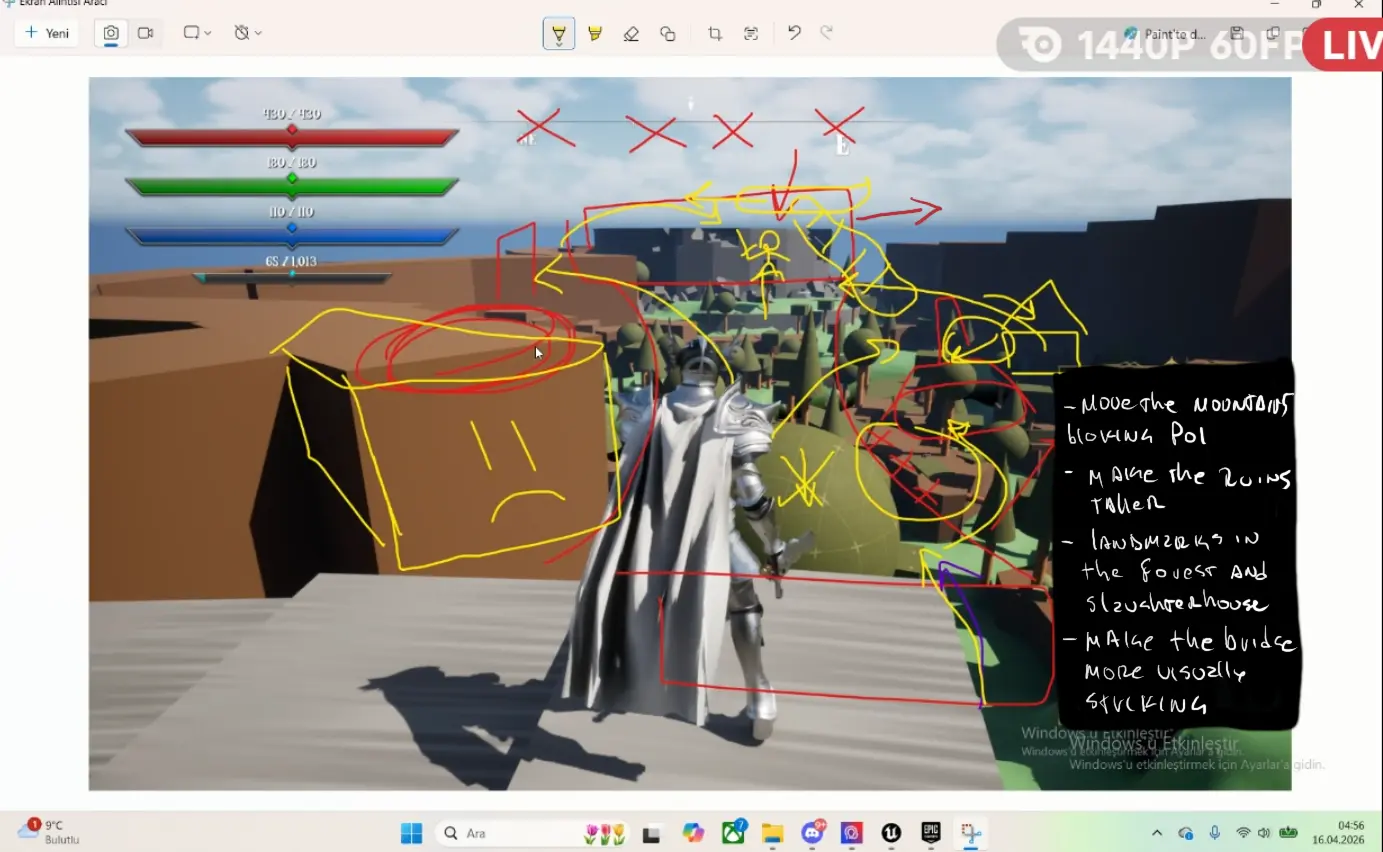
Feedback & Problem: The main vista lacked strong landmarks to help guide players through the level, while excessive environmental obstacles blocked visibility and reduced readability of the possible routes.
Solutions:
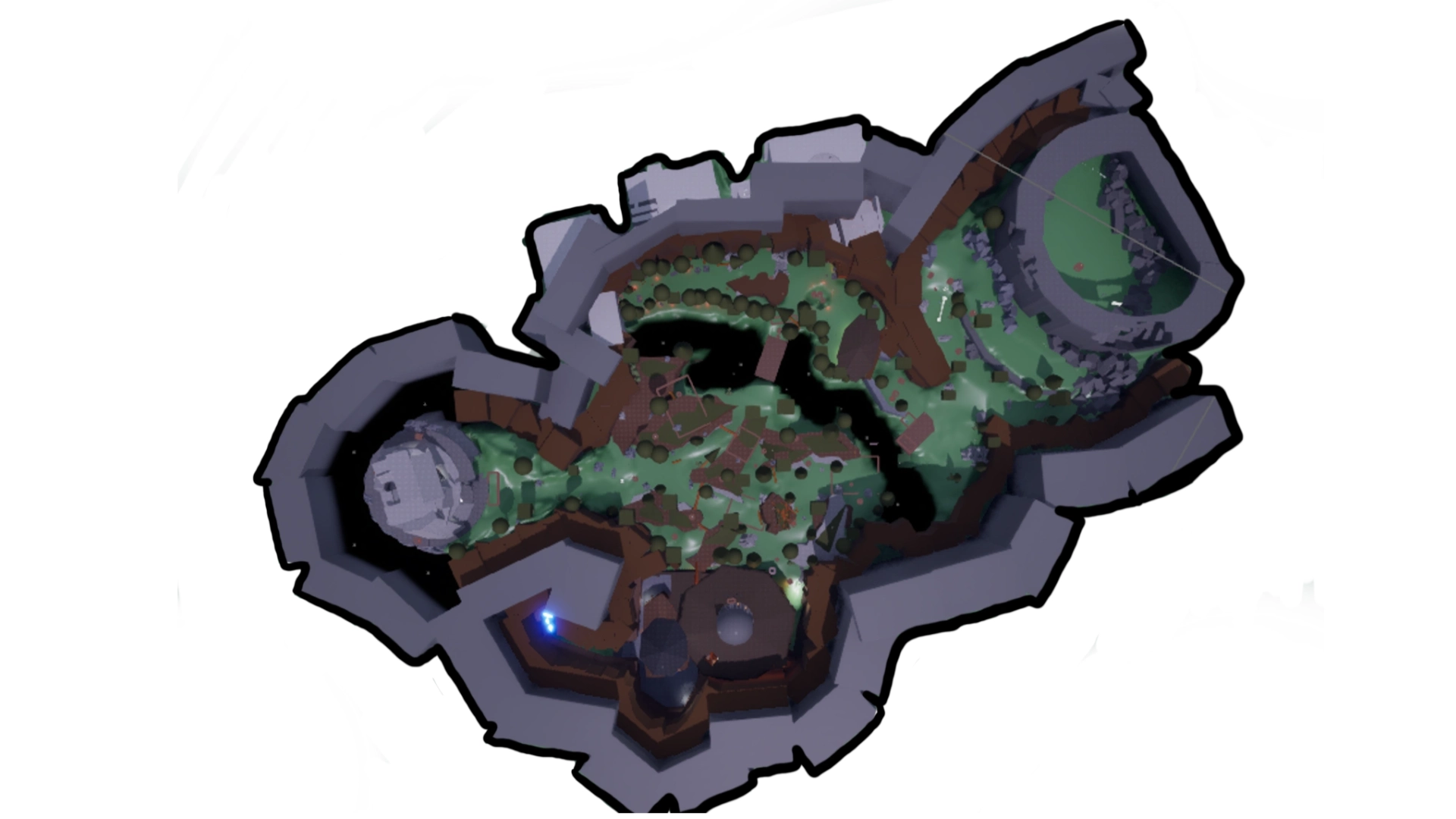
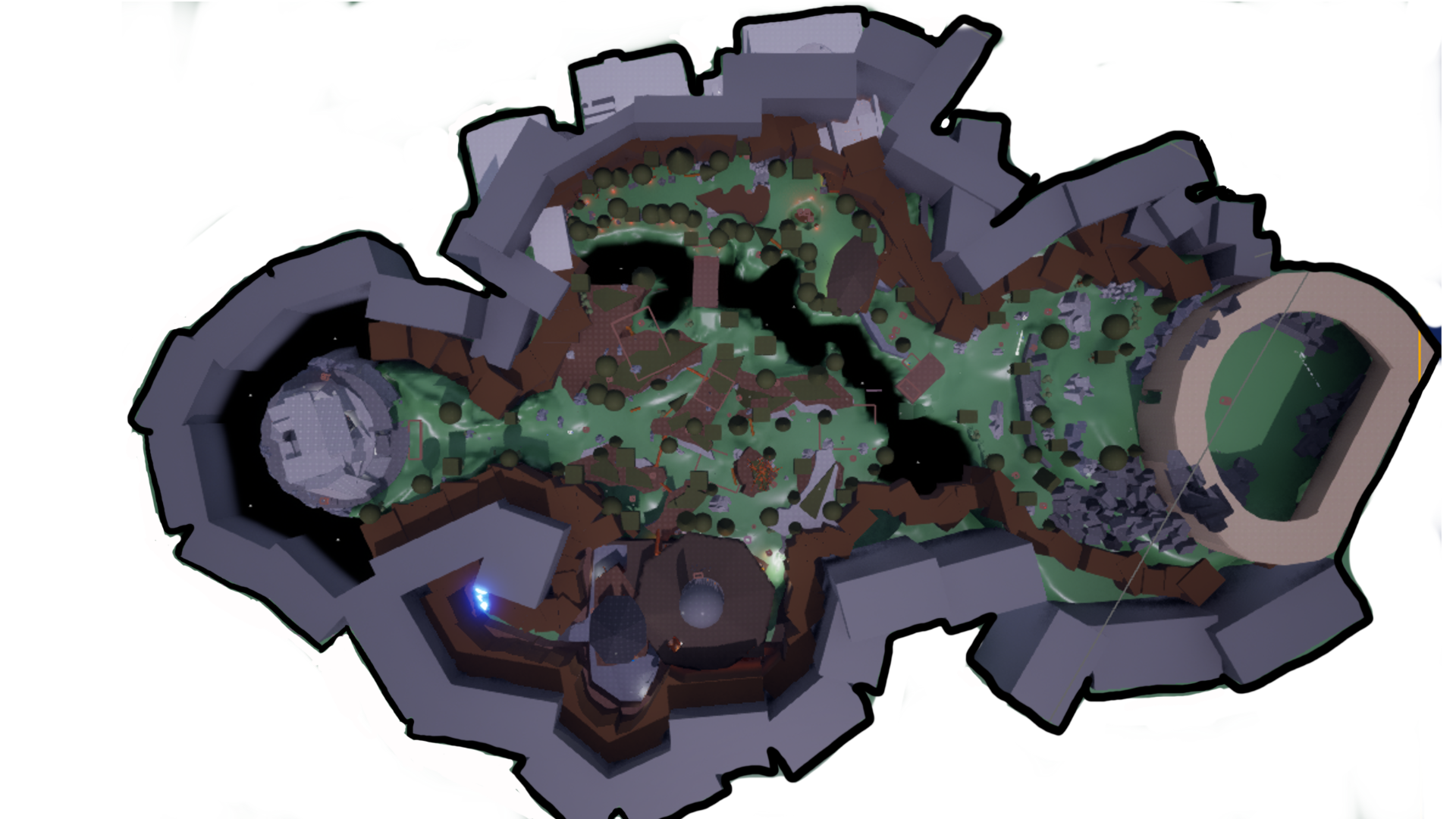
Solution Detail 1: The Ruins were repositioned higher and further to the right to improve long-distance visibility across the map from multiple player viewpoints.
Solution Detail 2: The bridge connecting the Lower Forest to the Sacrificial Area was pushed forward and reinforced with additional lighting to establish it as a clearer Golden Path POI.
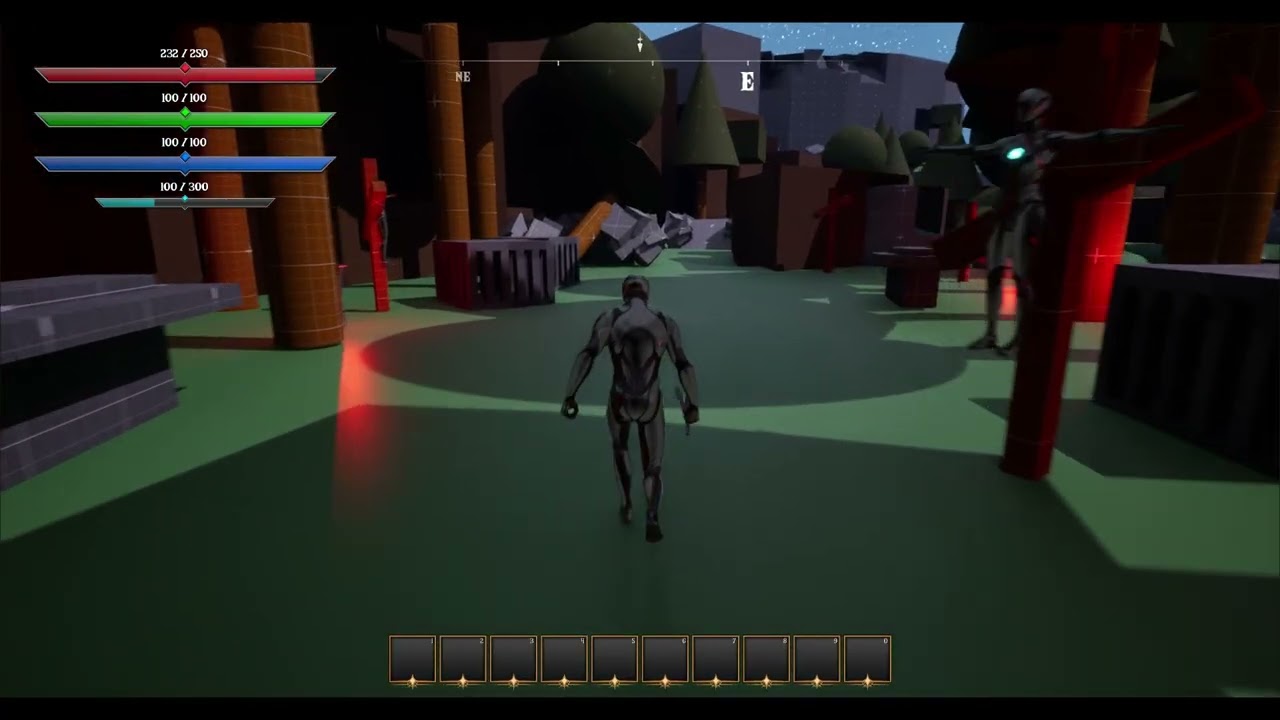
Solution Detail 3: A large hanging-body tree was added to the center of the forest to create a stronger navigation landmark within the area.
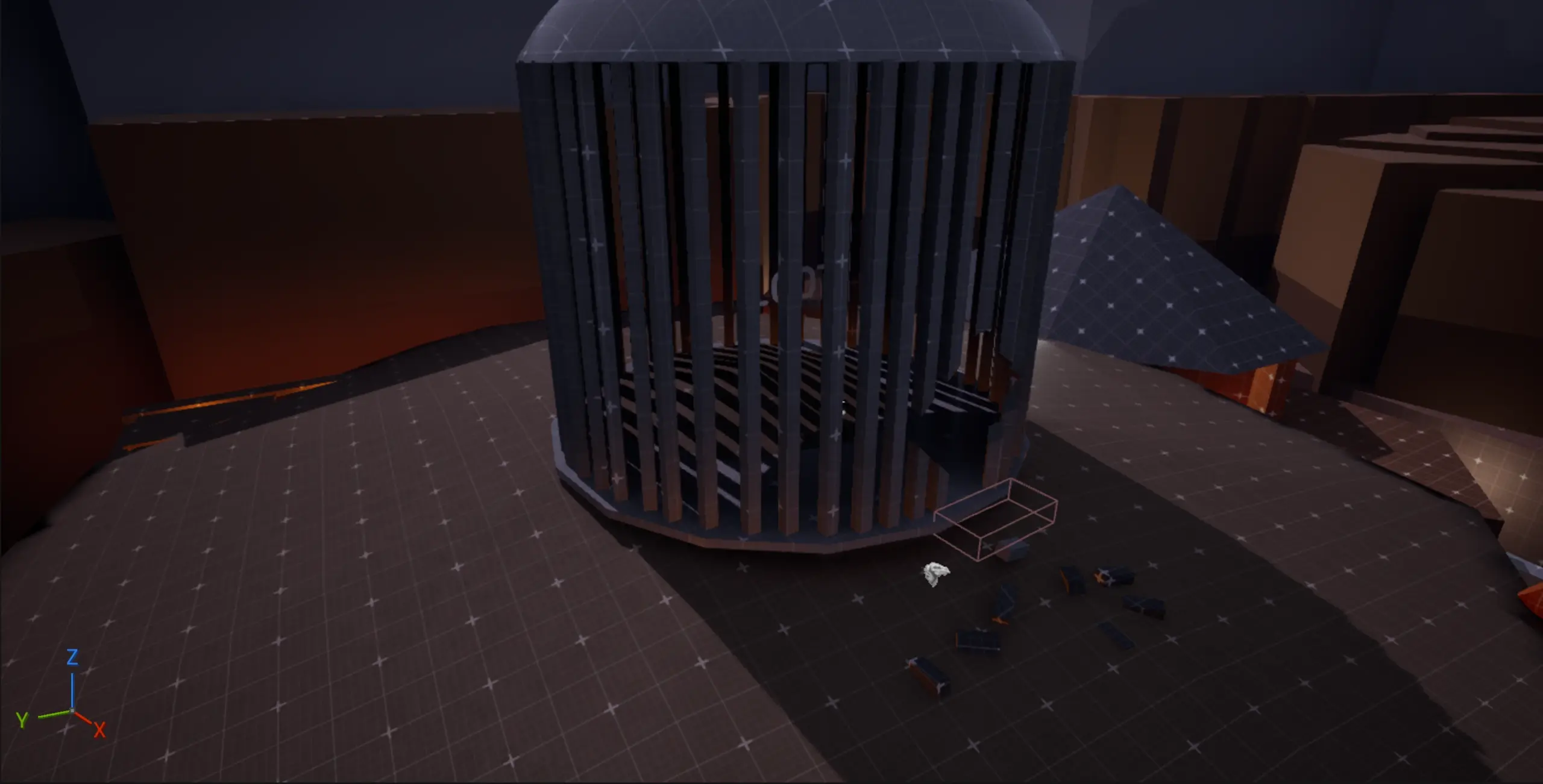
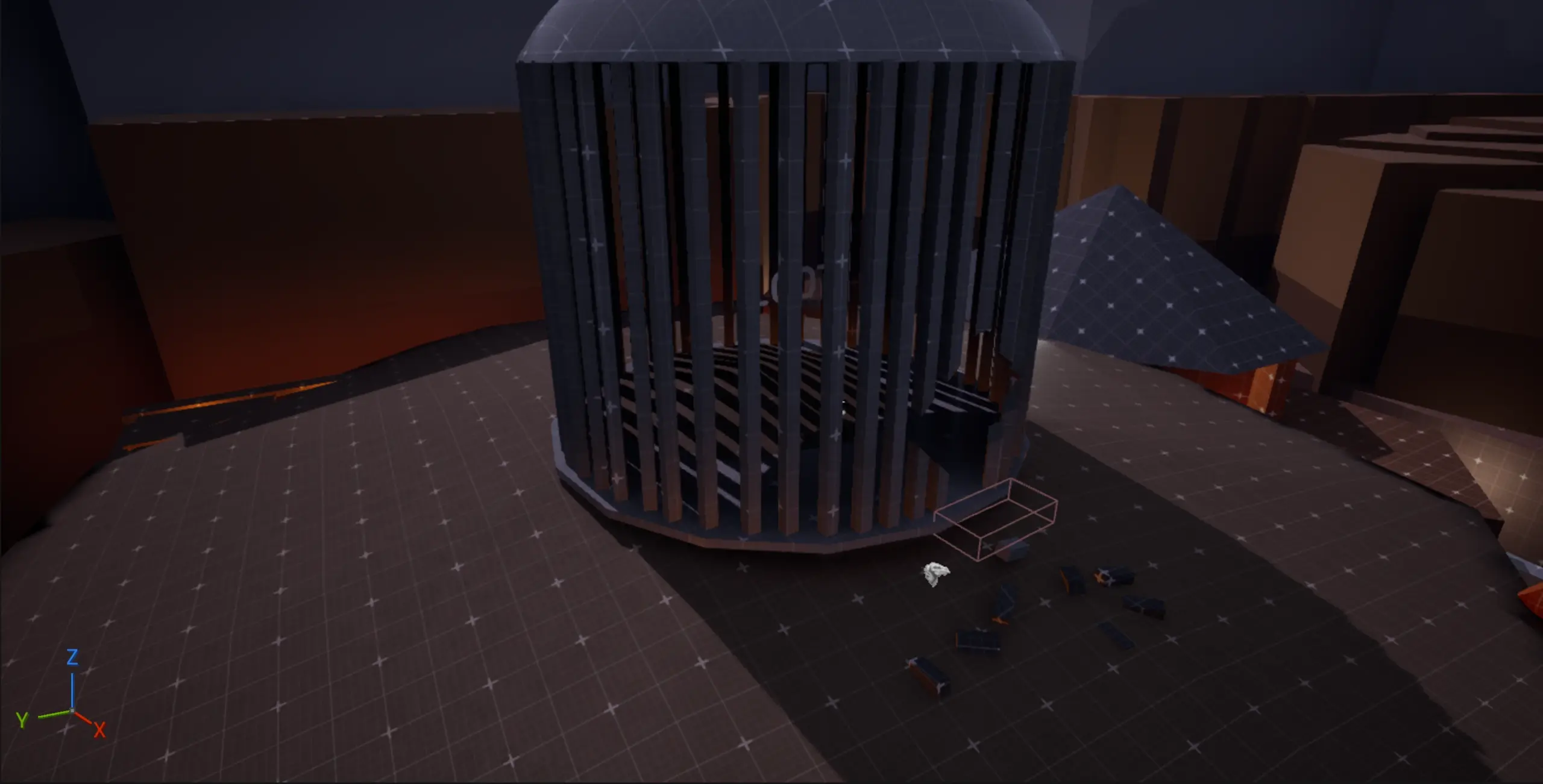
Solution Detail 4: A massive broken birdcage was added above the Slaughterhouse roof to improve visibility and strengthen its silhouette from the primary vista.
Iteration Highlight 3 - Mentor Feedback

Results: The iteration improved player flow, navigation clarity, and exploration readability within the Sacrificial Area by reinforcing progression paths and making optional content easier to discover.
Feedback & Problem: The Sacrificial Area had unclear flow and weak spatial guidance, causing players to miss important spaces and unintentionally skip major sections of the level. The Catacombs entrance also lacked proper signposting, resulting in low player discovery.
Solutions:
- Solution Detail 1: A fallen tree was added between the bridge and the pit to block sequence breaking while naturally redirecting players through the intended route and exposing them to the full encounter space.
- Solution Detail 2: The pit was reworked with loot placement and a ladder to better communicate vertical traversal and encourage players to descend into the area.
- Solution Detail 3: Additional lights and environmental framing were added around the Catacombs entrance to improve discoverability of the optional area.
9. Polish Pass
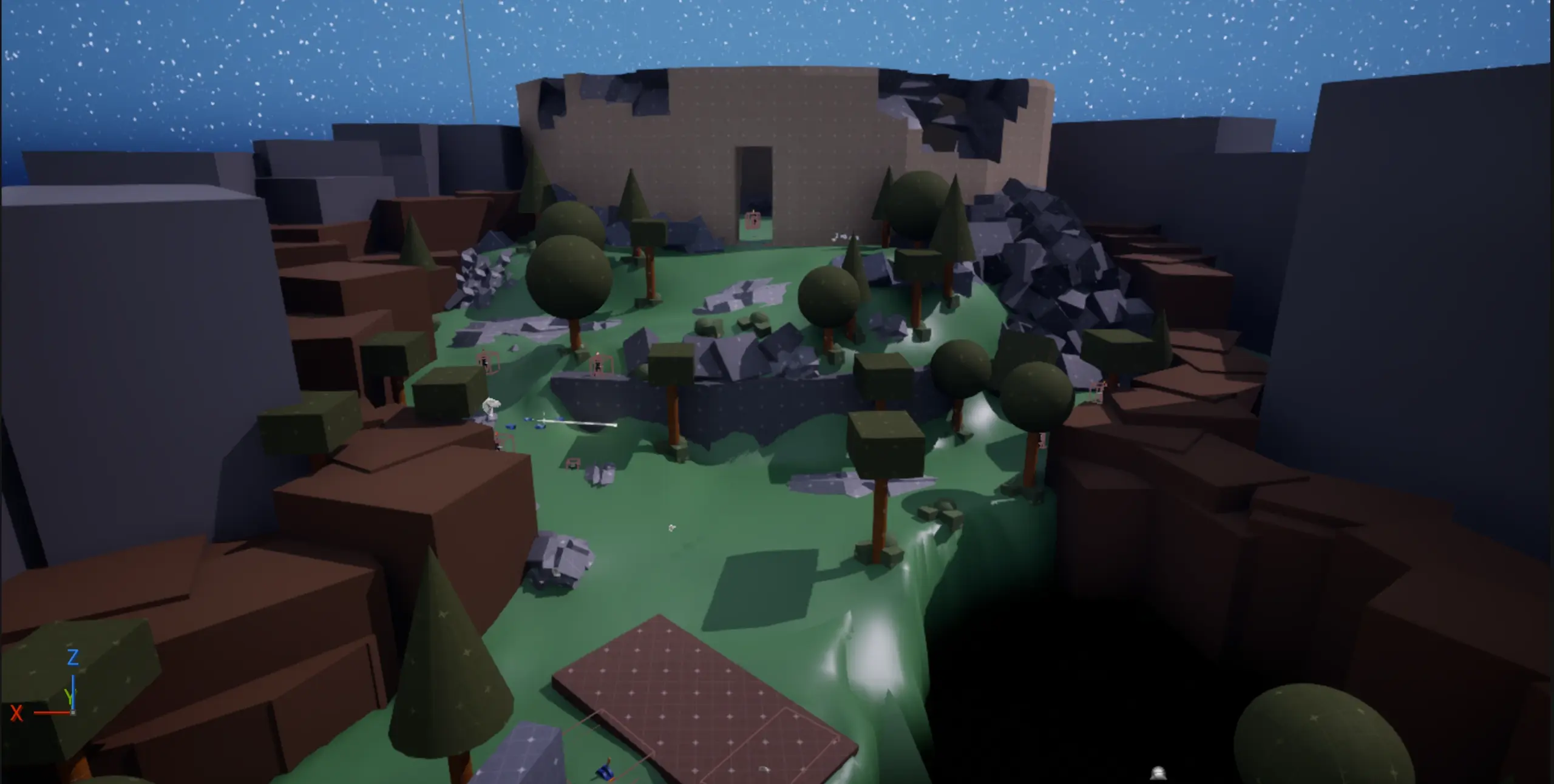
Results: The polish pass improved the level’s visual cohesion, readability, and atmosphere while strengthening area identity and making major landmarks and progression paths more recognizable across the map.
Goal: Improve visual readability, environmental identity, and pacing variation while reinforcing atmospheric cohesion and clearer player guidance through landmarks and environmental composition.
Implementation/Execution:
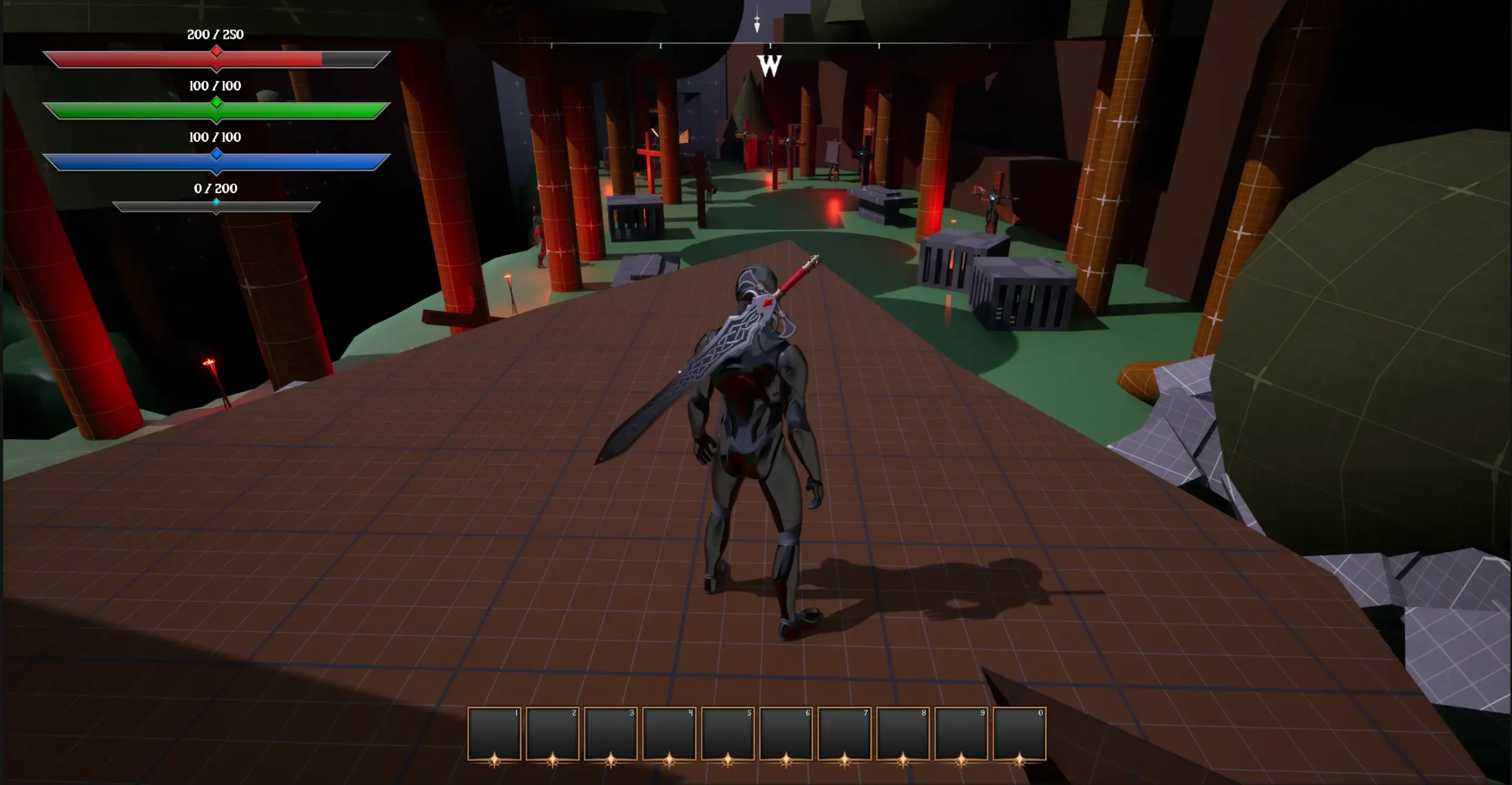
Material & Surface Pass: World-aligned materials were implemented to improve texture consistency, terrain readability, and environmental cohesion across the level.
Area Identity & Landmark Readability: The Ruins were elevated and repositioned to improve long-distance visibility across the map, while the Sacrificial Area bridge received stronger visual framing to reinforce it as a clearer POI and Golden Path connector.
Pacing & Visual Rhythm: Density, traversal flow, and environmental transitions were adjusted to create stronger pacing variation between exploration, combat, and narrative spaces.